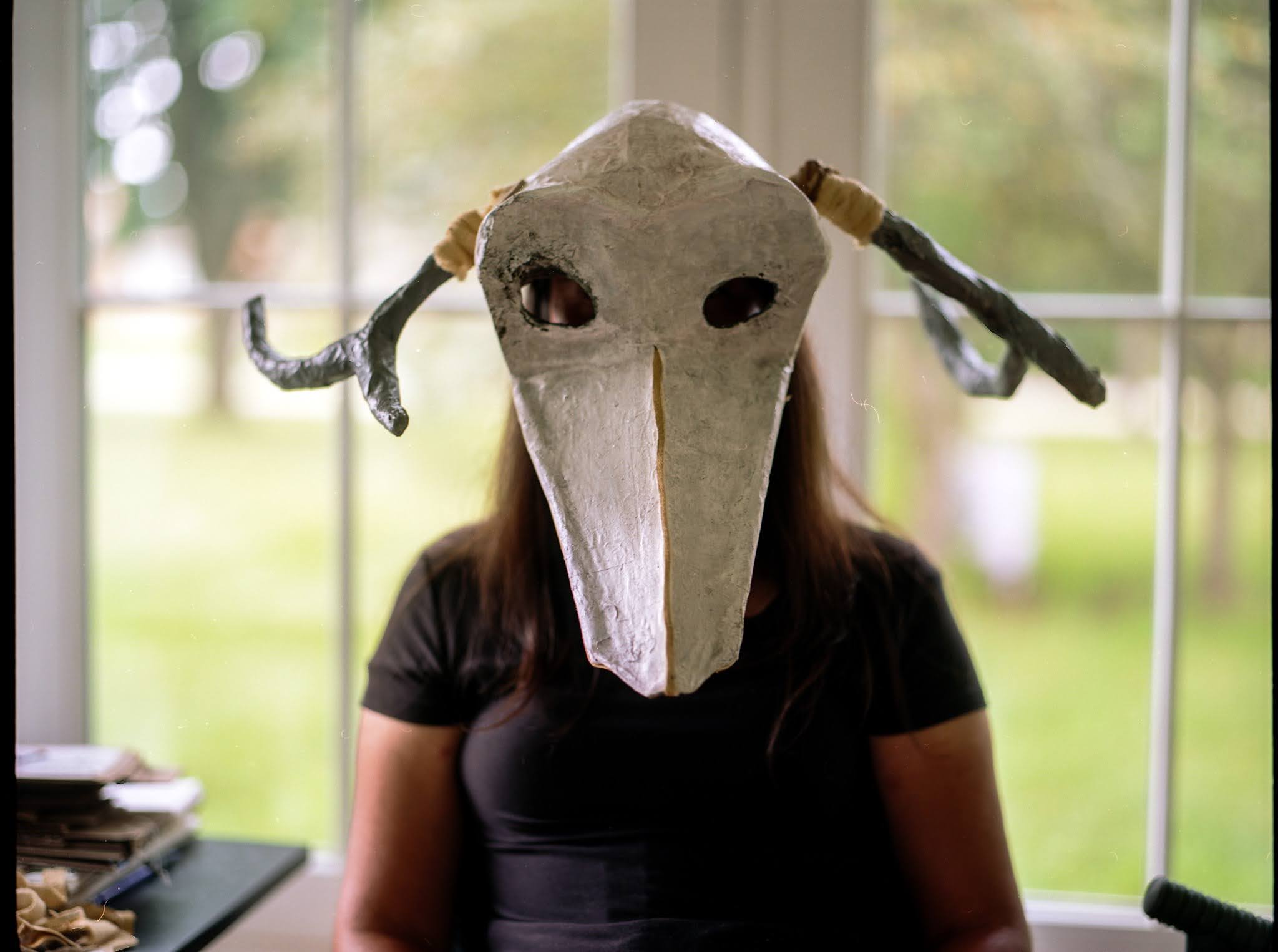
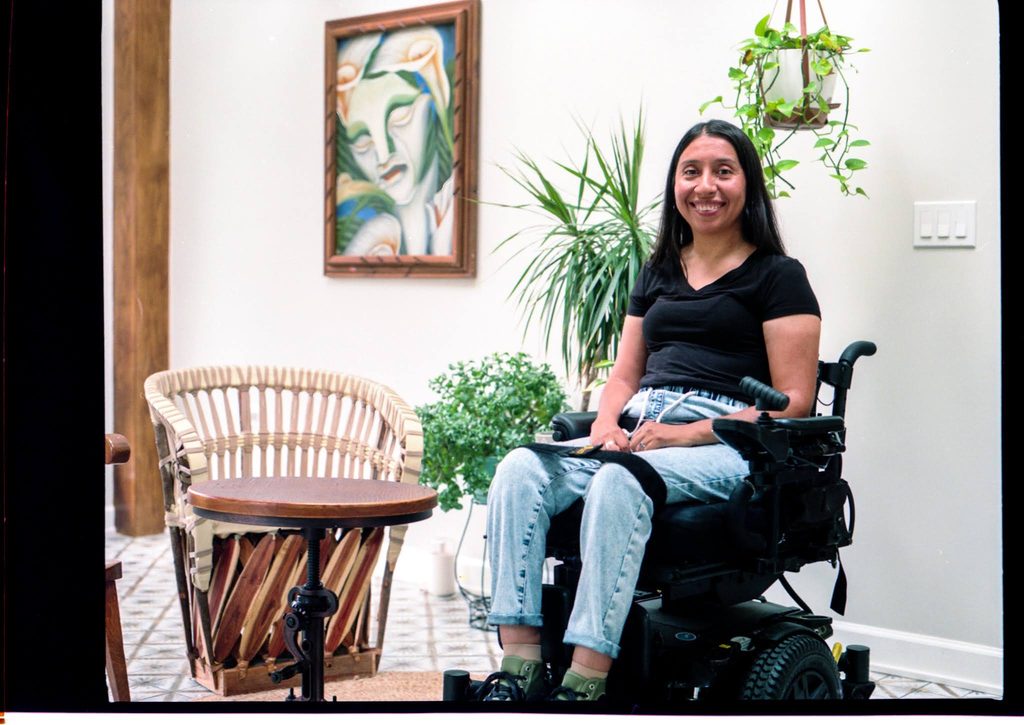
Reveca Torres is an artist, disability advocate, filmmaker, Mexican-American woman, and director of the nonprofit BACKBONES. In our conversation, Reveca reflects on disabled embodiment and grief, the importance of accessible creative spaces, and the role of interdependence in making art. She also discusses her film While We Are Here, which takes us through her journey of connecting with disabled artist ancestors and exploring community, legacy, and the importance of preserving disabled histories.
You can read previous iterations of Disabled Sanctuary here.
cherry sarah kaufman (csk): How do you generally like to introduce yourself, and what has been filling your days?
Reveca Torres (RT): It’s an interesting question because no one ever says that: “how do you introduce yourself?” But anyway, I am Reveca Torres. An artist, disability advocate, and the director of a nonprofit called BACKBONES, and these days, I am now calling myself a filmmaker, too.
Work fills my days sometimes, but I do a lot for BACKBONES as the director. I end up just immersing myself in projects, or, you know, management of the programs, but I’m also very intentionally and consciously trying to make sure I balance my life because there’s a lot of burnout, both with running a nonprofit and making a film and thinking about making art and also just running my life as a person with a disability and caregivers and thinking about aging. That’s definitely what’s been filling my mind and my body. Also plants. They bring me joy.
csk: Who are some of your closest plant companions?
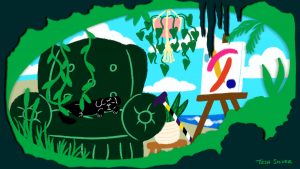
RT: A lot of succulents, and I had this Christmas cactus that someone gave me close to seven or eight years ago. And out of that I’ve made probably 20 or so plants that I’ve been able to gift to friends, and so . . . just kind of been keeping my eye on that one, because it’s been so giving. Beautiful like, magenta colored flowers.
I’ve been doing a lot of working with plants and propagating things, so that’s also what I’m filling my days with.
csk: Which feelings or emotions feel most present or at the surface for you these days?
RT: It’s a mix of things. And I’ll be honest, not to be, like, a downer or anything, but there’s been some grief around . . . I had an injury last year, a hip injury, and was in bed for eight months, almost. So, recovering from that, and then having another surgery. And this was after I had been living pretty well with my disability and initial injury. I hadn’t had major complications until this, and so it was something that was a big change in my life, and I’m adjusting to what that looks like for me now. It wasn’t catastrophic or anything. I was able to recover from it. But, there’s still new sensations of pain, and I’m still relearning what my new normal is. So, I’m balancing some of that grief from that while also being hopeful and looking forward to getting back to myself, as I’m starting to get better and feeling excited about what that could be. I’m going back and forth between all of those things. I’ll be doing a residency in the summer. I haven’t done something like that in a really long time in and it feels scary, but at the same time I’m looking forward to it being a reset and possibly something exciting rather than fearful.
csk: That’s so much to deal with. The injury on top of multiple surgeries and then eight months of being stuck in bed and grappling with new pain and disability. I understand some of the grief of this. What is the residency you are looking forward to?
RT: It’s in Santa Fe, and I actually had a part in designing it. A friend of mine and I have both been to this residency before, individually. And she said, “you know, it would be really great to be in community with other artists with disabilities.” We ended up gathering a few other disabled artists and starting a working group to make it happen. We ended up getting a grant for it, and they’re going to supply not only the studio space and place, but also caregivers on site and art assistance on site because if we don’t have the care and support, we can’t focus on art, and if we don’t have an assistant to make art, we can’t make art. So, we’re going to have all the things we need for us to be able to focus on making art together. We’ll be going in June, and there will be a second cohort next year for six other artists that we can support to go to this residency as well. I’m not really sure what I’m going to make or do. I’ve been working on this film for so long but part of me just wants to take this as a time to not do anything related and just be in that space with the people that I’m around and see what happens. I’m going into it with an open heart and no expectations and with a spirit of just playing, getting to know my peers, and also resting. I want to rest.
I don’t want to go in with a project, because then I don’t want to feel tied to doing a project, and then at the end be like, “oh crap, I didn’t do it.” You know, I just want to go in and be like . . . ,“hey, I learned how to do watercolor from this person,” or, “I learned how to do blah blah blah from this other person.”
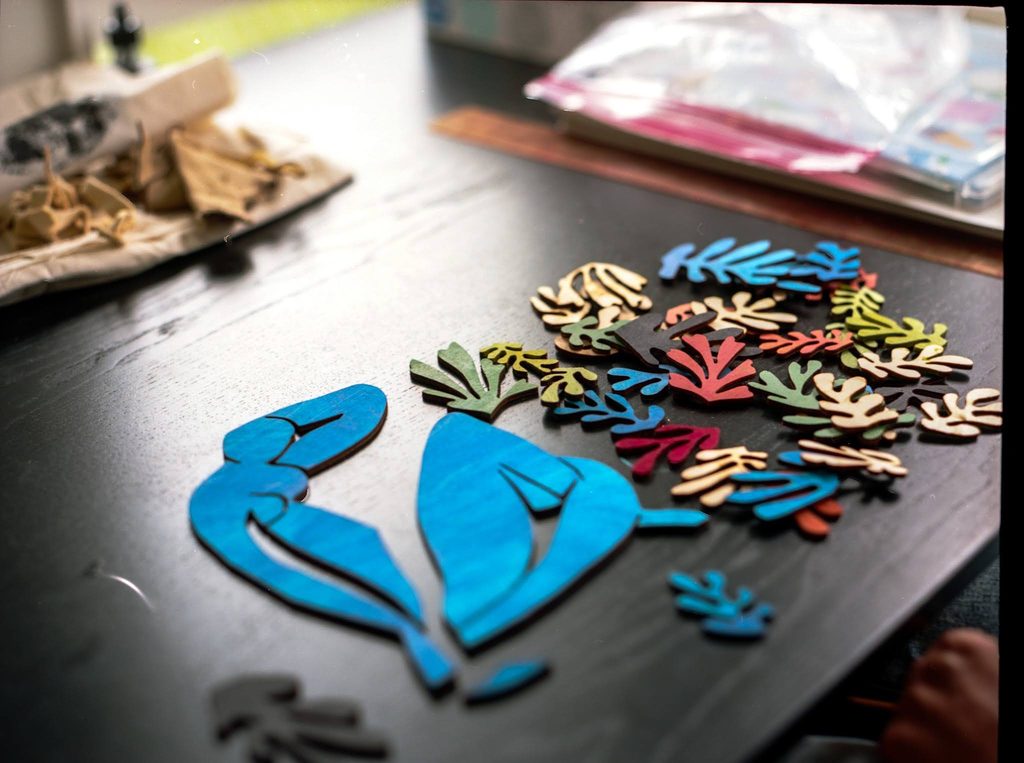
csk: Can you tell me about what led you to create the film While We Are Here?
RT: It was [early] pandemic time when I started documenting my work and people were looking for connection. I was looking for connection. And I love writing letters; I love snail mail and stamps and making cute packages. So, I was sending friends stuff in the mail. Notes, letters, little trinkets. Somehow I started thinking about art and artists with disabilities from the past. I wrote a letter to Frida Kahlo on the day of the anniversary of my injury, which is on New Year’s Eve.
It’s a day when people party, so it’s a weird day for me because I want to party, but at the same time, there’s a little bit of, like . . . you know, sadness. So, in the morning, I’ll usually journal something or make some art, and just kind of get it all out of my system, whatever I’m feeling that day.
I wrote this letter to Frida Kahlo, and then I began to wonder how past artists with disabilities thought of themselves. Did they consider themselves disabled or use the word “disability?” What was their identity in society at the time?
The whole reason this all started, too, was because I came across a letter that Frida Kahlo wrote to Georgia O’Keeffe. It was like a letter to a friend when they’re not doing well: “are you okay?,” “I’d love to come see you,” that kind of thing. And so that just kind of intrigued me—this community of artists from the past. I ended up writing to Frida, to Van Gogh, and to Henri Matisse. I’ve learned so much through those letters, kind of bringing them into my life, and figuring out why they were important to me. And just asking some questions that, you know, obviously it wasn’t a dialogue where they’re going to answer these questions, but it was more of reflections of my own.
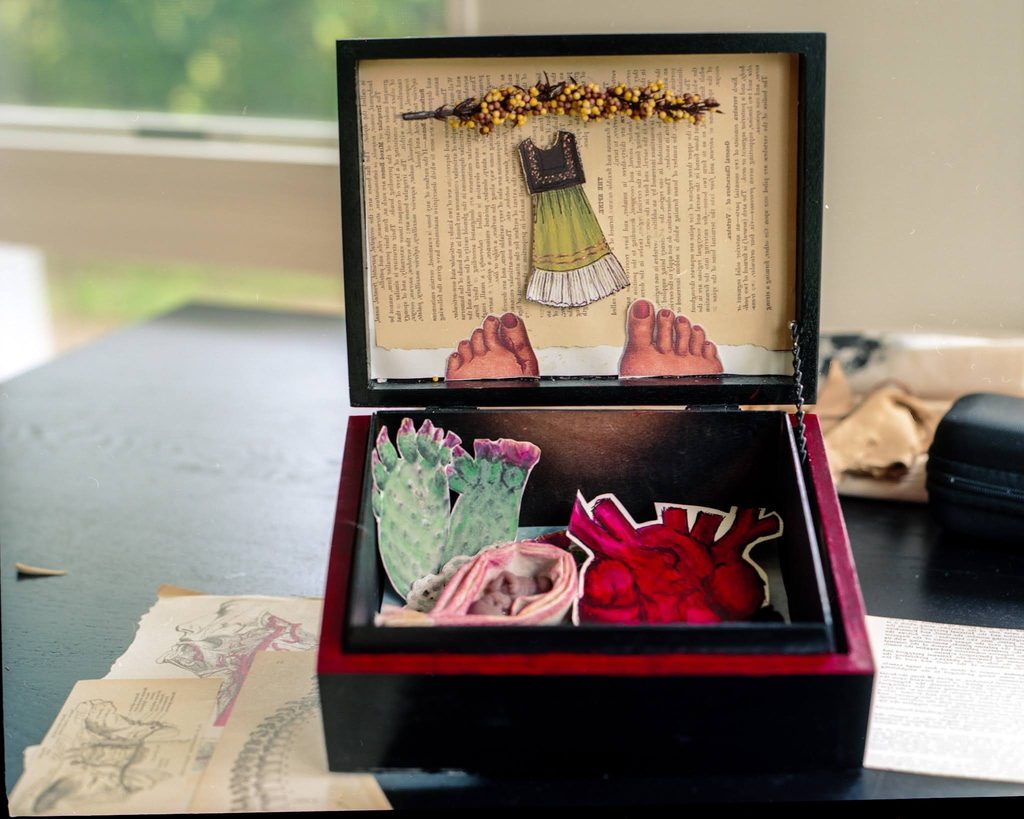
I was asked to be a part of an exhibition with Matt Bodett, and then I was asked to create some costumes for Maggie Bridger for one of her dances. I just documented everything. Honestly, I didn’t really know where it was going, but I was like, Chicago has such a community of artists that we’ll collaborate, we’ll show up for each other, we’ll promote each other’s work. So, While We Are Here just kind of touches on, on some of that dialogue and reflections of these disabled ancestors and contemporaries that become part of our community.
Since this was during the height of the pandemic, my caretaker and I were living together, and she was helping me make my art too. She helped me make this film. So, some of the questions that the film raises are: What does it mean to make art with help? And what are the frustrations that come along with that? What are some of the happy surprises that happen?
There are a lot of layers. For a minute there, I thought, like, how am I gonna make this all work? I’m working with Matt Lauterbach, and he’s been a really, really amazing editor.
csk: What did it feel like to connect through writing with the three disabled artist ancestors you discuss in the film? Did you receive any messages back, and what did you get out of the correspondence?
RT: Yeah, I got the sense of connection, honestly. Of truly feeling like I was communicating with someone, even though it wasn’t reciprocated in the traditional sense. It’s different than when you send an email or a text and you get an immediate response, right? It made me feel like when I was younger, I would send letters to my grandma in Mexico. And it would take weeks, sometimes even months to get to her, and then for her to write back. It just kind of felt like that there was time to reflect and time to think about, well, what would they answer to this? Or what would they say? Or what would it be like if I was sitting with them having coffee or like having a drink and stuff? I almost felt like I got that back from Frida. I was reading her diary and even just looking at some of her paintings. They give you so much information.
With Matisse also, he was writing letters during wartime to his friends that were artists, and they would come and paint together. There’s a lot of documentation of thoughts and their interactions with their friends. And because they were writing to their friends, they were being vulnerable, and they were telling you what they thought. Obviously, the letters weren’t to me, but I felt like I could learn so much from them and feel that vulnerability that someone that you cared for would send back in their letters.
I also got to go to France to film in Matisse’s garden, and that was incredible. I get butterflies in my stomach whenever I watch that part of the film. My caregiver and I ate an orange from the tree there and wondered if Matisse also ate from the same tree. It felt really magical.
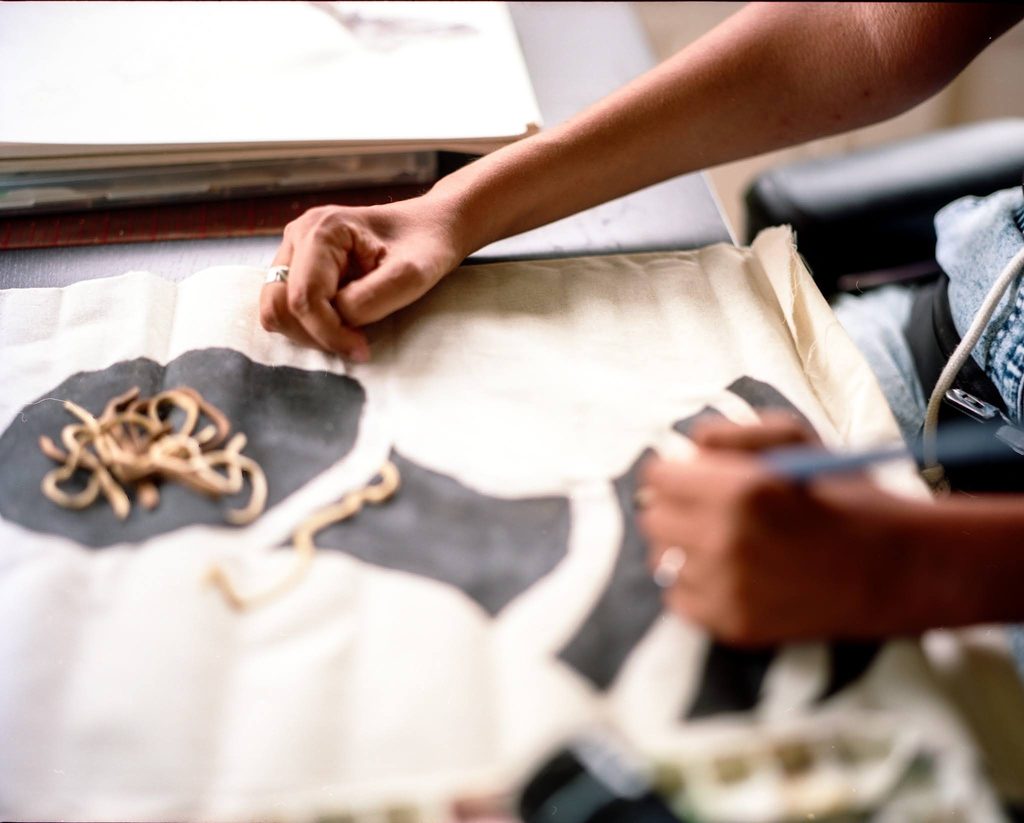
csk: Before starting the film, were you in any practice of connecting with ancestors?
RT: Not in a ritual type of way. But yes, particularly with family, especially my grandma. I still have some of the plants that used to belong to my grandmother that I have been propagating to make sure they continue.
I designed my plant room in the house with these tiles that remind me of my grandmother’s house in Mexico, too. And I have furniture in there that’s like what she used to have.
“My work and the work of other disabled artists like me is evidence. Evidence that we exist and that we’re here and that we’re important.”
csk: When you think about your own legacy, what do you hope to leave behind?
RT: I think, as disabled people, our histories are erased or not recognized. And, you know, I didn’t know a lot about the history of disabled people. I knew some of the basics of the ADA passing and those types of historic disability rights things, but you don’t learn much about disability history in school. I think when the movie Crip Camp came out, I was like, “wow, I didn’t know all of this,” and that made me feel really proud of being a person with a disability. And part of why I started documenting my work, too—documenting making art and what my art was is—as evidence to leave that we are here, that we existed, and that we deserve to be recognized as part of this timeline in humanity.
In archives you can find the artifacts of kings and emperors and the rich, but what about everyday people? What about disabled people? My work and the work of other disabled artists like me is evidence. Evidence that we exist and that we’re here and that we’re important.
I think about this a lot as a woman with a disability. I’m not having children to pass on my jewelry or whatever. But I want to leave something. And this is what I’m leaving behind: my artwork, my thoughts, my contributions to those around me. If I get forgotten after this moment in history, that’s fine, but what was significant is what’s happening now.
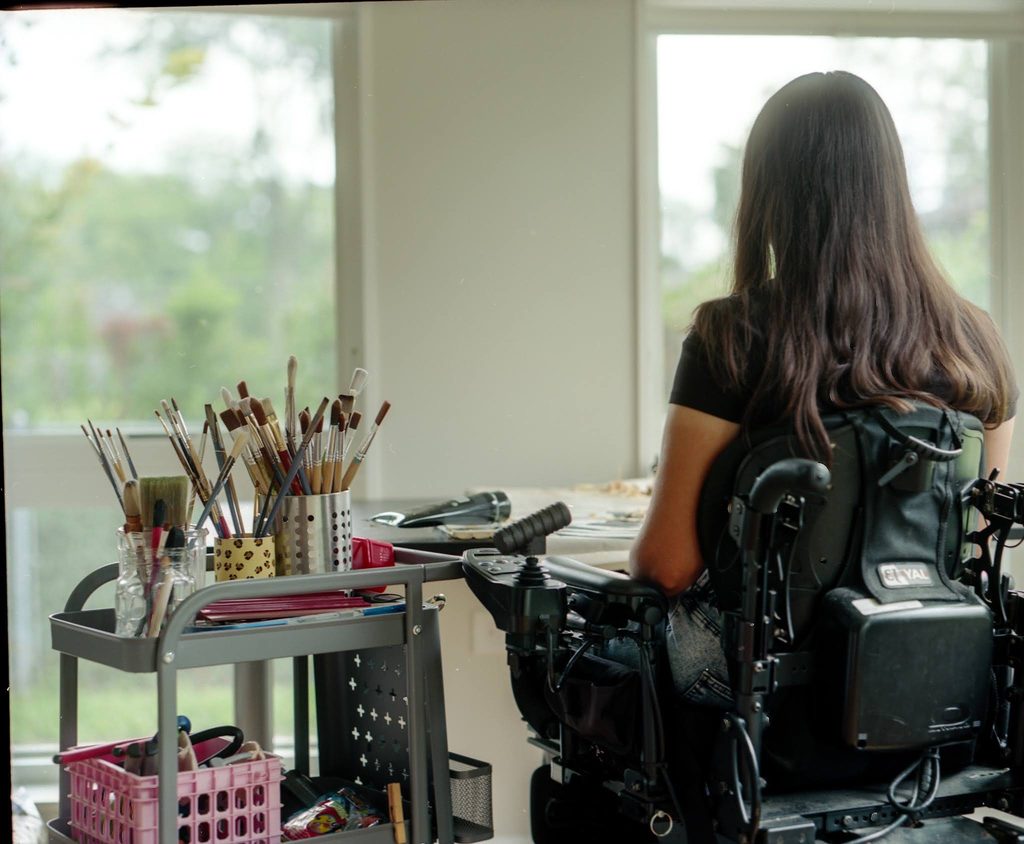
csk: I would love to end this conversation by hearing about your experiences of art making. One of the things that physically disabled artists like us have to consider is having an accessible space to make art. What does your art-making space look like, and what does that space feel like to you?
RT: Last year I finally added an addition to my house to have an art studio. Before that I just had it in my bedroom, a corner with a desk and a bunch of shelves with all my supplies and things in other rooms, and everything was everywhere. I often didn’t make art because it was just such a hassle to get all of the things and then put them away, and I didn’t have someone around to help me do that. So, I got the art studio, and then I got injured, and I didn’t get to use it at all. It was probably just a few months ago when I finally got it all set up. I made sure to put a closet in it, and my dad made all of the shelves reachable for me in an L-shape so I could go in the closet and grab the things I need. We put different bins with different supplies, and I started stacking things, and my friend who came over to help was like, “no, you can’t stack things, because are you going to be able to unstack everything and grab things yourself? You need to make it as easy as possible for you to be able to grab what you need, so you can make art whenever you want.” She was really great at helping me determine what access was gonna look like for me when sometimes I couldn’t see that for myself. We’re so used to compromising on access and compromising on scarcity and not having things how we want them that her reality check of, “no, this is a space that you created just for you” was incredibly helpful and affirming.
I didn’t use the space for about a week after getting it set up. But at some point after that, I just felt like making something. I put on some music, I went in there, I grabbed the paints, I grabbed the palette, I grabbed the canvas, and I just painted for hours that day. It was awesome, you know? I wasn’t making art because I was making something for a commission or because I had a project to do. I was just making.
I was almost in tears because I realized that I can actually do this whenever I want now. There’s still things projects or things that I definitely need assistance with, but the fact that I could just do this right now, even if it isn’t a significant piece of work, but it’s just the act of making, and the act of having access to making when I want, how I want without anyone in the room. And we don’t get a lot of that alone time. So, that’s really valuable to me when I do have those moments where I’m able to be alone, and I’m able to do things alone and in my own mind space. And I’m pretty sure you know exactly what that feels like.
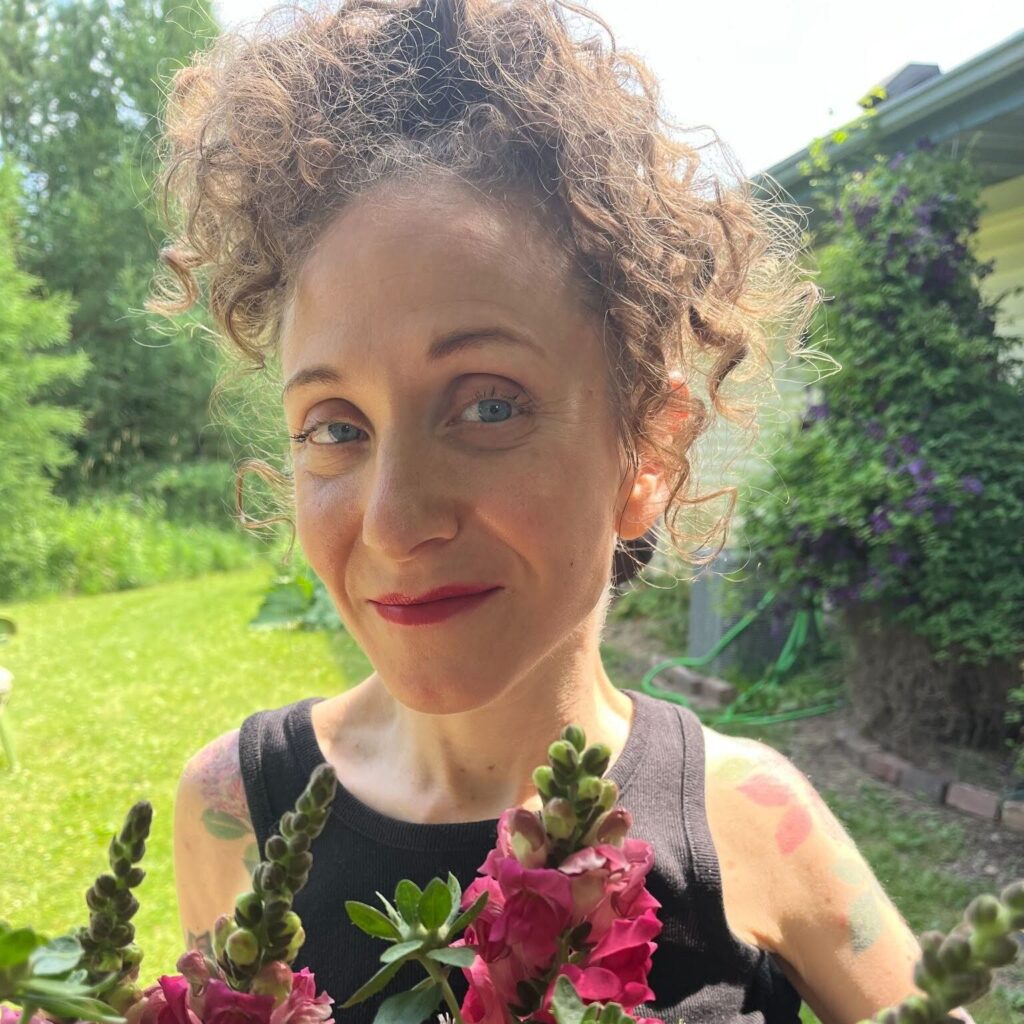
About the Author: cherry sarah kaufman is a queer, disabled, white, Jewish writer, mouth-painter, and kitchen witch. She is also an ANTE-UP certified sexuality educator, and prioritizes curating resources and spaces for other disabled survivors. She created www.disabledparts.com, a website exploring disabled sexuality and relationships. She strives to make her disabled ancestors proud. Her work explores disabled embodiment, structures of care and intimacy, erotics, survivorship, feeding people, & Jewish magic and spirituality. She is made of fire, water, and honey.
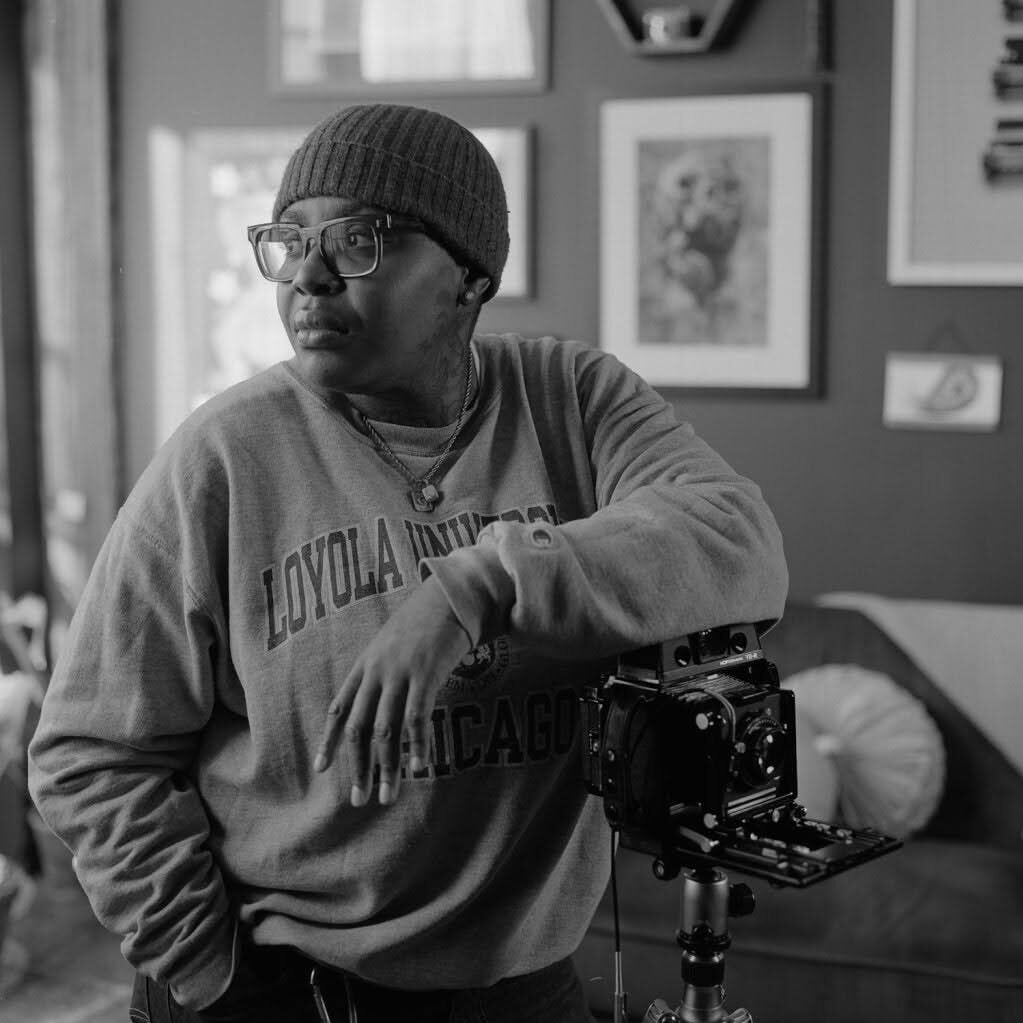
About the Photographer: Genesis Falls, known as Geno, is a Chicago-based film photographer whose black-and-white work captures the raw essence of humanity. Inspired by childhood moments with her grandfather’s instant camera, she pursued Cinematography at Flashpoint Chicago and now focuses on unseen stories and unfiltered lives. Exhibiting at spaces like Evanston Art Center and as part of the Black Women Photographers collective, Geno earned the 2023 Black Women’s Photography & Flickr Grant. Influenced by Gordon Parks’s philosophy, she uses vintage cameras to create intimate, tactile images that honor resilience and challenge viewers to reflect on humanity’s shared beauty and strength. @geno_tatted