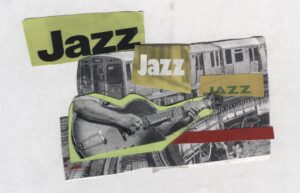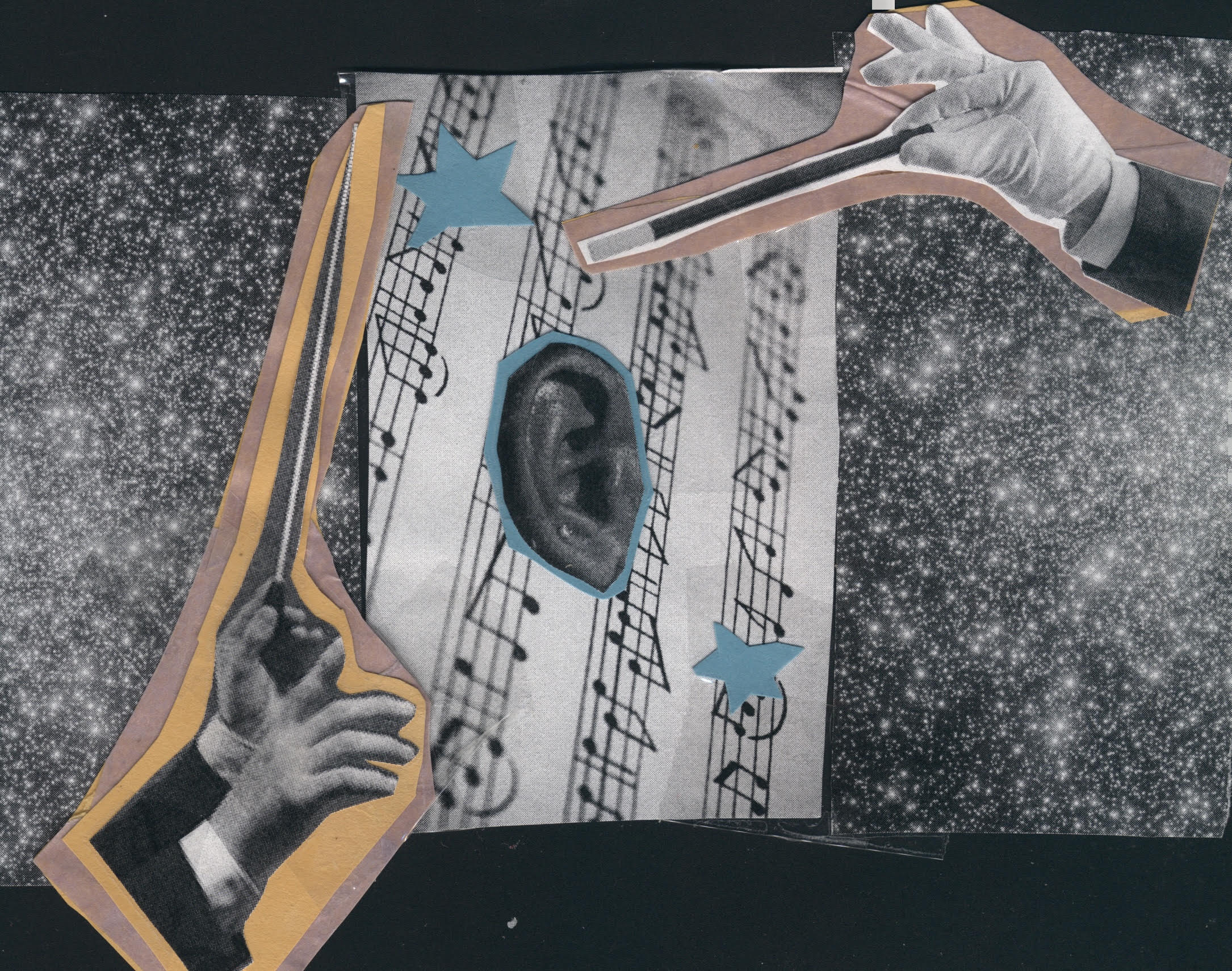
On the very sunny first Saturday of February, the morning felt fresh, as though anything could happen. And cosmically enough, there were two different movies about two innovative musical superstars playing at different theaters on the same day. I enjoyed a self-made double feature: Space is the Place at the Gene Siskel Film Center and Desire: The Carl Craig Story at the Outset. Some say art is how we decorate space and music is how we decorate time, so on this day when I had time to kill, I found myself at their intersection—watching movies.
The day felt special. It reminded me of something Toni Morrison said in the beginning of her novel, Jazz: “Daylight slants like a razor cutting the buildings in half . . .” As the sun broke through the winter skies across downtown Chicago outside the Siskel, I was still illuminated in the darkness of the theater. There, I saw Sun Ra’s Space is the Place, a masterpiece of a film. It depicts the artist’s life purpose: to awaken people with sound and starshine. The film begins with Sun Ra landing in the present day, 1970, Oakland, California, and then time-traveling to 1940s Chicago, where the musical magician eventually places a wager with a demonic pimp called the Overseer. The wager is for the souls of Black folks all over the world, using the power of music to take them to a utopian planet far from planet Earth. Superstar mystique, a quirky syntax, and a boundless sonic landscape propel the marvel to and from the stars, inviting listeners to look within and notice they hold the same magic held within our great cosmos.
Back on Earth, I then ventured to the live-music venue The Outset for the next film as the sky blackened. In the past at the Outset, I’ve witnessed crazy concerts and dance moves galore; now, I found myself sitting for the first time. Submerged in subwoofers and projectors, I watched the documentary Desire: The Carl Craig Story.

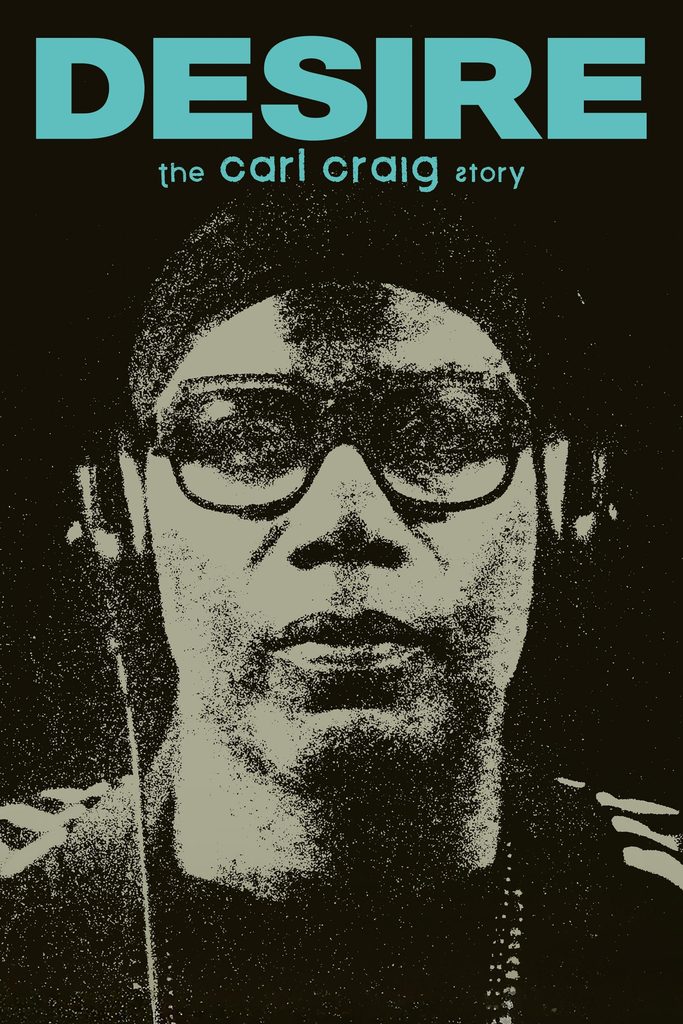
Desire: The Carl Craig Story explores the artist’s pursuit for a life filled with sonic ecstasy. Carl Craig is the visionary behind projects like Planet E Communications and the party series Detroit Love. As one of the biggest techno producers in the world, he’s responsible for taking the local sounds of Detroit and making the genre into another form of language. Craig’s panging appetite for music came from his upbringing in Detroit—be it from records gifted from his mother, his grandmother’s backyard Church, or listening to Black Sabbath with his brother. Craig proclaims his desire simply came from this urge to improvise or make things beautiful from the seemingly ordinary. The city’s industrial history and a childhood full of sounds invigorated him to create these sonic and transcendent songs. Craig’s desire was informed by the potential for masterpieces, honing in on repetition and what most people would consider noise.
When writing Jazz, Morrison said she thought about the combination of “artifice and improvisation-where you practice and plan in order to invent.”1 Craig heard rhythm and magic in machinery, where others heard ruckus. He then practiced and invented an entirely new sound.
I’m enchanted by Craig and how easily his reputation as maestro translates into his tracks. Throughout the film, the viewer gets glimpses into his process, whether it’s sitting in the studio processing memories aloud or conducting the bodies of festival crowds; it’s such a translatable process from the mind into the physical reality. I felt similarities between Sun Ra’s process, where he speaks to and from the universe each morning, giving an offering in return for the universe’s blessings.
Overall, the film showcases the vibrancy of the Midwest. The regional richness broadcasting on public radio was so decadent that people would travel state to state and city to city in order to hear the differences in soundscapes. During a Q&A following the film, Stacey Pullen, collaborator and techno DJ, discussed the life and times of creation in this region and beyond playing shows in London, Chicago, Detroit, and LA. Carl Craig and Stacey Pullen reflect together like old friends do, which is clear through how the artists look back and forth. In this moment, I see so clearly how being filled with desire can be magnetizing. Someone evocative enough to make a computer cry like snake charmers, or magicians bending audiences to their own volition.
When the Q&A finishes, the floor opens, and DJs take control. Forming the shape of the evening, casting dreams and drumbeats into the dark air. Where one moves—hips, blips, or in spaceships—sound fills in their absence. Or perhaps it absorbs? The track, Desire, by which the film was named, is frankly alive. Piano keys twinkle into the ether—sharp and delicate percussion begins as a bassline steadily grooves below an organ. Swelling . . . my ears are suspended and my feet untamed. I’m captivated by suspension. There’s a drama to Craig’s construction of a track that reminded me of jazz. More specifically, I thought about fellow Midwestern missionary Morrison’s evocation of the genre as a discipline in discernment—and knowing what’s possible when willing yourself towards your own desires. In one of the final paragraphs of Morrison’s Jazz, the lamenting statement, “Look at where your hands are. Now.” is commanded by the reader, a reminder of our own power in a sense.
My Midwestern pride comes from a place of inner tension. There’s a desire within me to honor the land that caught my ancestors in a period of deep social anguish and anxiety, but in this, I’ve found bravery and trust in the Midwest. From subtle yearning in my beloved Ohio home place, to whimsical wandering and wanting here in Chicago—there’s a landscape of desire in this region that seemingly finds resolve in dispersing between bodies, sounds, and genres. Throughout the films, I felt this underlying undulation between the Midwest and its potential. I think of desire as the space between one potential, tension, then resolution. As I depart from Outset, the night sky sews the stars and skyscrapers back together. The cold air caresses me, and I carry on through the dark. This lengthy day is leaving me, but I feel full. Satiated from all that I’ve seen.
***
Footnotes
- Elissa Schappell and Claudia Brodsky Lacour, “Toni Morrison, The Art of Fiction No. 134,” The Paris Review, 1993, https://www.theparisreview.org/interviews/1888/the-art-of-fiction-no-134-toni-morrison. ↩︎

About the author and illustrator: Bri Robinson is a mixed media artist, analog collagist, sculpture artist, and historian who weaves intricate narratives of love, loss, and identity across the expansive Midwest. Through their unique process of cutting, pasting, and layering, Bri deepens the meaning of these found objects, transforming them into evocative works of art. Bri’s practice is deeply rooted in the exploration of identity, relationships, and the constant evolution of self. By merging archival materials with elements of popular culture, they create thought-provoking narratives that invite viewers to engage with the complexities of the queer experience. Through their work, Bri honors the past while also pushing the boundaries of contemporary art history, crafting pieces that are as introspective as they are expansive. Check out their work on instagram @niq.uor.