Tuning Away from Mechanized Listening features Midwest’s music ecosystems—listening cultures where thoughtful curation, collective engagement, and storytelling still shape what and how we hear. This series is meant to be a reminder: listening can be more than a passive, forgetful experience. You can read all of the articles in this series here.
Cultural preservation is often imagined as work done in archives or at institutions. But cultural preservation can also happen as a lively event when people gather with the intention of teaching, making, and listening around traditions. Thinking with Pauline Oliveros’s understanding of listening as active engagement—rather than passive hearing—my conversation with Chicago-based organizer Yasmin “Yasi” Zacaria Mikhaiel at BIYA BIYA explores cultural preservation as a practice sustained and cultivated by reciprocity.
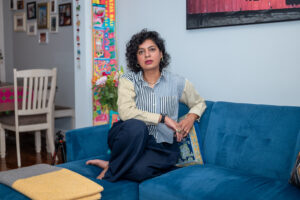
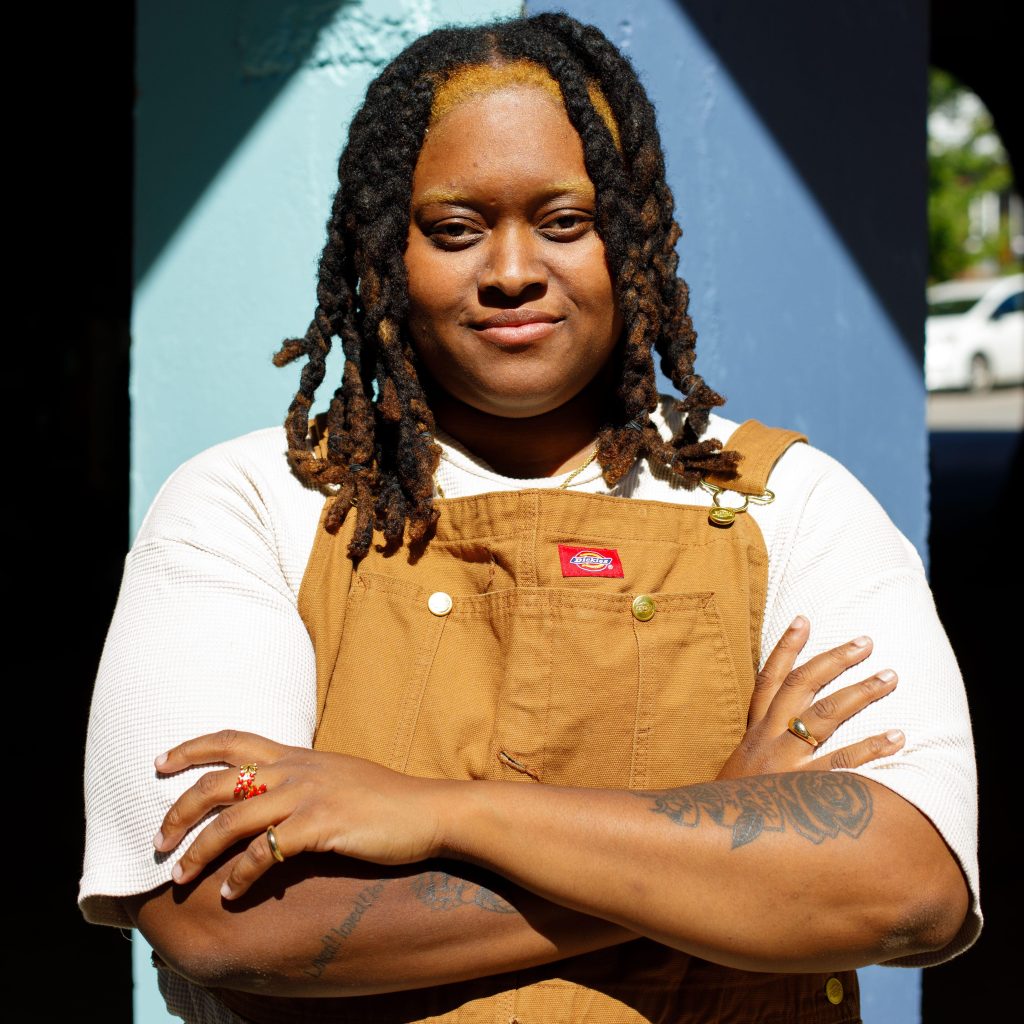
The interview with Yasmin Zacaria Mikhaiel, Founder & Creative Executive Producer of BIYA BIYA بیا بیا, a Chicago-based Creative Agency and Production House, was recorded over Zoom, then edited and transcribed.
Livy Snyder (LS): Let’s start with the name BIYA BIYA. Where does it come from, and what significance does it hold for you in the work that you’re building?
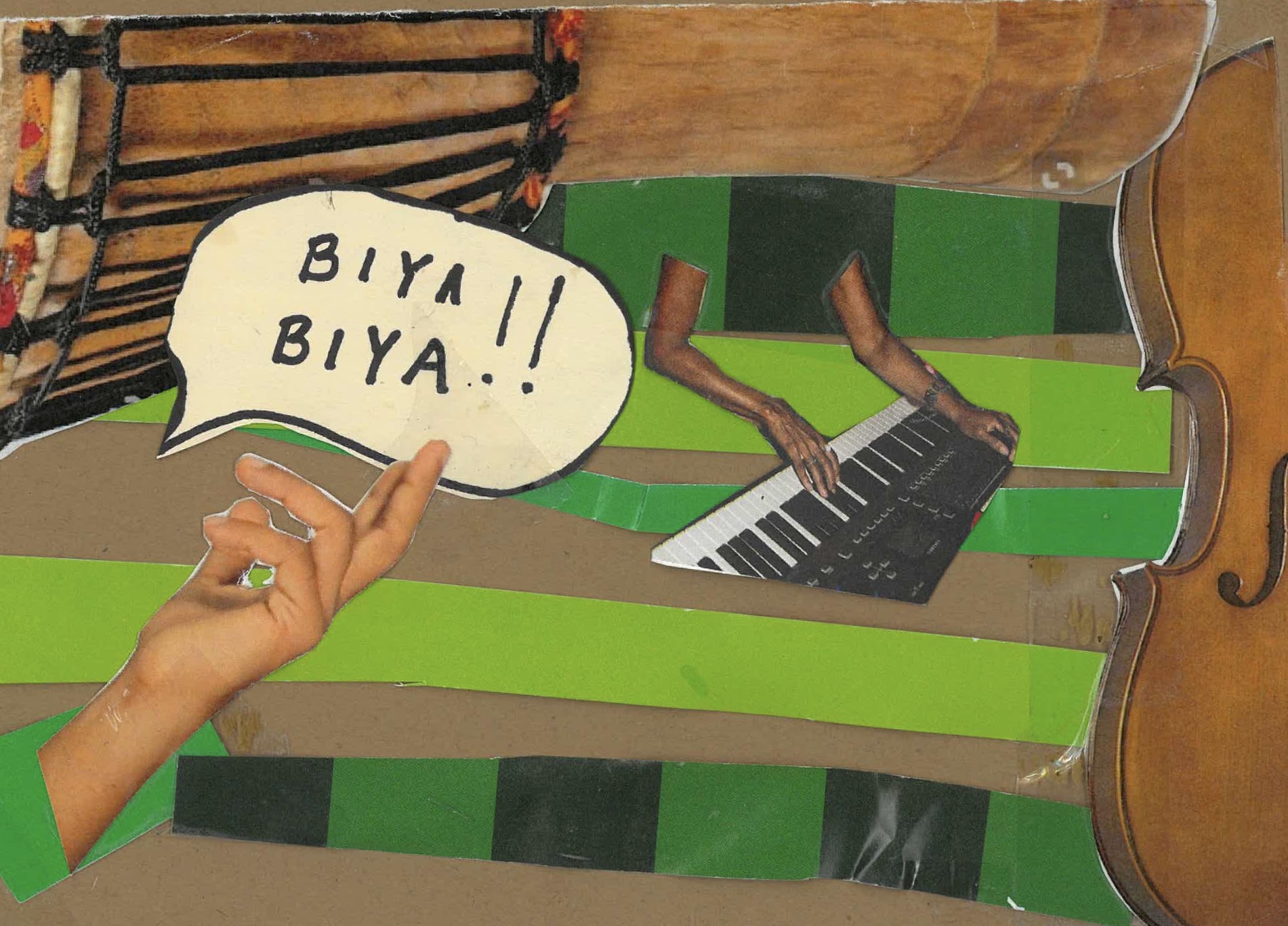
Yasmin Zacaria Mikhaiel (YZM): “Biya biya” in Farsi means “come, come” and Iranian people are so generous that there’s a cultural etiquette, almost-joke, called taarof. It’s this practice where we offer someone something with the expectation they decline until we offer it at least three times. If they say no three times, then for real, you can back off. I founded BIYA BIYA with a similar playful and abundant spirit of giving.
Growing up, I always heard “biya bakhor” which means come eat. Whenever I was in trouble, my mom would always call, “Yasamin khanam, biya!” giving me the equivalent of the honorific Ms. This word biya has held so many different kinds of connotations growing up, and most of it is rooted in play, in gathering. It was natural for me to organize BIYA BIYA’s programs along these of lines of “come learn, come eat, come dance, come play, come make.”
Gathering and cultural preservation have always been the heart of all my work as an artist, administrator, and producer, but I sometimes struggled to express how they were connected. To finally have a space that brings it all together is really moving.
LS: Many of your programs invite people to experience sound in participatory ways, like maqam classes that share the fundamentals of maqam theory, including scale structures, ajnas, modulation, and taqsim. What does it mean for you to create spaces where people aren’t just sitting in chairs, hearing music, or taking in a lecture, and instead actively listening with each other?
YZM: I always see listening as a practice of exchange and really sitting with what has been offered to you and being able to offer something back, at its heart. So, listening is a reciprocal process when it comes to BIYA BIYA.
I’m really interested in the art of diasporic communities, those who have immigrated from places away from homelands. Many times, a lot of people leave their homelands under duress. It’s a huge undertaking and not one that is made lightly, and sometimes not one that is made with a lot of consent. So, being able to find ourselves in a space that intentionally celebrates and preserves culture through interactive learning or participation is really exciting and important to me.
I’ve been developing a program called Diaspora Duos, which invites cultural exchange across diaspora communities. Our first iteration was rooted in dance, bringing together dabke Arabic dance and Kathak South Asian dance, and trying to find the similarities and then the uniqueness across them. What is really incredible about these dances and what they have in common is attention to beat cycles, precise footwork, and rhythm. So being able to invite an audience in to clap rhythms, to count the beats together is a really cool way to see how music is more than just what you’re hearing passively. It’s like an active engagement with how music is put together.
The second iteration of Diaspora Duos was a live music version of it, where we curated an Irish bassist and a Mexican vocalist, and then a West African drummer and a Carnatic singer. So across four different cultures across the world, we’re inviting people to see what collaboration can look like across different communities.
I didn’t explicitly ask our artists to talk about what their collaboration looked like or to include audience participation during the music concert, but it happened organically. I think this speaks to artists’ onstage desire to really interact with their audiences and have a shared understanding of where their music has come from, and that anyone can participate at any level in the arts.
I’ve loved curating experiences in low-shame environments, low-stakes environments where people can experience cultures that are not their own, but also for those who have been distanced from cultural roots to embrace the curiosity to reconnect. I love that.
LS: One of your recent events, Eldest Daughters 4 Eldest Daughters Music Night at Dorothy [lesbian Speakeasy in Chicago], really stood out to me in its curation. Tell me about that event and what ideas or values guided the way you brought artists and community together for that night?
YZM: As a queer Iranian, it’s been tough to find a community space that embraces both of my identities, and I’ve been curious about producing shows [at Queer] bars for a very long time, since I’m pretty sober. It was an experiment in figuring out how we could pair music and conversation connected to the experiences that eldest daughters hold, even if sometimes stereotypically.
[As eldest daughters] we are the biggest givers, planners of our family, translators for our parents, doing everything that we need to take care of everyone else. Sometimes that self-sacrificialness is a heavy burden, one with the weight of always having to have our shit together. We know how to care for people in the ways they need care, or maybe the ways we wish we were cared for. The event came out of a desire for myself to meet other people who move in community in these ways.
It honestly started as a joke amongst friends, sitting on a couch at a birthday party, and a friend asked me, “Yasi, would you date yourself?” And I was like, “hell yeah” and laughed. Only because I am curious [about] finding others who are as planning forward, fierce cooking, community caregivers. I have a desire for my energy to be matched.
For better or worse, I would love to experience it and so, when thinking about how to bring that community together, I was really curious of how BIYA BIYA could break the ice in that kind of environment. Because I know eldest daughters, we can be a little intense sometimes and have very big ideas about what we want and what we deserve.
Music felt like an equalizer, decompression, but I was also interested in movement. I have an affinity towards live instrumental music since I play saxophone and cello. There’s another kind of Sapphic stereotype of cello being one of the most lesbian instruments, which I very much enjoy. I reached out to some of my cello friends for this Eldest Daughters program.
Based on availability, a really dear collaborator and cello partner to me, Dr. Aliah Ajamoughli, proposed pulling together a band based on collaborators she had worked with prior. Vita, the cajon singer and guitar player and Noori, who also goes by Radia Ali, formed the band Lady RAV. This was their formal debut. The curation was an experiment in trusting my long-term collaborators to bring in folks that they had worked with and hadn’t been able to find a stage together before.
That’s an experience that I really cherish in BIYA BIYA, that I am the first to produce emerging artists who have been overlooked or can provide new opportunities to long-time veteran musicians that haven’t been able to get booked. This line-up also included drea the vibe dealer, who has been working in music for over 20 years, and is a collaborator to Aliah and had been in the indie musician world with Vita.
Opportunities are very tough to find. I really love making this space for folks that haven’t felt like they have the resources to do what they want to, which is to commit to live performance as a regular part of their artistry.
There is a lot of trust between the musicians and me. They build their set, create the vibe with intentionality as they want to, and I just facilitate the space and resources for them to do their best work.
LS: I’m not the eldest daughter in my family, but I’m second within twelve months, and I am a Virgo, so I definitely relate.
YZM: It was a really beautiful collaboration that centered eldest daughters, but in marketing I kind of joked that eldest daughter allies were welcome as long as they respect and honor the labor that is done by eldest daughters in their family or community.
LS: Yes! I love that. I am an eldest daughter ally! (haha) Okay, so shifting gears a little bit, you kind of touched on this when you mentioned working on programming, but your programs often include learning components. Why is education such an important part of BIYA BIYA’s approach to cultural preservation? When people think of cultural preservation, what often comes to mind is the notion of an artistic practice being replicated with precision so as not to alter tradition. Your approach feels much different.
YZM: I see cultural production work as also a part of cultural preservation and so we’re committing to the futurity of ourselves and our cultural crafts. If we don’t teach each other these beautiful cultural arts they will be lost. I see this as an extension of my archiving and community documentation work.
I also have a background in museums [so I’m] really thinking about if we don’t document ourselves, if we don’t learn these crafts, they will fall into the margins or the abyss. A lot of [BIYA BIYA’s] programming is rooted in learning or experiencing something new.
Our workshops are usually rooted in cultural crafts like Palestinian tatreez, Persian calligraphy, mending parties, maqam workshops, block printing, zine workshops, and more. Each workshop inevitably leads to participants sharing family stories or anecdotes of growing up with these arts. It reinstills the importance of sharing these crafts and creating something tangible together.
A lot of our [concerts] are rooted in the Southwest Asian diaspora, with music spanning the folkloric to the 70s and 80s or with a contemporary twist. Our resident ensemble TAYF is explicitly queering music as a band centering non-binary and women performers in a male-dominated tradition.
LS: I’m curious about your background as a musician. Can you share a bit about your practice and how that experience influenced or shaped the vision and values behind BIYA BIYA?
YZM: Yes, I have been playing saxophone since I was ten years old. My mom was always really encouraging of me and my sister to be in the arts because she didn’t get to have the opportunity. She even worked part-time in a music shop in order to afford our lessons and instruments. By high school, I was in band and orchestra—randomly picking up cello after getting inspired by the movie School of Rock. As a kid, that was very much in my head, I fell in love with music and having an embodied practice that allowed me to be in a different brain space.
I’m a decent musician, but I’ve always been way more drawn to stage and production management, so I’m not too surprised I ended up being a producer. I played saxophone and cello through high school and college, but dropped them for a few years as I focused on my journalism and theatre/dramaturgy career. I’ve always felt so rooted in multidisciplinary arts and desired to find ways to bring all the pieces of what I like to do together.
About four years ago, I stumbled across the Middle East Music Ensemble at the University of Chicago on Instagram, a community orchestra now boasting eighty-plus members. I joined as soon as I could. It was really lovely to meet more people with SWANA backgrounds interested in reconnection to our cultural roots.
BIYA BIYA emerged organically as I witnessed the struggle of my friends who were trying to be working artists, drowning in the admin, the producing, and the marketing of their work. As an accidental communications girlie working across the arts and journalism, I saw an opportunity to start a company that could help sustain us. Being able to offer those skills and services to artists and their organizations has really been beautiful and rewarding.
LS: For my last question, I just always like to have an open space where you can share something that you’ve been reflecting on a lot with BIYA BIYA, or your practice, or anywhere you want to go in the discussion that we haven’t covered yet.
YZM: I think it can be really scary to make our own opportunities, especially when we’re moving without funding, without sponsorships, without clear mentorship. It can be really experimental to just decide I’m going to produce events for a community and see what happens, because a lot of it can feel like a gamble, especially a financial one. I’ve been really lucky that I’m at the point where I can gamble a little bit with the money I’ve been able to make side-questing as a journalist, professor, producer, dramaturg, etc. Now I feel lucky to finally have a clarified vision and more focus in building an artistic home with the purpose of cultural preservation and artist management.
There’s not a lack of talent at all in Chicago. Investing in our friends and each other is what’s going to make the roughness of our world and economy survivable. I deeply care about the wellness of the freelance artistic economy that is undergirding all arts workers who want to live off their art. I want our communities to give us the same energy and investment that they give to their most beloved celebrities. I want us all to question what it would mean to give each other that attention, that time, that repost, that interview to really highlight work that is happening shoulder to shoulder, on the ground, in order to sustain our artistic ecosystem.
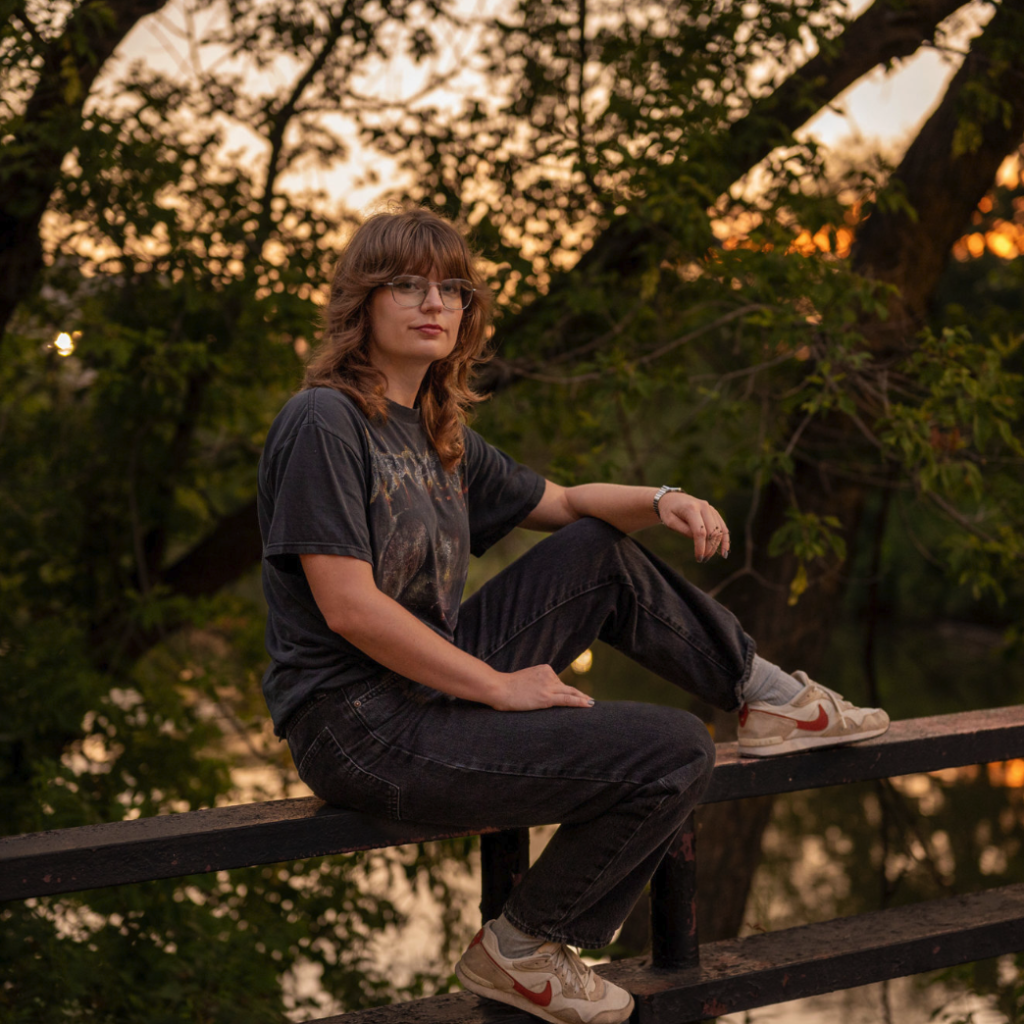
About the author: Livy Onalee Snyder’s writing has appeared in the journal of Metal Music Studies, DARIA, Newcity, Ruckus, TiltWest, and more. She graduated with her Masters from the University of Chicago in 2021. Currently, she holds a position at punctum books and serves on the board of the International Society for Metal Music Studies. Listen to her live on WHPK 88.5 FM Chicago. And read more of Livy’s writing for Sixty here.
About the illustrator: Bri Robinson is a mixed media artist, analog collagist, sculpture artist, and historian who weaves intricate narratives of love, loss, and identity across the expansive Midwest. Through their unique process of cutting, pasting, and layering, Bri deepens the meaning of these found objects, transforming them into evocative works of art. Bri’s practice is deeply rooted in the exploration of identity, relationships, and the constant evolution of self. By merging archival materials with elements of popular culture, they create thought-provoking narratives that invite viewers to engage with the complexities of the queer experience. Through their work, Bri honors the past while also pushing the boundaries of contemporary art history, crafting pieces that are as introspective as they are expansive. Check out their work on instagram @niq.uor.