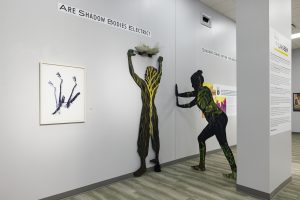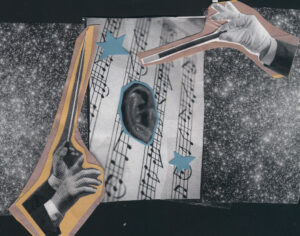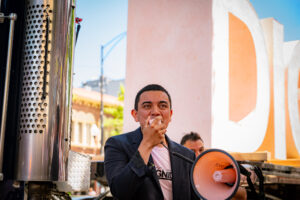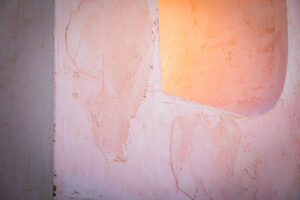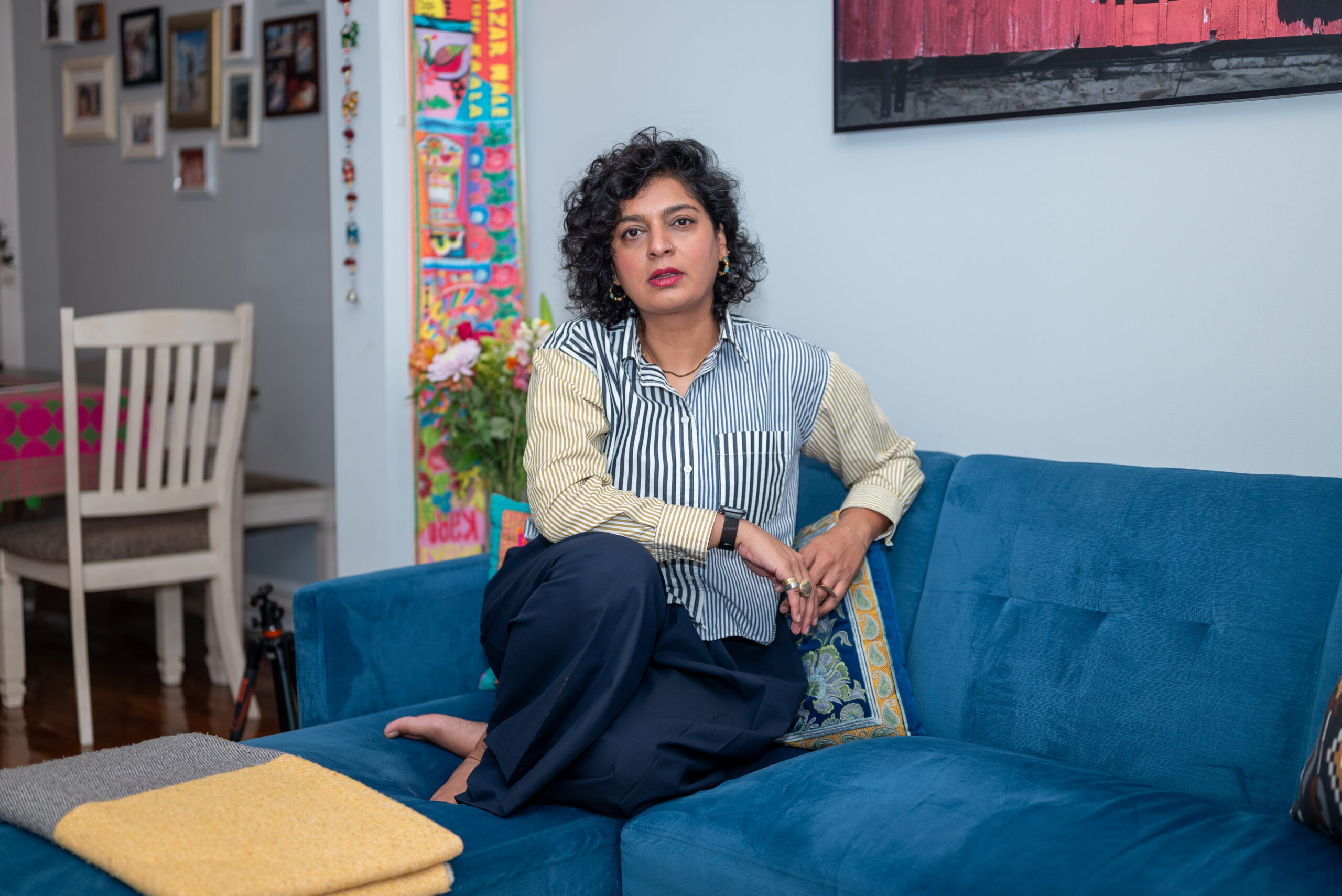
Walking into Glass Curtain Gallery’s جہدِ مسلسل (Juhd-e-Musalsal), The Distance We Carry, viewers are immersed in a deep, interwoven narrative on the lived experience of seclusion, alienation, meditation, and ultimately, resilience that pulses within Chicago’s Muslim American communities. جہدِ مسلسل, a solo show by Chicago-based photographer and teaching artist Mehreen “Lali” Khalid, delves into the complications of the American immigration system, single motherhood, diasporic solitude, and colonial oppression. Through poignant portraits, videos, and installations on the gallery walls, Khalid examines the isolation, solidarity, and beauty that come within the intricacies of quotidian life where one is always “other.”
After moving to the city in 2022 out of blind faith to be closer to her son, Azan, Khalid quickly acquired a teaching position at the School of the Art Institute of Chicago. جہدِ مسلس is part of Khalid’s Diane Dammeyer Fellowship with the Museum of Contemporary Photography, which opened on June 25. The exhibition runs until October 3, 2026. I sat with Khalid as she was preparing for a community dinner to discuss the show, her artistic practice, and the significance of her work in the current political and social climate. The conversation below has been edited for clarity.
Saadia Yasmin Pervaiz (SYP): I first want to talk about your exhibition at Glass Curtain, جہدِ مسلسل (Juhd-e-Musalsal), The Distance We Carry. I know this is a subject you’ve been contemplating for a long time. How did this specific body of work come to be?
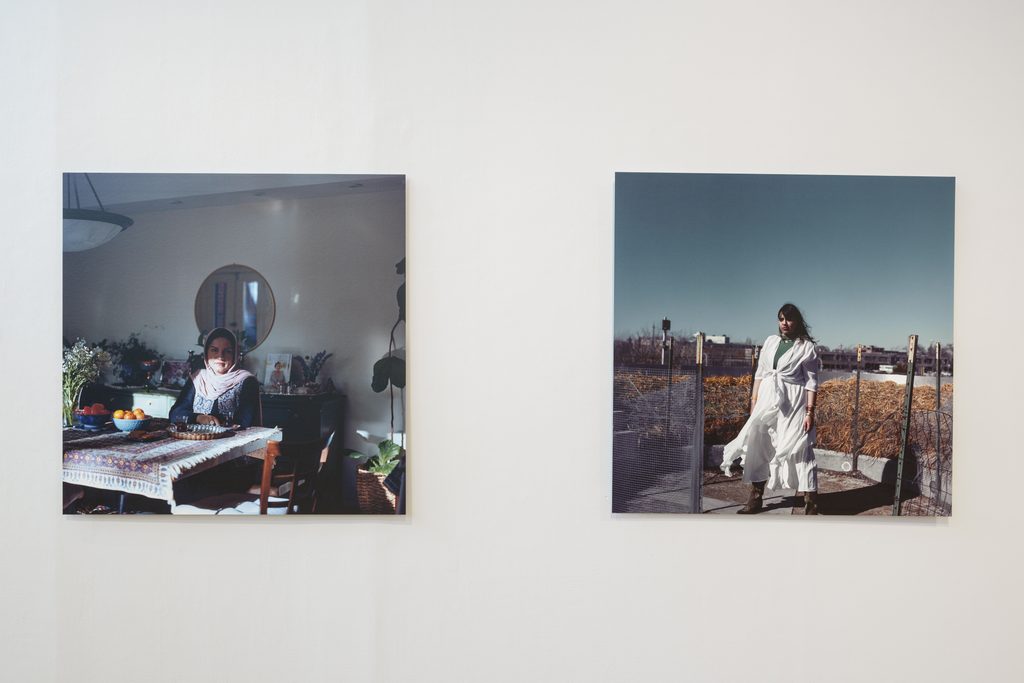
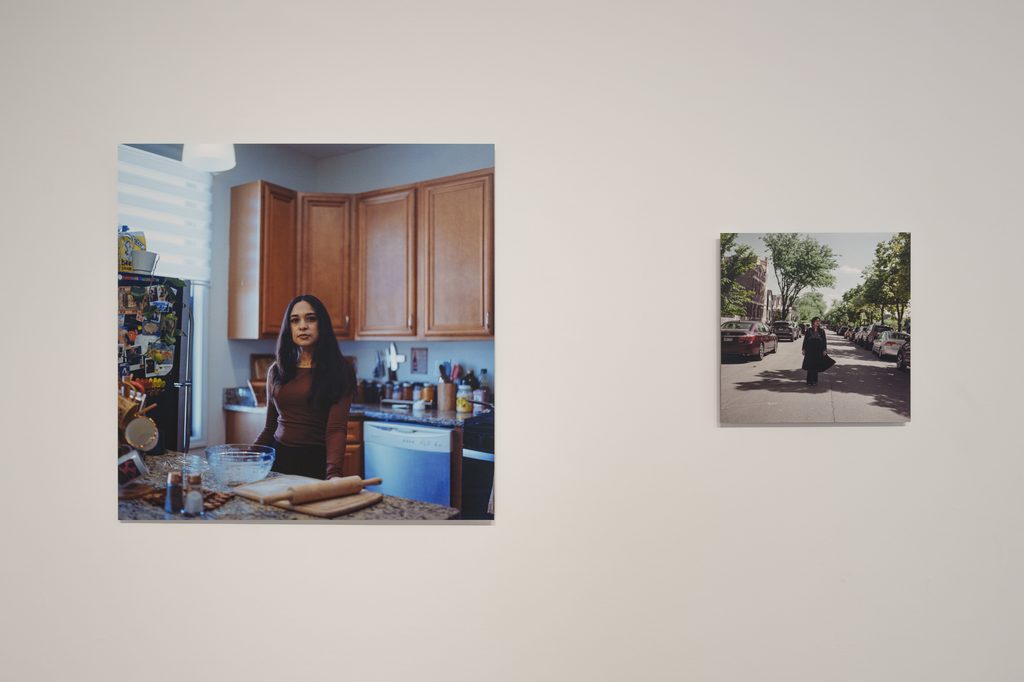
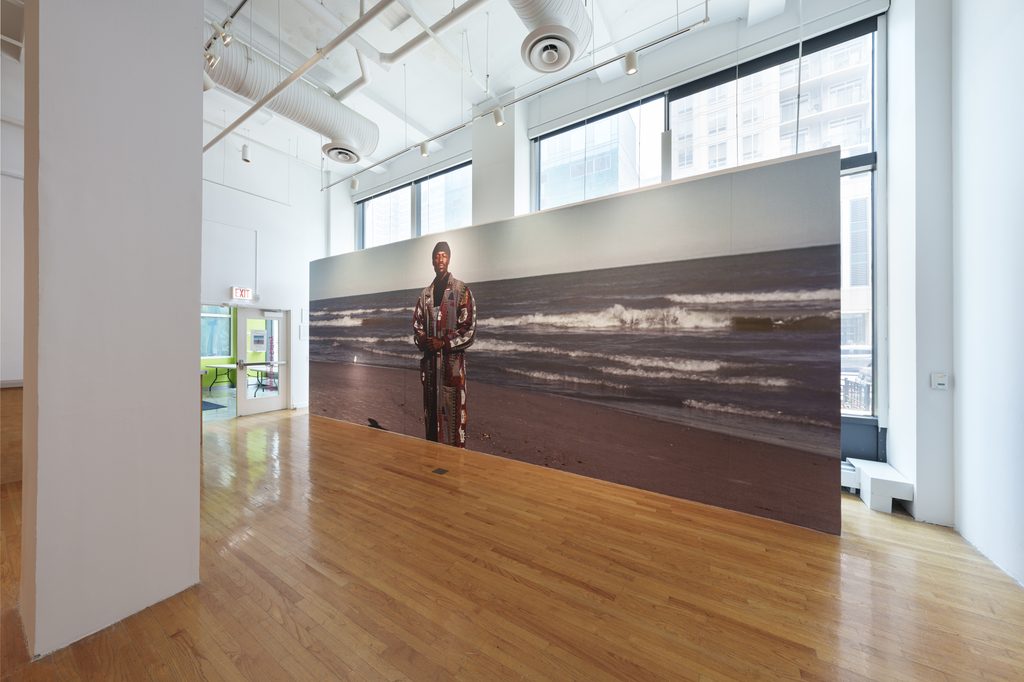
Mehreen “Lali” Khalid (LK): Thank you so much for taking the time to talk to me. This has been a topic that has interested me since I moved to the US: Muslim immigrant experiences in the United States. In 2025, I applied for the Diane Dammeyer Fellowship through the Museum of Contemporary Photography, which culminated in an exhibition. The core series in the exhibition is The First Light, The Skylarks Sing, which is centered on portraits of local immigrant or refugee Muslims. In creating these solitary images, the photographs confront the stereotypes and prejudices that exist in this country. I have been embedded in these communities as a brown Muslim woman in the Pakistani diaspora—I’ve experienced the discrimination firsthand, whether through my ongoing custody battle for my son in the legal system or through the government system, like customs when I’m returning from abroad, for example.
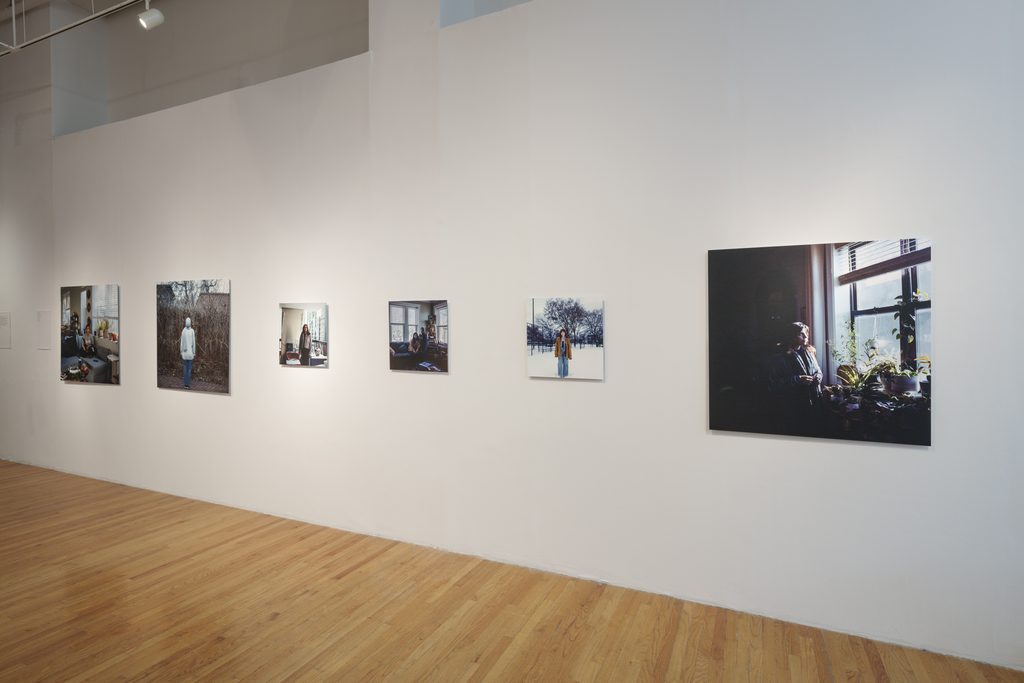
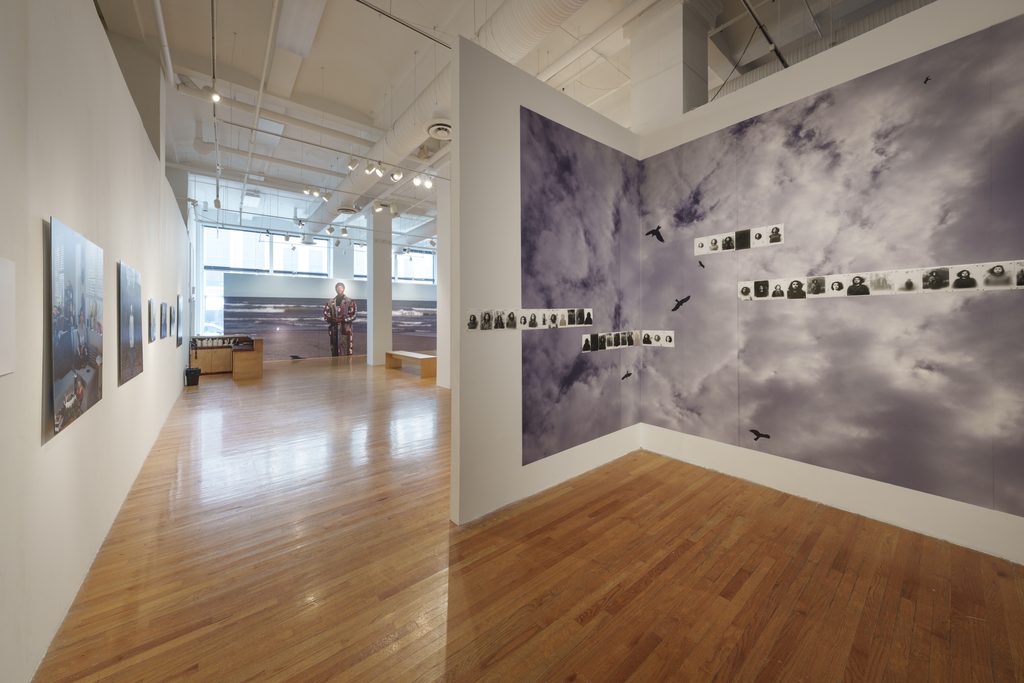
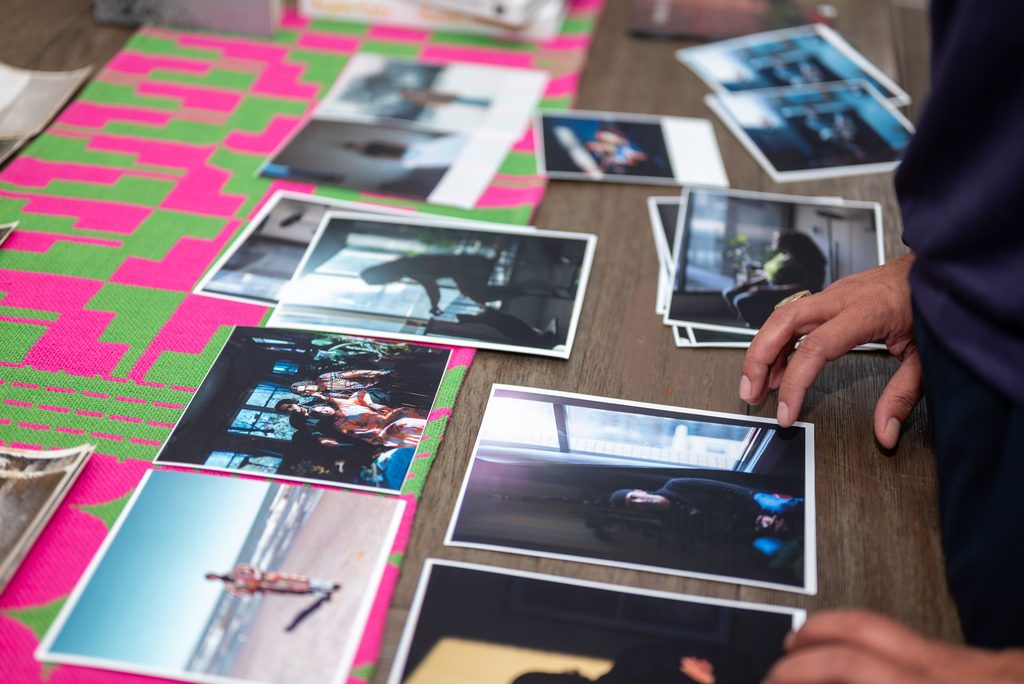
The exhibition also has my first short film, سحر (Sahar), a new series I made during another fellowship in the spring of 2026, ضد (Zid), and my second monograph, گوشۂ جگر کے نام کچھ خط (Gosha-e-Jigar Ke Naam, Kuch Khat), Letters to Azan. All these components of the show come together to reaffirm not giving up and pushing against the popular and incorrect narrative surrounding someone like me, who is brown or Muslim or an immigrant. In doing so, it also rewrites the archive and challenges the art historical canon of Muslims under the Western gaze.
If I look at pictures of an individual who looks like me from the past, especially in textbooks, there’s never any agency or power given. There’s never collaboration between the sitter and the photographer. My methodology involves constantly collaborating with people that I am photographing. I give them the camera, I leave the room if I’m recording a video, I ask them where they want to be, I encourage them to pick the location, what they want to wear, and what they want to talk about. Through this dialogue, I try to take back the agency that was taken away from us at the invention of photography.
SYP: One of the most arresting parts of The First Light, The Skylarks Sing is the variety of the compositions. Every portrait is significantly different from the next. There are compositions where the subject is at complete peace, placed next to ones full of piercing stares of defiance.
LK: That’s the methodology at work, I think. One person would ask me to photograph them by the lake, because that’s where they would go to meditate and read Malcom X—and I met them there. Another asked me to photograph them at home, because that’s where they felt comfortable, and I would meet them there, too. The participants are collaborators.
SYP: I’m curious to know why you chose Muslim Americans and Chicago for this project.
LK: When I moved to America, there were so many prejudiced and biased questions asked of me constantly. I know many of my friends, peers, and even people that I don’t even know have experienced it. People asked me why I speak English so well, or how I safely played outside in Pakistan growing up. Just yesterday, my ex-husband’s lawyer asked me during a hearing why I would let my 13-year-old son hang out with just his friends in Pakistan. She said, “I would be scared to have him away from me.” I called her out for it—I said: “You think Pakistan is just a backward place where people just wear hijabs and burkas.” And that reminded me of why I have the desire to make this body of work.
We are so complex and complicated—there are so many individualities and identities that exist. But the American media continues to portray us through a myopic lens. More than 77% of Muslim characters in films are men, and even when women do appear in these films, they are reduced to roles of mothers or daughters or lovers or sisters. It flattens us. That’s why I picked Muslim Americans. I’m tired of defining myself and my friends and constantly justifying our existence.
I don’t think this is a project limited to Chicago, by the way. My desire is to expand and tell more stories.
SYP: Why now?
LK: Oh, I’ll tell you. The current political climate and the government right now bother me more than anything else. There is so much hate towards minority communities, including mine. There is so much angst against those deemed “the other.” I feel that because of this hatred and the wars in the world, there’s a dire need to record Muslims as we are. As people. As mothers, fathers, students, lovers. We are trying to survive.
As an immigrant, in the diaspora, you lose a sense of being grounded due to survival. You are an outsider in your new home, and your new home changes you to feel lost in the motherland as well. But we are just trying to live.
SYP: I noticed a lot of your work is bilingual. The name of your exhibition in English is The Distance That We Carry, but that’s secondary to جہدِ مسلسل (Juhd-e-Musalsal), which leads the billing on the title wall and digital collateral. Your film is named سحر (Sahar), and your backlit emulsion series is named ضد (Zid), which are cases you don’t even translate into English. Unless someone who speaks Urdu sees those titles, they wouldn’t understand the significance. What was the motivation for that?
LK: There’s been a standard of “everything needs to be legible for the audience.” I don’t want to do that. If people want to squint harder, hear more, or feel something, then the responsibility is on them.
I grew up with a lot of Urdu music and poetry, and I love my language. In the house, we were always told to speak Urdu, despite me thinking English was cooler. It wasn’t until I moved to the United States when I realized, “Oh my God, I don’t get to speak my language every day.” There was something missing. My kid was born; I made sure to speak to him only in Urdu, and now he’s fluent. For these bodies of work, it’s very important to have things that are significant to me from fleeting, day-to-day experiences. Language is one of those things. I grew up bilingual, and when I moved here, people were surprised I spoke English so well. Conversely, they made no effort to learn anything about my language.
The title of my film سحر (Sahar) means “the light before dawn,” in the best attempt of English translation. ضد (Zid) is something I cannot express in English, either. It has to be the Urdu word.
SYP: That’s so interesting, because I’ve noticed that when we are hanging out, or going to meetings, or just networking, there are times when you and I will default to an Urdu word because we do not have an English equivalent.
LK: Sometimes you just can’t translate. And so much gets lost in translation. My monograph گوشۂ جگر کے نام کچھ خط (Gosha-e-Jigar Ke Naam, Kuch Khat) has a similar story. My mentor, Charles Guice, said I didn’t even need the translations. I actually hesitated and suggested maybe they’re necessary, and he told me, as a compromise, to not place them directly next to the Urdu script. People should just view the image, language, and the Nastaliq first and then get to the meaning later.
SYP: This touches upon the canon correction and access we discussed a bit earlier, and access to Muslims under the Western gaze. You don’t just have studio practice. You are a major social practitioner in the city. You just helped launch Chicago Foto League, you gave workshops at ChaiTown Addas, you documented immigrants at activations by Spaceshift Collective, and you co-founded a gallery initiative with me named Roshini Collective. How does that social practice tie into canon correction?
LK: My studio practice and my social practice go hand-in-hand. I find my sitters and students by first building a connection and folding into communities.
The biggest thing that bothered me as a graduate photography student was the lack of agency in the Western canon. I want to give people tools for making ethically sound photographs. Consent is infinitely important. Imagine a white, male photographer going to Pakistan and taking photographs with the sole purpose of exhibiting those photos in the United States. My question is: how were these photos taken, and how does this publicity affect the communities in Pakistan? There’s a major problem of privileged photographers taking photos in a colonial lens, without any funds helping the actual sitters out of their situations.
I want students to ask for consent. I want them to consider whether, as someone from outside the social spheres of the subject, they have the ethical position to photograph them. I personally don’t. If you are going to do it, you have to spend time with the people before you even pick up the camera. Fazal Sheikh, for example, establishes himself in the communities before he even takes a photo. He gets social permission to capture them beforehand. And that’s something I want my students and the photography community to deeply and seriously consider.
SYP: We’re coming upon the end of our conversation. I have one last question. What’s next for you?
LK: I’m excited about an upcoming show in Philadelphia at Twelve Gates Arts run by Pakistani gallerists Aisha Zia Khan and Atif F. Shaikh. In the show, I’ll be co-exhibiting with Carrie Mae Weems and Sama Alshaibi. I have a lot more in the pipeline, but you’ll just have to wait and find out more.
The Distance We Carry was on view at Glass Curtain Gallery from June 25 – October 3, 2026.
About the author: Saadia Pervaiz is a visual artist and writer based in Chicago, IL. Her writing focuses on South Asian art and history, including diasporic South Asian art movements, nationalism, the South Asian female form, and gender.
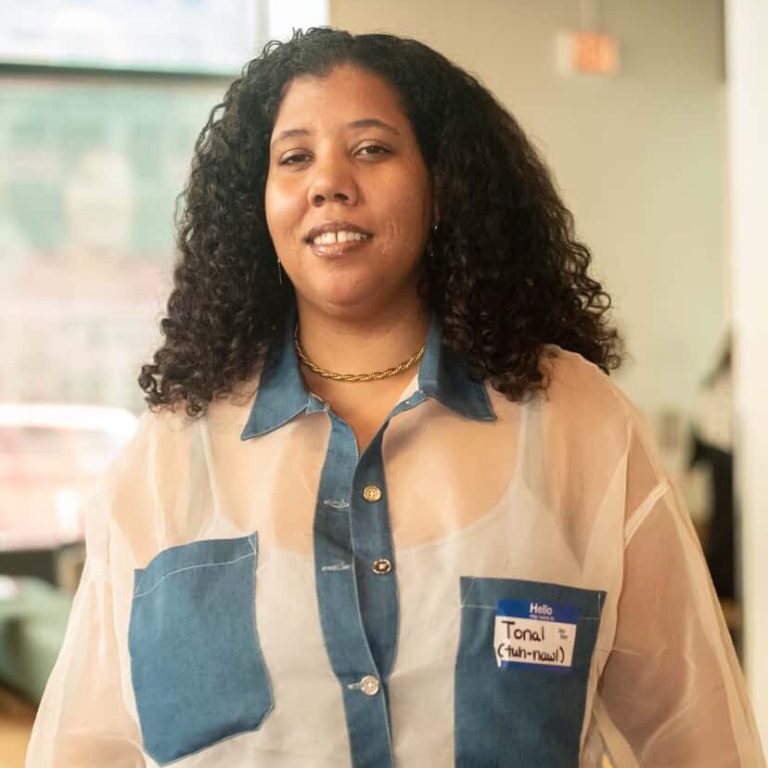
About the photographer: Tonal Mondae (they/them) is a documentary photographer and writer based in Chicago, IL. Their work creates visual narratives that celebrate personhood and seek to explore the relationship between belonging and environment. The use of collaborative portraiture is an act of resistance that promotes the right to self-authorship for Black, Brown, and queer people.