Much like in politics, the actions of institutions responsible for shepherding and interfacing with the art world are often shrouded in a veil of PR speak. It can be difficult to ascertain how much of an institution’s mission statement is present in their day-to-day operations without a long, nuanced look at how their actions reinforce their words. Disconnects between institutional words and actions stem from many different causes. A particularly forgivable way this happens is when institutions are motivated by intentionally naïve idealism, aiming to get as close as possible to goals that are hopelessly optimistic or financially unfeasible. A particularly insidious way this happens is when institutions use the language of social optimism, community building, and care for the marginalized as a way of shielding themselves from scrutiny while actively opposing these ideals with their actions.
A friend repeats her mantra to me that she learned in therapy. You take the best-case and the worst-case scenario and the reality is that it’s probably somewhere in the middle.
As part of our responsibility to ensure long-term financial sustainability for our university, we are continuing to engage in ongoing budget planning discussions. As part of this review, we have made the difficult decision to stop operations in the DePaul Art Museum at the end of this academic year, effective June 30, 2026.
In the coming weeks, we will convene a discussion with our university community to explore how the museum building and its collections can continue to serve as assets to DePaul, elevating our academic prominence and supporting the recruitment, training and development of current and future students.
– Opening paragraphs of “Reimagining the arts at DePaul” letter from DePaul President Rob Manuel to the DePaul community, February 26, 20261
The announcement that DePaul University decided to close its art museum came as a surprise to many, but this decision wasn’t made quite as quickly as it appeared from the outside looking in. According to Laura-Caroline de Lara, DPAM’s director, she had been fighting to defend the museum behind the scenes for months.
In my interview with de Lara, I learned that DePaul has recently decided to keep the museum’s collection, although details are still sparse about what this means long term. DePaul has also decided to retain a single staff member for maintaining oversight of the collection. This might seem like good news at first glance, but it is important to consider this decision against possible alternatives. Even in an extreme hypothetical situation where DePaul tries to liquidate its entire art collection as fast as possible, there would still be a need for staff to coordinate the logistics of how this could happen. Even though one staff member will be kept on to manage the university’s collection, there isn’t currently a clear plan for what this position will be. Do they hope to find someone who understands how to manage a literal museum’s worth of objects, but who also doesn’t mind the hostility of a work environment where administration abruptly terminated a four-person staff who already heavily relied on student workers?
With the decision to keep the museum’s collection and retain one staff position for maintaining it, I am increasingly confused where the big pile of money DePaul administrators expect to save in this process is. I suspect they are acutely aware that providing the public with financial details of this decision opens them up to increased scrutiny, but I also find it hard to believe the same people who decided to close an art museum without announcing plans for managing its collection have a fully accurate understanding of the financial implications of their decision.
*
What do you do with 4000 artworks?
“I am pleased to share DePaul’s plans for providing you and your students with access to our permanent art collection. The university will maintain and steward the art collection as part of our academic and research offerings. The university is committed to upholding the Association of Academic Museums and Galleries’ best standards and practices in caring for these works.”
– DePaul Provost Salma Ghanem in a letter to DePaul Faculty, April 13, 20262
I spoke with Phoebe Collins, the collection manager at DPAM, about some of the implications of DePaul Administrations’ decision to close the museum but keep the collection. She expressed frustrations with the lack of transparency surrounding the university’s long-term plans for the collection.
“I am just as baffled and confused as you are and many others are as to why [closing the museum is] the solution. The building is not going anywhere unless they are planning to move the collection to offsite storage, which, at that point, it won’t be able to be used for classes, which seems to be the reason why they’re keeping it. It doesn’t make sense.”
While Collins applauded the decision to keep the collection, our discussion left me with the impression this was the only reasonable course of action for DePaul to take. We discussed what other options could have looked like: Donating the collection to a different museum or organization would require extensive documentation for each of the 4000+ objects in DPAM’s collection, even in the best-case scenario of finding another museum willing to take on the responsibility of managing the entire collection as a whole.
“[Institutions receiving a donation] need to conduct research on the items and the donors.” explains Collins. “They make sure [the artworks] fit their collection, mission, and vision.”
Could we find institutions that would be interested in our collection? If not, would it be sent to auction? And this then gets tricky, because, if you’re sending artworks to auction, any sales made, if you’re doing it ethically, should come back to the museum and only then be used for collection purposes. This is where some universities get in trouble—they will try to sell some artwork to cover financial gaps. However, that is not ethical per the American Alliance of Museums Code of Ethics.”3
With what little information has been released to the public, it increasingly feels like DePaul administrators’ decision to close DPAM has unknowingly catapulted them into a logistical nightmare, and that the decision to keep the collection was only made after realizing the quagmire they found themselves in.
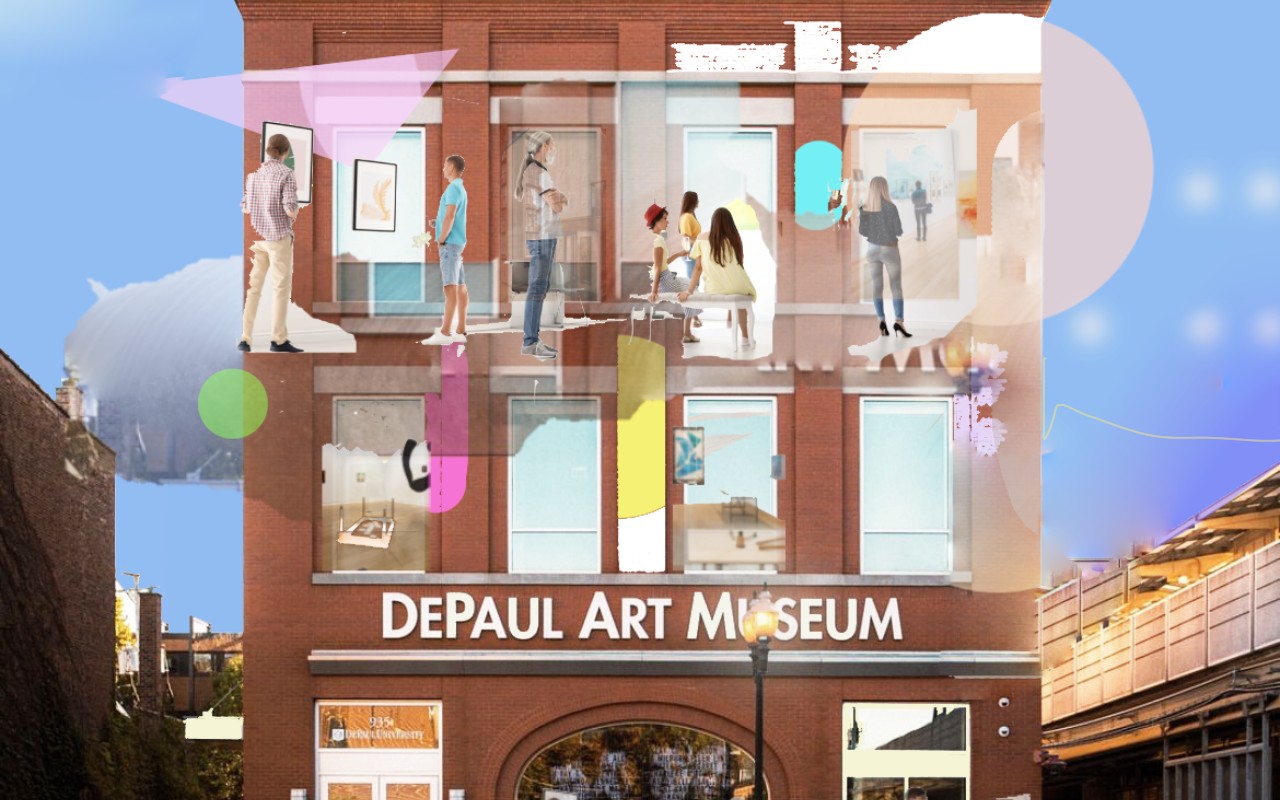
One doesn’t need to look further than the history of DePaul’s art collection4 to see the importance of responsible collections management. DePaul’s art collection was initiated by the DePaul Women’s Board, who created the “Art for DePaul Drive” in 1972 to support the university’s recently established Department of Art. In the midst of developing a long-term plan for how DePaul’s art collection would be managed, it was discovered that a Picasso etching that had been gifted to DePaul in 1970 had gone missing. This set off a long series of committee meetings where the responsibility of caring for the collection bounced around between several different departments, including the library, the “Art Acquisitions Board,” and even the Office of Advancement. In the summer of 1985, Art Professor Simone Zurawski was given a stipend to create a report of DePaul’s art collection, and her report concluded that professional expertise was needed to administer the collection properly. Following this report, several iterations of an on-campus gallery housed the collection and hosted exhibitions for nearly 20 years. In 2003, exhibits and programs began using the label “DePaul Art Museum.” In 2011 a new building was constructed specifically to house the museum right next to the Fullerton “L” stop.5
It is unclear how DePaul’s administration plans to maintain the collection after DPAM closes, but it is especially unclear how they plan to showcase it and make it available to the public. The clear and simple answer is: they won’t.* By removing the art museum, DePaul is excusing itself from this responsibility to the public. Conveniently, the transition from museum to university art collection also alleviates that pesky need for DePaul’s artworks to publicly exemplify their ideals.
*
Community Impact and the Evolution of DPAM’s Identity
In the 15 years DPAM has existed in its current location, it has solidified itself as a staple in the arts community of Chicago. Despite its fixed location, DPAM’s identity hasn’t been static. As the collection has grown with new acquisitions and new exhibitions, a more mature, focused, and nuanced identity has grown with it. DPAM has become a museum focused on supporting the arts community of Chicago and the historically marginalized communities within it. Developed by former Director and Chief Curator Julie Rodrigues Widholm and championed by former Curator Dr. Ionit Behar, the museum implemented a Latinx Initiative for “fostering Latinx representation and participation in museum exhibitions, collections, and public programs.” As a part of this initiative, exhibition statements, wall text, and programs for DPAM’s exhibitions were available in both English and Spanish. Of course, sentiments like this could easily exist as hollow talking points, and the true difficulty of implementing socially conscious initiatives lies in making sure the resulting exhibitions are impactful, intelligent, and approachable. For what it’s worth, I think exhibitions at DPAM in the past several years were some of the strongest I’ve seen anywhere, thanks in no small part to the curatorial vision of Dr. Behar, who has since moved on to become the Marilyn and Larry Fields Curator at the Museum of Contemporary Art. This endowed position at such a prestigious institution speaks volumes to Dr. Behar’s curatorial reputation and her impact on the Chicago arts community beyond DPAM. Even in ideal conditions, finding her replacement would be a difficult task.
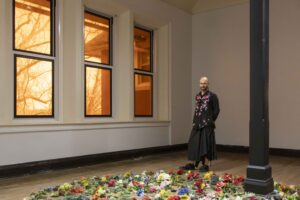
DPAM held a specific and exciting niche in the Chicago arts community and beyond. “Making it” as an artist is a difficult and abstract task, and one of the largely accepted metrics of professional accomplishment for artists is a solo show at a museum. This is an honor too often restricted to artists that have reached the upper echelons of reputability and financial acclaim. Many institutions larger than DPAM can’t afford to take a chance on up-and-coming artists when ticket sales are on the line, and most institutions smaller than DPAM don’t carry the same weight with collectors, curators, and awards panels. Because of its identity being so firmly rooted within an academic context, DPAM was often able to showcase the work of artists on the cusp of international recognition in their debut museum exhibition. In her write up for Hyperallergic on a solo show by Chicago-based artist Alice Tippet, one of DPAM’s final exhibitions, renowned art critic Lori Waxman put it bluntly:
“Rose Obsolete is Tippit’s first solo museum show, an artistic milestone that the DePaul Art Museum (DPAM) has crucially granted many fine local artists over the past decade. Those opportunities are about to be lost—along with DPAM’s presentations of some of the most politically incisive and culturally inclusive group exhibitions in the region, and its shepherding of one of the more notable collections of Chicago artworks—due to the unexpected and appalling news of its impending closure.”6
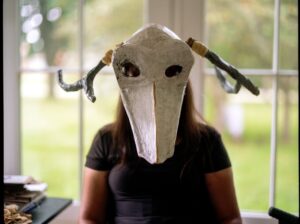
Waxman’s article links to four crucially important artists whose first museum solo show was at DPAM: Brendan Fernandes (2018), Julia Fish (2019), Selva Aparicio (2024), and Iñigo Manglano-Ovalle (2026). She also links to two shows of immense cultural importance which highlight DPAM’s ability to wrestle with and confront difficult subjects: “Art for the Future: Artists Call and Central American Solidarities,” an exhibition about the 1980s activist campaign “Artists Call Against US Intervention in Central America,” and “Remaking the Exceptional: Tea, Torture and Reparations, Chicago to Guantanamo,” an exhibition from 2022 examining the 20 year legacy of the United States’ extra-legal prison in Guantanamo Bay, Cuba. I would also add DPAM’s 2025 exhibition “Tengo Lincoln Park en mi Corazón: Young Lords in Chicago,” which explored the Young Lords Organization’s (YLO) trajectory from street gang to civil rights organization against a backdrop of gentrification and urban renewal in the Lincoln Park neighborhood. In addition to their artistic merit, these exhibitions reinforced DePaul’s mission statement, which claims the university “addresses the great questions of our day, promoting peaceful, just, and equitable solutions to social and environmental challenges.”
DPAM’s success hinged on being able to directly address injustice through their exhibitions and programs, and to use its reputation and resources to document and interrogate the ways that DePaul, Chicago, and the arts community either reinforce or combat injustice around them. Are these concerns only important in times of easy economic prosperity? Regardless of their actual intentions, it is easy to read this decision as a reflection of how the university’s administration views the policies that DPAM championed. At best, this is read as an ineffectual and misguided attempt to save money in a time of politically-induced financial difficulty, but at worst, this is PR speak to disguise a much more insidious motive.
*
Finances – The elephant in the Room
The timing of DPAM’s closure feels intricately linked to the current political moment. In a letter to the DePaul community in September 2025, the president discussed a sharp decline in international student enrollment. The fall of 2025 saw a 62% percent decline in international graduate student enrollment. He attributed this to several causes, including “challenges to the visa system” and “declining desire for international students to study in the U.S.”
In October 2025, DePaul President Robert Manuel published a letter to the DePaul community outlining a goal of meeting a 2.5% budget surplus for the 2026 fiscal year, which corresponds to about $27.4 million dollars that need to be cut from university spending:
“Our 2.5% operating margin target remains below DePaul’s long-term sustainable goal of 4.0%. This goal represents the levels of surplus needed for the university to stay financially strong – not only to pay our bills, but also to reinvest in the institution and respond to new opportunities and challenges.”7
This language is admitting the goal of 2.5% is a compromise between DePaul’s continued operational budget and the desires of its financial board, but presenting a conveniently round number also deflects attention from more granular decisions.
Manuel’s letter outlines that 2.5% equates to about $14.8 million above the break even point, making every 1% of margin equal to about a $5.92 million reduction in spending. This means cutting DPAM, with a total budget under $800 thousand, contributes only .14% margin to DePaul’s bottom line. This number is wildly optimistic, as it doesn’t factor in the amount of money that DPAM raised on its own through fundraising. In my interview with Laura Caroline de Lara, she provided me with the rough estimate that the university only contributed about $450 thousand towards DPAM’s annual operating budget, which would equate to about .08% margin. To this I would ask: Is meeting a 2.5% budget surplus so much more important than meeting a 2.42% budget surplus and keeping the art museum?
Even this number is still a best-case scenario for the university. It assumes all of the money that is being spent on the art museum immediately goes back into university coffers, and, with the uncertainty surrounding the future of DPAM’s collection, it is difficult to ascertain what money, if any, is being saved here in the long run. The museum building is potentially big enough to accommodate other uses, but wouldn’t renovating the DPAM space require capital upfront? A proposal to manage DPAM’s space with fewer resources than DPAM’s three full-time staff members and one part-time staff member seems preposterous. If DePaul wants to keep the building, the collections, and their reputation, wouldn’t keeping the museum be the most financially sound, efficient way to do this?
And then there’s the elephant in the room: The decision to close DPAM feels especially egregious considering DePaul recently received approval from the City of Chicago to build a $60 million dollar athletics practice facility, demolishing four rowhouses dating to the 1890s and a 1925 courtyard apartment building on the 2300 block of North Sheffield Avenue.8 The hypocrisy of closing an art museum with an annual operating budget under $1 million due to financial concerns while building a $60 million athletics facility strips the decision of any pretense that closing the art museum was a financial necessity, and this hypocrisy makes it abundantly clear what is and what isn’t important to DePaul’s administrators.
DePaul should be proud of its academic reputation, Vincentian identity, and cultural presence within Chicago. Closing DPAM weakens all of these things. In addition to this, graduate candidates around the world are responding to increasingly hostile rhetoric from a U.S. government dead set on crippling higher education. There is an argument to be made that standing up to this rhetoric won’t fix the problem, but if DePaul wants to be a destination for international students who still value getting a graduate degree in the United States, it shouldn’t backpedal from its already established reputation in the cultural sector.
*
Ships are safe in the harbor, but that’s not what ships are for.
Getting an expensive college degree is risky. Closing DPAM also closes one of the best opportunities for students to directly impact the world around them through internships and public programming.
In 2023, I wrote about the DPAM’s exhibition “Life Cycles” in an article for Newcity.9 The exhibition brought together over 50 contemporary and historical Chicago-affiliated artists in a brilliant display of curatorial innovation. In addition to the work of Associate Curator Ionit Behar and Collection and Exhibitions Manager David Maruzzella, “Life Cycles” was partially curated by seven DePaul University students.
In a final set of interviews I conducted for this article, I met with the current roster of student interns at DPAM to discuss the lead up to an exhibition they curated titled “For Chicago, With Chicago.”10 The news that DPAM was closing was publicly announced alongside openings for exhibitions of work by Alice Tippet and Barbara Nessim, but these exhibitions were not planned with the knowledge that they would be the museum’s final exhibitions. To address this, the interns at DPAM put together a showcase of the museum’s collection in an event space on DPAM’s second floor. They started by putting out a community call for people to submit artworks in DPAM’s collection to be included in the exhibition, providing the community with one final opportunity to see the artworks in a museum setting.
Bernardo Soares, DPAM’s Curatorial Intern, had the following to say about the exhibition:
“We really wanted to lean into a kind of poly-vocality of the curatorial approach; we’re trying to include as many people in decision making as possible.
“We’re saying ‘this belongs to you and you very much decide what is done with it, regardless of who owns it.’ And I think that’s the kind of theoretical approach we’ve taken with the curation for the show. We’re trying to emphasize the idea that museums are not necessarily ‘it,’ and that they’re more ‘us.’ There is no collection without people participating in what it means.
“And so, in an incredibly aspirational way, we’re trying to inspire other students to keep this work going and inspire them to advocate for DPAM as much as we have tried to.”
Adding to this, Seijii Robinson, DPAM’s Collections and Exhibition Prep Intern, said:
“I think the programming and all this stuff we collaborated with other people on for the exhibit speaks to this notion of creating a sense of community. I think that even with the updates that we’ve gotten about the collection, it’s still not going to be open for view in the way that a museum typically is.
“[You’re] not going to have the gallery experience, the walking around experience, the talking to people about what they’re seeing experience, unless it’s in a class that you have to sign up for. And I think that, for me, I was happy that the artwork was still going to stay here, but I still felt like it wasn’t what we wanted.
“It’s not good enough. It’s still not getting at the heart of why a museum is important. We should at least have a base in education and community. Closing [the collection] off to the public is not doing that.”
Eden Nisam, Arthur D James Fellow in Collections at DPAM, reinforced this idea, saying:
“I agree with everything that’s been said, but one other thing worth mentioning about this show is just how topical this work is. The collection specifically has a focus on supporting artists that are from underrepresented communities, specifically Latinx artists, and I feel like these works are really timely.
“We did look at the collection more broadly [when curating this show], but I think all of us also were keeping our current political reality in mind. Of course, we have also been sort of emblazoned by the fact that the institution is closing. It’s not an apolitical show.”
There is a chorus of agreements, to which Nisam adds, jokingly, “it’s kind of impossible to do anything apolitical with this collection.”
Jessica Saunders, DPAM’s Communications and Outreach Intern, adds:
“Especially now, when all of the discourse surrounding everything has become so convoluted…” she gestures at the artworks to be included in the exhibition, “…seeing that people have been engaging with these ideas and talking about the ideas is refreshing. It shows that this fight is not a new thing, that it’s been happening for a long time, and there have been moments when we’ve been able to succeed. I also view the show as a call for persistence.”
As our conversation turned towards artworks planned for the show, the students discussed how several artworks in “For Chicago, With Chicago” hadn’t been in exhibitions at DPAM yet. The exhibition was a generational hodge-podge of different ideas, and I’m still struck by how appropriate that feels. I think bubbling just under the surface of the community-focused curatorial approach that the DPAM interns used is a real statement about what art can accomplish. These interns did what artists and art students do and have always done best: Make the most of an uncertain future.
Central to the narrative that was given to Director Laura-Caroline de Lara is a reimagining of how the DPAM space could serve the community. It may be tempting to assume that student gallery space or something that more directly champions the work of artists at DePaul could serve the community better than a museum showing artists from outside of DePaul’s campus, but understanding the strategic value of DPAM requires more subtlety than this. DPAM was a real museum, not a gallery dressed up in museum clothing. The museum was a substantial presence in Chicago’s art scene, and its reputation can’t be mimicked through internal validation. DPAM’s cultural impact within the city of Chicago and beyond created a seat at the table for DePaul students to benefit from this reputation.
With the announcement that DPAM’s collection will at least continue to be maintained by the university, we can confidently say the artworks aren’t going anywhere soon. The artworks will be safe in DePaul’s collection, but likely tucked away from the public and out of reach of the very community they represent. To this, I would say, that’s not what artworks are for.
* * *
Works Cited
- “Reimagining the arts at DePaul” letter from DePaul President Rob Manuel to DePaul Faculty, Staff, and Students, February 26, 2026. https://offices.depaul.edu/president/notes-from-rob/2025-2026/Pages/arts-dpam.aspx
↩︎ - “Update on DePaul’s Art Collection” letter from DePaul Provost Salma Ghanem to DePaul Faculty, April 13, 2026. https://resources.depaul.edu/leadership-notes/Pages/art-collection-update.aspx ↩︎
- “AAM Code of Ethics for Museums,” originally adopted in 1993 and amended in 2000. https://www.aam-us.org/programs/ethics-standards-and-professional-practices/code-of-ethics-for-museums/ ↩︎
- “Biographical / Historical” Summary of DePaul Art Museum Records held by DePaul University Library Special Collections. https://archives.depaul.edu/repositories/2/resources/671 ↩︎
- Ibid. ↩︎
- Lori Waxman, “Alice Tippits Mischievious Erotics,” Hyperallergic, (April 24, 2026): https://hyperallergic.com/alice-tippits-mischievous-erotics/ ↩︎
- “Budget follow up” letter from DePaul President Rob Manuel to DePaul Faculty and Staff, October 27, 2025. https://offices.depaul.edu/president/notes-from-rob/2025-2026/Pages/budget-followup.aspx ↩︎
- Patrick Filbin, “DePaul Cleared To Build New Athletic Complex In Lincoln Park, Replacing Century-Old Homes,” Block Club Chicago, (December 10, 2025): https://blockclubchicago.org/2025/12/10/depaul-cleared-to-build-new-athletic-complex-in-lincoln-park-replacing-century-old-homes/ ↩︎
- Frank Geiser, “Uncommon Pairing: A review of ‘Life Cycles’ at DePaul Art Museum,” Newcity, (September 13, 2023): https://art.newcity.com/2023/09/13/uncommon-pairing-a-review-of-life-cycles-at-depaul-art-museum/ ↩︎
- “For Chicago, With Chicago” exhibition summary from DPAM’s website. https://resources.depaul.edu/art-museum/exhibitions/Pages/for-chicago-with-chicago.aspx ↩︎
*Editor’s note: After this article was written, Sixty was informed that DePaul Art Museum’s collection is still available for viewing to anyone who makes an appointment and for external loans to other institutions for exhibition.
Please also note that the state of DePaul’s art collection, finances, and other internal decisions may have changed since the time this essay was originally written in June of 2026.

About the Author: Frank Geiser is a visual artist and arts writer based in the south suburbs of Chicago.
About the Image Maker: Andrea Coleman’s work makes use of found family images, memorabilia, and videos as a basis to produce a series of digital paintings. Combined with expressive mark-making and coloration, each piece addresses elements of nostalgia and a distorted form of memory. Coleman digitally manipulates images found in photo albums, or VHS recordings to challenge ideas of authenticity and re-appropriate the aesthetic of aura and memory. Drawing inspiration from her own, familial relationships and oral histories, the work investigates the intuitive interconnectedness and multidimensional relationship between snapshot and portraiture.