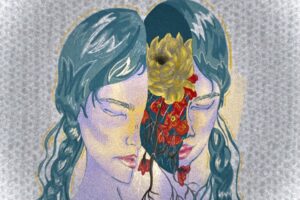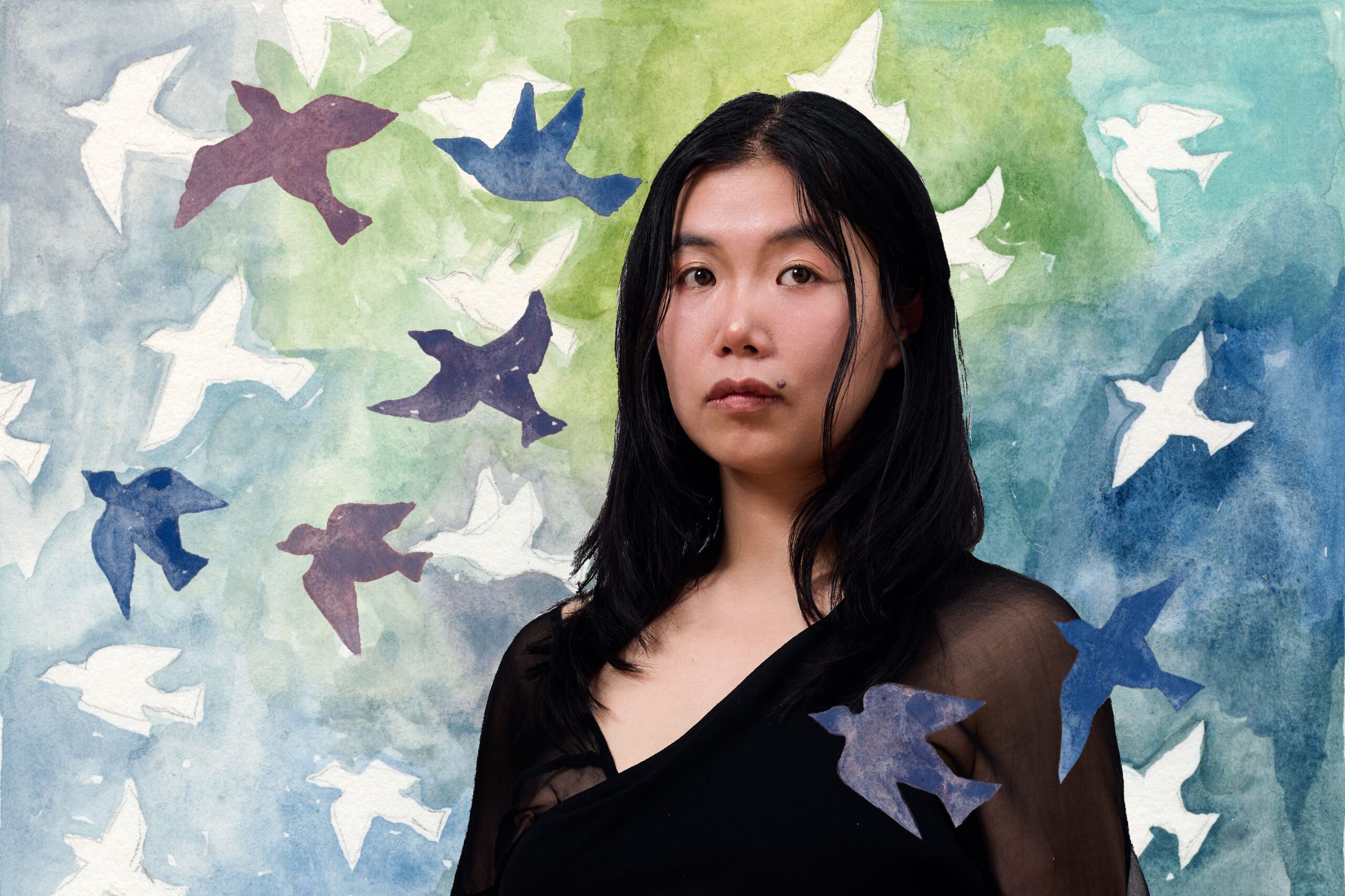
Jiaming You’s work deals with the layers of our identity and how some impose their perceptions onto others—including the artist. These themes stem from the artist’s experience as a Chinese immigrant living in the United States and the many identities they must take on in our current political climate. Through their exploration of the city as well as imagery from magazines, they often use found images as points of contention for their broader bodies of work.
                                                     Do you see what I see?
                                                         feathers flowing through the air
                                                                         Leaving their mark only for those
                                                     Te pregunto otra vez, ¿puedes ver? ¿Notas los cambios?
                                                     Embrace those points of tension.
In their new body of work at HOOK Space, You considers migration patterns of European starlings as well as Tien Wen Tu’s 13th-century maps of the stars. This astrological and astronomical map was used as a tool to help people better understand what was above them by taking data of the stars across the sky. These charts were used for navigation, agricultural calendars, divination, keeping track of patterns, and more. Philosophically, it helped people better understand their place within the world. You uses these maps in their work to explore how they not only shape how the artist belongs in their world, but also how they belong in the greater society that we live in.
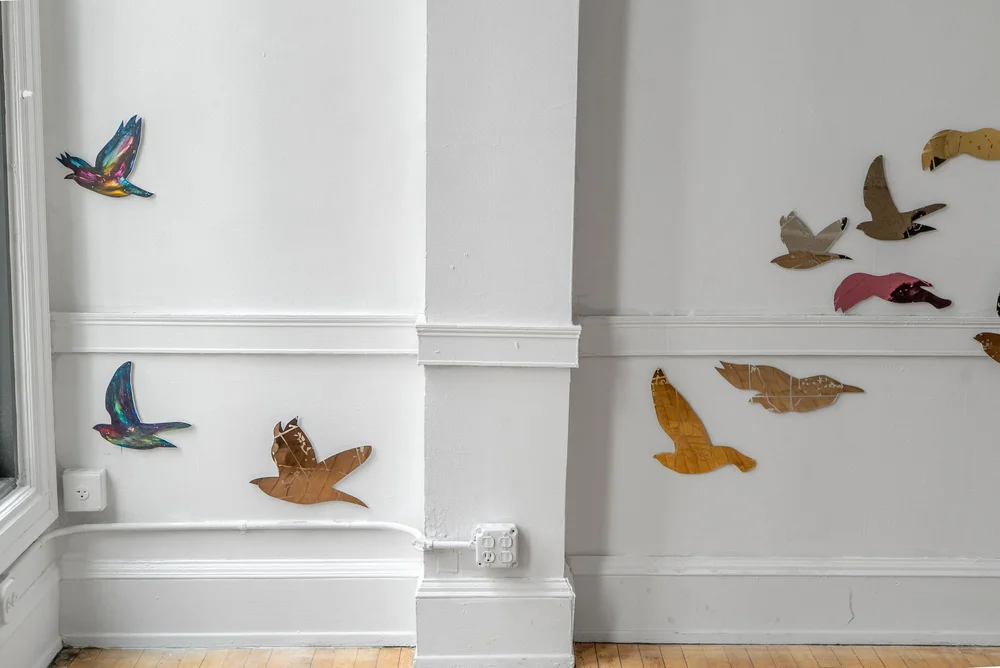
As I enter HOOK Space, I am greeted with an array of starlings made from four types of materials: painted wood, tinted acrylic etched with text, mirror acrylic etched with a star map, and translucent vinyl. Near the door on my right, the types of materials the starlings are made of change from tinted acrylic to mirror acrylic. Although the majority of the starlings stay in one grouping based on the material they are made of, there are points of tension where the birds change from one material to another.
In the past, You asked their audience, “where does your perception arise from? Are you born with them or are they based on socioeconomic backgrounds learned through society and your experience?” In this new work, the artist is thinking through how to replicate patterns found in nature by grouping the same material types together—just as flocks of starlings do by the makeup of the same species. What happens when a species delineates? This tension point also brings to mind the question: why go from using this material to this other material?
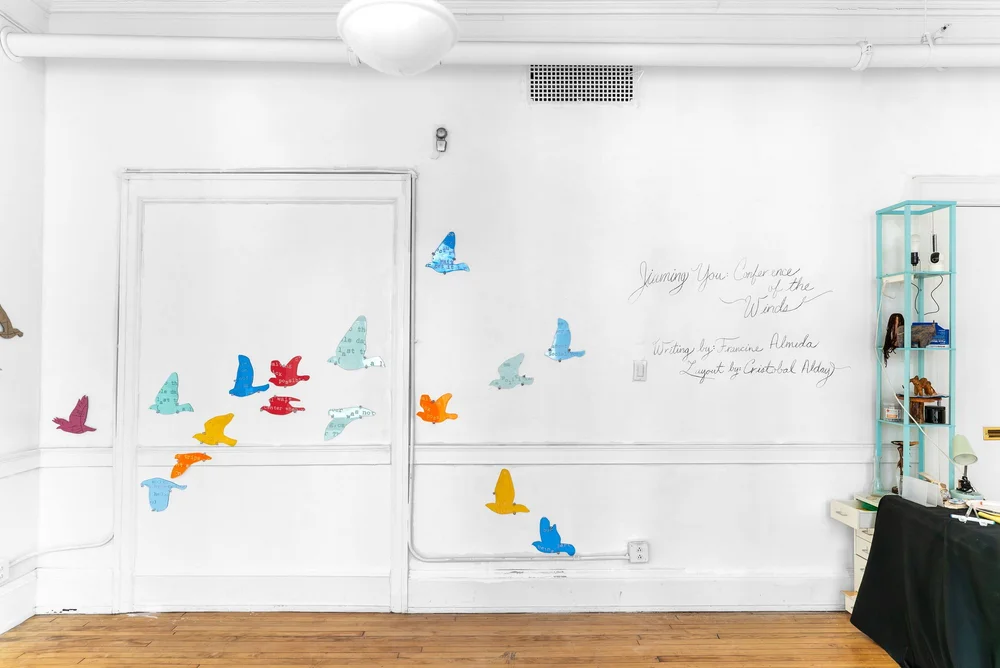
From translucent to reflective, You’s work has the ability to provoke the audience to question their place within society, their own perceptions, and how they view others. As I am walking around, I am thinking about the transition from translucent starlings to reflective starlings. The translucent material and etched words allow me to think about myself and my inner workings as I question what thoughts come to mind when I see them and how it may differ from what it sparks in others. The reflective starlings have me questioning my ego, as I see my own reflection calling back to me. When people see a reflective surface, they usually reach for their phone or camera to take a photo. When the artist is present during opening or various programming, they push back on this instinct by seeing how people view their work and encouraging them to look inward versus outward.
Whether translucent or reflective acrylic, both materials share one important element: etchings. Through etchings of star maps, which can be seen on the reflective acrylic starlings, I am reminded of the patterns in the sky that make up astrology. Modern day astrology explores how one’s own birth fits into the greater stars above and the larger universe. How do my placements shape who I am, how I communicate, how my ego functions? By having this star map on the reflective acrylic starlings, we can see the personification of our own being reflected back at us. As I dig deeper, I question how my own self-guided perceptions cause me to experience what I am seeing before me and how that might differ from person to person.
                                                 Do birds of a feather,
                                                                           Really flock together?
                                     Y los pajaritos que son diferentes
                                                 Los que no quieren lo mismo que los otros?
                                                                           Keep a tally of how many times I say “you” versus “I”
                                                              Consideration, contemplation
                                                                           Consider me like you consider yourself
                                                                           Like mother birds care for theirs.
As I walk across the room, I see a pattern of migration; a never ending cycle that loops and loops again in terms of chords flying. The wall of mirror acrylic starlings slowly shifts into painted-wood starlings. These opaque birds are vastly different from the other two and capture a visual language of their own. Here, the point of tension where the material changes feels less chaotic and more smooth. When I look at them, I am reminded of clouds during a sunset when all the colors bleed into one another, or the multitude of colored lights during an aurora borealis. Transitioning from reflective surfaces mapping the stars to painted wood that looks like the heavens feels soothing, making the material transition feel easy. The colors themself nods to more personal elements of You’s life, as it deals with the colors of their father’s MRI scans. Here, the artist connects modern practices of using MRI’s to map our bodies with 13th-century methods used to map the sky.
The painted, opaque starlings transition into translucent vinyl starlings on the windows. These vinyl versions are printouts of various Chicago locales. You might recognize some of them—others, not so much. However, their translucent nature invites viewers to consider their place within the city and even beyond. By being able to see myself on these starlings through the reflectiveness of the windows, I am placed in these locales that the artist is navigating. When I see my reflection, I wonder if I had visited these specific areas before. What do I remember about being there? The translucent starlings on the window directly across the tinted acrylic starlings prompt us to go from looking inward to looking at our place within the greater ecosystem. Where do I fit in? Do I want to fit in? What about how others view me within my place in society? These questions come to mind as I go from bird to bird on the windows and see the way each one changes as the day changes the light within the space.
                                                 Place
                                    Time
                                                                     Movement across generations
                                    Never forgotten and always passed down
                                                                           You won’t forget about us
                                                                                        skyscrapers echo the machine echoes throughout
                                                               Captured under the gleaming light of your eyes
                                                   Forever and always.
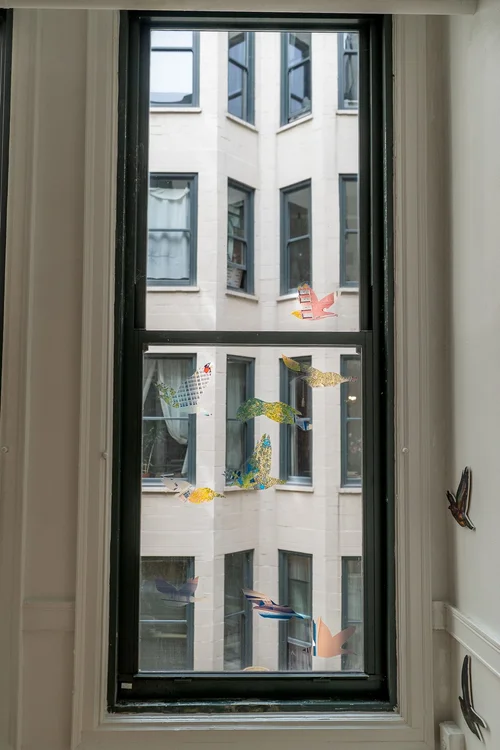
I love the way the environment shapes You’s work and the way the work shapes the environment around them in a space. The work is always changing, always adapting and taking on new meanings and colors. This very adaptability connects to migration and the way immigrants often have to adapt to their surroundings to survive and live. Being an immigrant themself, the artist draws on their own personal experience having to adapt by code switching or trying to find folks that make them feel more at home. In order to work as an artist, they grapple daily with the complex systems in place that force them into these circumstances. But not everyone’s experience is the same. Bird species like starlings tend to repeat their migration patterns again and again; a cycle for parents and offspring. My question still stands: what about the ones who choose to go outside of this pattern? Just like these outliers and points of tension, migration tells a larger story of who and what might force people in some cases to migrate. Throughout this eternal flight around the gallery space of migration patterns, we are able to question our very society through the reflections of inner and outer workings and hopefully help us see more than our own views.
                                                                   Endings are Beginnings
                                         Are beginnings also endings?
                                                                                           yourself, in the context of the greater
                            Patterns or signs?
                                                     The ones in your eyes, they reflect your very being,
                                                                                                                                              But
                                                                                          Can you go beyond your very perception of time..
                                         Pause.
                            Repeat.
Jiaming You’s exhibition Conference of the Winds was on view at HOOK Space in Chicago from May 8 – June 7, 2026. The exhibition was curated by Francine Almeda with the layout designed by Cristobal Alday.
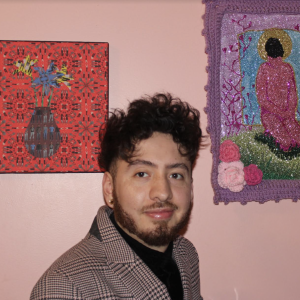
About the Author: Cristobal Alday (he/him) is a Queer Latinx writer, artist, grants administrator, researcher and curator from the south side of Chicago. He focuses on photography, and film particularly dealing with queerness, and how identity is influenced by familial dynamics, and space.
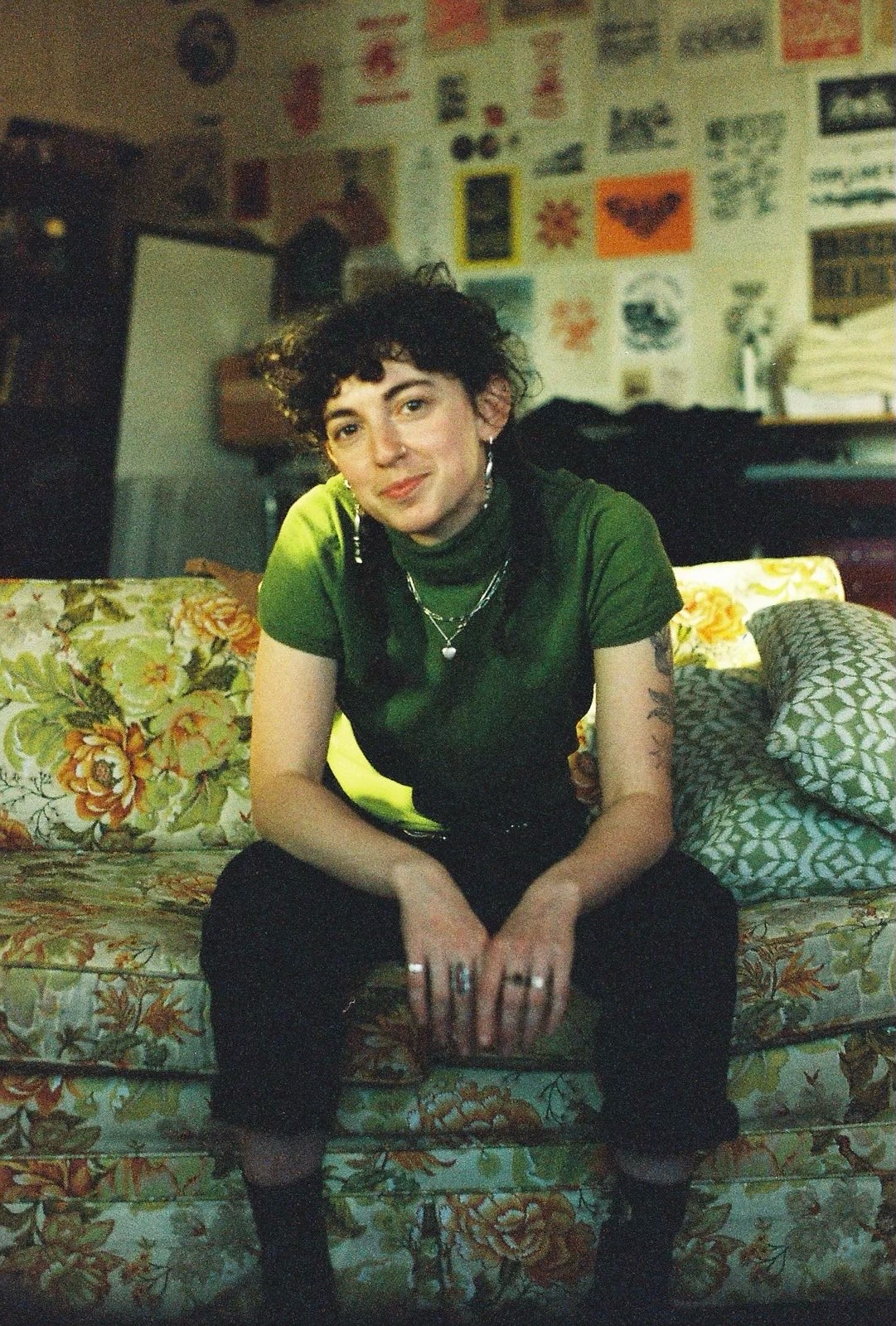
About the Image Maker: Dio (they/them) is a geographer, organizer, and printmaker currently living on occupied Dakota lands in so-called Minnesota. Their work is focused on placemaking, community building, and organizing through the arts, and facilitating collective and collaborative art-making in support of justice movements. When not drawing, you can find them drinking tea, picking up shiny objects from the ground, or marveling at brick buildings.