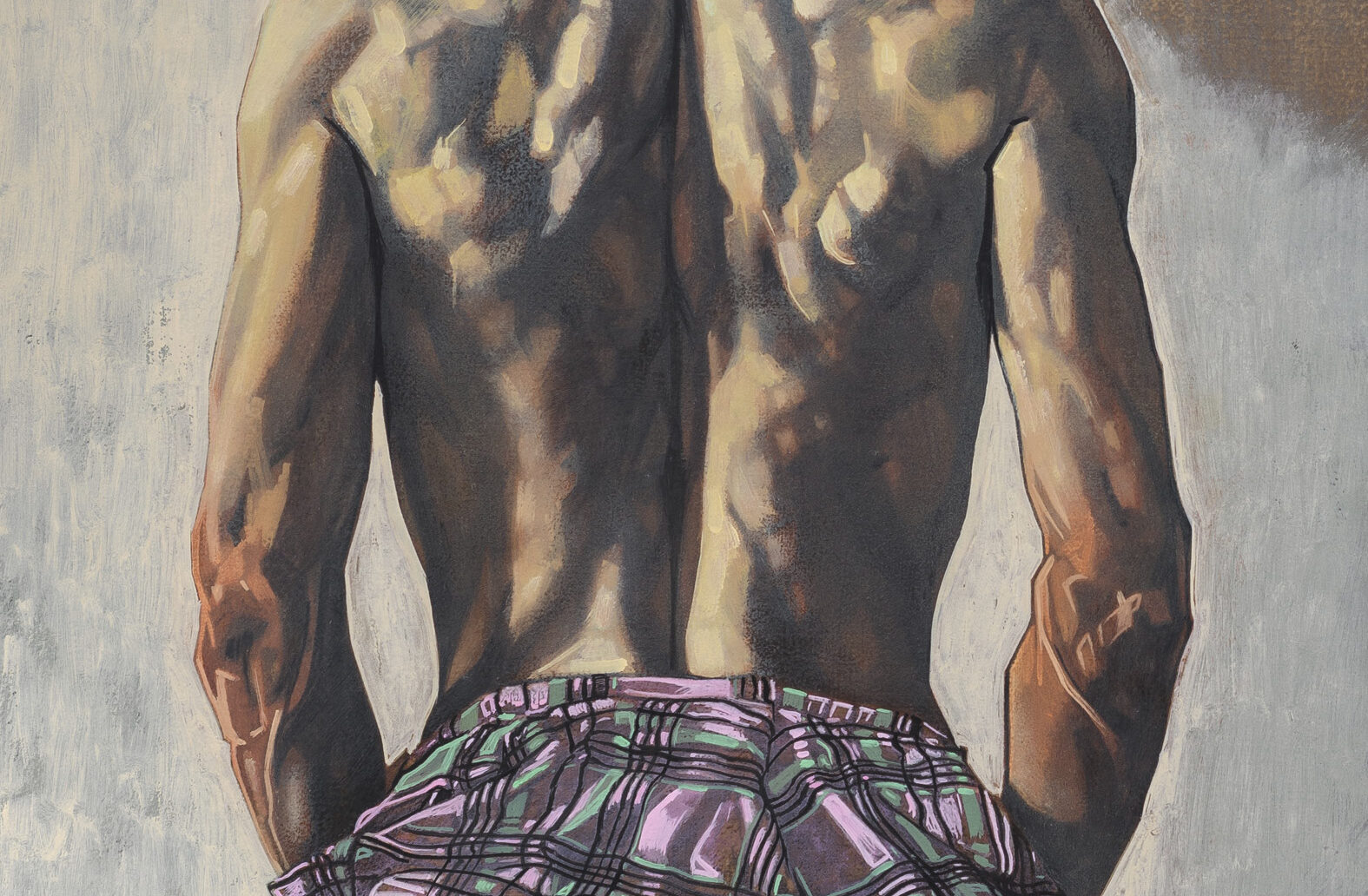
Immediately after her flight from New York landed, my friend Nomi beelined for my apartment still armed with her suitcase and a large tote bag whose straps were beginning to rip apart from the bag’s body. We greeted each other in my doorway with an embrace. She immediately began to rummage through her tote bag after saying she had a gift for me. I watched her search warily. Her announcement made me apprehensive, and the precarious state of her tote bag compounded this anxiety. Was I capable of faking gratitude if she gifted me something I disliked? Nomi is tenderhearted and generous, qualities that make her an exceptional gift giver, so rationally I knew my fear was unwarranted. Nonetheless, I was relieved when she pulled a book from her tote bag whose cover I recognized: a provocative portrait of a man’s lean, muscular backside with a pink-and-green plaid miniskirt pulled up around his waist, exposing his bare ass.
I’ve already read it, I said, dragging Nomi to my bedroom where I plucked my copy of Joon Oluchi Lee’s Tricyclist and pressed it into her hands.
How? Nomi asked twice. Her bamboozlement was understandable since the book technically wouldn’t be published for another month. An advanced reader copy, I explained while she compared the subtle design differences between her copy and mine. I read it this summer while working at an artist residency. I thought you would enjoy the book’s sex scenes, and the main character’s friendships with lesbians, Nomi said.
She was right, of course. Some of my favorite scenes from Tricyclist included Howie Song—a run-of-the-mill ballet dancer and Bay Area faggot—and his romantically-downtrodden friend Tish being thrown out of a leather bar in the Castro, and an unexpected reversal of roles when Howie insists on topping a sexually ambiguous sous chef he’s been sleeping with regularly. There are also ecstatic descriptions of Howie’s ex-boyfriend’s cock, and their daily morning ritual of oral sex, that echoed Wayne Koestenbaum’s obsessive and exhaustive descriptions of his lover’s genitalia and their cipher-like quality in his newest novel My Lover, The Rabbi.
Lee’s earlier, crystalline novel Neotenica (Nightboat Books, 2020) astounded me when I first read it years ago. It followed a couple, Young Ae and Young Ae’s Husband (he is never given a name, instead becoming an extension of his wife) who agree to an arranged marriage after meeting on a Korean dating site. Young Ae’s Husband is straight but regularly cruises Craigslist for gay sex, and early in the novel, is assaulted on San Francisco’s BART train while wearing a shirt with a screenprinted image of Madonna and a slogan in Times New Roman: “Every straight guy should have a man’s tongue in his mouth at least once.”
I adored Young Ae’s Husband’s inscrutable sexuality, which momentarily reminded me of Jackie Ess’ novel Darryl. The titular narrator is an average guy who likes basketball and enjoys watching other men fuck his wife. While Ess (who also lived in the Bay Area) satirizes a straight white man who embraces his stigmatized desires as a kind of marginal identity to shirk the burden of power, Lee approaches his characters from an oblique angle, carefully subverting the racialized and gendered tropes of sexuality and identity through Young Ae’s Husband to illustrate the gap between appearance and personhood. Reading Lee’s writing was like eavesdropping on an argument between lovers passing in the street: unpredictably sensual and violently (t)horny, and I wanted more.
I read Tricyclist while I was working in the kitchen at ACRE, an artist residency in Wisconsin’s Driftless region. These three weeks were grueling and emotionally turbulent, both environmentally and personally: wildfires in nearby Canada cloaked the hills, forcing us to build DIY air filters and don KN95 masks during a hundred-degree heat wave; heavy rainstorms fuelled a surge in the bloodthirsty mosquito population; I had recently accepted an earlier date for vaginoplasty surgery and would be going under the knife in two months; and my boyfriend and I were moving in together when I returned from Wisconsin. It was a moment of manifesting transformation—from predictions of human-induced climate catastrophe to its indisputable onset, from my-body-as-I-was-born to my-body-as-desired-it, from wildness to domesticity.
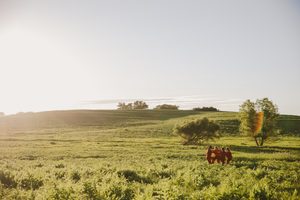
Each morning I woke early and traipsed along the dewy edge of a cow pasture, where I occasionally saw a trio of sandhill cranes foraging, that separated the main lodge and cabin where I was staying. My daily ritual was simple. I drank several cups of coffee and read a few pages of Tricyclist before I began my twelve-hour workday.
Tricyclist begins with Howie and his friends Fei Fei and Jean traveling to the estate sale of a famous and recently deceased figure skater with the hopes of scoring vintage designer clothing, or at least old figure skating costumes, for Fei Fei’s boutique. Clothing is a cipher in Lee’s books. Nearly every scene includes an exhaustive, sometimes tedious, description of the clothes worn by Howie and the cast of characters who revolve around him, as if Howie wants to catalog and understand how people fashion themselves, what these garments might represent about their identity, and the corresponding gap between this outward appearance and inner desires when this ornamentation is stripped away.
The estate sale is a bust, though Howie is struck by one of the laborers working at the estate sale. This stranger reminds Howie of the first man he fucked as a sixteen-year-old—a groundskeeper twenty years Howie’s senior who refused to kiss Howie, later revealing he had a boyfriend of nearly fifteen years. This resurfaced memory prompted Howie to question his physical attraction to men despite their unappealing personalities and insincere behavior. Fei Fei offers a theory: “That’s because you are like us… You have a desire that’s been disconnected from the phallus… and moved it to… inappropriate aspects of the self, like dress, or attitude, or personality, or vagina.”
Hoping to follow Howie’s migration of desire, I underlined this bit of dialogue and thought of it often as I continued to read. I was tempted at first to interpret Howie’s loose approach to gender as a kind of eggy-pre-transition femininity I similarly practiced before understanding my need for womanhood, though I was quickly disabused of such a self-interested reading of the novel as Howie remained resolutely attached to homosexuality and masculinity. I couldn’t help but wonder: Wouldn’t someone so enthralled by men and their bodies often find themselves foiled in their sexual or romantic pursuits if his desire was no longer focused solely on the phallus?
I became increasingly endeared with Howie—who finds himself repeatedly snagging like a burr on the people around him, traveling to unexpected and inappropriate places. Howie lives in San Francisco during the strange timespace between the dot-com crash and technocapitalist gentrification that transformed the “gay capital” of America, though he is preoccupied with his own desires, and the desires of other people rather than this cultural shift, whether that’s his string of failed romances, or ideas about sexuality and gender more broadly. Howie is adrift, seemingly always out of place. He repeatedly finds himself the “third wheel.” A gay man who’s more at home among lesbians. A paramour in other lovers’ romances. A ballet dancer who is neither an exceptional dancer nor a bad one, his continued employment owed entirely to the luck of his inherited proportions.
Lee’s Tricyclist became an altar book as the residency carried on. Several of the pages were made translucent by bug spray or smudged by greasy fingers. I stuffed wild bergamot between the pages until it was heavily perfumed. Whenever I wanted to appear busy, I reached for it. I was the only trans woman among the forty-ish people on campus. The cohort was nearly evenly divided between dykes who evangelized The Faggots and Their Friends Between Revolutions and straightforward fags. I rarely socialized outside the residency kitchen staff because these long, laborious shifts left me exhausted, and I wouldn’t allow myself to sit with the group when they chainsmoked late into the night for fear I might indulge in a cigarette despite firm warnings from my surgeon. It was novel to discover my experience more closely resembled that of few cis straight men on campus, perhaps the only time in my life I’ve felt such a bond.
I didn’t find my incidental social isolation unpleasant. I was the surplus actor in a threesome, capable of making an unnoticed French exit at my whim.
Near the end of the residency, someone told me at dinner that they heard a rumor that the copper-colored Mustang that broke down near the entrance to the campus belonged to me. I found this bit of gossip flattering because it symbolized a kind of mythological aura the residents wanted to thrust upon me. However, I was also dismayed because it evidenced my distance from their temporary social milieu. Perhaps this is why I admired the Tricyclist scenes I mentioned earlier, situations that revolved around misrecognition and fantasy from strangers and lovers who cannot grasp how Howie is telegraphing his desire to the world. There’s a pleasure in being out of place, spectating from a distance. Like a form of negative parallelism, not x, but y, my definition of self, and perhaps Howie’s too, emerges and dissolves relationally.
After Tish’s failed reconciliation with a lover, Howie and Tish meet at a leather bar in the Castro and are confronted by a stranger who they initially think is being lesbophobic after overhearing someone complain, “There are so many women in here tonight!” to which Tish retorted: “Interesting how one woman is ‘so many women.’” Although the argument quickly shifts when they realize this man is upset because Howie is wearing a t-shirt from a lesbian folk singer popular in the 1980s who later found God and condemned homosexuality.
Howie is disappointed afterward because the shirt was his first piece of gay memorabilia, and Tish tries to console him, insisting he can wear the shirt ironically and that Howie and this leather-clad stranger are “probably the same babes in the same mean old woods.” Neither Howie nor his aggressor seem capable of resolving this failure of their performed selves to represent their interiority, which might suggest their desires share similar roots even if they diverge in their outward presentation.
After they’re kicked out of the bar, Howie texts Jeb—the sexually ambiguous sous chef—and invites him to his apartment. Jeb wants to fuck Howie. However, as he prepares to sit on his cock, Howie announces: “Actually, I would like to fuck you.” Howie is surprised by Jeb’s wordless compliance and his large, spongy ass. Afterward, Howie wants to know if it was Jeb’s first time being fucked. “Not by a gay guy, no,” Jeb replied, clarifying, “I do live in San Francisco, so I do have sex toys. I have a vibrating butt plug.” I experienced a pang while reading this exchange because Howie alludes to an unstable gender identity, revealing he considered transitioning but ultimately decided against it. Howie allies himself more closely to a gay manhood actualized through femininity.
Howie’s relationship with Jeb, whether he wanted to transition or not, was a driving narrative tension in Tricyclist, perhaps because it represented Howie’s subconscious desire to escape from legible ideas of sexuality or gender. Jeb had revealed he had a preference for Asian women after correctly guessing Howie was Korean as pillowtalk after their first hookup, adding, “and obviously, some guys.” Howie later grills Jeb to figure out if he might be “some kind of transitional object” for Jeb, an androgynous, femme creature that would make Jeb more comfortable with his homosexuality. Did Howie want to fuck Jeb in hopes of preventing such a scenario? Does Howie wield his cock in an effort to wrest the power of giving pleasure from Jeb’s and disprove misogynist and racist beliefs about the sexual roles they previously indulged in together? Jeb doesn’t respond to Howie’s question about whether his cock is better than a “buxom chick pushing the on-switch” on his vibrator. Instead, he touches Howie’s collarbone and says, “I love you for your clavicle and these little bones right here.”
Near the end of the residency, I begrudgingly changed into an orange silk minidress with a ruffled pleat along the bottom edge and walked through an alfalfa field to reach ACRE’s AV studio, a small air-conditioned building near the mouth of the campus. Everyone gathered for a musical jam session that had become a residency tradition dubbed “No Show.” I had fond memories from my time as a resident last summer dancing in front of a projection of Sergei Parajanov’s The Color of Pomegranates while others experimented with synths and random instruments. My silhouette was wraithlike and sensuous. I had been an ornament to their collective act of noisemaking. A recipient of the pleasurable sounds they created.
This year, as a staff member, I found myself in the musical ensemble. I read aloud passages from the Faggots and Their Friends Between Revolution. I sang. I encouraged a painter to join me. He had told me he once met Juliana Huxtable and that she had made a declarative proclamation about his personhood and art: I can tell you want to be weirder. Hoping to help him overcome his hesitation as he nervously held the microphone, I started to scream: GET WEIRDER. GET WEIRDER. GET WEIRDERRRRR. My voice was guttural and dragged out. I rarely speak above a whisper, so I could feel my vocal cords thrumming with effort. This strain made my voice sound like heavy furniture being dragged across hardwood. Afterward we were all flushed and giddy. One of the other chefs said, “It feels like we all just had sex.” I nodded dumbly.
I felt a similar kind of role reversal as Howie after he penetrated Jeb, this subtle shift of my role from receiving pleasure to being central to its creation as I sprawled on the floor and howled into the microphone. I had blurred the boundaries between masculine and feminine acts for myself, allowing myself to participate in this orgiastic cacophony of instruments and voices. We had all dissolved into each other, at least for a night, before becoming ourselves again. And as I reflected on this experience alongside Joon Oluchi Lee’s Tricyclist, I admired his skillful command of these ambiguous, yet revelatory moments between people. Lee understands the lifelong struggle to understand oneself and others, and the seemingly insignificant acts that concretize or demolish this solidity we desire.
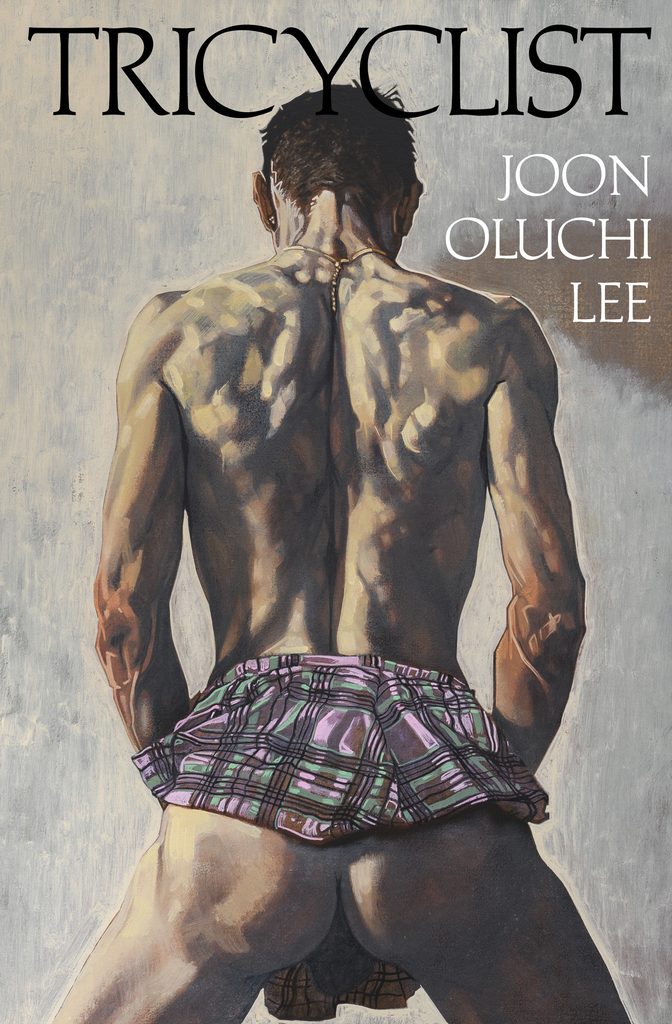
You can learn more about Joon Oluchi Lee’s Tricyclist on Nighboat Books’ website.
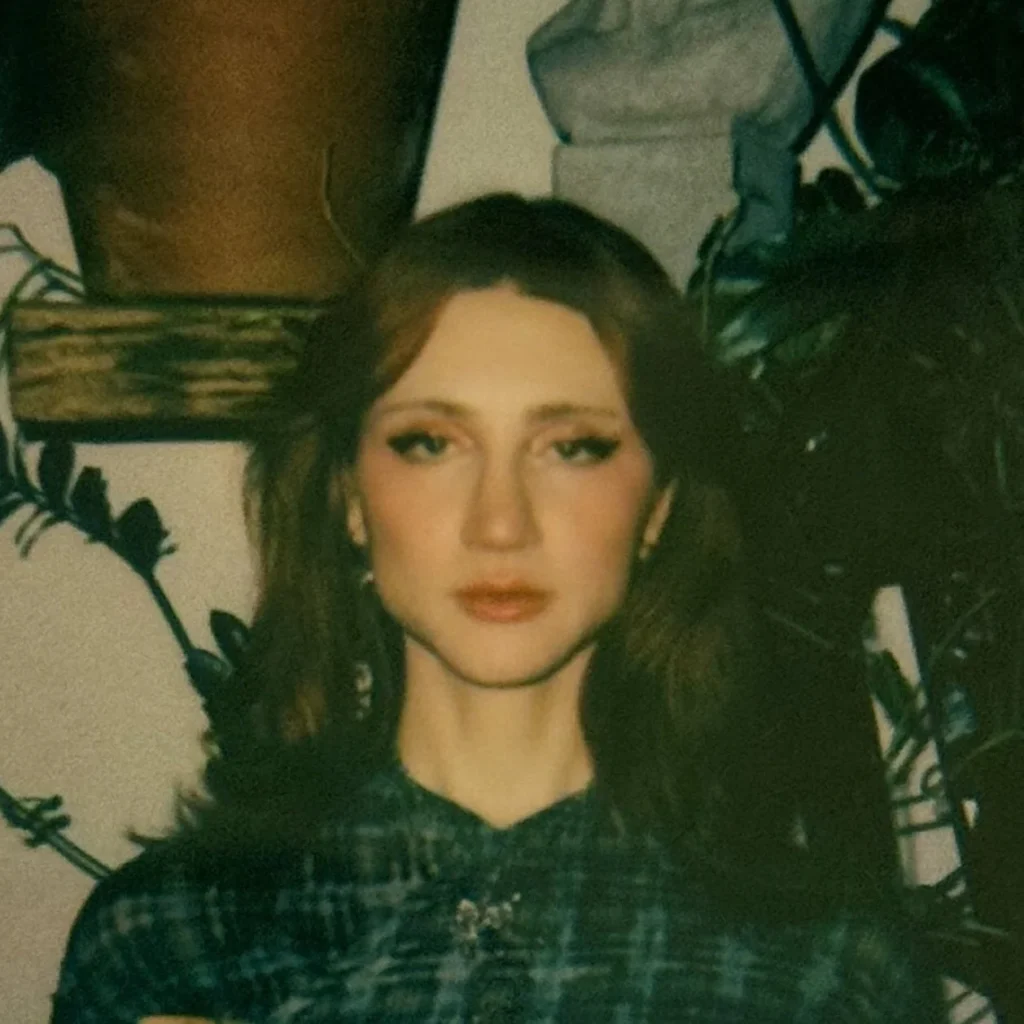
About the author: Riley Yaxley is most often a dinner party host, a fishkeeper, a beach rat, a flâneuse, a glutton, a flirt, a dancer, a delinquent daughter who forgets to call her mom. She is also a writer and editor.