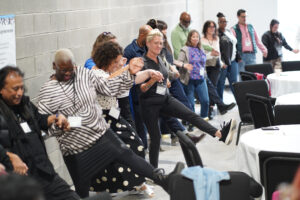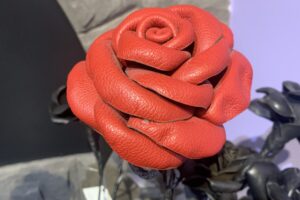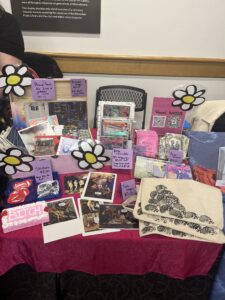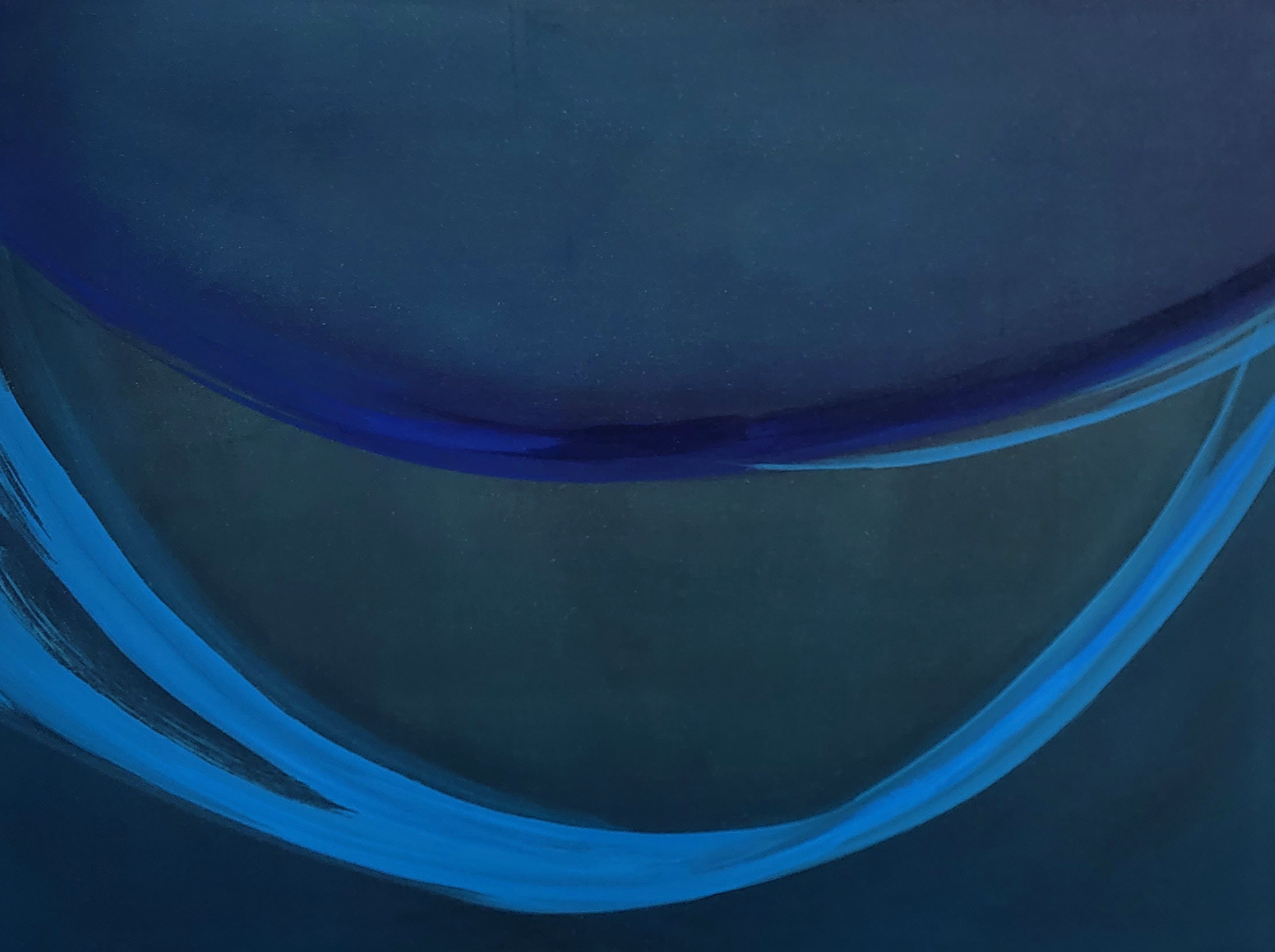
The water has always captured my attention. It is ancient and young. It is gentle and rough. I’ve seen its terrifying power, but I have also benefited from its innate life-giving power. Make the River Present was curated by Michelle Dezember, Director of Learning and Engagement at the Contemporary Art Museum St. Louis, and Allena Marie Brazier. The show, which opened March 7, 2025, encouraged visitors to engage with both the Mississippi and Missouri rivers. I’ve been following Brazier’s art for awhile now and I am always amazed by the projects she is working on. She is an artist, curator, and community organizer based in East Saint Louis with a deep commitment to St. Louis and its communities.

Charlie Farrell (CF): Introduce yourself. What are some core tenets of your art making practice?
Allena Marie Brazier (AMB): I’m Allena Brazier, a curator and artist based in East St. Louis, Illinois. I work fluidly across sculpture, installation, photography, painting, and writing, often drawing inspiration from urban and natural environments, history, and faith. I reflect on my connection, questions, and experiences within the communities I am a part of to create immersive installations and exhibitions.
CF: What was your relationship to St. Louis and East St. Louis growing up?
AMB: Generations of my family have called this region home. As a child my family and I would travel across the Mississippi River on any given bridge between both cities. Travelling to St. Louis served purposes from doctor appointments and sporting events, to walks in the park with the family and viewing the Fourth of July fireworks. I enjoyed visiting St. Louis because of its vastness, fast pace, and regional differences in comparison to my hometown, a smaller city region where days were just as enjoyable, time slowed, and the people and places were intimate. East St. Louis is my home and one of the foundational cities to my family’s lineage where my interest in natural and built environments took root and continues to this day.
CF: What was your experience in graduate school? How do you think your time at Washington University in St. Louis shaped your practice?
AMB: I am happy with my experience in graduate school, I was able to grow personally and professionally with no limitations or hardships within the larger institution. The program was interdisciplinary and independently led with professional guidance, exactly what I needed at the time. My interest in social interaction and environments simultaneously were honed in towards a personal expression of place-based work and expanded my understanding of material and abstraction. Being a university based in St. Louis, WashU was a site specific experience that mentally and physically allowed me to consider all my observable interconnections between East St. Louis and St. Louis in the culture, landscape, and the materiality of place.
I was the inaugural Sam Fox Curator in Resident, which pushed me professionally. Much of my time was spent on administration, logistics, and connecting with artists in the St. Louis metropolitan region. My first exhibition in this position was titled Belonging: Cross River Art Exhibition, focusing on artists bordering the Mississippi river in the Missouri and Illinois states. These relationships have been cultivated carefully with respect, care, and continued support.

CF: What does it mean to you to be working between St. Louis and East St. Louis and within the context of place-based practices?
AMB: Working between St. Louis and East St. Louis means recognizing that even places in proximity can have distinctive social constructs, historical backgrounds, present-day challenges, and celebrations. The landscapes of each city are not only different from one another, but also within their own city limits. Experiencing this makes me more aware of my position and role as an artist and curator (person), and of my responsibility and desire to learn and research when making decisions about place-based work or organizing within an organization, institution, or venue. Working this way has shaped my sensitivity when visiting other places and has strengthened my commitment to learning. Understanding a place also informs how work relationships develop; the details of infrastructure like streetways, construction, large corporations, and local businesses all shape interactions, meetings, and relationships to the place.
CF: What does the Mississippi River mean to you?
AMB: The Mississippi River grew into my life; well, rather, I grew to know and recognize the Mississippi River. One, its power and physical nature as water. Two, its power shaping history, land, and cultural identities. I might have taken the Mississippi River for granted, going and coming through an industrial landscape, focusing only on social experiences. The river, even though it was close to my hometown, I did not interact with it for too long. It quietly rushed under my feet. Now more than ever, the Mississippi River means home. It provides a sense of self-orientation. Learning more about the river has made me more aware of how powerful and vast it is and how it is important to community, culture, and life.

CF: Can you speak on your relationship to water?
AMB: Surprisingly, my first two core memories with water are quite opposite but remind me of the life-joy-giving water has versus the dangers it possesses. My first memory was me in a pool as a child, around 4 years old. I had a drowning incident where the water rushed over me, and I was unconscious. Then, a few years later, I was taking swim lessons, never quite mastering swimming. However, I still enjoyed the water and would go swimming all the time, and I still enjoy water to this day.
My draw to water within my artistic and curation practice began in my hometown along the Mississippi River, a site of industrial growth that also carries the weight of racial violence, segregation, and historical erasure, and has expanded through my travels to Alabama, Tennessee, and Kentucky. The river’s key influence on history and community has shaped my work and understanding of water’s cultural and spiritual significance. It has inspired curated shows like Belonging: Cross River and my solo show WaterWays which is based on historical and Christian-gospel perspectives.


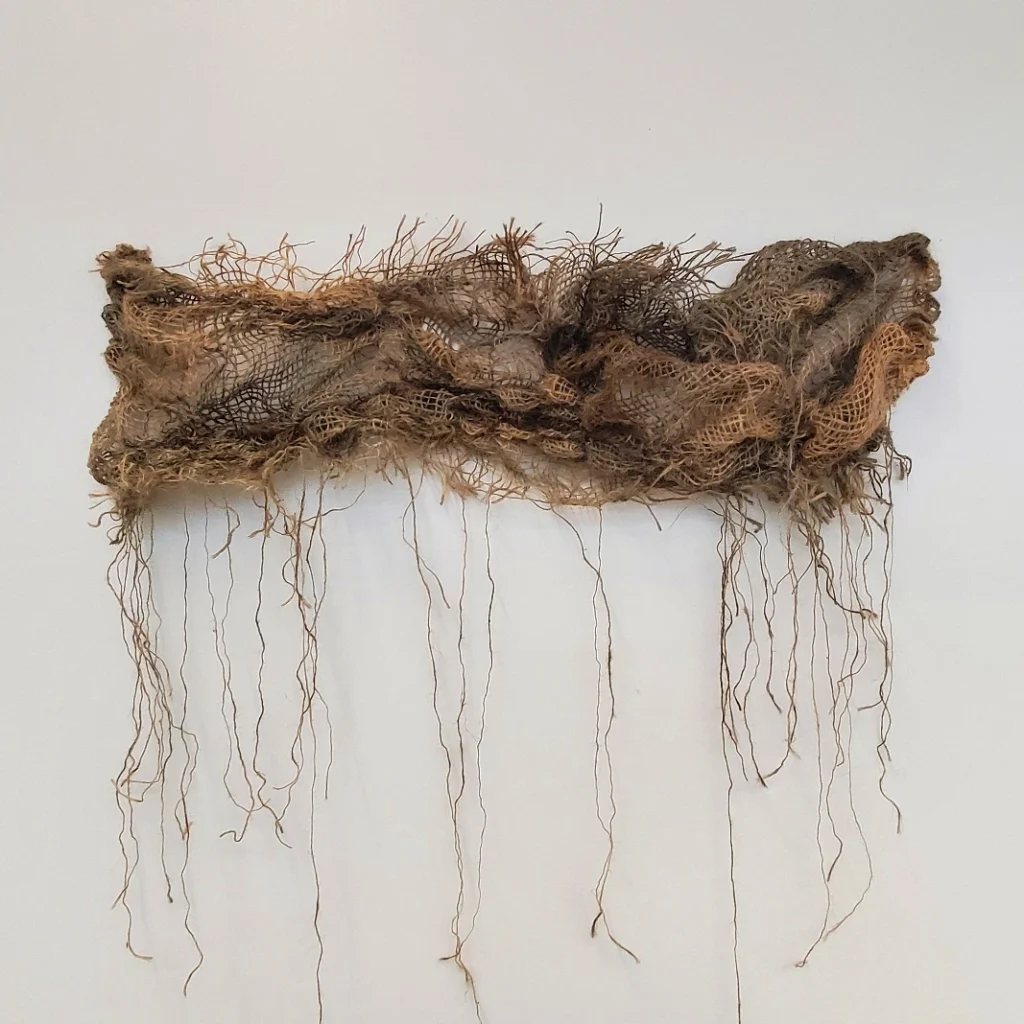

CF: The Mississippi River is used to transport people, goods, and ideas. Do you see the Mississippi River as a collaborator? What does it mean for you to be in dialogue with the River?
AMB: The river has natural qualities that provide and shape the landscape and benefit people through its water cycle. Inherently, it also has turbulent processes that can be detrimental to life. Our presence can work with these cycles or against them, increasing or amplifying the river’s raw nature.
It’s more than seeing the river as a collaborator; it’s about the actions and language used when the river is involved in systems of use. As I interact with the river, I consider my attitude and how I understand my presence and behavior within nature. The river is a natural source, and as I interact with it in my work, I consider my attitude, goals, and genuine curiosity and awe to better understand my presence and behavior within nature. I have not used the river directly, but create and discuss it through stories, visuals, writing, and curation, seeing it more as an active place than as material. The river has its own cycles that may, at times, align with my needs.
About the Author: With a commitment to deep listening and thorough investigation, Farrell strives towards a practice filled with curiosity and rigor. They work to destabilize entrenched historical narratives of traditional art historical canon(s). Relationality across time and space is a point of interest for Farrell. The question of, “How can we exist better together?” drives her practice. She currently serves as the Assistant Curator at Counterpublic. @artfully.thought