What began as a regular business anniversary quickly transformed into a powerful act of community solidarity following an attack on the young dancers of Ballet Folklórico de Chicago. By weaving together the efforts of local artists, independent businesses, affected families, and elected officials, Logan Square response serves as a poignant blueprint for how community pillars can actively transform unexpected trauma into collective, healing action.
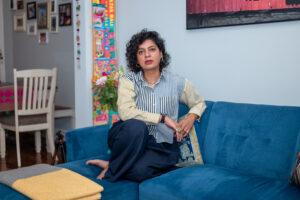
On March 7th, 2026, Ricardo Sepeda—an artist and owner of Calaveras Barber Shop & SMP—was scrolling through Instagram when a video jarred him out of his evening repose. The footage captured a deeply disturbing scene: a couple harassing children and parents leaving a youth dance practice, shouting threats of ICE, and pouring an unknown liquid on them. For Sepeda, the shock hit uniquely close to home. The eerie familiarity of the woman’s voice and the blurry silhouette of the man in the video resembled a long-standing client of his own shop.
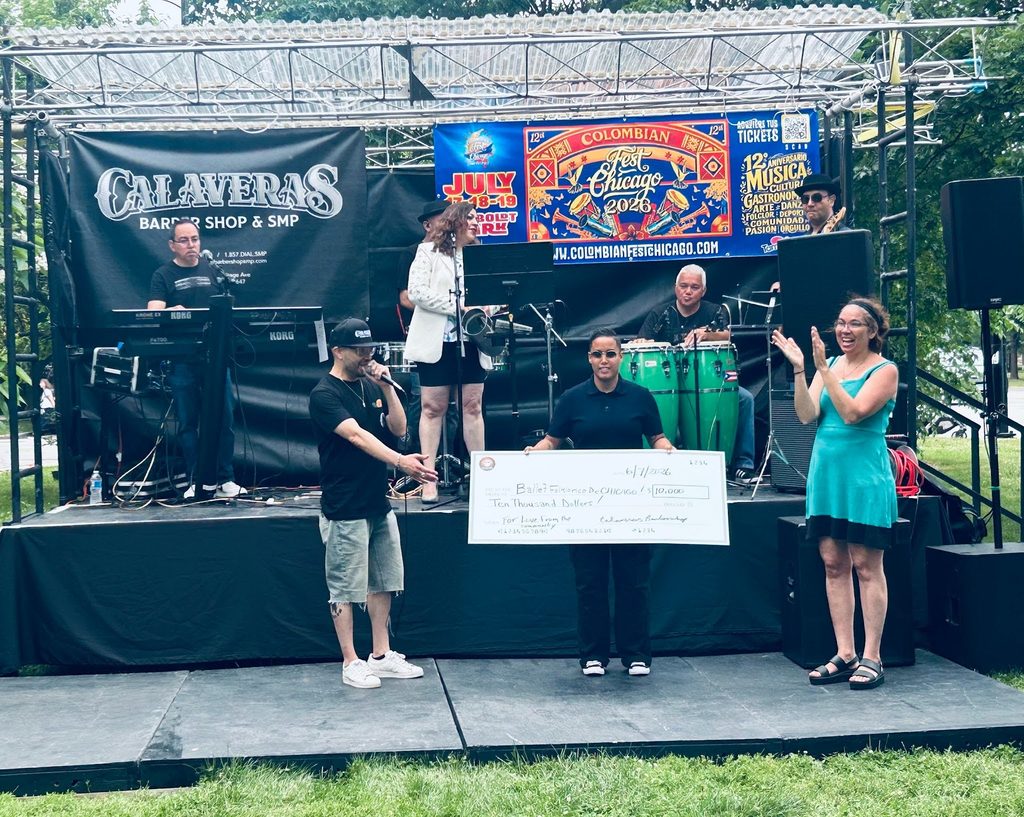
Rather than looking away, Sepeda chose decisive action. Recognizing that local businesses are the social fabric and vital anchors of community safety, he refused to let intimidation dictate the narrative for these families and scare the dancers away from their artistic outlet. Even though his own shop is rooted on the border of Logan Square and Humboldt Park, he chose to leverage his platform for the neighboring Northwest side studio, setting an ambitious fundraising goal of $10,000—exactly $1,000 for each year the community had supported his business—to directly benefit the targeted dance company.
What follows is an unfolding chronicle of community resilience. Sepeda and I sat down at Calaveras Barber Shop to discuss his business venture and the motivation behind the fundraiser. This conversation is followed by interviews conducted at the anniversary event with Alderperson Jesse Fuentes and Ballet Folklórico de Chicago’s founder, Ofelia Guerra, mapping out how a neighborhood showed up louder than hate.
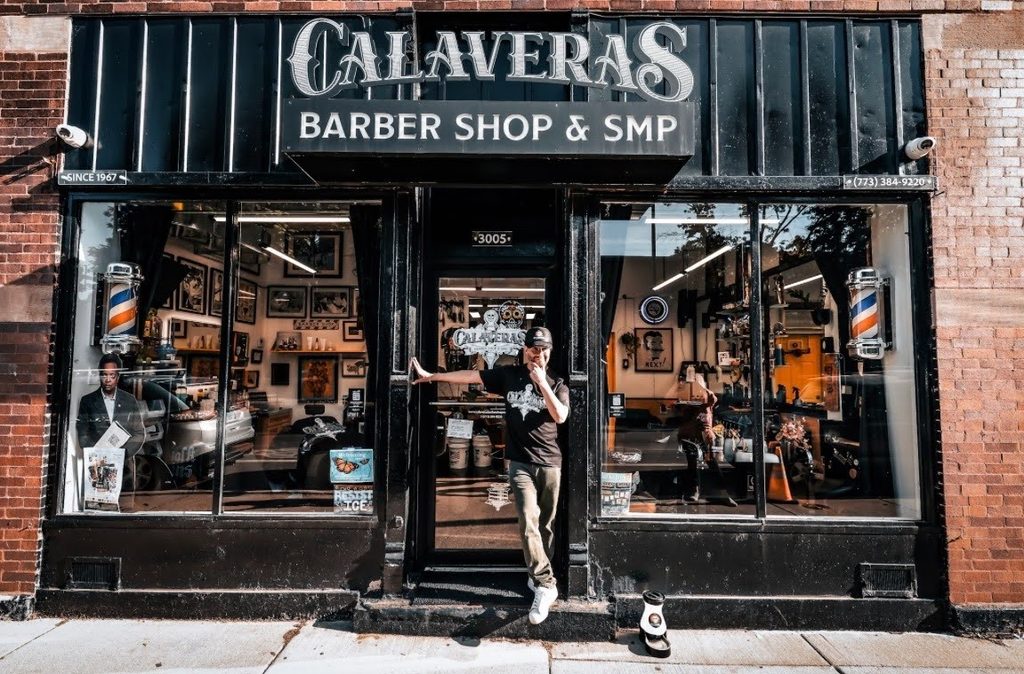
Basia Krupa (BK): How long have you been in Logan Square and when did you become the owner of the barber shop?
Ricardo Sepeda (RS): I’ve been living in the neighborhood since 2014 and an owner since 2016. It used to be called Joe’s Hair Studio and ran from 1967-2016. I found it while ditching barber school one day. I walked by and saw these older guys cutting hair using no clippers. It was all sheer work. I was like wait—you are doing fades with just the sheers? It’s a crazy hard technique. I started watching from the outside until one day I walked in and asked the owner Joe if I could learn from them.
BK: Having a storefront gives you a unique position to take the pulse of the community, witness and contribute to the changes in the neighborhood. If we fast forward to this year, what has the climate been like?
RS: Yes, it’s like the internet but without technology. You can sense it’s hard right now. The job market is challenging; people face economic challenges, high unemployment, job insecurities, divisive mindstates and immigration issues. I don’t even watch the news. I know what’s going on because clients tell me, and I see it in my schedule—it’s slow because rent is due or tax season is coming up. I didn’t realize that being a barber would push me into community therapy because people need to be heard, and I don’t judge. Some of my employees are part of the queer community. I embrace everyone. Originally, when Joe and Willy (the second older barber) still worked here, the studio was known as “House of Peace,” and I still try to run the shop as if they were here with the same values of safe space in mind. Even the new name of the studio reflects the unity of the human race: Calaveras (Spanish for Skulls) is what we all share regardless of gender, political and religious affiliation, or sexual orientation. We’re working on skulls all day and helping people feel good about their appearance.
BK: I know you are planning your 10th year anniversary block party with a special fundraiser for Ballet Folklórico de Chicago this year. Can you tell me how the idea took root?
RS: Yes, so I was doomscrolling on IG one day and saw this video of a couple attacking Ballet Folklórico kids. It irked me because of my background. My mom and uncles are original ballet folklórico dancers featured in a Museum of Elgin collection and book. That’s how I figured out dance (Sepeda aka Reksick is also a B-boy) through them. The picture is right here (points to a framed photo on the wall). I got the book, too. I can show it to you (grabs the book). That’s my mom and my uncle Joe who passed away.
I also thought these people looked really familiar, but you couldn’t really see the video. It was grainy. Then, when you’ve been around someone for so long, you can recognize their voice, their mannerisms, tone, how they move through the conversation, the body silhouette. When I heard the lady say, “You’re lucky ICE isn’t here,” I felt terrible and when the guy came behind her pouring liquid on them, I thought it was really racist. I wasn’t a hundred percent sure if it was my client Robert Villanueva, so I put the thought aside until numerous friends started forwarding me the video. That’s how I knew it was the couple I knew. Not only did I know them, they were doing it to kids, but on top of that they were also Mexican, and he was a musician! That triggered me.
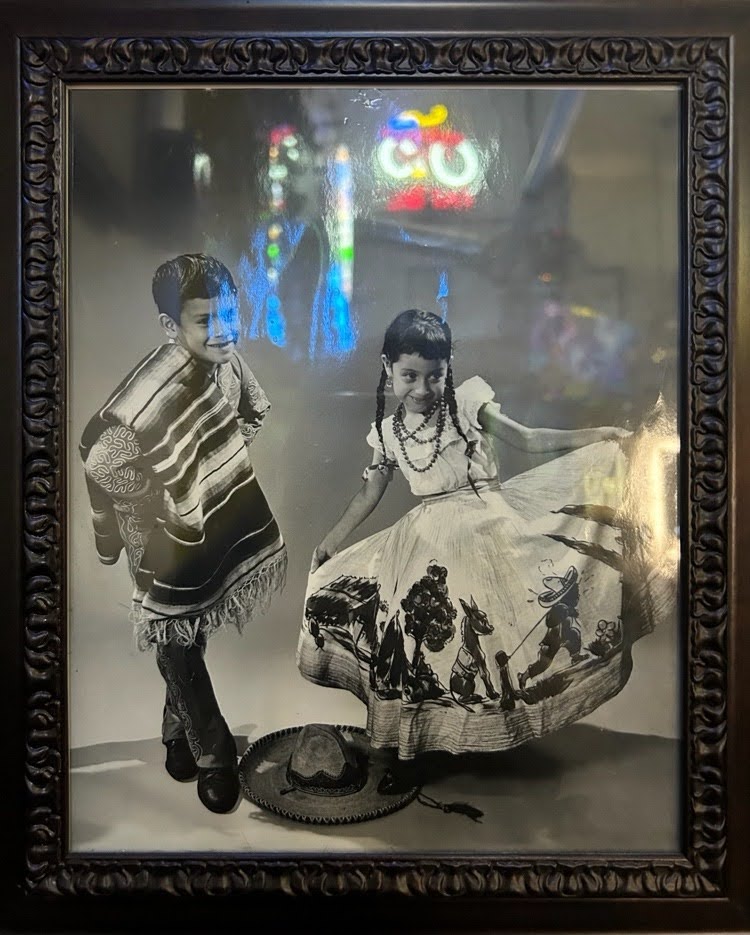
I felt like they insulted not only Ballet Folklórico dancers, but also my whole family and culture. The Villanueva’s knew that the picture of my mom and uncle had been on my wall for a while. I didn’t want to assume it was them, so I sent him the video and asked if it was him and he confirmed it. After that, I cut off all communication. In a couple days, the incident went viral.
I also called Ballet Folklórico de Chicago, I told the studio that I wanted to throw the fundraiser for them. That’s the only way I can stand in solidarity with them and to turn a negative into a positive. The timing coincided with my annual block party, where I show appreciation for the community that supports my business. They give me the opportunity to bring people together, so I have to give back.
BK: Are you at all concerned that the fundraiser can be taken as a political statement and taking a side, which could affect your business?
RS: Yes. I am thinking about it. I talked to Ald. Jesse Fuentes about it, and she is supportive. I want to have the best interest of the people in mind while organizing and preparing. It’s not political. I am putting a stamp that this type of action has no place in my house/shop/community/culture. We’ll have people from all political backgrounds, sexual preferences, nationalities, and music tastes here. It’s a lot of work, but I am not scared of it.
I am hoping this will help the company members feel appreciated, seen and heard, and that we all can remember how to be together and enjoy human connection.
. . .
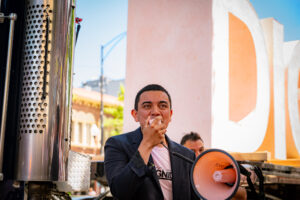
On June 7th, 2026 at the corner of Humboldt Boulevard and Armitage Ave, Sepeda’s wish seemed to come to life. As the cultural Aztec dance group Yaoyolotl Tezcatlipoca opened the festivities, DJs, vendors, families, friends and Ballet Folklórico de Chicago dancers filled the street and grassy boulevards, their smiles on full display.
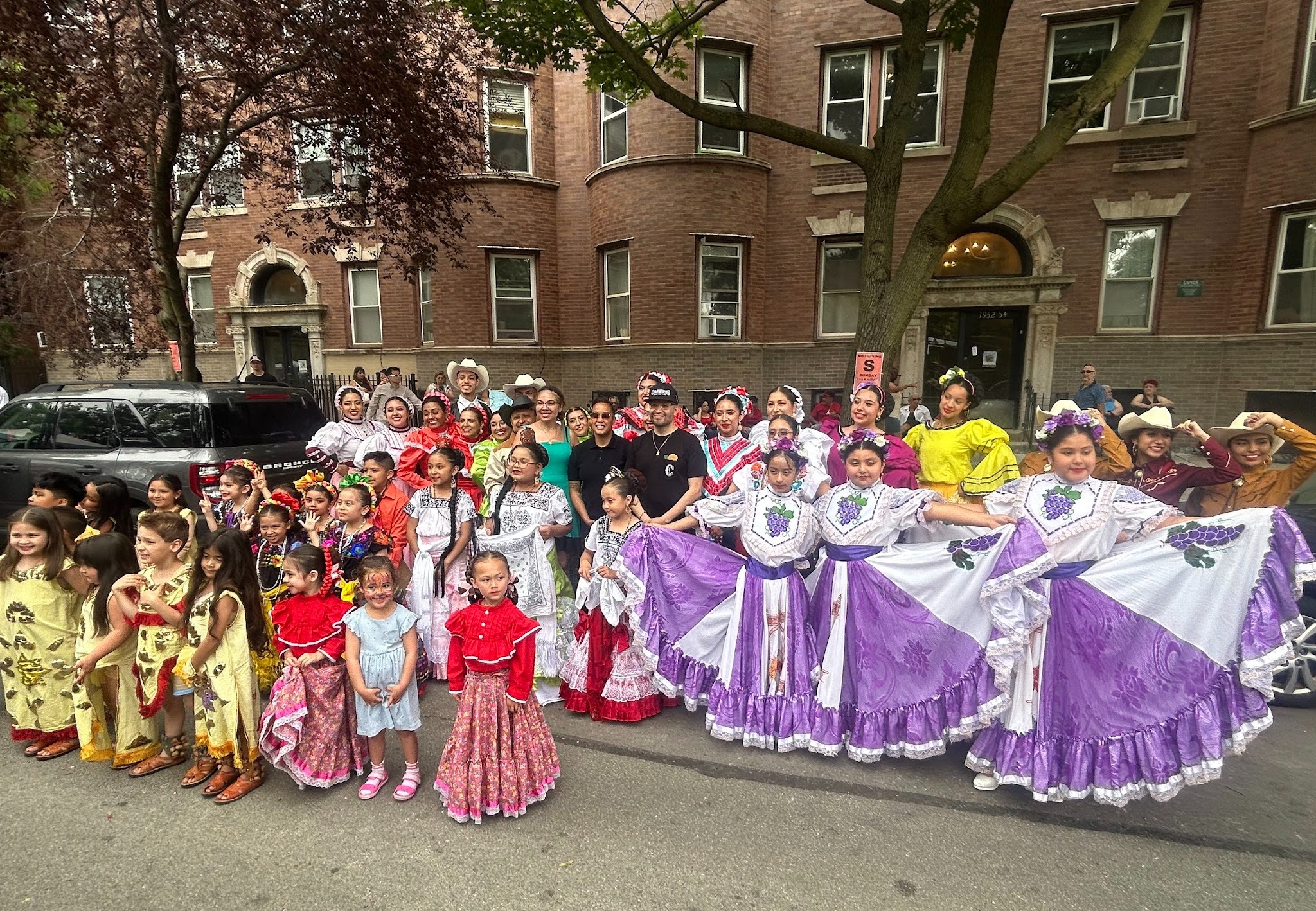
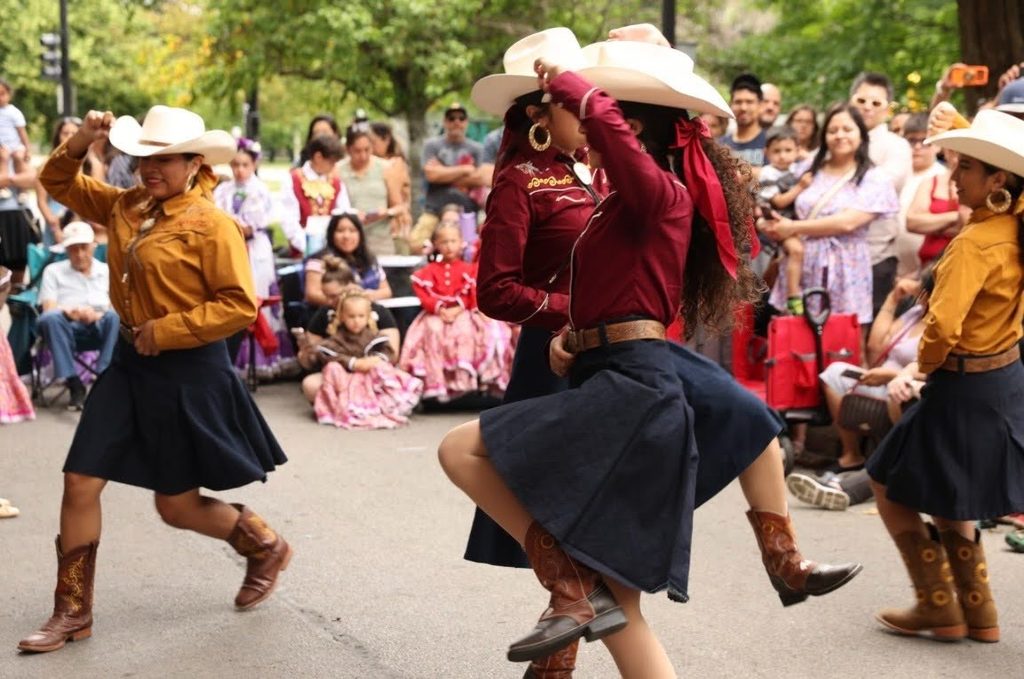
The Ballet Folklórico de Chicago company, about fifty dancers strong, chose to perform on the pavement to showcase the rhythmic stomping of their shoes, a sound characteristic of folklórico dances. Ald. Jesse Fuentes arrived just as the first performers moved into formation, twirling in their colorful dresses. We spoke shortly after the performance.
BK: I am here with Ald. Jesse Fuentes. Why was it important to you to support this event?
Ald. Jesse Fuentes (JF): Community events and engagement is the way we make the community safer. Today this event thrown by Rico and the Calaveras Barber Shop for Ballet Folklórico de Chicago is extremely important during this political moment when we’re facing attacks on immigrants. We’ve all seen the video of these dancers being attacked by residents in the community, and we want Ballet Folklórico de Chicago to know that they have a community that supports them, that champions them, that will organize for them, that will protect them and that they are not alone, and I think this is exactly what the city of Chicago needs at this moment. They need more collective spaces to be authentically themselves, and to be supported by the community and that’s why it was important for me to show up today.
BK: We knew you were supporting, but we weren’t sure if you would be here in person. How do you think this may influence the dancers themselves to feel this kind of support?
JF: I think dancing alone is already really difficult. You’re constantly training your body, constantly fighting mental fatigue. It’s an art form and it’s rigorous, and it’s all the more difficult when you belong to the company that faced a traumatic event that we’ve seen them face. So today I’m hoping they feel affirmed. I’m hoping they feel proud. I’m hoping that they feel encouraged to be their authentic selves, to continue to dance, to continue to heal on stage through music and through the art form. I’m extremely proud to have seen some adults and the young people and I hope they continue to feel that immense amount of pride.
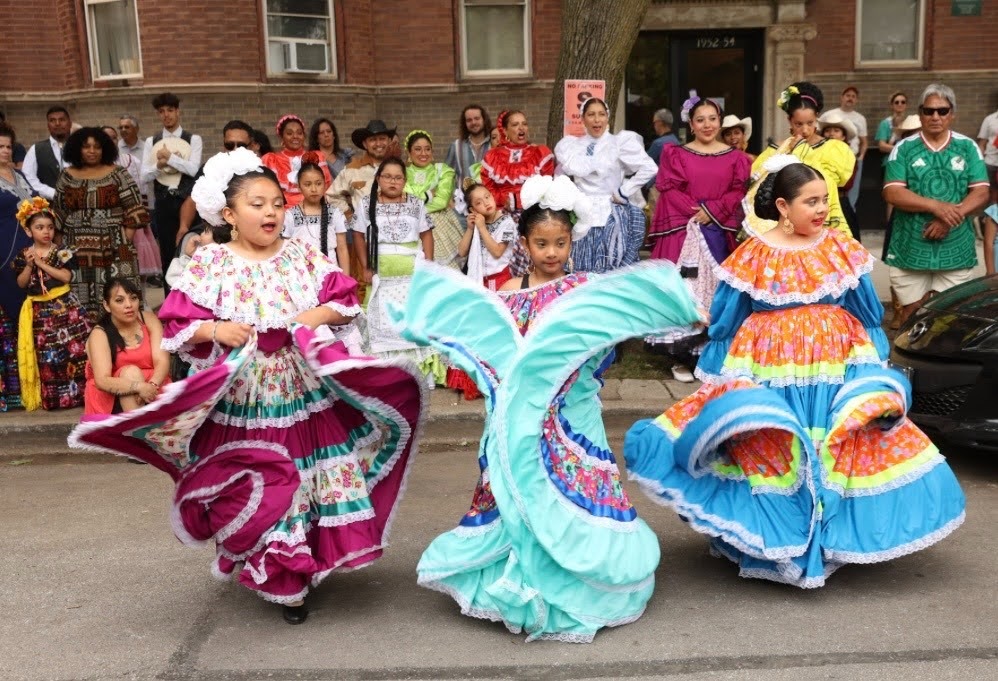
Ballet Folklórico de Chicago founder and executive director Ofelia Guerra, who introduced each dance, offering a brief look at its regional roots and cultural significance, shared her experience of the March attack on the troupe dancers and reflected on the community response.
BK: Could you give a little history and your motivation behind starting the company?
Ofelia Guerra (OG): Yes, I started the company for my two daughters: Olivia who is fourteen now and Amelia who will be twelve. At that point we didn’t have an organization on the North side of Chicago to learn dancing, language, and all that comes with the culture. We decided to open a space in the Kilbourn Park auditorium. We thought it was going to be a small community group that we invited friends and family to, but it turned out to be so much more because the community continued to demand other classes for adults. Now we teach Tiny Tots and are inclusive of all learning abilities. What makes us so special is that the community knows they are at the center of everything that we do.
BK: If we fast forward to what happened recently with the neighbor’s attack, could you tell me how it affected the community of dancers, emotionally and artistically? Did it make them cautious, aware, scared, especially given the current political climate?
OG: All of the above. It made us regroup as an organization the next day when we all met together and talked about what happened along with the parents. We stressed that they weren’t the ones that did anything wrong. I wasn’t there at the time, but I have full confidence that what the parents and kids told me was true. I went to the studio the next day because when we first recorded it, the police didn’t come out, so the next day the police came and went next door to find out what happened. Emotionally the kids were devastated because it was a scary incident since the neighbors were above on the second floor, and they didn’t know what the guy was going to come out with. It wasn’t the first time we had a bad experience with them, with that class. Previously the guy yelled at these students as well as other students from other classes and once everyone learned about it from the news, it was brought to my attention that other isolated incidents happened. That really troubled me because I didn’t know about them either. Sometimes in our community people don’t really raise their hands. They may think ‘oh, this happened to me, this guy harassed me but it will go away; they won’t do it again.’ He might have not done it to the same person, but he might have done it to a different class—all this we didn’t know until the incident that went viral brought the issue into the focus.
BK: What was the response of the authorities?
OG: The police came. The mayor’s office also got involved and put a mediator in charge of trying to bring the two sides together to peacefully coexist in the area because after all we are still neighbors and the guy still lives there right now along with his partner who was also involved in the incident. We haven’t seen them since the incident happened, but we had to put some other policies in place in the studio to be more aware and to protect our families. We don’t want a repeated incident when we are not prepared for it. We had to install security cameras and a buzzer system so that we can ensure our families are safe. We also had tremendous support from families and community organizations, the city and the state attorney. We even had a visit from the FBI, so we had people come collect the facts and provide support stating collectively that we don’t tolerate behavior like this in the city of Chicago. I felt really supported.
BK: Was the mediator successful? There was a short clip on the news when the couple seemed to apologize saying they didn’t mean it. How did the process work and what came out of it?
OG: Yes, and we saw it, too. We thought something would come out of it because their presentation in the media did seem like they wanted to apologize, but when the mayor’s office put a mediator in charge, she called them a few times, wrote them letters, stopped by the house a couple of times, but nothing happened. They didn’t call her back. They didn’t answer the door, so it was very disappointing because of how they portrayed themselves in the media. We had a couple of court dates. At the last court date the defense was putting a proposal for either probation or community hours that will be presented at the next court day.
BK: What was your reaction when you heard Ricardo Sepeda was going to organize the fundraiser for you and how did the company’s performance become a part of it all?
OG: It was amazing. He reached out almost immediately. I was inundated with messages. The media would sometimes just show up to the studio or call me when we weren’t even open yet. They wanted to report on the story so quickly and get the scoop, but when I saw his message, something told me I have to answer this message right away because he seemed so caring about our organization. It wasn’t about promoting his event. It was more about understanding what happened, and wanting to do whatever he could to help out. I didn’t even know that he wanted to donate ten thousand dollars for his ten year anniversary. I thought he might do a Go-Fund-Me, maybe raise a couple hundred dollars, which I would be grateful for, but this is amazing like WOW! I immediately said we have to be part of it. If he was going to donate ten thousand, I wanted to provide a performance, so he could see all the hard work that our kids and other dancers put in—from Tiny Tots to [dancers in their] early sixties that performed here today.
BK: I was amazed by the richness of it all—the costumes and regional representation. We thought we might see a short snippet, but this was a long, generous performance, enhanced by the sound of dancers’ shoes tapping the pavement creating its own beat. Are the classes free?
OG: They are not free because we have to pay the instructors and the operating costs, but the tuition is very low—$30/a month. I don’t make a salary. I have my own career. I work for Citigroup, and I’ve been there almost twenty-two years, so I don’t need to take any money out of it. If anything, I’m putting my own money into it. I want to see an organization like this be successful, so I purchased a building because I want to make sure long-term, we continue for generations to come. And all of the ensemble pieces come from Mexico.
BK: Amazing! How did the kids feel when they heard the overwhelming support of the community? In all of this, I’ve been thinking about them because I imagine how much this can mean to them and how much it can affect a young brain. Do you feel like this has made the difference for them?
OG: I think it has made a difference in a positive way. First when the incident happened, it was a shock to everybody. We [dance] because we are proud of our culture. [They] don’t have to be embarrassed or question why [they] do this. With all the extra safety measures, they know they can practice in a safe space and so now instead of being embarrassed, they stick their chest out as if saying I’m proud to represent my country and traditions. Whenever they go perform at events like this, it makes them even more proud. They see all people who support Ballet Folklórico de Chicago and it’s not just Mexican people—it’s all types of ethnicities.
BK: How do you plan on spending the funds?
OG: We have a scholarship fund. We’ve given out twenty one scholarships. This is going to fund scholarship winners. We believe in education and that the youth are the ones who will carry forward the traditions. Some of them are going to be first generation in college, even if it’s a little scholarship money, it means something. I would love to give somebody a full ride but right now it’s not possible. Any little bit helps, and you never know what kind of difference it can make to somebody. Today the weather was perfect. It was all in our favor.
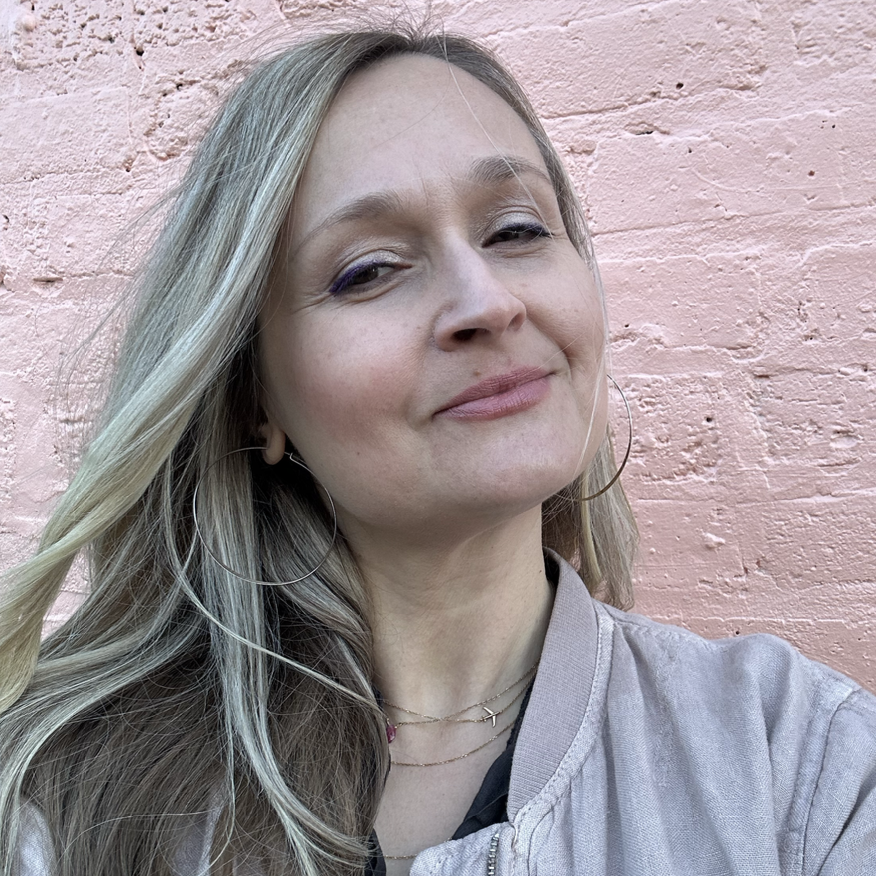
About the Author: Basia Krupa is a Polish immigrant based in Chicago whose work as a writer and researcher explores the cultural meanings embedded in dance and the ways embodied traditions shape identity, belonging and community across borders. Her perspective is informed by her own experience as a dancer, which continues to shape her understanding of movement as a form of cultural expression and collective storytelling. Before focusing on writing Basia danced with a hip-hop dance company and practiced Brazilian samba. She later spent several years living in South Korea and China, where she researched breaking culture and completed a master’s thesis in linguistics focused on the practice. Her published work includes reporting and essays for American Dancer magazine in the lead-up to breaking’s Olympic debut, as well as on-the-ground reporting from Paris during the Paris 2024 Olympic Games. Her writing looks beyond dominant narratives to explore how dance forms travel, evolve and sustain meaning within the communities that practice them.