Tuning Away from Mechanized Listening features Midwest’s music ecosystems—listening cultures where thoughtful curation, collective engagement, and storytelling still shape what and how we hear. This series is meant to be a reminder: listening can be more than a passive, forgetful experience. You can read all of the articles in this series here.
The concert is already in full swing by the time I arrive. The organizers are still putting up a banner, but the four musicians playing tonight pay them no mind. They’re playing in front of a closed garage door behind the Taylor Park Fieldhouse, atop a platform that could be a loading dock if it were accessible by a truck. In front of this stage, a handful of people have assembled on a basketball court, and the rest of Chicago’s Taylor Park stretches out to the south beyond them. The Metra’s Rock Island line runs immediately to the west; the Red Line, despite the name of the project, has its 47th St. stop some two blocks away.
There are maybe a dozen people there over the course of the night, both witting and unwitting. One man has brought a lawn chair, but when I arrive, most of the people are either staffers or playing pickup basketball and only half paying attention. One of the organizers approaches me and hands me some information about the project: eight Red Line stations, eleven concerts in total between May and October. She asks me a little bit about myself and how I found out about the concert series, and she invites me to the final concert on October 16 at the Harris Theater downtown.
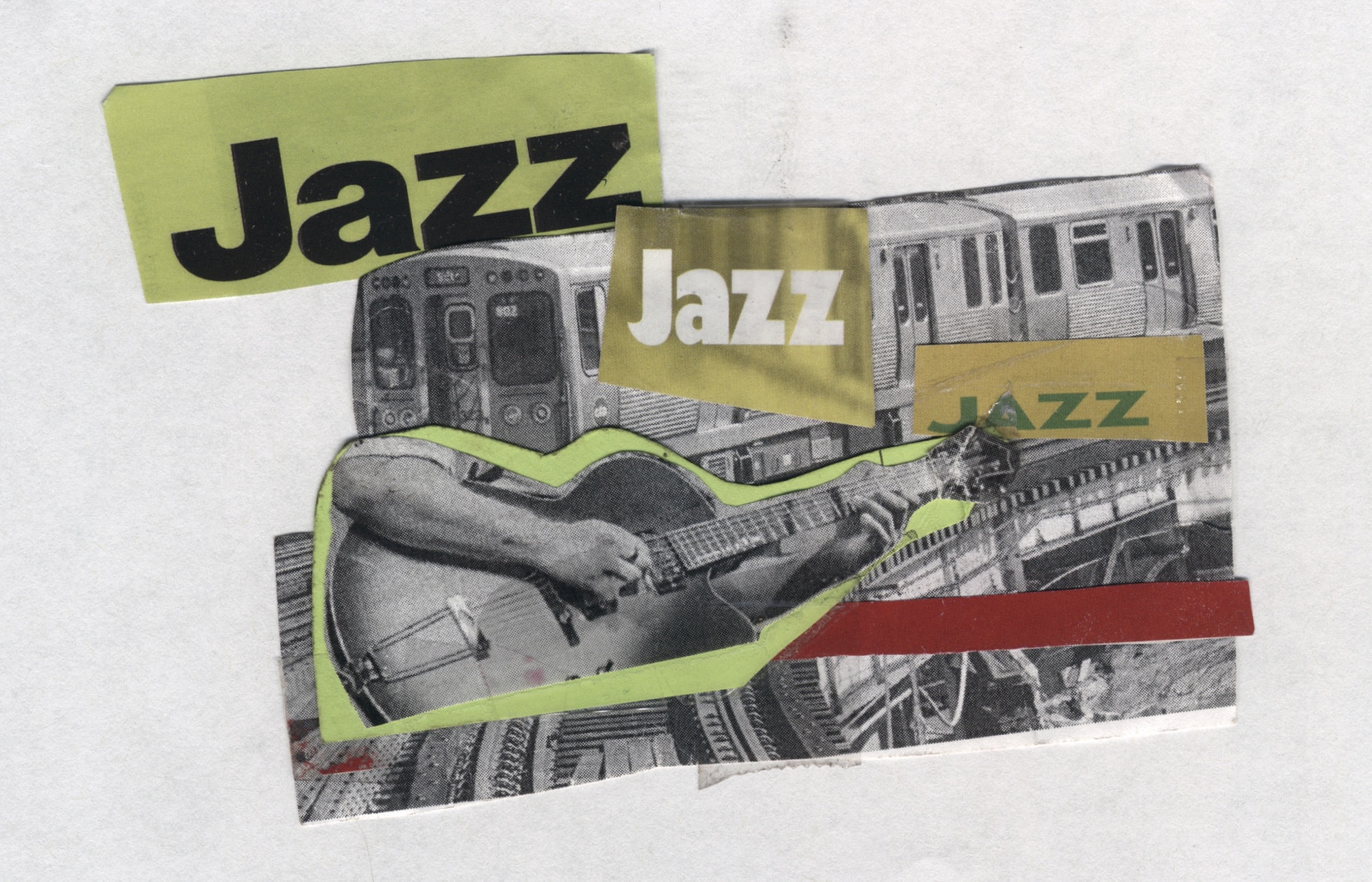
The music is very good, I should say. I don’t mean to bury the lede. There are beautiful melodic numbers with terrific improvisation and more locomotive numbers, not just rhythmic but building somewhere. It’s never flippant, even when it’s flashy, and it’s always hardworking, even as the musicians make it look easy. Fareed Haque, the curator of the whole project, plays guitar; Alex Austin and Greg Fundis, who have performed and recorded with Haque as the band MathGames!, play acoustic bass guitar and drums respectively; and Hitesh Master, who collaborated with Haque, Austin, and Fundis in The Flat Earth Ensemble and on Haque’s record Return to the Joyous Lake, plays harmonium and provides the vocals. The vocals are distinctly Hindustani, and the band as a whole has a very global sound: It’s definitely jazz, it’s structured like jazz, but it’s not married to any pentatonic scale, and the harmonium provides an interesting undercurrent beneath the otherwise conventional instrumental lineup.
Everything is amped and mic’d, but there’s still some competition for noise. The Dan Ryan Expressway, which at this point runs concurrently with the Red Line and which is preventing any performance within the 47th St. station itself, can still be heard on the air more than two blocks away. Every ten or fifteen minutes, the Rock Island line speeds by with a wall of sound and casts long shadows in the fading light. An airplane flies low overhead—Southwest, from Midway. Still, the music is never drowned out. After the first song, Haque, who doesn’t have a mic, shouts to address the audience, and the air swallows his voice. At only thirty feet away, I can barely hear him introduce the musicians and thank Mandala Arts for putting together the project.
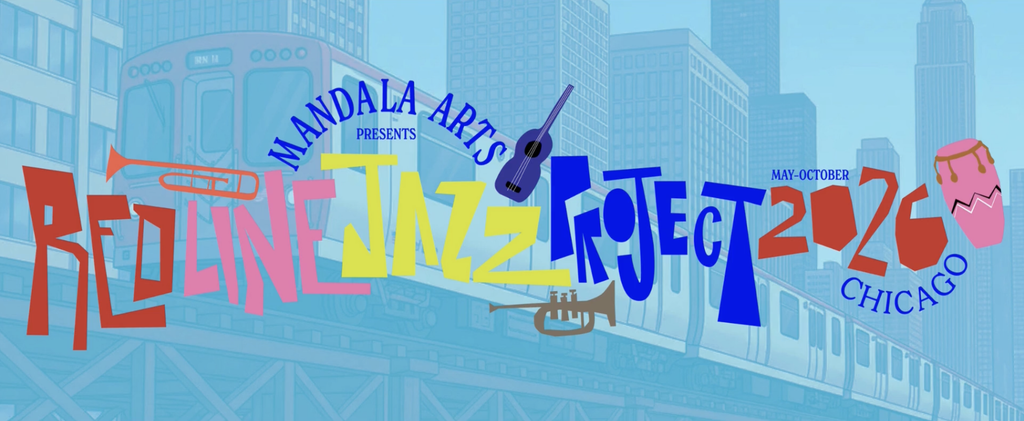
The Red Line Jazz Project is part of Mandala’s Creative Place-Making series. A South Asian arts organization based in Chicago, they have dance, theater, and musical projects, as well as a dance ensemble and academy. Previous Creative Place-Making projects include Homeward, which was produced in collaboration with other Chicago-based artists and combined narration, as well as modern, contemporary, classical South Asian, ballet, and African diasporic dance traditions; and Our Shared Home, a Naperville mural project co-created with more than seventy community residents celebrating the sixtieth anniversary of the Immigration and Nationality Act.
Mandala Arts was founded in 2014 by Pranita Nayar with this kind of wide scope in mind. Nayar, who moved to the US from India in 1985, had previously focused solely on Indian classical dance, but she grew tired of being boxed in, and she started Mandala Arts to create a space for multicultural art. The Red Line Jazz Project was specifically born out of Nayar’s experience in India, she told me, where it is not uncommon to have public music. Not busking, which of course happens everywhere, but something more embedded in the culture and less baldly commercial. At first, the project centered around CTA buses, but that concept was abandoned after the CTA informed them that they did not have the proper licenses.1 So they pivoted to train stations and ran a trial performance in the Red Line’s Morse Station in Rogers Park.
The trial was a success: the concert was received warmly, and as a result, the CTA greenlit the project. Mandala Arts approached Haque to perform and curate; they had previously collaborated in 2023, and the reunion was a natural fit. Some of the performances, like the one by Taylor Park, were to feature Haque and his collaborators, but wherever possible Haque and Mandala Arts tried to book groups that were local to the area, with performances. The goal was to reflect each neighborhood back upon itself and create something both of Chicago and the world.
“When you’re raising a child at home, and there’s music just playing in the background, you know, it just becomes part of the environment,”2 Nayar said when I asked if that reflection might be fleeting. “At the train stations, let it just become part of this lovely environment, that I’m coming home between 4:00 and 6:00 to this happy music… There’s a decorum of sitting in a theater in an auditorium and listening to the music as a group together, but there’s also joy when the community’s engaged in it consistently without feeling forced, you know?”3
This kind of childhood inundation resonated with Haque specifically: born in Chicago to a Chilean mother and a Pakistani father, he was, as he put it to me, “inundated with world music from birth,” living in Chile, Spain, France, and Pakistan all before the age of four and spending every summer before the age of fourteen traveling.4
Haque has since become a renowned jazz guitarist, playing and recording with artists including Bob James, Billy Cobham, Zakir Hussain, and Sting. A member of the faculty at Northern Illinois University between 1989 and 2018, he has also performed with the Chicago Sinfonietta and the Chicago Philharmonic, as well as with Joe Zawinul as a member of the Zawinul Syndicate. He also founded or co-founded groups such as Garaj Mahal, MathGames!, The Flat Earth Ensemble, and the Chicago Immigrant Orchestra.
Although Haque is known primarily as a jazz guitarist, and his music is inextricable from the Chicago blues tradition, he calls himself an “improvising classical guitarist,”5 sitting at the intersection between the classical and folk traditions and following in the footsteps of others who have blended classical and folk, including Astor Piazzolla, Heitor Villa-Lobos, and Aaron Copland.
“All of those folklorical traditions to a greater or lesser extent are . . . built around improvisational approaches,” Haque said. “So the moment a classical musician who doesn’t improvise is trying to embrace a folklorical style . . . they’re already lost, because they’re missing the essential element of the music, which is spontaneity, improvisation. If you go back to Baroque music . . . it was replete with improvisation. Not just soloists, but accompanists [too].”6
Something like the Red Line Jazz Project allows these classical and folk traditions to get back to their roots. Both genres have certainly had periods of widespread commercial relevance, but both began relatively humbly, and something was inevitably lost in the selling.
“All the greatest classical guitar compositions were meant to be heard by about fifteen or twenty people in someone’s living room,” Haque said. “And when you play, when you have that experience, you’re like ‘Wow, this is incredible.’ I just showed up here with a mini orchestra on my back, and you know, I do a couple of songs, someone else takes a guitar and sings a Bob Dylan tune, someone makes dinner, and all of a sudden, wow, look what all that’s happened here, you know? And I think all of [this] come[s] back to this community artistic impulse . . . . We [Garaj Mahal] had our happiest and played our best shows [in front of] sixty people, not six thousand.”7
“You know, it’s funny, man,” he told me later. “If I hire musicians, and I tell them the gig pays fifty bucks, they’re gonna show up pissed off, bored, complaining. If I tell those same musicians, ‘I got a gig with two rehearsals, and it’s no money involved,’ they’re psyched.” He laughs. “At a certain point, the music has to be more important than the money . . . even [in] the greatest, most financially lucrative circles.”8
The Red Line Jazz Project is meant to celebrate and protect this ethos of voluntarily associative art, Haque said, particularly as it pertains to Chicago. In New York and California, for example, there’s much more of a connection to money and the media: because there’s a lot of money and fame at stake, art is made with commercial success in mind. But Chicago has a more vertically integrated climate of community that can be hard to come by elsewhere. Because there’s less money to be made, the art is produced primarily for its own sake and for the sake of the community.
“Lil’ Ed & The Blues Imperials are still playing at the Kingston Mines,” Haque said. “Joanna Connor is still playing at the Kingston Mines, two sets till three in the morning or whatever it is . . . Marquis Hill can play the Montreux Jazz Festival, all that, and he can still play the late night jam . . . at the Green Mill.”9
It’s cool, of course, to have heavy hitters play the local scene, but it’s more important than that. Music is ultimately about community and agency, Haque told me. If you lose one, you lose the other.
“Music and the arts in general is an engine of community and therefore an engine of agency,” he said. “‘Hey, let’s learn these songs that grandpa taught us, let’s play them, let’s get together. You’ll cook the food, I’ll play the music, you set up the dance floor, let’s put these lights up, let’s make it pretty.’ Look at all these things that flow from the idea of community and . . . start with the arts, you know? . . . We keep taking that urge, that urgency for community and putting it on a stage, saying, ‘Let’s see if we can take this community and separate it and monetize it.’ And to a certain [extent] it works, but [at] a certain point it’s its own worst enemy.”10
Back by Taylor Park, a woman dances on the basketball court. Another man walking by can’t help but stop and bob his head, almost despite himself. There is something lost, I think, by not being within an actual CTA station; at the very least there would be more people, but the performance succeeds despite. The music is just happening, with no reference to any of the usual hallmarks of performance. There’s kind of a stage and kind of an audience, but no one here really asked for music; no one here is a paying customer. But by choosing to stay and listen, something tacit is agreed, something beautiful and slightly novel, and the music becomes a welcome interruption in the otherwise normal fabric of things. And all of a sudden: Wow, look what all that’s happened here, Haque had said to me.
A hawk lands on a lamp post nearby, and the band all turns to look. The music slows to a murmur and eventually ends. We clap, assuming it’s the end of the song, but Haque tells us to be quiet so as not to spook the bird. Finally, they play one last song, and all of them are singing this time. The sun is already down, the light will soon be gone with it, and when the music ends, the spell breaks, and people disperse quietly. The community was not permanent; perhaps it could never be. The music joined us and let us go in equal measure. We were briefly one in a moment, and we dissolved into many the next.
Is that success? I don’t know. Perhaps it doesn’t matter. Success need not have a monopoly on meaning. In any case, I went home happy: to live in Chicago, and to have been part of something unique and ephemeral with neighbors I will almost certainly never see again. I’m not sure what else I could have wanted.
***
Footnotes
- It is possible to obtain a license to perform at select CTA train stations per CTA Ordinance 006-075, but the scope of the project seems to have required special dispensation from the city, which they were not willing to give for buses. ↩︎
- Interview between the author and Pranita Nayar. ↩︎
- Ibid. ↩︎
- Interview between author and Fareed Haque. ↩︎
- Ibid. ↩︎
- Ibid. ↩︎
- Ibid. ↩︎
- Ibid. ↩︎
- Ibid. ↩︎
- Ibid. ↩︎
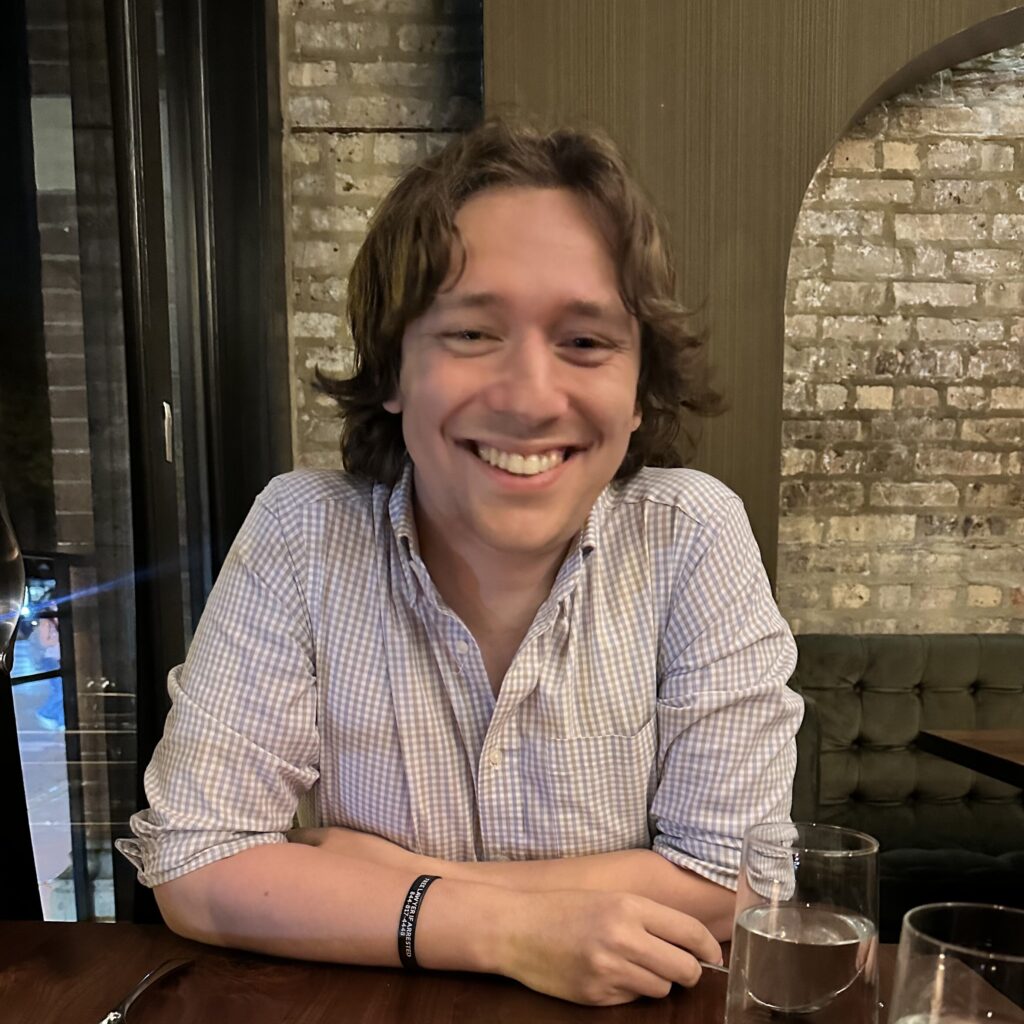
About the author: Jack Bourdeaux is a writer living in Chicago. A recent graduate of the University of Chicago, he also plays the violin and was a co-director of Steel Veins, a feature-length documentary about the CTA.
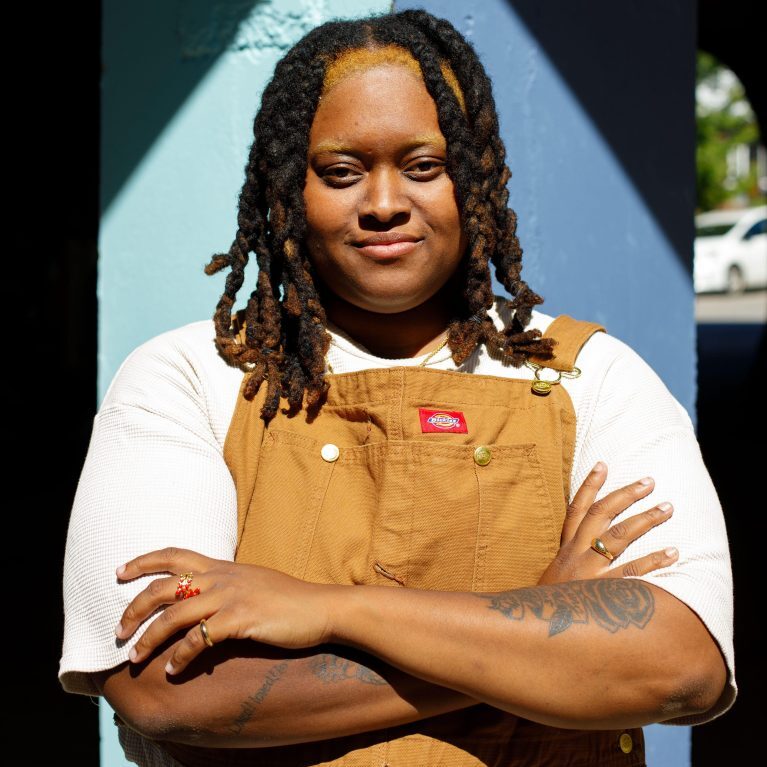
About the illustrator: Bri Robinson is a mixed media artist, analog collagist, sculpture artist, and historian who weaves intricate narratives of love, loss, and identity across the expansive Midwest. Through their unique process of cutting, pasting, and layering, Bri deepens the meaning of these found objects, transforming them into evocative works of art. Bri’s practice is deeply rooted in the exploration of identity, relationships, and the constant evolution of self. By merging archival materials with elements of popular culture, they create thought-provoking narratives that invite viewers to engage with the complexities of the queer experience. Through their work, Bri honors the past while also pushing the boundaries of contemporary art history, crafting pieces that are as introspective as they are expansive. Check out their work on instagram @niq.uor.