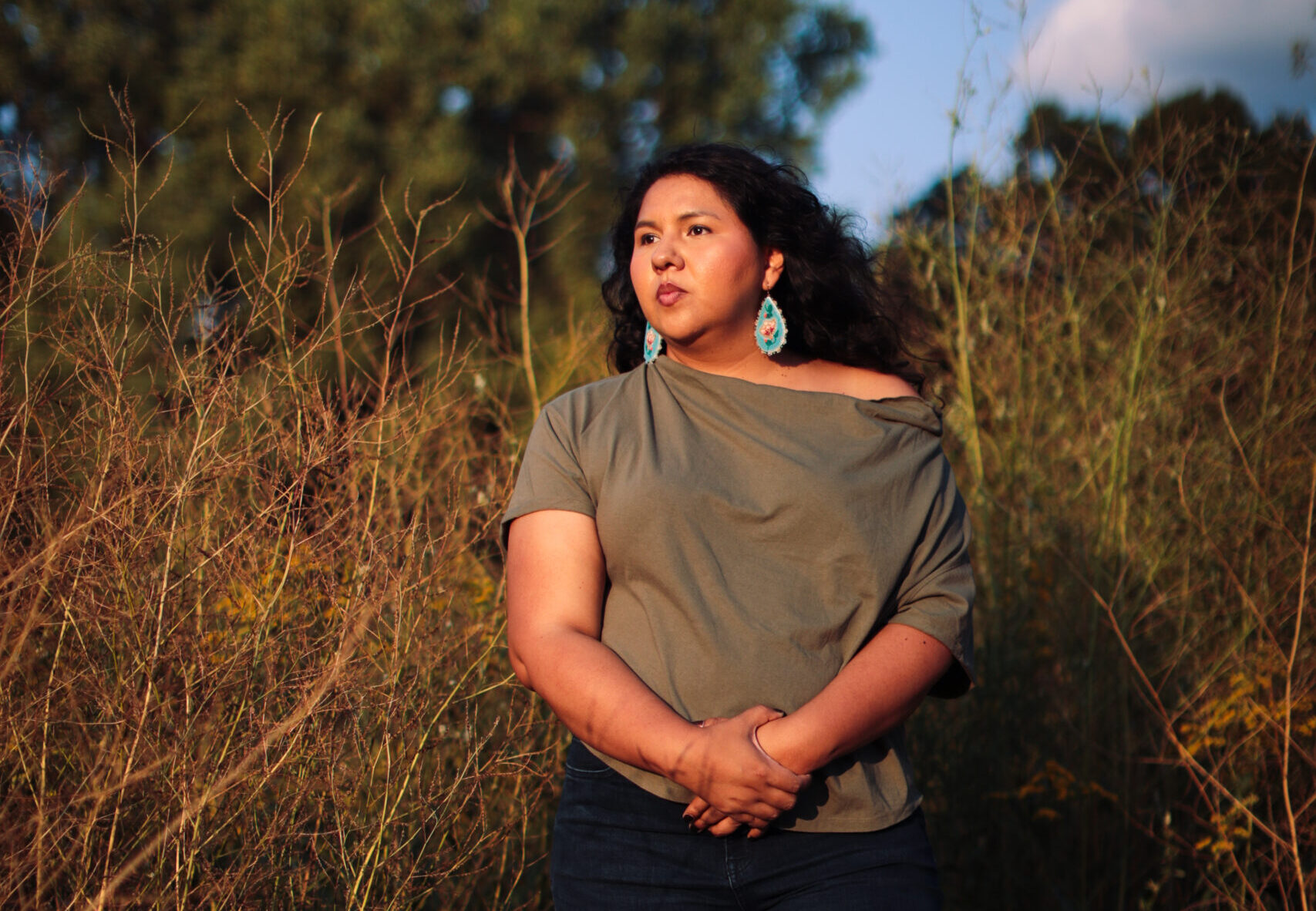

Sixty Bilingual is excited to welcome our first Guest Editor Jaida Grey Eagle in a 6-month journey to develop, refine, and publish bilingual writings on topics that are resonant and relevant to Indigenous, trans, queer, diasporic, and/or disabled artists and arts workers in the Midwest.
This opportunity arose as Sixty’s Bilingual Editor and the rest of the editorial team flagged a priority to publish arts writing in Native Languages. To help us in accomplishing this editorial goal we invited Sixty’s first Guest Bilingual Editor to oversee a series written in Lakota by invited writers chosen by Grey Eagle.
. . .
Luz Magdaleno Flores: I’m excited to be introducing you to Sixty’s community. Let’s start with introducing yourself. Where are you located right now?
Jaida Grey Eagle: My name is Jaida Gray Eagle. I am an enrolled member of the Oglala Lakota Nation, who are based out of South Dakota where I was born on the Pine Ridge Indian Reservation. I am currently speaking to you from the East Side of St. Paul in Minnesota where I currently reside with my husband, our baby girl Poppy, my niece Robin, our rez dog Strider and our East Side cat Sica.
LMF: Awesome. How do you identify in terms of your artistic practices?
JGE: That’s a good question. <Laughs> It’s something I’m still figuring out. I’m a photographer. I primarily do documentary photography, It’s what I’m most known for, I think. I studied art in college so I also do some fine art photography with alternative processes. I also have been beading since I was a little girl. I’m always looking for ways to sort of combine all of my loves into one. Like beaded cyanotypes. I just recently got into quilting. I just finished creating a cyanotype starquilt that is on display at the University of Toronto until next summer. I’m just an artist and try to find different creative outlets for my creativity.
LMF: It’s very common for a lot of us artists to wear a lot of hats. I feel like limiting ourselves to one just doesn’t feel natural.
JGE: Yeah, it doesn’t. People are like, “You’re an artist!” I’m like, “Yes, but I’m also…”
LMF: When did you see that coming on? Do you have memories as a child, let’s say playing with a camera or being fascinated by a particular type of art?
JGE: Yeah, you know, I’ve been photographing since I was a little kid. I used to have a Game Boy camera, which I used to make little comic book strips out of photographs and I would create photo stories with them. I used to take my parents camera all the time! I actually ended up breaking it because I was always turning it on, turning it off, turning it on, turning it off, because I carried it with me everywhere. I was always entering art contests when I was a kid. Art has just always been around as a Lakota person. My mom did bead work. My dad could do these realistic drawings. They both wouldn’t consider themselves artists, they just did it.
Having access to art supplies and materials was just always there. It was never a bad thing to be an artist in our family. I could say I was an artist and people were like, “Yeah, yeah, for sure.” It wasn’t until I started hearing negative things about art in school from guidance counselors. They were like, “That’s not real. You’re not an artist,” but at home, the supplies and encouragement were there.
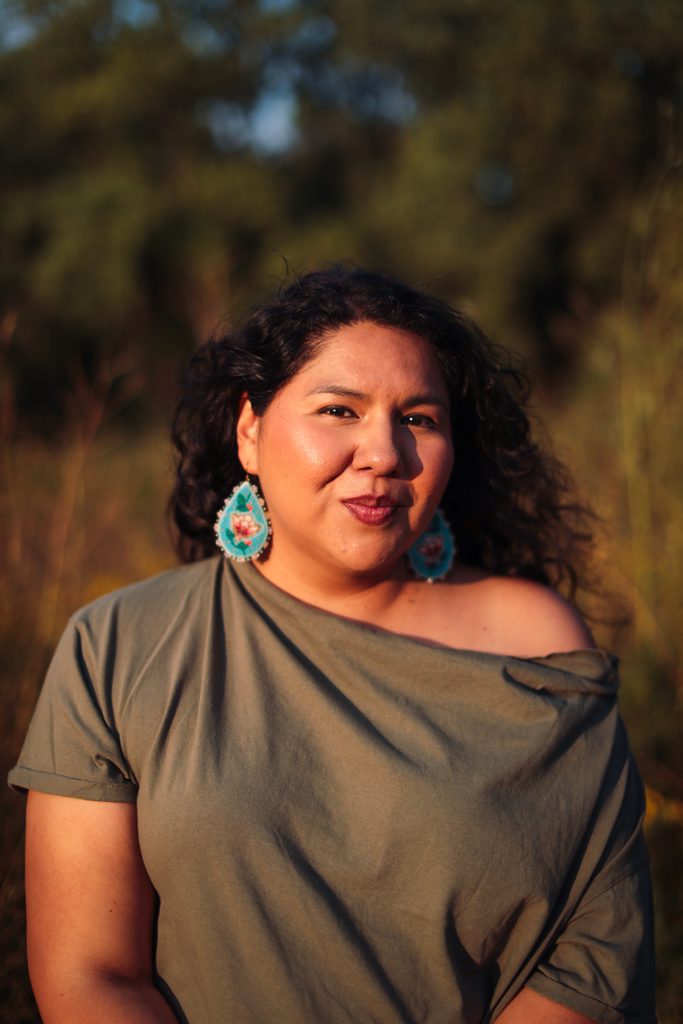
LMF: That’s beautiful that you had the support at home. What drew you to get into photojournalism?
JGE: I think my mother was obsessed with the news. She herself produced some documentaries, and she was always sending us news articles and telling us to stay informed. I had always been really interested in journalism, but it felt like it wasn’t going to be a path for me because I didn’t go to college immediately after high school. I was like, “Oh, that’s not a possibility because it’s such a gatekeeping industry, and it feels like you have to start at 22 or otherwise you’re just not gonna get into it.” It was always at the top of my mind and I had studied art in college, and even the art that I was doing in college was documentary photography. It’s like I was still telling stories with my photos.
I got into a program called Report for America, which places emerging journalists into up and coming newsrooms. And that’s where I ended up cutting my teeth into journalism. That provided an opportunity and a doorway for me that hadn’t been there prior. I was placed at the Sahan Journal in St. Paul, MN where I was a fellow for three years and covered many incredible stories with my amazing colleagues. I learned so much during my time there and am forever thankful for them for starting my journey. Now I am currently freelance and have been for the past three years, which feels wild to say that I’ve been freelance for three years!
LMF: I learned that you went to school in New Mexico. How was that experience as someone from the Midwest?
JGE: It was wild! Oh, my goodness! I had been to New Mexico as a child because my dad went to the University of New Mexico. But it’s such a different experience going there as an adult. And I hadn’t visited since I was a kid. My husband and I made the decision that I was gonna go to school for photography. We didn’t visit. We didn’t do anything. We blind signed a lease for an apartment and we just went. I remember going there and it was so dry and hot. I was like, “What are we doing? <Laughs> Why did we do this?” I wanted to be around water. I really missed water. Anywhere that I am in Minnesota, I can walk a short distance the road and there’s a lake right there. I can’t do that in New Mexico.
I was very thirsty for a long time. <Laughs> Acclimating to the desert was a lot. Once I started getting more into it and started adjusting more, I really fell in love with the food, the sky, the culture, and just being there. It’s interesting because I was just there a few weeks ago and it’s almost like it’s become a second home for me. I know a lot of the people and a lot of the stores. I feel like I could just land and call a friend and be like, “Come eat with me?” It’s definitely a second home now.
LMF: Would you say that our connection to water is your favorite thing about the Midwest?
JGE: Yes, absolutely and the seasons. I think people are really intimidated by our winters. But when you’re here you don’t really think about it, I guess? It just happens it’s nice. I really like the winter. I like the fall. I like the spring. It’s home to me in a way that no other place really has been.
LMF: Thank you for sharing. Let’s go back to your photojournalistic work. Is there a project or experience that you’ve had up to this point that you would call your favorite or just stands out in a way?
JGE: Yeah, there was a story that I worked on with the Smithsonian in the Summer of 2024. It’s about a massacre that happened at Blue Water Creek in what is now Lewellen, Nebraska. It was a massacre of a village of Sicangu Lakota people ordered by General Harney and the enacted by the calvary in 1855. The Lakota people that were massacred had items taken from them by one of the calvary members. Somehow, some way those items ended up at the Smithsonian collection. One of the survivors of the massacre was a little boy named Little Thunder whose descendants ended up finding out about the massacre, and then finding out about those items that were in the Smithsonian. They started asking for those items back, to be repatriated back to their people and one of the people that stepped up to help them, assist them, and lend them his voice is a man who is a descendant of General Harney who called the attack on the Lakota people.
So my reservation is an hour and a half away from where this massacre happened and I had never heard of it in my life! It’s not something that’s really widely talked about or even particularly known about. I had heard about the massacre at Wounded Knee, but growing up, even as a little kid, they used to call it the Battle at Wounded Knee. It’s only been very recently that they started changing those signs to calling it a massacre. The signs in Lewellen, Nebraska still call this particular massacre a battle. The Smithsonian Magazine had reached out to me to cover this story that I had never heard about.
I remember I ordered the book that the Smithsonian published that contains photographs of items that were taken from those people. I couldn’t look through it. Even though I had ordered it, I was looking through it, and it was a lot, to be able to sort of absorb it. I was like, you know, I need to be strong. I need to look through this and see what this story is about. And I was looking through it, it was hard. It was hard to look through those items and know what had happened. A few weeks later my niece and I, we drove out there, I think it was in, July or August, it was really, really hot.
During this story, I had the opportunity to photograph a revered elder and spent some time with him and we were just sitting in his house, and his house is kind of hard to find. I remember I called his landline and I said, “How do I find you?” and he said, “Oh, I’m just a few miles north of your Grandma Dodd’s.” He knew who I was! That was just so funny because I haven’t lived on my reservation since I was a little kid, but people still remember who you are and remember who your family is. One of the things about working with a magazine is you can kind of take your time a little bit. I needed to take that time in order to fully capture the story of the land and what had happened there, because a large part of the story is centered around this witness tree–this 250-year-old cottonwood tree that’s in the middle of the field where the massacre had occured.
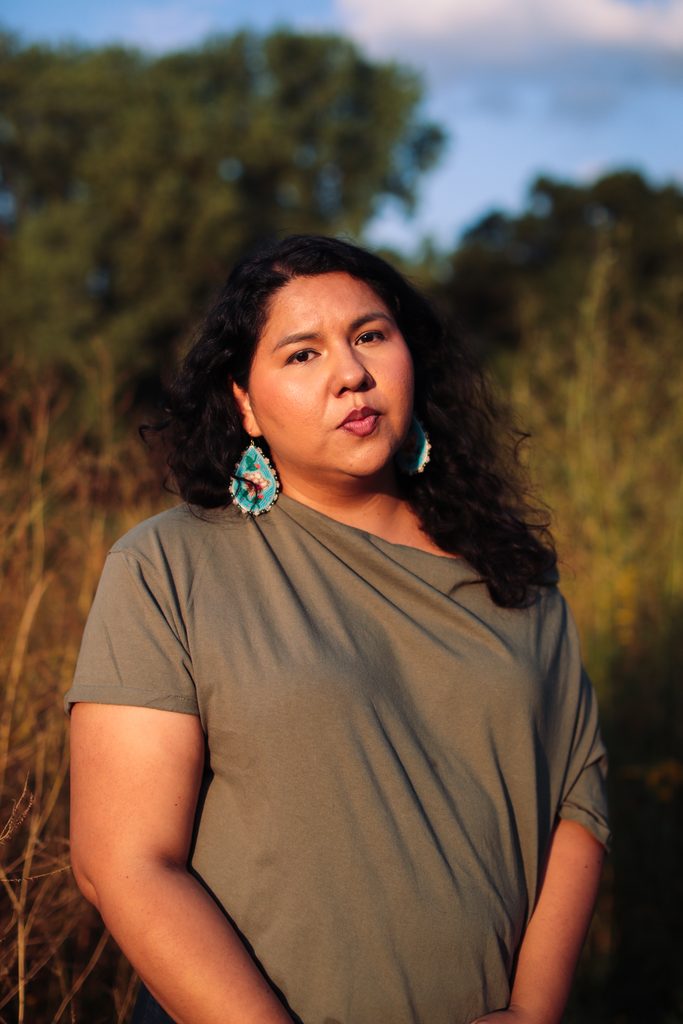
They call it a witness tree because it witnessed what happened. And somewhere along the way, the family were gifted saplings from that cottonwood tree to grow at their own houses. So I told the photo editor, “I’m going to their houses to photograph those saplings, even though this is so far away. These are hours apart from each other,” and he was like, “Yeah, yeah. Do what you need to do.” I drove to their houses on the reservation and I photographed those saplings and I photographed that tree for days, and I got to meet the family that was behind asking for those items back. They came out to the massacre site, and it was just, it was so heavy, you know? It was just so emotional because it’s such a vulnerable space, not only to be photographed, but to also be at that site. It felt like a lot, but it felt good to be there and to help tell their story. And then you submit it and you kind of forget about it, right? ‘Cause Magazines are kind of, like, a few months out. Then the photo editor messaged me and said, “Jaida, your portrait’s actually gonna be the cover!” And I got so scared. <Laughs> I was like, “It’s my first magazine cover and it’s such an intense story.” I was like, “Oh my God are you sure? But after going through the edit again and looking at it, I was like, “Yeah, I can see why that would be the cover, because it’s such a powerful story. It’s such an unknown story.” I am also happy to say after a few months after the story was published, the Smithsonian returned those items. Those items are back with the community. They are back home.
LMF: Oh, hell yeah! <Laughs>
JGE: Yeah. <Laughs>
LMF: I think that’s a good reminder or a moment of recognition of how journalism, even though we don’t think about it as memory work, can be memory work, right? And there are feelings that can come through when we’re working on stories that are more emotionally connected to us than others.
JGE: Yeah, definitely.
LMF: How do you practice self-care?
JGE: I practice self-care by decompressing once I get home. I think a lot of the times, with journalism, they want us to stay distant from the stories, which is accurate sometimes. I think sometimes when it’s a personal story, I think whenever it’s something that’s a little bit closer to home, you know? They hired me because I’m a Lakota photographer. Of course, it’s gonna give me feelings. I think it’s okay to have those feelings and just recognize them. Just not let it interfere with the work. The way that I practice self-care is smudging a lot of the times. I go to ceremony. I journal. I write. I forgive myself for being human. I allow myself to have feelings and be a person because sometimes you just have to be. We’re people. We’re not machines. We’re not AI. People hire us because we are people. And we do have feelings. And to deny those is not human.
LMF: True. So you’re Sixty’s first guest bilingual editor. What are some goals you have for your time collaborating with us?
JGE: I really want to showcase and uplift Lakota language. It’s something that I had the privilege of growing up and being around a lot in my life. I’m not fluent. Even if I became somewhat fluent, I don’t think I would ever claim to be fluent because it’s such a vast language. There’s so much understanding to it. It’s such a beautiful language. I just wanna showcase the beauty of our language and show how much of it we’ve kept and how it’s deeply revered within our community.
LMF: Of course. I’m sure you’re excited about creating opportunities for publishing for different folks, are there contributors that you’re very excited about?
JGE: Yeah. I had reached out to Robert Harold Bordeaux about doing a photo essay that celebrates the language. I’m a photo person, so of course I’m excited to see what he does. I mean, just with all of them, with everybody who I’ve approached, I’m just excited to see where they go with it. Some people are fluent, some people are not and I’m excited to see how it all comes together.
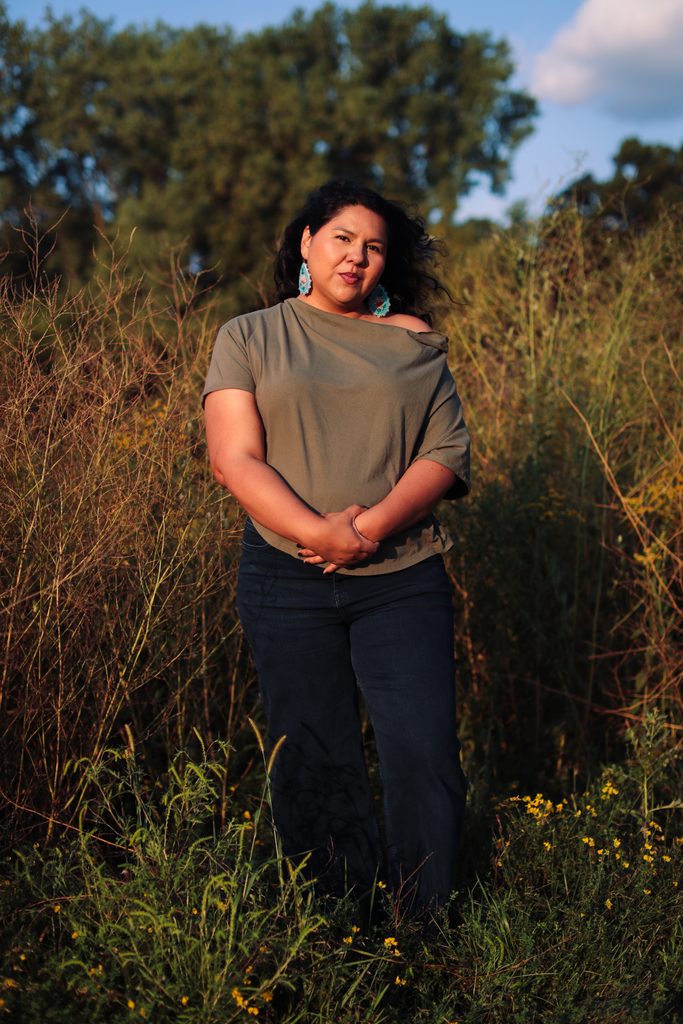
LMF: As a talented photographer yourself, I’m looking forward to your portraits by Patience. Have you all set a vision for the shoot yet? I’m always curious as to how other photographers collaborate with other photographers.
JGE: She wants to do film and digital, and I chose the space. The space is where I actually did my maternity shoot last year. It’s this park that’s near our house. It’s where we take our dog and our baby for a walk every day. We’re so blessed with really beautiful parks in Minnesota and they’re huge. There’s this tree that’s in the center of it that my husband and I say is our tree. That’s where I’m gonna have my portrait taken.
LMF: That’s beautiful. I love that. Is there anything you wanna add?
JGE: I’m excited to be able to tell everybody to get going.
LMF: The last question I had for you is what advice do you have to non-Native folks to best support and show up for Native people in these times, especially artists?
JGE: Having an understanding of Native art is always really valued to me, you know? Sometimes I think people don’t understand how much goes into our work from hide tanning, to quill work, to bead work, to all these things that our families have kept for a long time is hard work. It really truly is. Cleaning and dying quills takes forever. To tan a hide takes days, weeks even. Theres so much behind the scenes that happens within our work.
I remember selling at an artist booth and somebody was touching one of my bracelets and she was like, “What is this material on the back?” I said, “Oh, this is tanned hide,” and she literally dropped the piece and said, “Oh, I don’t want anything to do with that.”
Most of the time, animal hide that we use is roadkill or animals that were hunted by families through sustenance hunting practices. To respect an animal is to use all of its parts, right? Like, we talk about how their hides are gifts to us. We have stories about our relationships with animals and how best to respect them and their lives. Because it was an animal byproduct, she didn’t want to touch it.
Hide tanning is so different from what we sort of demonize in the industry like factory farming or commercial leather. There’s a difference between indigenous knowledge and traditional ecological knowledge and that. So, I don’t know, just a respect for what it is that we do and that we maintain because we lived in this country for a long time, and we had very little to no impact on its carbon footprint prior to colonization, and we still practice those practices and we’re grateful and celebratory to still have them even after all that we’ve been through.
LMF: Thank you.
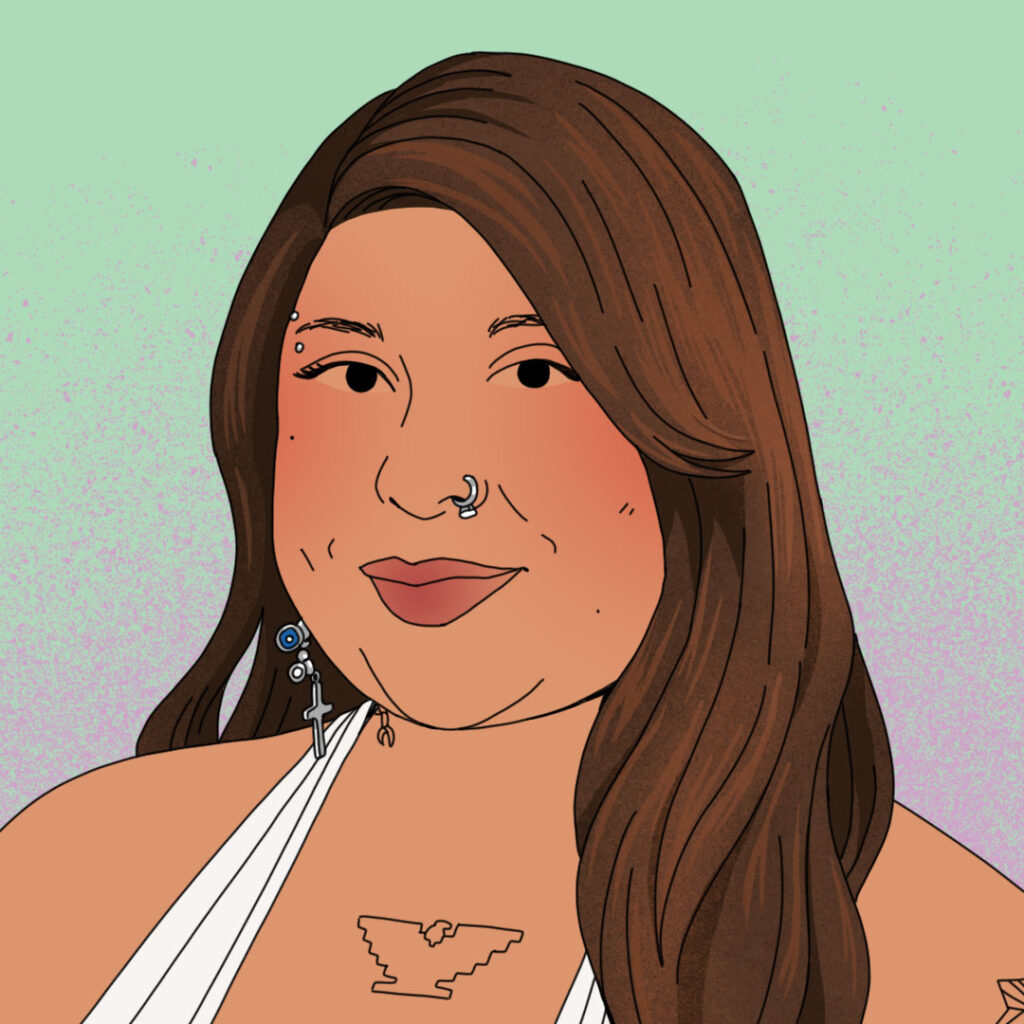
About the Author: Luz Magdaleno Flores (she/her) is Sixty’s Bilingual Editor. She is a Chicana content creator, poet, textile artist, and fotógrafa based in Pilsen by way of Oxnard, California. Also known as DJ Light of Your Vida.
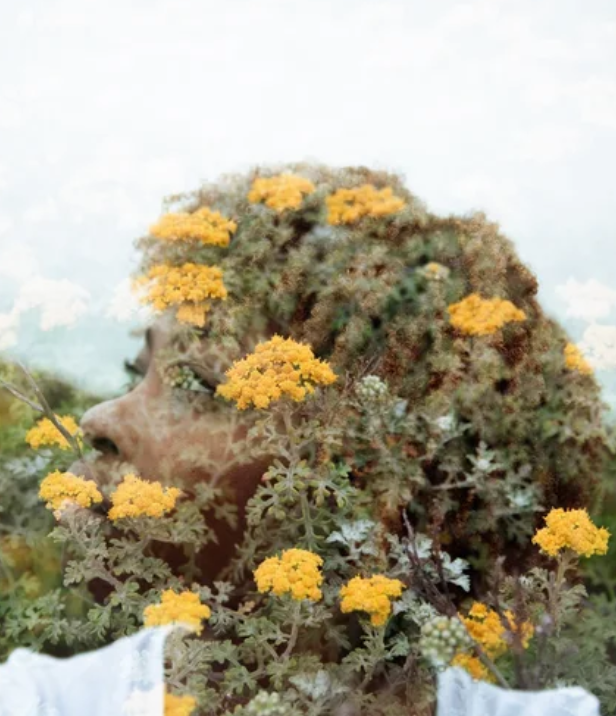
About the Photographer: Patience Zalanga is a Minneapolis–St. Paul-based photojournalist and artist whose work over the past decade has centered on social movements and civil unrest in the United States. Her photographs have been published by TIME, The New York Times, NPR, Minnesota Public Radio, BuzzFeed News, AJ+, NBC News, and Business Insider, and images from the 2020 Minneapolis uprising are now held in the Library of Congress collection.