At the end of the Ogilvy-made trailer for the 61st Chicago International Film Festival (CIFF), Chicago-theater-vet turned Oscar-nominated actor Michael Shannon had a simple invitation: “Find your genre.” The trailer played before each showing. “Do you like subtitles?” Shannon asked while the screen read, “Aimez-vous les sous-titres?” Implying non-English-language films are a coherent genre. Another genre proposed by Shannon: “Were you in high school theater?”
The first time I saw this spot, I worried that the sensibility of the festival had strayed from Cinema/Chicago founder Michael Kutza’s mission to “provide an alternative to the commercial Hollywood movies that dominated the city’s theaters.” When the mission of the Festival has already spread to the rest of the city— screenings at The Gene Siskel Film Center’s winter “marathon movie” series Settle In routinely sell out and audiences often pack the Music Box’s 750-seat theater for the latest international film—what does that mean for the Festival?
Splashy commercial hopefuls already backed by major distribution made up so much of CIFF 61’s prized curatorial spots—A24’s Eternity was the Fest’s Closing Night pick, and Hamnet, Frankenstein, Jay Kelly, Train Dreams, and Wake Up Dead Man: A Knives Out Mystery all received prized Special Presentation programming— signalling that perhaps the Festival’s original role as a commercial alternative had faded.
It turned out that the film that followed the spot, Hong Sang-Soo’s 33rd feature What Does That Nature Say to You was my perfect introduction to 2025’s Chicago International Film Festival. Like any time a new Hong feature reaches Chicago, it’d been about a year since the last one, and I was at the Gene Siskel Film Center. Only, instead of me and a few other quiet people on a weeknight often in the smaller theater, at CIFF, we were treated to a packed, laugh-happy house in the larger 198-seat theater. I experienced this same amplification of what I love about Chicago film culture throughout my time at CIFF.
By the end of my time at the Festival, I found myself drawing connections between the smaller, quieter, often international films that are more to my tastes and the splashier films gunning for Oscars.
The tiresome portrayal of tragic motherhood in Chloé Zhao’s Hamnet suffered in the rearview once I saw one of the endless close-ups of Rose Byrne’s explosive desperation in Mary Bronstein’s If I Had Legs I’d Kick You. Until Bronstein’s central aesthetic choice to keep the child out of frame felt like an imposed visual rule once I encountered the Dardenne Brothers’ verité style and ensemble structure of Young Mothers.
Drama in Joachim Trier’s Sentimental Value came more from the external circumstances of suicide and fascism: I craved the careening of those situations into the lives and behavior of the dysfunctional family. Everything I wanted from Trier’s film I got in Mascha Schilinski’s Sound of Falling (winner of CIFF’s Silver Hugo Best Director award).
While Park Chan-Wook’s anti-capitalist class allegory in No Other Choice felt broad, Ratchapoom Boonbunchachoke filled his debut A Useful Ghost with genre and style flourishes that bring Thai labor and queer history to life with genuinely original cinematic imagery.
Over and over, I found the most lucid critique of a film I found frustrating in another film programmed. Absent from the marketplace of a Sundance or TIFF, and larger in scale than alternative fests like Slamdance, the beauty of CIFF is in bringing these otherwise disparate styles of film and festival in conversation and friendly competition with one another..
While other Chicago festivals like Reeling and Black Harvest represent a broader range of LGBTQIA+ and Black films than CIFF’s OutLook and Black Perspectives programs and fans of low-fi horror might be better off picking Music Box of Horrors instead of CIFF’s After Dark program—no other festival in Chicago reflects a broader swath of contemporary filmmaking and filmgoing culture than CIFF.
Find your genre indeed.
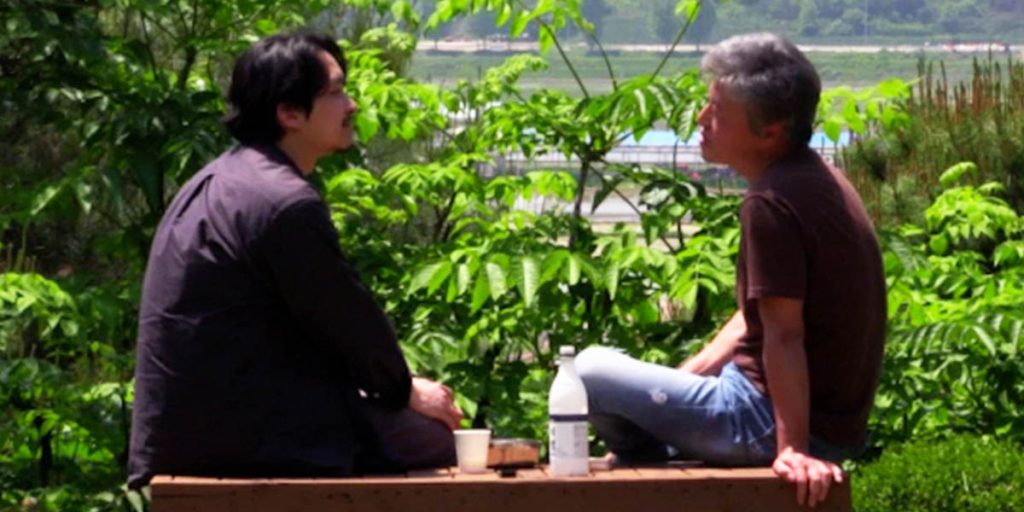
What Does That Nature Say to You (Dir. Hong Sang-Soo)
Driving his girlfriend Junhee (Kang Soyi) from Seoul to her parents’ suburban home, thirty-something failed poet Donghwa (Ha Seongguk) expects to drop her off, meet the parents, and leave. After a horribly awkward conversation about Donghwa’s car with Junhee’s father Oryeong (Hong regular Kwon Haehyo), Donghwa ends up spending the day, into the night, at the house. Oryeong doubts Donghwa from the start, then through a shared love of poetry with his wife (Cho Yunhee) he finds a reason to extend Donghwa a little grace. Only for Donghwa to ruin it, scene after scene, with his self-absorption or naiveté.
At the end of the film, drunk off his ass, alienated beyond repair from Junhee and her family, Donghwa uses his flashlight to try and find his way from Oryeong’s music practice space back to the main house. Once Donghwa notices the bright green leaves of a nearby tree blowing in the wind, he’s stopped in his tracks, lost, the need for a destination other than right there erasing itself. He gets a glimpse of what it’s like to see nature, that nature in front of him, what is on camera, through Hong’s lens. For Donghwa, the leaves of the tree reflecting in his phone flashlight might be a turning point. For us, it looks like what we’ve been seeing for the film’s entire runtime.
Much gets made of how Hong’s work loops in on itself, but What Does That Nature Say to You, maybe better than any Hong in recent memory, showcases how no other filmmaker so relentlessly pursues the erosion of the dividing line between comic and dramatic irony. The distance in age between Hong and his self-insert character in this latest — the filmmaker in his late fifties, the protagonist in his mid-thirties — emphasizes that Hong’s camera is always ahead of those protagonists that resemble him.
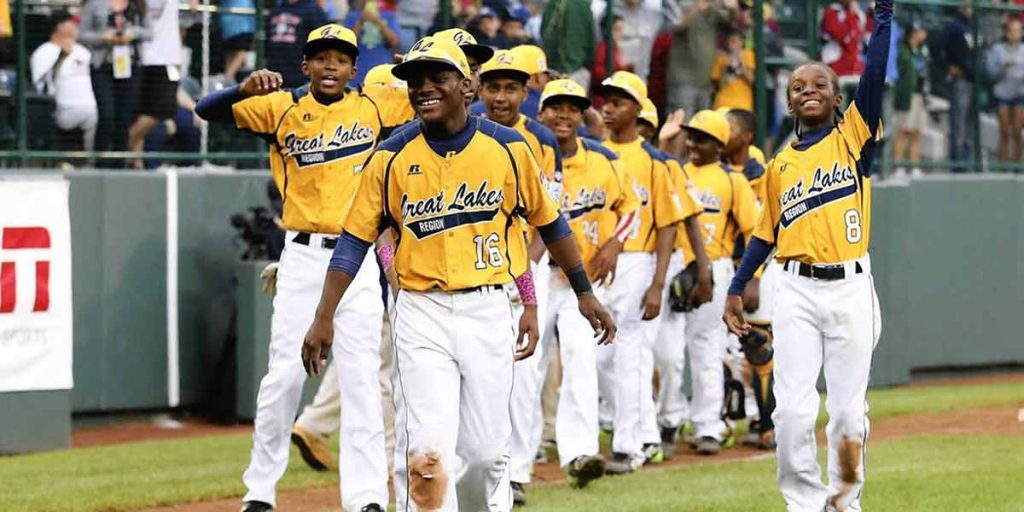
One Golden Summer (Dir. Kevin Shaw)
CIFF Opening Night selection, Kevin Shaw’s documentary One Golden Summer follows the 2014 Jackie Robinson West Chicago Little League team that became the country’s first all-Black team to win the national championship. Their story swept the city and soon the nation, only to have a tragic (and, the documentary will show you, racist) fall from grace.
This doc hits all the beats you would expect it to: talking-head interviews with a constellation of people related to the team, including the players, their families, etc. They reflect on glory days, and then the systemic implications of the revocation of their victory, all in well-researched, visually paint-by-numbers talking heads interviews.
However, around halfway through the movie, the filmmakers use generative A.I. in this film — for two glossy, otherwise unremarkable exterior B-roll shots of Black boys playing baseball. This visual choice soured me from the film’s accomplishments. The choice to resort to A.I. felt like a broader failure of vision: if even one shot is replaceable by a digital approximation, what is the aesthetic conviction of the film?
Given its prominent Opening Night selection, I could see that the film is a great Chicago movie. But is it a great movie?
Dracula (Dir. Radu Jude)
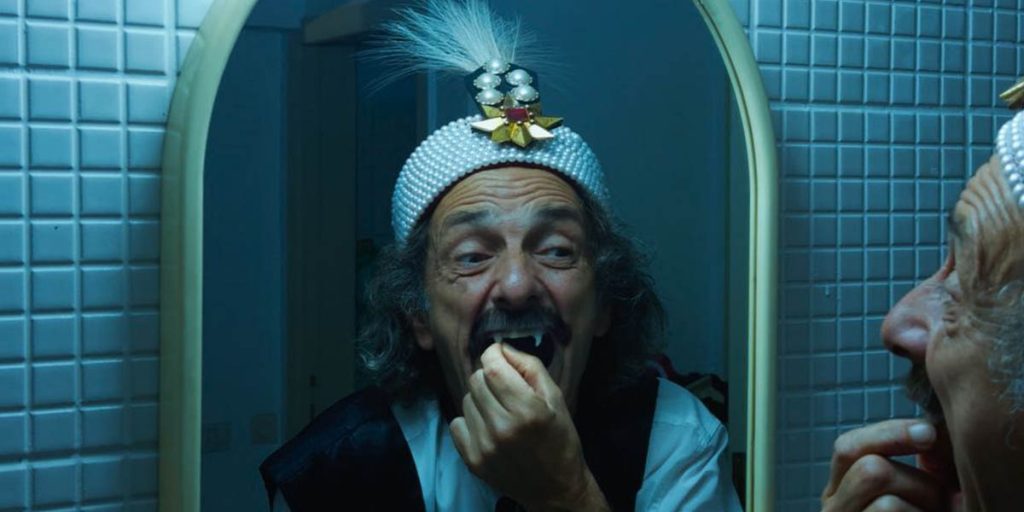
I found a searing critique of One Golden Summer’s aesthetic strategies in Radu Jude’s Dracula. In Jude’s gleeful, kaleidoscopic probing of Romanian national myth and “bad” imagery, Dracula, there are several hilarious, ugly, and fraying-at-the-edges A.I. images of Dracula’s castle. All are prompted by a failed director character within the film (Adonis Tanța) using generative A.I. called “DR. AI JUDEX 0.0” and “Viacu2000.” The director character explicitly states that he consults A.I. when he feels a total lack of inspiration. We see these images throughout the film between its many plots and subplots, all of which orbit around ideas of Dracula and Romanianness. The A.I. imagery begins to feel almost like Jude, ever the provocateur, linking each of his wild yet careful stories to a landscape of bullshit, fraud, and theft. Each “failed” image of the Castle reminds you that the filmmaker behind this film is not the one out of ideas.
Kontinental ’25 (Dir. Radu Jude)
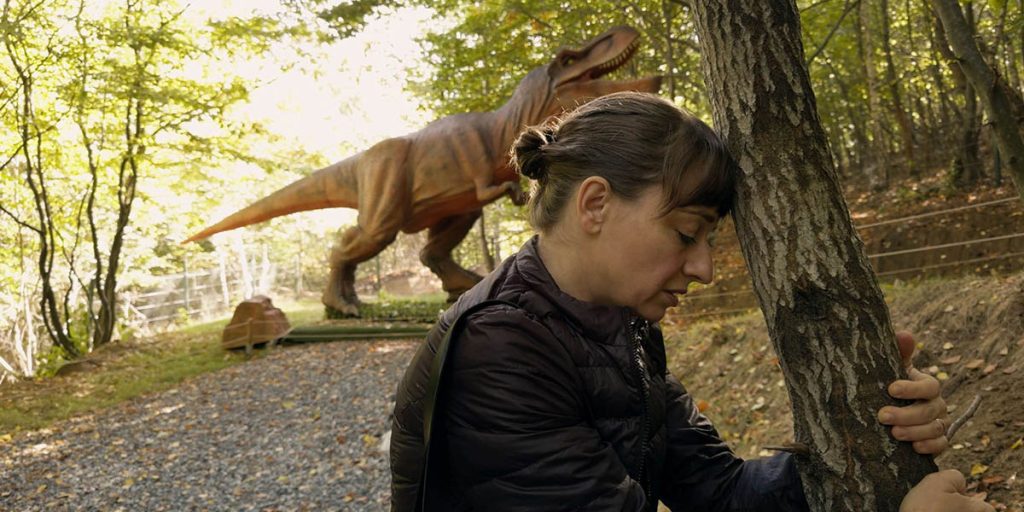
Kontinental ’25 asks, what if Radu Jude made a Hong Sang-Soo movie? The situation is pure Jude: A homeless man (commits suicide on camera in the boiler room of the landlord who evicted him. For the rest of the runtime, we watch scene after scene where that landlord (Eszter Tomper), a bailiff who signals left politics with mentions of Gaza and Ukraine, seeks reassurance that her tenant’s suicide (which she describes in excruciating detail to each new person) wasn’t her fault. Shot entirely on iPhone in stationary single takes, where the only camera movements are pans and zooms, Jude brings Hong’s strict cinematic grammar into his Romania, one whose national existentialism leaks down to all its citizenry, even those who claim good intentions.
Miroirs No. 3 (Dir. Christian Petzold)
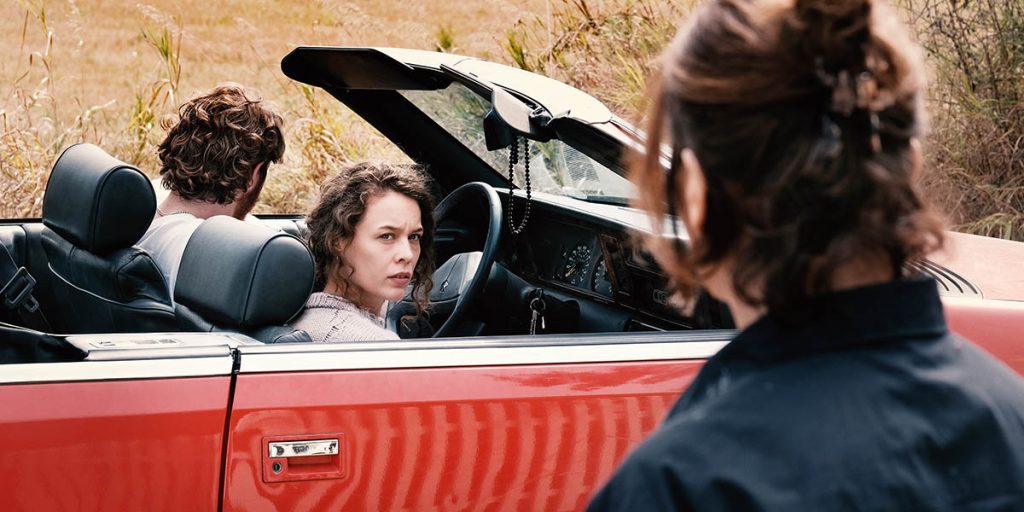
In Miroirs No. 3, Christian Petzold, a master of constructing quiet surfaces that carry the currents of deep, melodramatic suffering, creates an atmosphere of utter repression.
We meet Laura (Paula Beer) right as she leaves a friend group en route to vacation because she’s “feeling weird.” You wouldn’t know it from her expression: shot in telephoto, Petzold makes looking at Laura feel voyeuristic. After her boyfriend dies in a car crash, she stays in a house down the road with a woman named Betty (Barbara Auer). We never see Laura’s big, tearful reaction: instead, the film cuts ahead to quiet domestic scenes of Laura in her adopted home. Betty and Laura bond over what this chance encounter allows each of them to avoid: for Laura, a return to her life, and Barbara, the fantasy that a past tragedy never happened.
Gradually, we learn that Betty is a mother sick with grief. Her daughter died by suicide, and she is basically dressing up Laura as a replacement daughter-doll. The film becomes a twisted, harrowing look into how two lonely women without the words to describe their experiences nor the permission in their inner circles to speak cling to each other for comfort and meaning. Quietly one of Petzold’s best.
Dead Man’s Wire (Dir. Gus Van Sant)
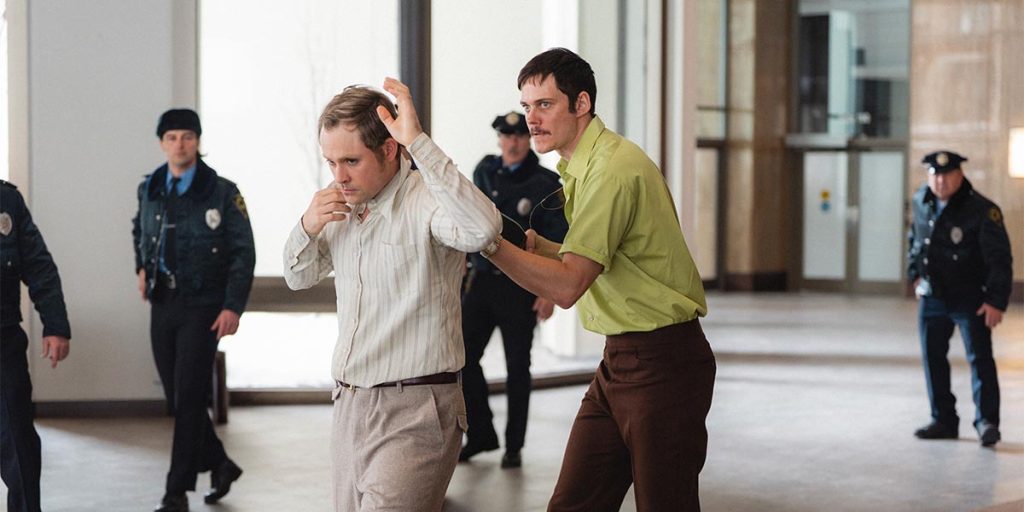
Based on a true story, Dead Man’s Wire revels in the liberatory potential of the camera: not since To Die For has director Gus Van Sant played with so many formats. Through the prism of period-accurate video news cameras, we see Tony Kiritsis (a nervy, hilarious Bill Skarsgaard) wield his visibility towards not only his own sense of justice but to expose the corrupt nature of the M.L. Buch (Al Pacino) family business. Holding the son of his mortgage broker hostage, Kiritsis wants to show the systemic greed of mortgage brokers to the whole city of Indianapolis.
The film treats Kiritsis’ more capricious desires, like appearing on his favorite radio show, with compassion and doesn’t let them distract from the moral core of Kiritsis’s crime. Like One Battle After Another, Dead Man’s Wire ends with a Gil-Scott Heron “The Revolution Will Not Be Televised” needledrop. Only unlike Paul Thomas Anderson’s nine-figure Hollywood depiction of revolution, Van Sant seems to suggest with this televised needledrop, i.e. the events of the film, was not the revolution; that Kiritsis’ story of direct action, told in such a careful, entertaining manner, could prompt an unseen class revolution to take place. The gesture rang humble and grounded in history: Fred Temple (a wonderful Colman Domingo), that radio DJ, praises Gil-Scott Heron’s music within the world of the film.
Sitting in the theater at the end of Anderson’s film, I wondered if P.T.A understood the meaning of Heron’s song: where Van Sant’s revolution roots itself in place and time, Anderson’s seeks a breadth that robs its message of any depth.
The Secret Agent (Dir. Kleber Mendonça Filho)
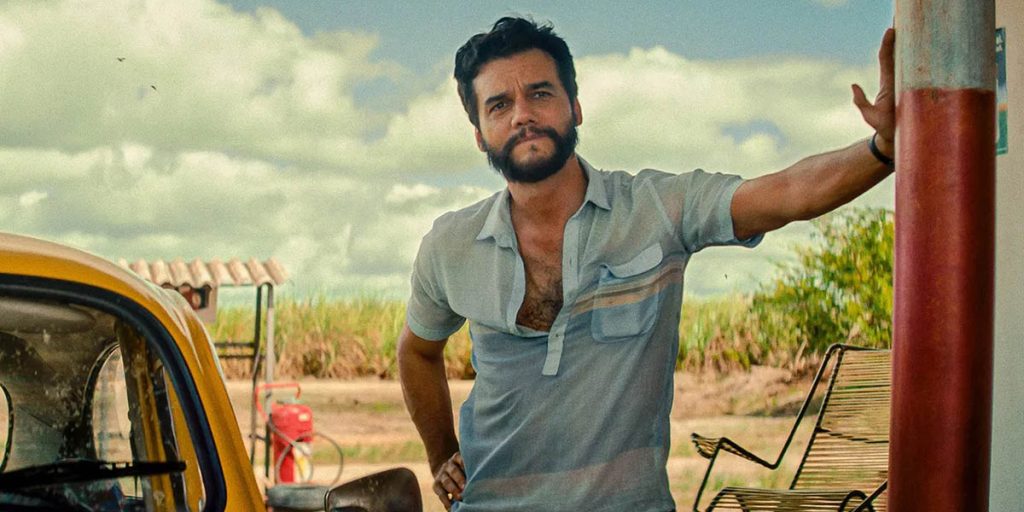
The Secret Agent, too, draws self-reflexive attention to its own medium. After Kleber Mendonça Filho’s 2023 documentary about movie palaces in Recife, Pictures of Ghosts, Filho invents a fictional Recife story where cinema palaces themselves, and their workers, are key players in 70s Brazilian resistance culture. With its genre play, the film goes from the story of an underground leftist commune into a righteous anti-fascist slasher, thriller, and then back again. It slows where you expect it to speed up, and vice-versa. The result is a film that turns the sweaty ‘70s American film inside-out, troubling national affiliation with film genre, steering the thematics (and sharks!) of Jaws, that most mainstream of classic “70s” American films, towards a galvanizing political catharsis.
The Mastermind (Dir. Kelly Reichardt)
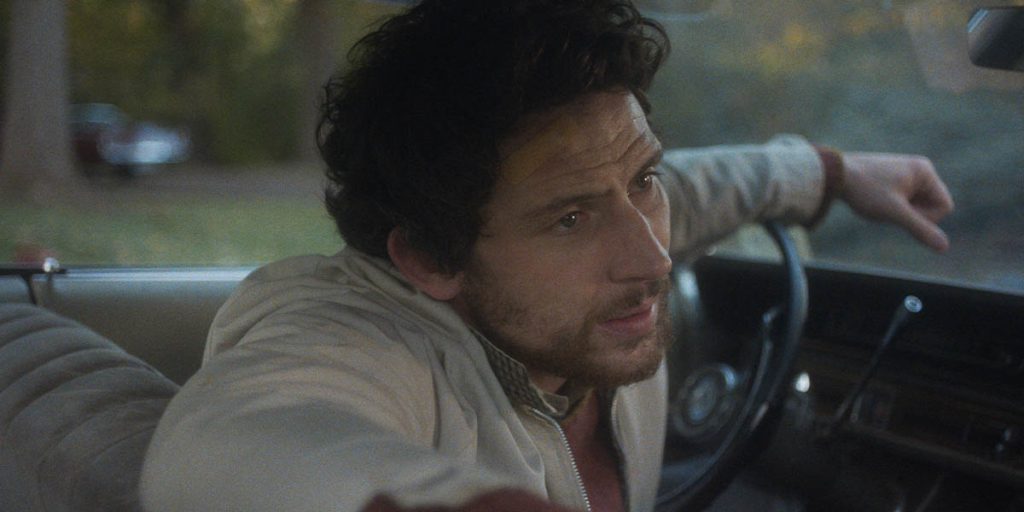
The Mastermind, like The Secret Agent, also invokes Dog Day Afternoon and 70s American resistance cinema, only it saps its hero J.B. (a restrained, wonderful Josh O’Connor) of his heroics. Instead, he comes across as obsessed with his schemes for riches, often at the expense of the needs of his children, wife, and parents. What gets him to leave town is equal parts fear of legal retribution and shame for what he does to his family. The film being a heist movie for only about thirty minutes, then a stretched-out road-movie-cum-landscape-documentary, robs its audience of the genre thrills it promises in the first act, the film’s form taking on the disappointment of J.B.’s loved ones.
At the post-screening Q&A, Reichardt invoked a Reddit post about the film that said, “If boring is good, this movie is a masterpiece.” Once again, Reichardt gets pidgeonholed into “slow cinema,” — like “body horror,” a term its pioneers never use to describe their own work. But a look across her filmography — many of which were screened at CIFF in a retrospective — one finds echoes, but never redundancy. Her narrative structure, subject matter, look, and feel from film-to-film shares a laconic, concise dialogue style, yes, but I don’t think she gets her due for how different each of her films is from the other. Where First Cow owes its style to Westerns, especially McCabe and Mrs. Miller, The Mastermind bridges Bresson’s procedural interest, Lumet’s sweaty masculinity, and maybe even a little James Benning into a style all its own. In its shocking ending, the film becomes about political resistance; Reichardt delaying this until the last possible moment itself feels like the film’s most radical gesture: avoid it all you want, try to construct a life where you can step out of it, but the currents of your historical epoch will come and find you.
Magellan (Dir. Lav Diaz)
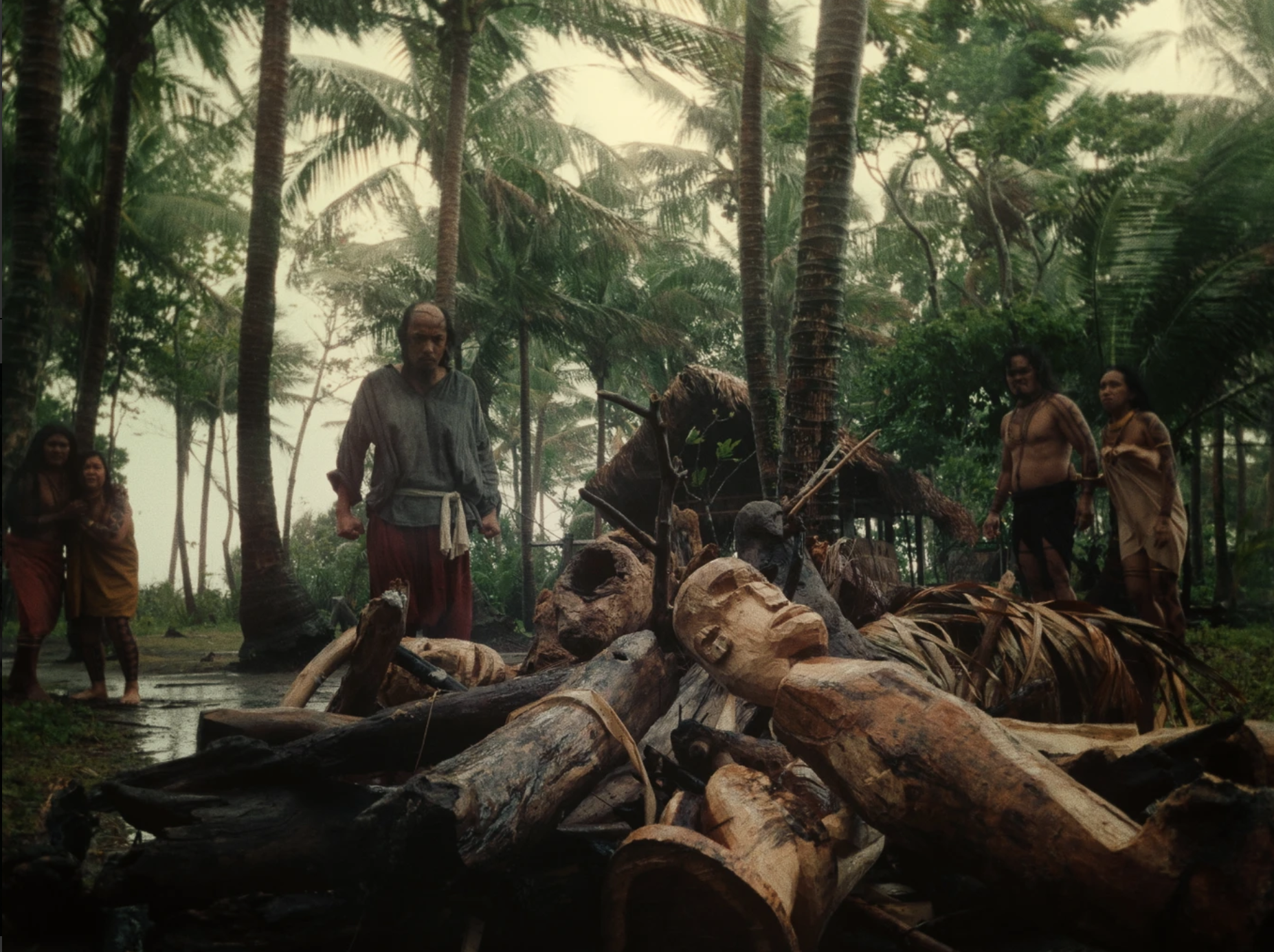
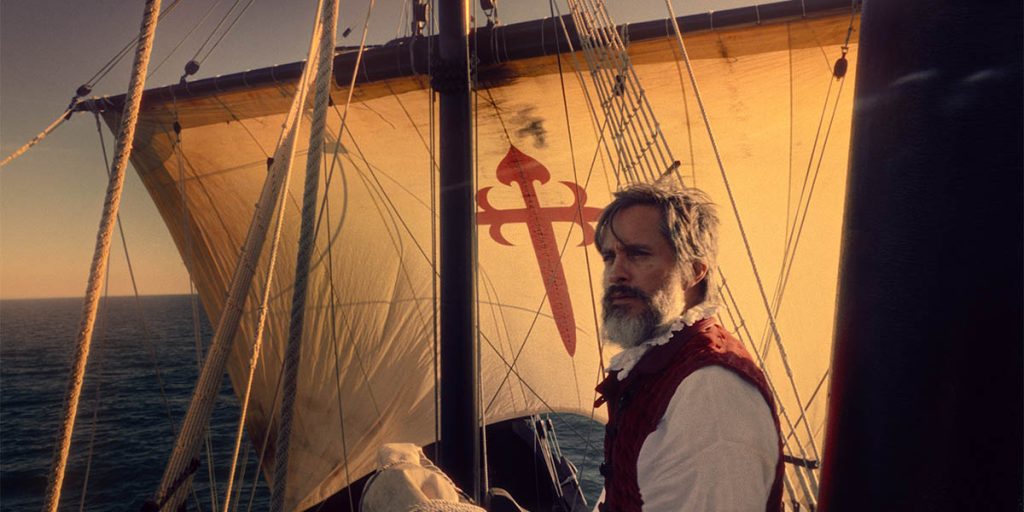
Magellan, in keeping with Lav Diaz’s work with genre across his filmography, at once satisfies and self-consciously fails in its genre of historical epic. In an understated, purposefully bumbling performance, Gael Garcia Bernal as Ferdinand Magellan comes across small, petty, and following the doctrine of his country and his faith it serves him, and ignoring both orders and scripture when his expansionist mission seems under threat. Where the still, distant camera undercuts Magellan’s heroism, it treats its Indigenous subjects with all the humanity it had in reserves. This is an inversion of the Western historical epic, a genre that emerged in early Hollywood: one that all too often treats its Black and brown characters as laying in wait for their colonization. The implication of Diaz’s genre work here is so world-altering, that I could see a whole movement of historical filmmaking emerging from his work here, “biopics” of hegemonic colonial leaders made by descendants of their colonized. My favorite movie of the year.
Nuestra Tierra (Dir. Lucrecia Martel)
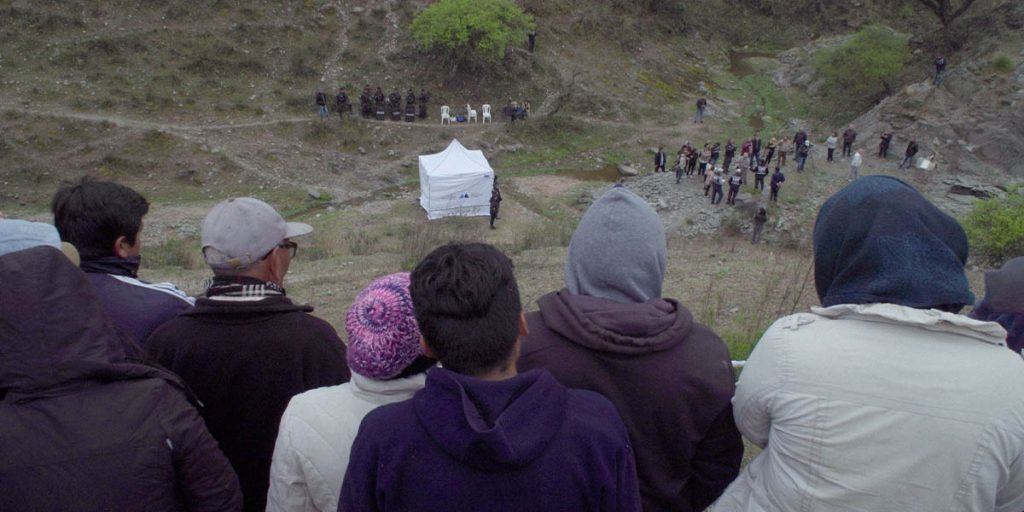
In her first feature documentary, Argentine master Lucrecia Martel abandons her usual vibrant, sensuous style in favor of something more distant. This suits the material: the trial of the murderers of Javier Chocobar, an Indigenous man murdered while defending his community land from government-backed, white-passing “landowners.” With digital cameras and a drone, Martel’s camera looks in the courtroom for moments where guilt reveals itself: in a furtive vape pull, a guilty glance at the floor. But in the land of the Chuchagasta, Chocobar’s tribe, Martel’s camera —and drone! —luxuriates in the reciprocity of the land and its people. During an especially memorable sequence, the landowning defendants perform a legal re-enactment of their “self-defense” on Chuchagasta land. In this sequence, Martel films the land with the cinematic language she’d established in the courtroom. Her style reveals the absurdity of the courtroom’s intrusion onto the land.

Cotton Queen (Dir. Suzannah Mirghani)
In a Q&A following a screening of her debut feature film Cotton Queen, Sudanese filmmaker Suzannah Mirghani told the audience “everything came from the cotton” when asked how she drafted the film’s story. It shows: Mirghani is reminiscent of Reichardt’s First Cow (also screened at CIFF in retrospective) and McCabe and Mrs. Miller in how rigorously it constructs a cinematic economy.
Nafisa (Mihad Murtada), a young girl living in a cotton farming village in Sudan, is lectured by village matriarch and “Cotton Queen” Al-Sit (an extraordinary Rabha Mohamed Mahmoud) on the power and innate worth of the village’s cotton. Al-Sit believes the cotton contains the history of the land, which contains the history of the village’s successful anti-colonial resistance against the British. Once Nadir (Hassan Kassala) arrives in the village, as a prospector of the land and a potential love interest of Nafisa, he threatens to globalize the farm by introducing genetically modified cotton. Making Al-Sit proud, Nafisa ends the film in an act of thrilling anti-colonial defiance.
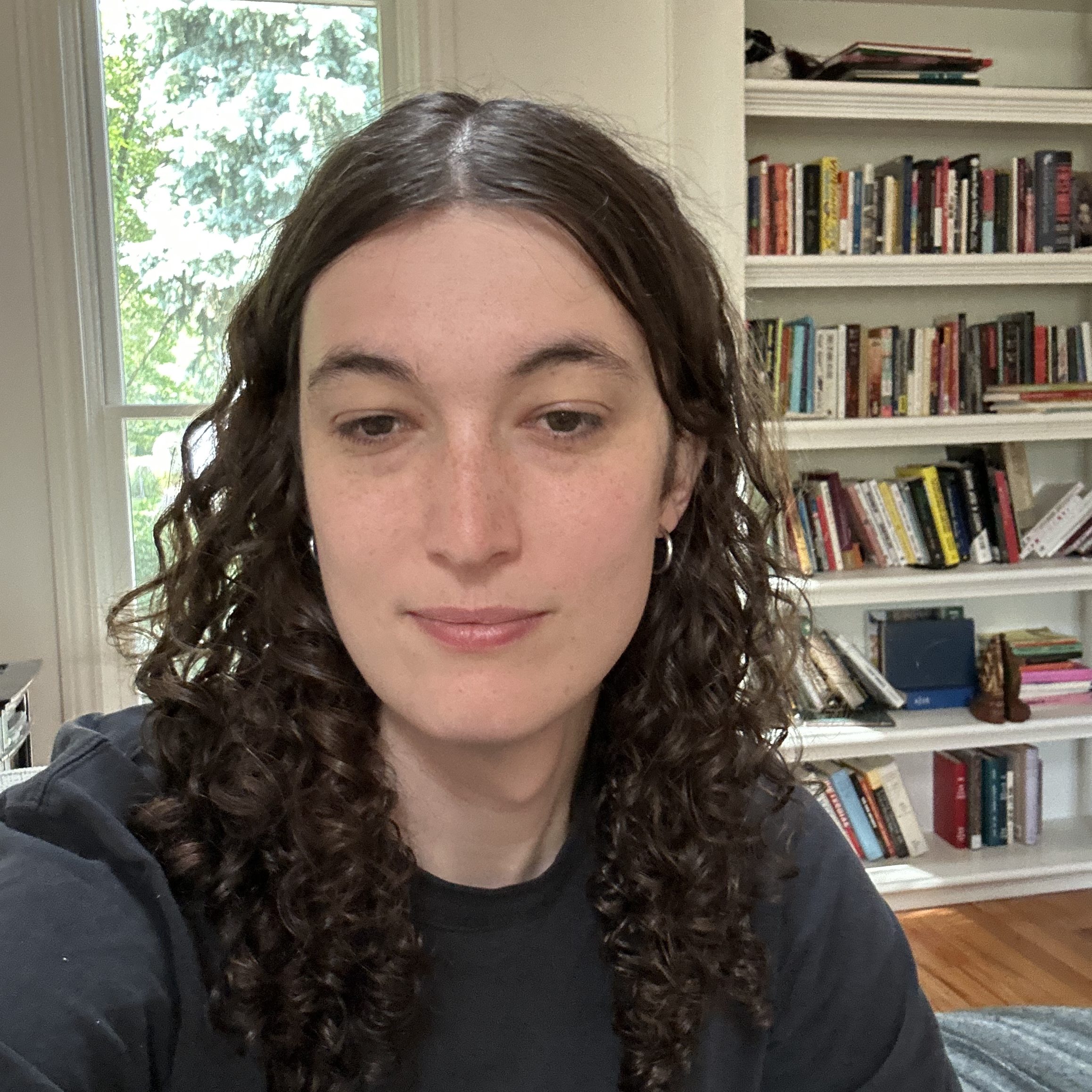
About the author: Elaine Schiff is a playwright, filmmaker, teacher, and comedian based in Chicago. She is learning how to weave.