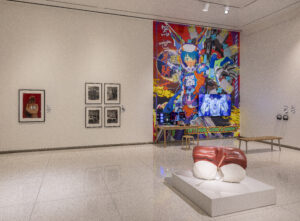
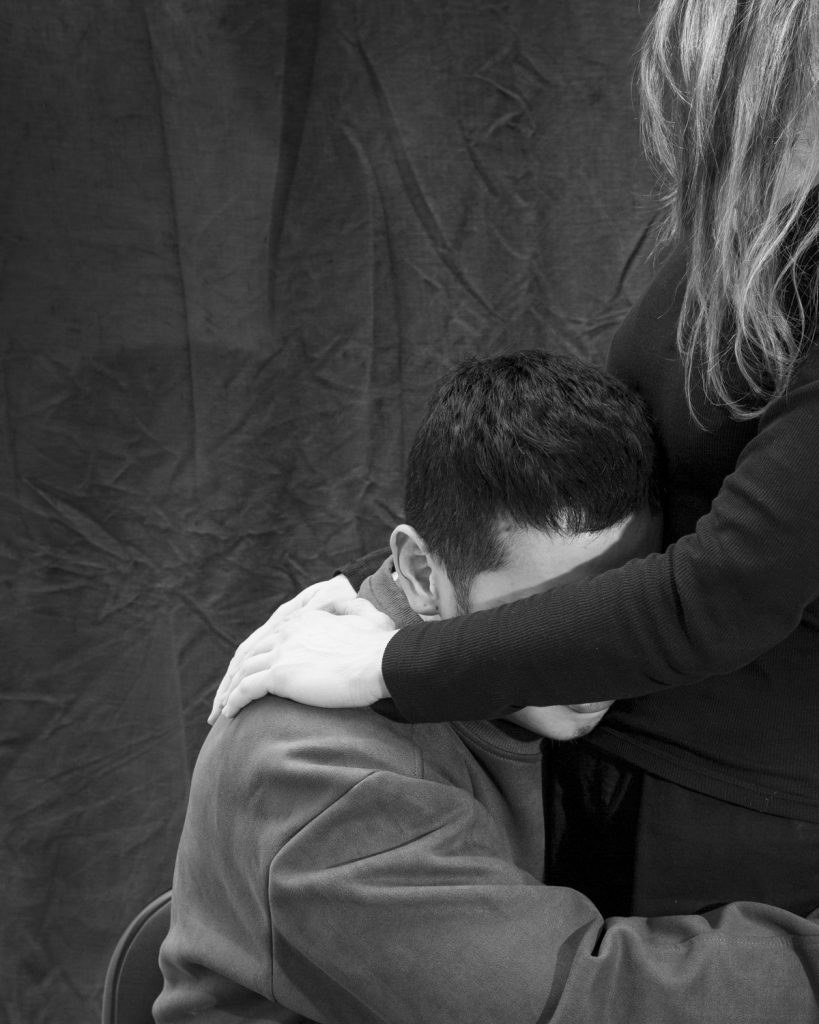
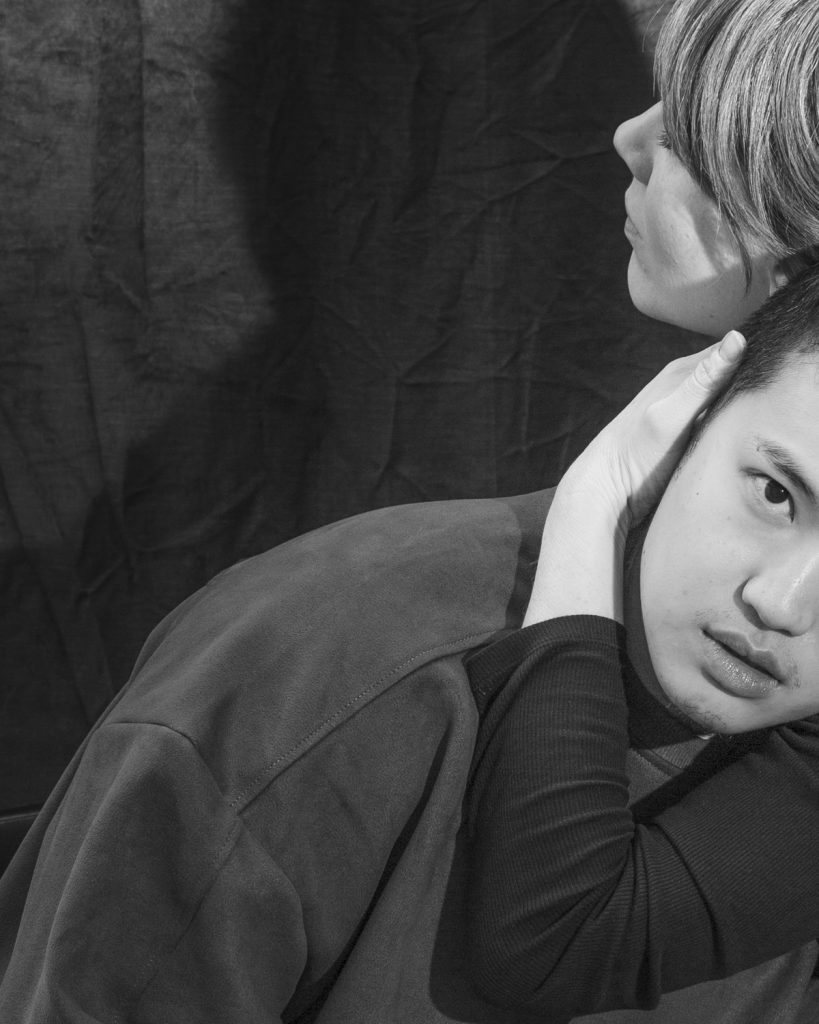
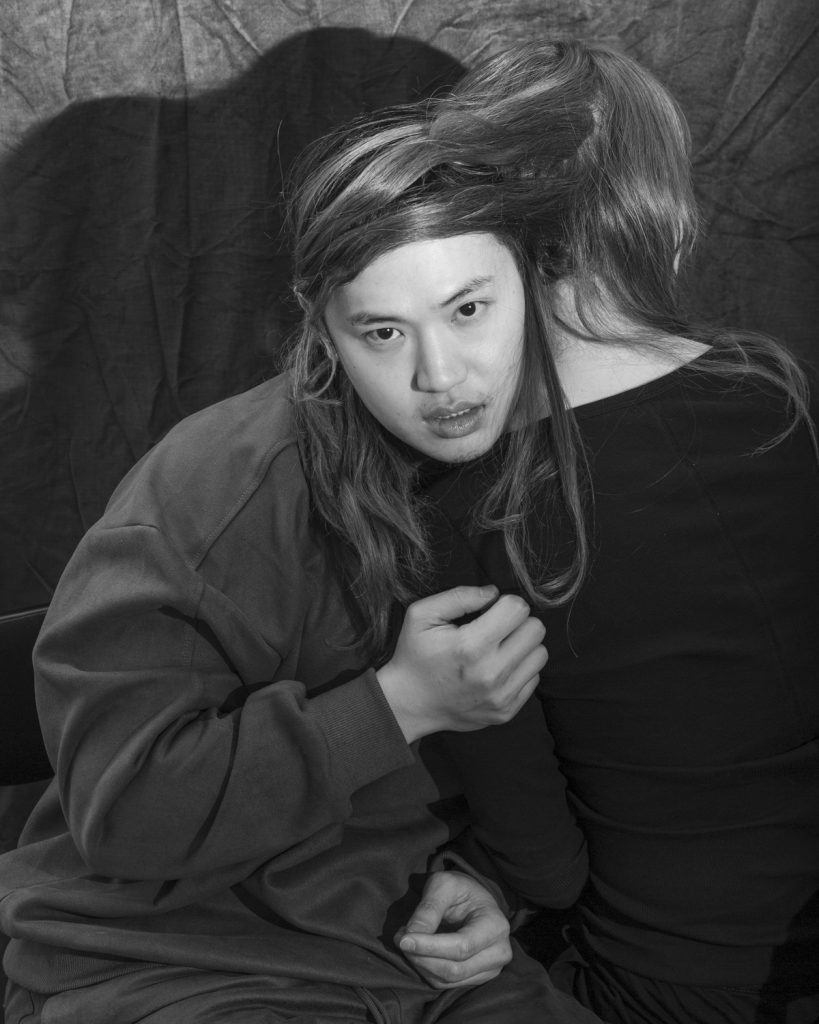
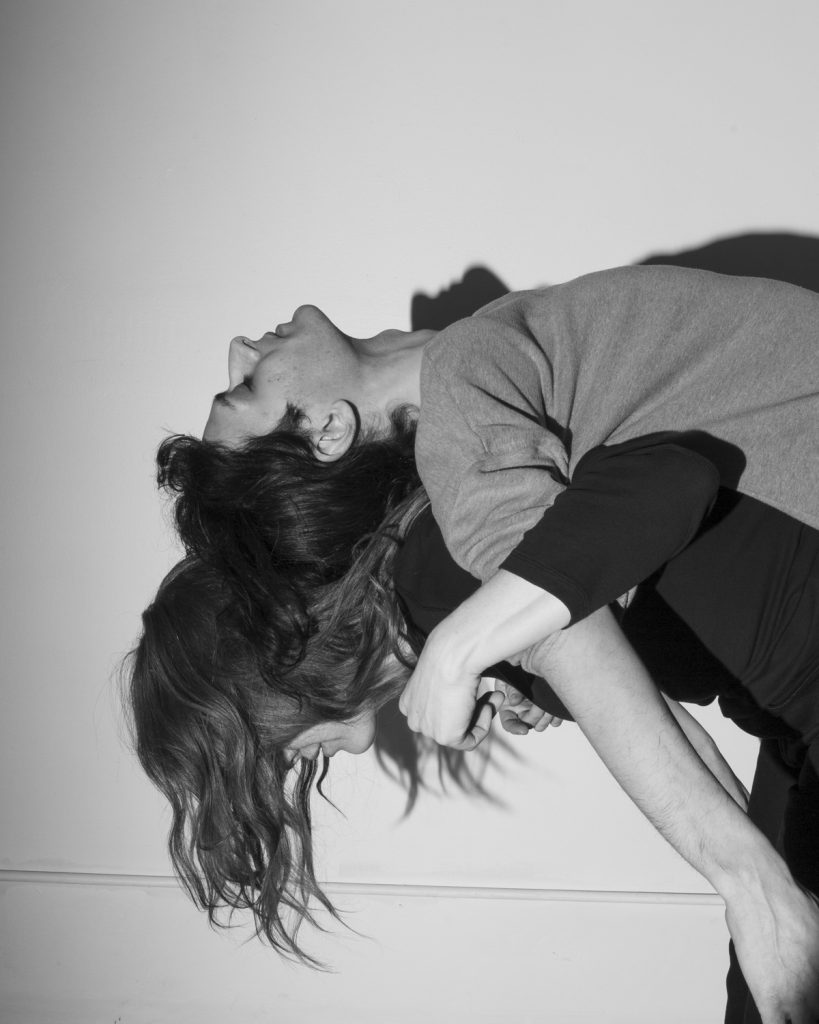
Kin wrapped up Root & Culture’s 2025 programming with a two-person exhibition by Ruby Que and Kat Bawden, offering a tender invitation into their real and unreal memories. Que, an interdisciplinary artist and educator, embraced the space with sculpture, sound, and video installations. Moving from an immersive room drawn from a comforting childhood memory to recordings of them teaching their native Cantonese through inviting participants to recall their own early experiences, Que explores the idea of the “mother tongue.” This intimate process-based practice is similarly reflected in Bawden’s work. Also an artist and educator alongside her curatorial practice, Bawden produces photographs in which she stands in as a “mother” to her participants. Shot in black-and-white, the prints serve as records of these interactions and gestures, allowing viewers to witness the diversity of these familial expressions.
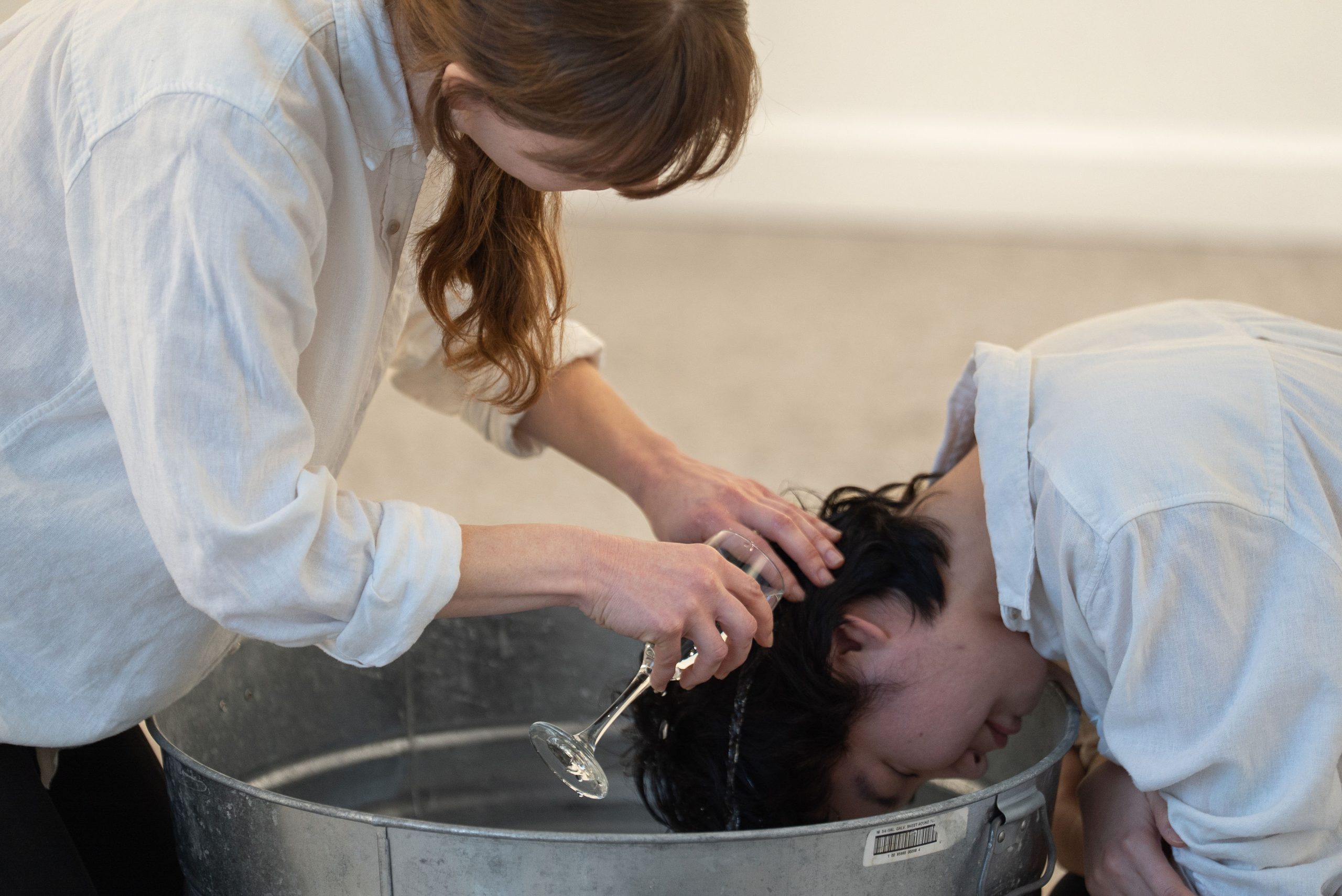
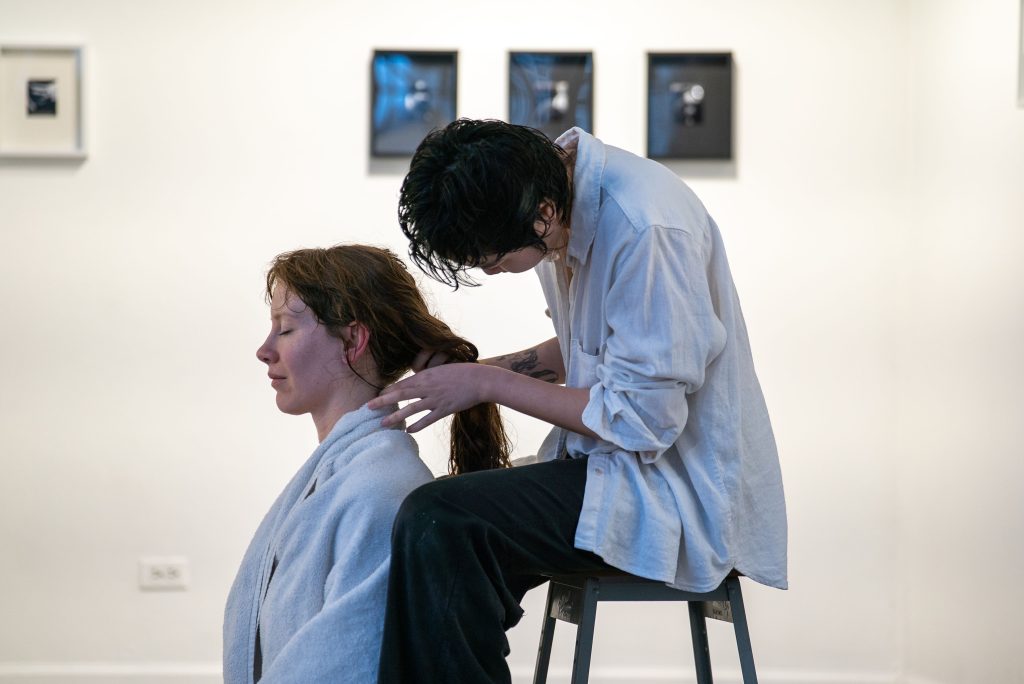
The artists come together through shared reflections, acknowledging the universality of our need to connect when experiencing feelings of absence. These vulnerable works inspire us to seek refuge beyond traditional bonds to people or our cultural identity. Que and Bawden generously share these moments without rupturing their intimacy. This careful balance leads us to consider the fleeting nature of performance art. Notably, the artists staged a live performance in the exhibition space in which they gave each other a haircut— a reenactment of familial touch that reveals their close friendship and suggests how such gestures bring us closer, offering means to heal absence.
On January 23, Bawden and Que joined me for a video conversation shortly after the closing of Kin at Roots & Culture. The interview reflects on themes of kinship and memory, as well as the vulnerability of their art-making process and their experience collaborating on the exhibition.
Alicja Seledec: Could you take me through how your work approaches the idea of “kin”?
Kat Bawden: So I never wanted to have biological kids, and then I got married, and my spouse and I really wanted to, and then we got divorced. I was still very much working through the grief over not having children and this uncertainty. I was still processing that grief and also wanted to think about other forms of mothering or familial bonds that didn’t involve biological kids or adoption — didn’t involve a family structure in a traditional sense. This work was a place for me to put all of my grief around not having kids, all of my fantasies about what it would be like to be a parent, all of my fears about what it would be like to be a parent. A place where I could imagine a parallel life for myself while I’m putting myself in this position of “mothering” people who are already in my life. People whom I care for deeply, and who care for me as well. So it was also about cultivating the relationships I already have, while my own understanding of family relationships is shifting as my parents get older. I think that a lot of the people I was photographing with are also in a place of shifting understandings of their relationships to their families.
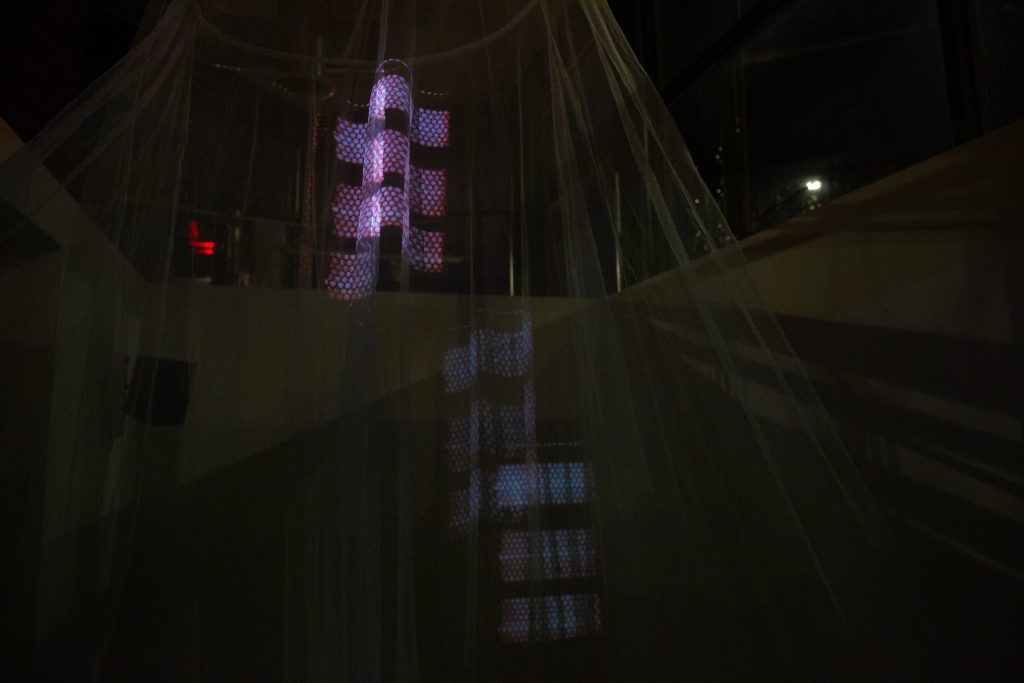
Ruby Que: Yes, and the work that I presented in the exhibition revolves around this idea of language. I was thinking about how you become friends with people, and you start to develop a shared language. This is very common in queer communities where people can code-switch. I am also from Hong Kong, so I’m thinking about the language of Cantonese. There have been … a lott of efforts by the Chinese government to push for Mandarin as the main language in schools, and just in Hong Kong in general. So the younger generation is losing the everyday language. English is also one of the official languages. Mandarin and English are both languages of the colonizers, and neither is the local or the indigenous language of the island. I also haven’t spoken Cantonese in a long time. Ever since I moved here, I had a partner who understood Cantonese, and I was able to speak it at home. But after we broke up, that sort of went away. And then my grandfather passed, so I started talking to my family again. I don’t really talk to my family, which is another context for not speaking Cantonese. Then I was thinking about how I’m using this language. And also realizing that in my friend groups, there are many who have Cantonese lineage, but do not know how to speak the language. So some of the central work in the show is these Cantonese language learning sessions. I would meet with people and ask them to share a childhood memory that is related to family or the language. And then I would teach them how to recount this memory in Cantonese, starting from keywords to phrases to sentence structures. Then I would share a memory of my own in return. These sessions usually took two to three hours, sometimes two sessions. And this is an ongoing project. And then another work that was important in the exhibition was this lullaby that I remember my family singing to me. It’s a lullaby about going out to fish because Hong Kong is a fishing village. And there are also index cards around the show that are keywords from these conversations. So I’m thinking about this idea of language, how you can build community through shared language, how to find a lost mother tongue. And also this phrase of the “mother tongue” itself, language connects to this deep intimacy that you have with family.
AS: It seems like there’s a common ground of building something from a sensation of loss of some kind in both of your works.
KB: I think for me it’s kind of like an ambiguous loss. There are terms for different kinds of grief, and one form of grief is “ambiguous grief” or “ambiguous loss.” It’s when there’s not a clear thing that you have actually lost, but you still feel this deep sense of loss that permeates because there’s no concrete event. An ambiguous loss is also something that’s associated with migration, losing a language, or cultural assimilation. And my therapist told me about this form of group therapy called psychodrama, which was very inspiring for this project. It’s when people get together to reenact a (usually) traumatic experience with a group of people. It’s kind of this way of re-experiencing that trauma as a way to get close to it and to get control over it. And so I was thinking about that for myself, but it’s recreating something that’s never happened. But it was like being able to play with my fantasies and play with my fears and make them real in that moment, using other people’s memories. So I would invite people to share their own memories of childhood and recreate them, or I would bring poses from art history or biblical imagery that I’ve connected with.
RQ: I love this idea of ambiguous loss. I’m shocked that we never talked about it.
KB: Yeah, I have a great book called The Myth of Closure, by this psychologist who’s the main researcher of this concept.
RQ: Yeah, I guess for me it’s similar. I don’t really think of these feelings as loss or grief, but rather like an absence, like something that is never there. And a book that has really influenced me is called Hong Kong, by Ackbar Abbas, who’s an architect. He talks about how Hong Kong is a city of disappearance, because maybe what we’re grieving is something that never was. After all, it is a place that was built by colonization. So, a “pre-colonial Hong Kong” or “post-colonial Hong Kong”, nobody knows what that really looks like. And I’m also thinking about Edward Said’s Reflections on Exile, where he was talking about how if we regard experiences always as if they were about to disappear. Oh, I’m just going to read the whole quote:
“Regard experiences as if they were about to disappear. What is it that anchors morality? What would you say of them? What would you give up? Only someone who has achieved independence and detachment, someone whose homeland is sweet, but whose circumstances make it impossible to recapture that sweetness, can answer those questions.”
So it’s not a loss that has already happened, but it’s that you’re always anticipating future loss or anticipating future grief. And I think this feeling, this absence, this feeling of missing someday, it doesn’t have to be negative. I think it can be a generative space for imagination, because there’s an opening. When there’s absence: how are we embracing that? What are we filling that void with? And I think that’s sort of what our projects are about: imagining what could have been or what will be.
KB: Yeah, and there’s a role for so much connection and play through that as well.
AS: So, in terms of connection and play, could you walk me through your collaborative process? Was this your first collaboration?
KB: No, we collaborated a couple of times. I curated a show of Ruby and another artist, Nicole Leung, which was really beautiful. But this is the first time we were both artists together, isn’t it?
RQ: Yeah.
AS: So I know that you included some works done before the show and also created some specifically for this exhibition. What was your curatorial process like? Also, how did you decide to tie in the collaborative performance into the space?
RQ: Yeah, all of my works were made specifically for the show. This was actually such a generous opportunity because we proposed last January for a show that wasn’t until November.
So there was a lot of time for me to make new work. Throughout the year, we were in conversation consistently and were constantly pitching new ideas. But the guiding principle was this idea of “kinship.” The most fruitful thing about this collaboration is that I think we share sensibilities in so many ways, and that was really beautiful. I was in one of Kat’s photos, and that session felt very collaborative. When we did the performance, it felt like we got there with one starting point, and then we kept building from that point on. It was quite intuitive for me. It didn’t feel like there were constraints, really, but what feels good, and we talked through as we did things.
KB: Yeah, absolutely. I feel like we just had similar questions in our minds, and so it was really fun because we would get together over breakfast and share ideas, and then go our separate ways for a month and a half, and then circle back and check in with what our ideas were and where our projects were going. It was great to have such a long timeline of the show. The work that I was making, because I started making it before we had pitched the show, I was making it with this deadline, so it was a great way to hold myself accountable to doing this work that was a bit slower because it involves other people. I usually work entirely alone, photographing or filming myself. And so it was great to be able to come back and chat with Ruby now and then about how things were going. Then, to also collaborate with them for a photo. The performance was really great, it was this flow of ideas of: “Oh, how about we do this?” Or “I’m thinking about this gesture. Let’s just move and see what happens.” And then Ruby was like: “What if you give me a haircut?!” And I was like, “Brilliant.” I have such a strong memory from my childhood of my mom cutting my hair.
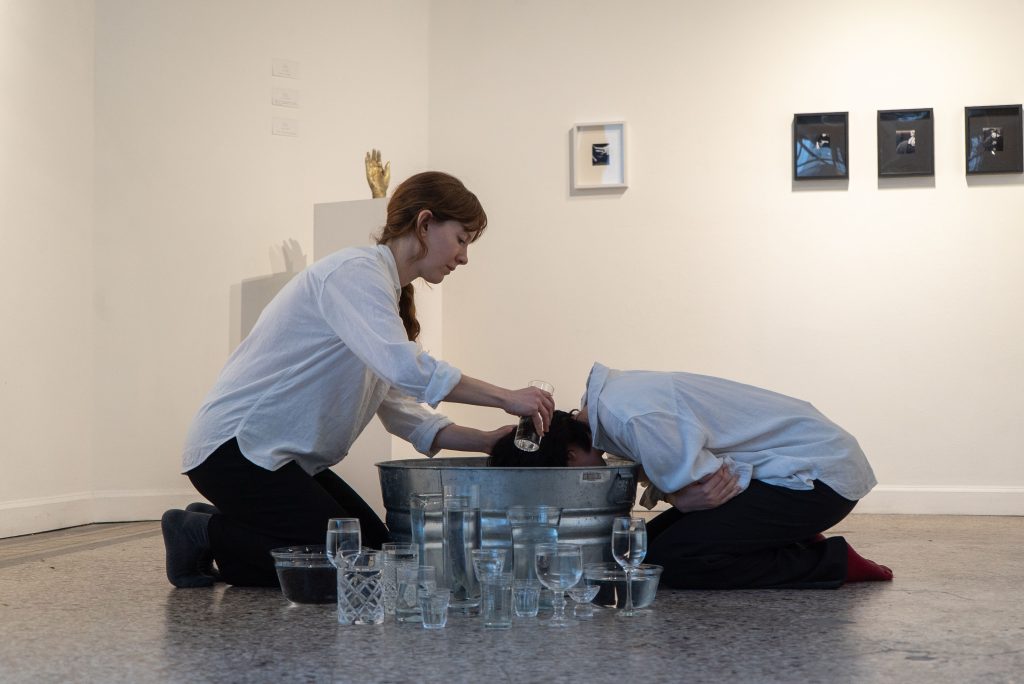
RQ: What’s so important is that we have this friendship. We’re not strangers that were paired together for the show. I trust Kat so much that I can just throw ideas out and see what sticks. But sometimes I’m like, “Okay, does this sound crazy?” And then they’re like, “No, that actually sounds good. Let’s try it!” So I think this intimacy is built from knowing each other and a friendship that has lasted for years, even before the show was pitched. And I just feel very safe exploring different things with her.
KB: Likewise, I feel like you’re a good person to think things through because you ask great questions, and you’re honest, and you’re not gonna go with something to be nice.
AS: I could definitely sense this intimacy in the exhibition space. It was very clear that it was curated by the artists themselves and that they know each other. I think that was something that really stood out about this show, and it was fitting for the idea of “kinship.” I would say both of your bodies of work require a lot of vulnerability. How do you negotiate this vulnerability with your participants or your audience?
RQ: This is my first time showing sound work, and they’re all very long pieces (15 to 30-minute conversations). I realized when installing the work that it’s quite demanding of the audience’s attention. And it’s hard to ask people that, right? Especially with sound work. I work at a museum, so I’ve seen that when sound works are installed, people usually stay for a few minutes, and then they leave. So I think it is not a test, but a plea, for if you want to be in this world, if you want to share this intimacy. The intimacy has to be earned. You have to pay attention.
As Kat said, I usually work alone. I like working alone, and this is my first project that involves other people. And I had started integrating three people who have very different relationships with me. One of them is a mentor in puppetry, another is a friend I met at the residency. And one person who has a very complicated relationship with me feels like a friend, but there are ambiguous desires that I was navigating with this person. So my conversations with these three people were vastly different. We were talking about different things, and we engaged differently. I also did all the recordings in this tiny recording booth on campus where I teach. So it literally fits two people, and the mic standing in between us, and nothing else. So when I was interviewing Tom, one of the participants, he was like, “Wow, I feel trapped here, but also sort of safe.” So I think that contributed to the conversation and how they sounded and what people
talked about. I learned a lot, and I think I felt closer to all these people because of the project. And now I’m expanding the project to more people. I think this feels like a long-term project because it also helps me reacquaint myself with this language.
KB: I think that’s so interesting. I assumed you were in people’s homes, because the interview with Tom is so emotional and intense. I just assumed because he sounds so comfortable sharing all of that with you. So that really speaks to the environment that you could create with people in those moments. I think that’s really beautiful. And also, I was just thinking how we’re bringing people in, collaborating with them, and learning about them, but also about ourselves. And then we both have these participatory elements, like you creating your installation for people to physically be in your place as a child, and then my photos of people being physically my children. So I think we’re both, in different ways, creating this participatory element of past and future.
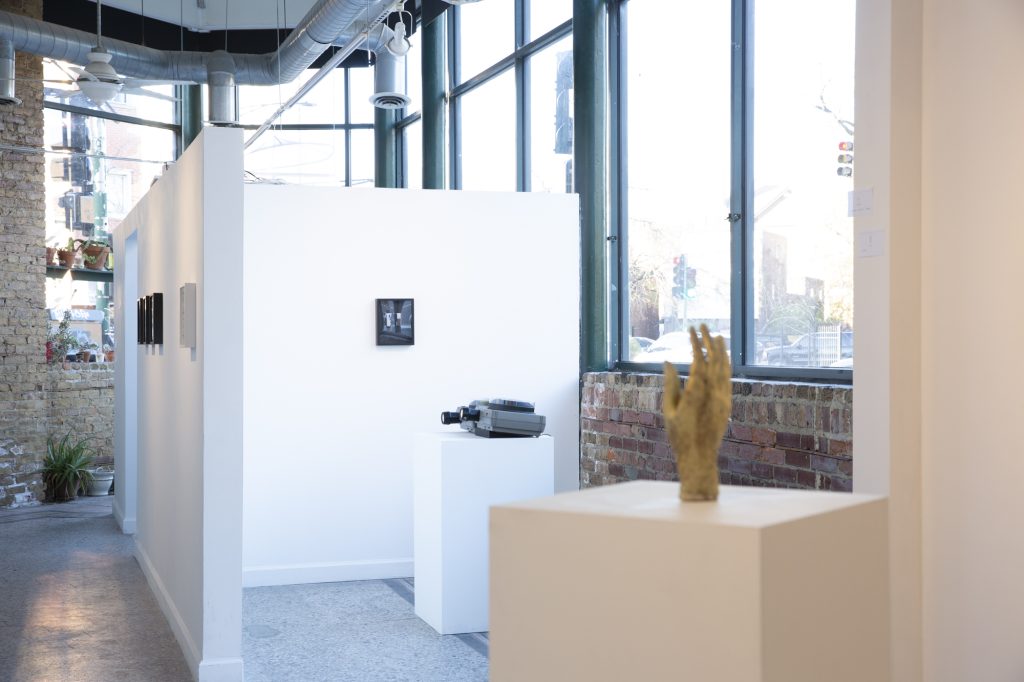
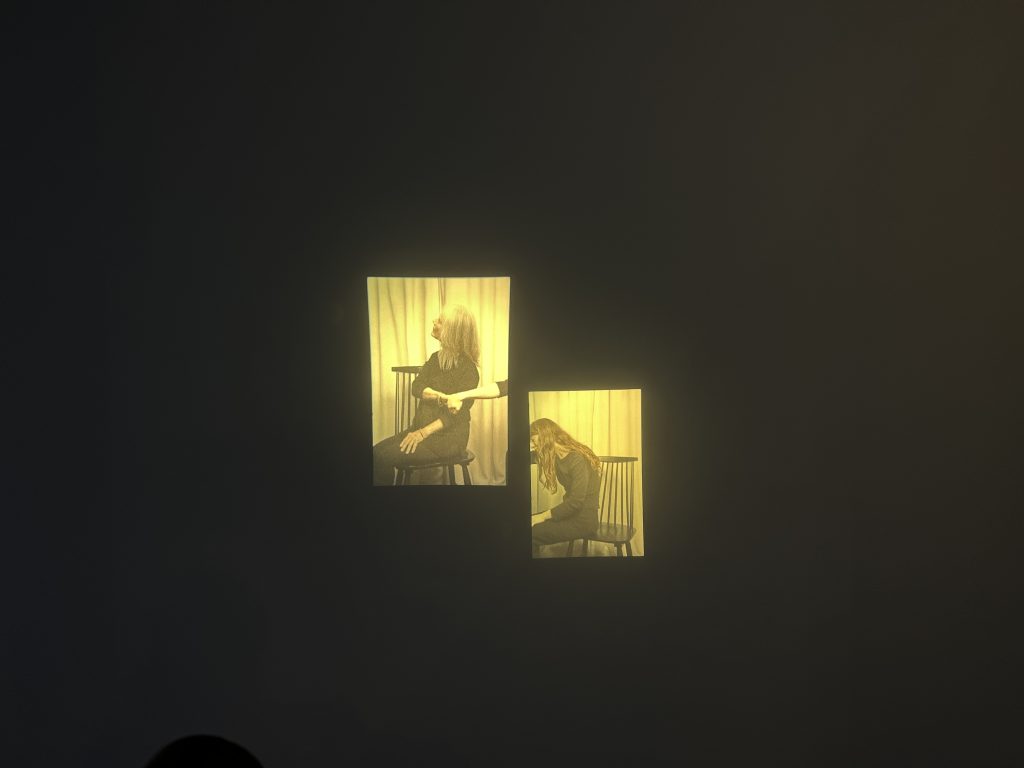
RQ: And also within the show, Kat has these projectors that people can flip through, and I have the index cards that people can flip through. So we both had elements that people can physically interact with. And I think… I’m someone who always wants to touch the work.
KB: Me too, I get as close as I can!
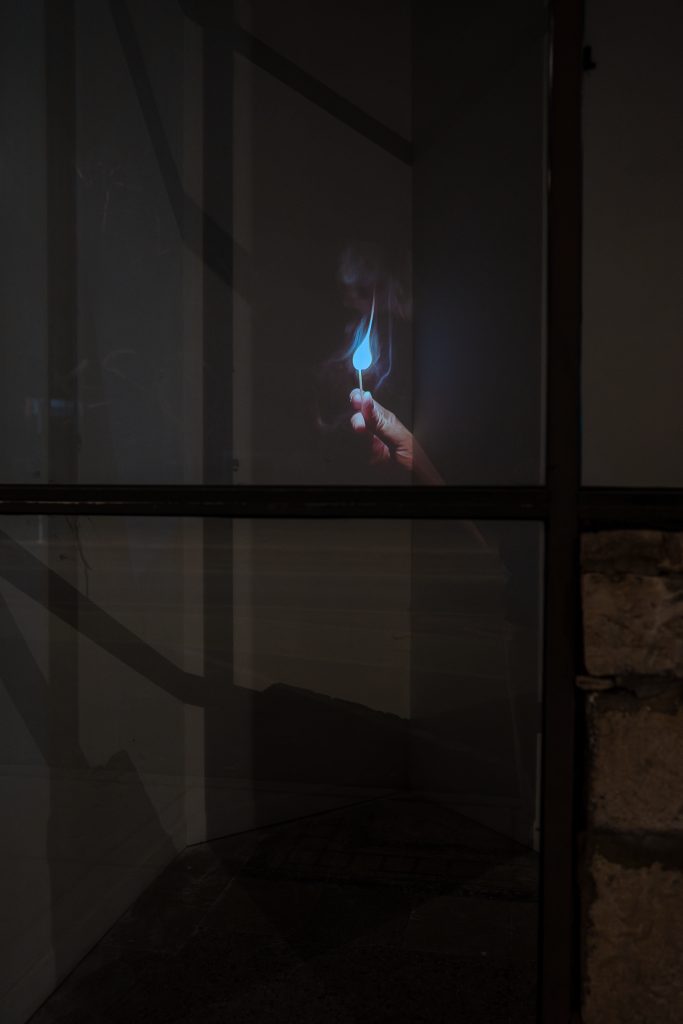
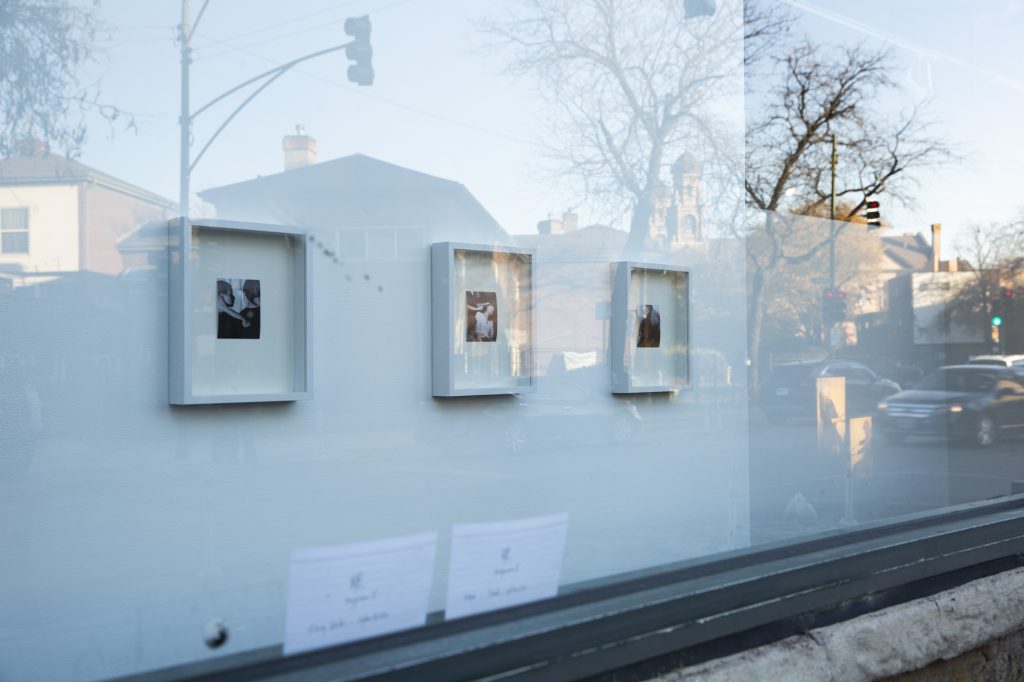
RQ: Yeah, and I think opening the access to visitors was an important part of bringing people into the show, too. The other thing I wanted to mention is that Roots & Culture is a ground-floor gallery with windows that are visible from the street. So we both made work for the windows so that people can walk by and see them. So Kat had these photographs that were related to hair in the window. And I had this projection of a hand striking a match over and over again until it runs out. It’s inspired by the story that I remember from my childhood called Little Match Girl. So I was thinking about how if you’re just passing by the gallery or waiting for a bus across the street, and you see this little moment of warmth and wonder, and how that might just bring a tiny bit of joy to people.
KB: And so, in answering the vulnerability question, I think I thought a lot about who I would want to invite to participate in the project because I knew that it would not be comfortable for everybody and that I wouldn’t feel comfortable with everybody. So I thought a lot about who would really connect with that process. And so, I chose people who I think are also very vulnerable in their own ways and who I think I would feel safe being vulnerable with. And then, similarly to kink and trauma, it was a very consent-based process of me constantly asking: Are you okay? Can I touch you here? Can I do this? Do you feel okay? How are you feeling? Do you want to take a break? I think it was just trying to build it into the process, and we’re going into this place together, but the shoots were also so fun, like we would just laugh so much. And so I would let the person I was photographing with not fully take the lead, but I would really read their energy. I would invite them to bring poses and treat the shoots how they wanted. There was one person who was very estranged from their family, and they wanted to treat the shoot as a way to re-meet their mom after a period of not much contact. And that was deeply emotional and very beautiful. So I would just let the people I’m photographing with have a lot of say in terms of the poses and where we were going and what the shoot could mean for them.
Intimacy and vulnerability went into how I printed and framed the work as well. I wanted to print all of the photos very small. They’re about 2 by 4 inches, and then I framed them in a deep 8 by 10 shadow box. I really wanted the frames and the photos to feel like these tiny rooms that you would walk into. I think in a lot of photo shows, you can walk in the door and see everything because the prints are large enough to take it all in at once. I really wanted these to be difficult to see from a distance, so you have to get up close to witness these little scenes. And then I was also thinking about the size of the photo and family photos that we keep in our wallets. When I was in college, I used to teach English and work with newly arrived refugee families. I would hear these stories from all these families who had fled, and they would sew their family photos into their clothing, so that was just in my mind, too. I remember growing up and having lots of photos in my wallet. I wanted to channel that family photograph as something very small that you could imagine in your hand.
AS: And how about the photo session you had with your mom?
KB: That was so fun. So, I was a little nervous to ask my mom, and I don’t know why, because she’s so out there. She has such a big, beautiful personality, and she is just an open person. And so she was very excited to be a part of it. I wanted to photograph with her as her mother (as my grandmother). But they had a bit of a complicated relationship. When it came time to move through poses or questions like: how do you remember your mom’s touch from your childhood? My mom just ended up telling me all these stories about her mom. They were funny stories, even though they were also kind of sad and challenging. And so she was describing my grandmother, her mother, to me as a mother. I would just listen and try to embody that physically, the distance they had. I was like, “Okay, let’s hold hands and just tug and pull and tug sort of like reaching for each other and moving away,” almost like an anxious/avoidant attachment style. There were so many more photos I didn’t include because it was mostly just us laughing. I wanted to stage something a little more ambiguous and tense, and that could speak to the nature of these shifting parental relationships. I left the shoot with this whole archive of my mom and me just holding hands and enjoying each other’s presence, which was really sweet. We left that shoot with something else that doesn’t appear in the work, something just for us, which was really special and unexpected. She was like, “I look very stern in these photos,” but I really loved that process, and it was nice to get to know my grandmother more. My grandmother and I were very close, but grandparents are different with their grandchildren.
RQ: We were also talking this one time when I brought my class to the show, that this show, first and foremost, is for us. Just like you said, there are photos you didn’t share in the show, and the conversations I had were edited because there were so many moments that felt best to remain a secret for the people who were there. Because I think secrecy or the preservation of those private moments was important. And also, there are a lot of moments in my conversations when I was sharing my own memories, or I was being vulnerable, or when I was doing a photo session with Kat, I feel like Kat was sharing her touch memories with her mother with me. And this is why these more social-practice projects differ from therapy. A therapist doesn’t tell you what they’re going through. But in our projects, we were both sharing what we were going through, how we were feeling, memories that were evoked by other people’s memories, and that helped lead into a more intimate space where people felt comfortable sharing.
AS: Yeah, absolutely. So, since both of your works are very process-based, do you feel that these projects transformed you or your ideas of “kinship”?
KB: I mean, it’s interesting to think that I worked on this project over the course of the year. I think the first shoot I did was in early January, and then we closed at the end of December. And over the last year, I’m no longer interested in having children. I don’t think that’s a part of the work, but it was something that happened throughout the course of the year. I feel like, in tandem with that, I worked through that ambiguous loss. But more to the point of the work, I learned about participation and how valuable that can be. It’s created this forking path to a new project that I want to work on that involves a lot of intimate participation. So it opened me up to that as my practice, and something I want to continue exploring. In this work, there was an outcome: the photos. But I think during the performance, there was just this alchemy that happens between two people doing something together, doing something really small and very big at the same time. And so I experienced this power of doing something very intimate with another person in front of an audience, and how beautiful that is. It really opened me up to making something with people and the idea that the art is in that interaction and in that moment of intimacy, the intimacy is the art. And so I’ve been thinking about this with a new project and not having a photograph as evidence, but just the interaction itself being the entire art, and how to work on that.
RQ: For real, I felt so much closer to everyone that I’ve talked to for this show. And also, I got an amazing haircut! I feel a lot closer to Kat. A lot of people who visited the show, I had deep conversations with them, and just by bringing them into the show, I feel closer to them. I feel closer to a joke about this. I’m like, wow, you found me at a very Chinese time in my life. For a long time throughout college, I put that part of myself away because I was trying to assimilate. And then when I cut off my family, I was also trying to put those memories behind me. But now I had space to teach myself the language again, and to really go back to the memories that I felt I had forgotten. Even when we were doing the photo session, Kat was asking me how my mother used to touch me. And I was like, I don’t know. Did she ever? I can’t remember. But then, as we moved through the session, some of the memories emerged, and that was really special. I was feeling closer to friends, but also feeling closer to a version of myself that I’ve tried very hard to leave behind, and then coming to peace with it.
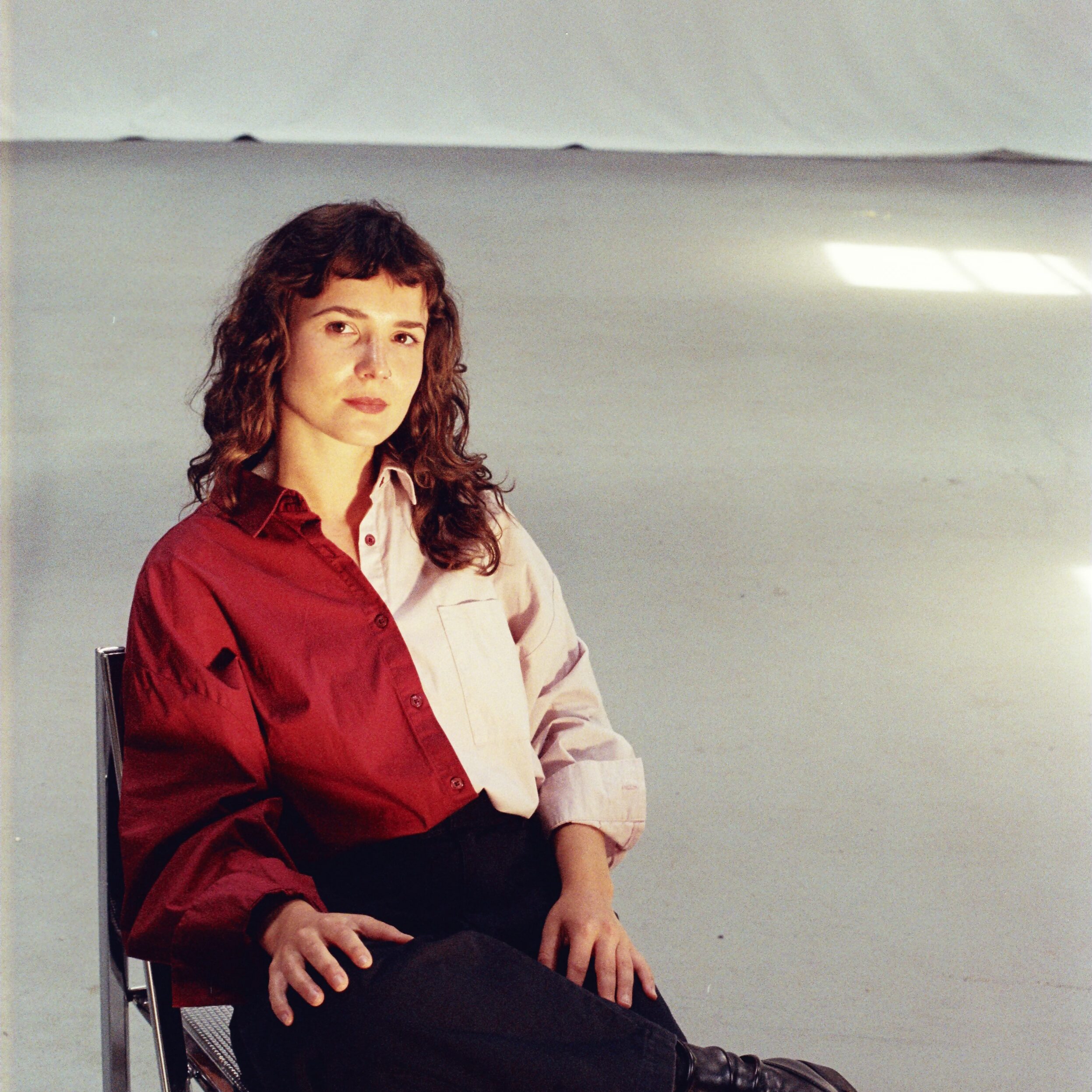
About the author: Alicja Seledec is an independent curator and art writer based in Chicago and Brooklyn. She holds a BA in History of Art and Architecture from the University of Barcelona. Her work moves between intuitive and research-driven approaches, prioritizing collaboration, public engagement, and the articulation of multifaceted ideas. She has developed curatorial projects with Fulton Street Collective, Bridgeport Art Center, and the Research House of Asian Art, and was the Lead Curator at Chicago Grand Gallery. Her writing experiments with a creative, intimate approach to art criticism. Her work has been published in magazines like The Posttraumatic and the Chicago Reader.