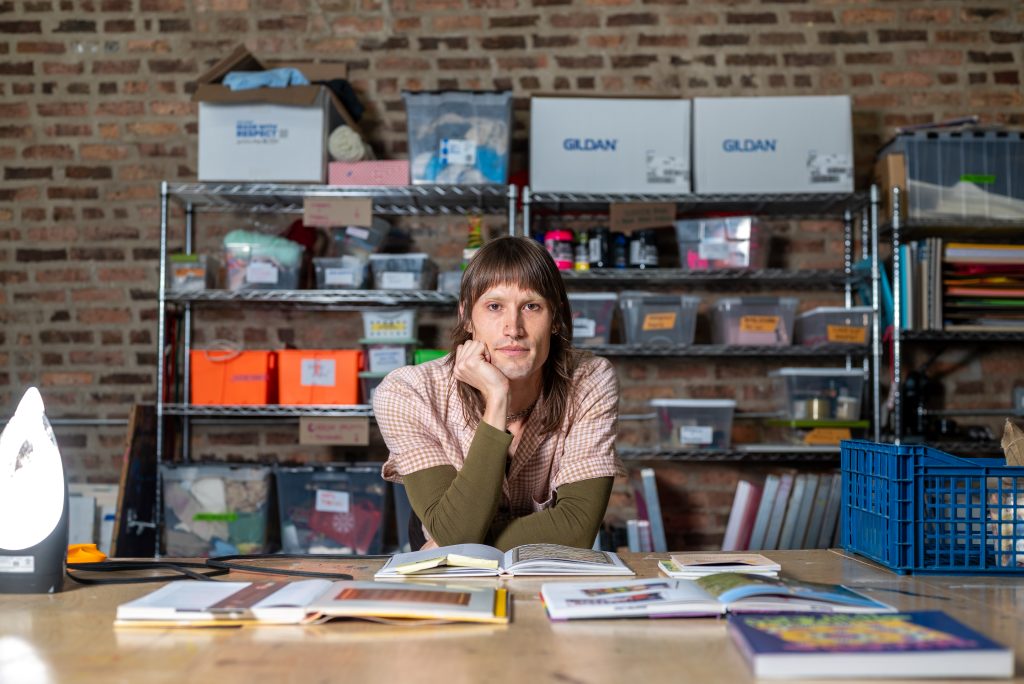
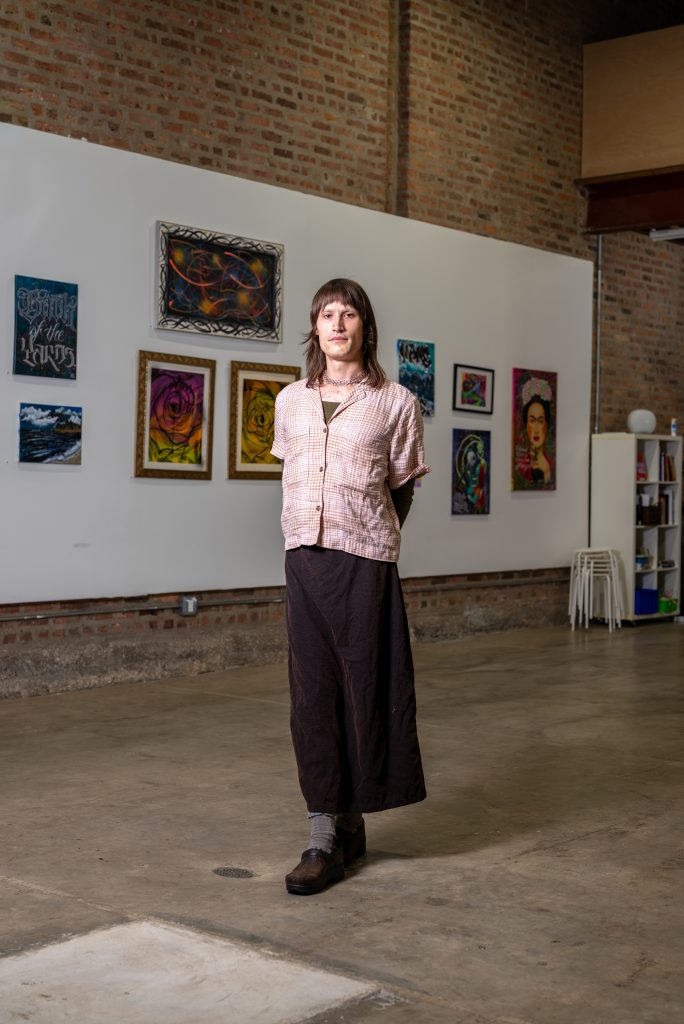
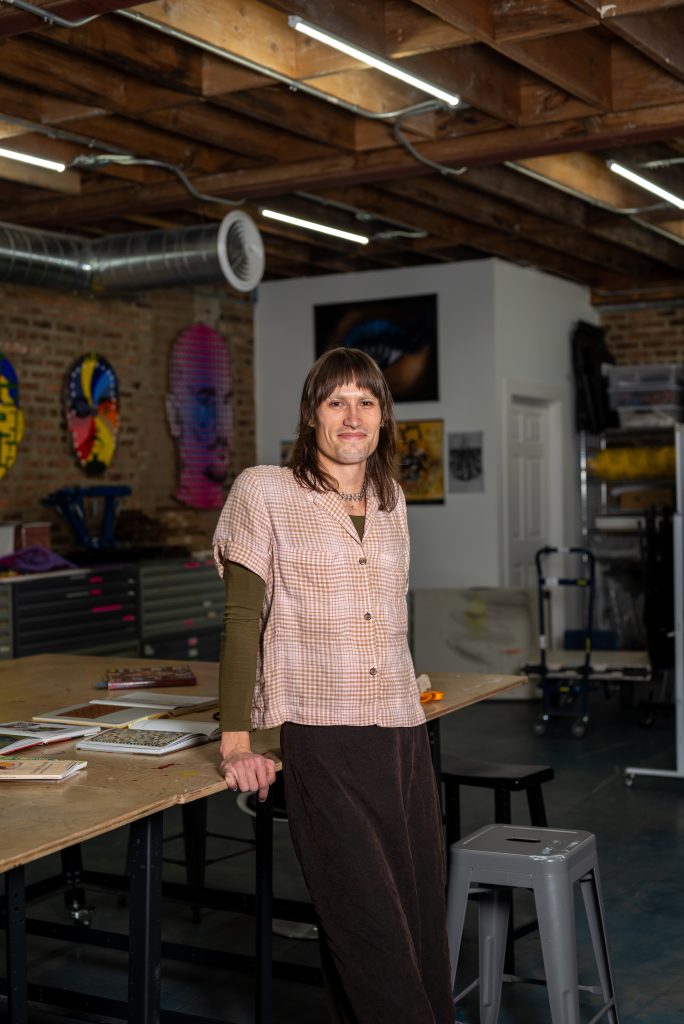
In April of last year, I sat down with Eve Emrich, the founder and director of Quilt Church, to talk about quilts, mutual education, and the importance of queer fiber history. Emrich is a quilt maker, seamstress, and self-described spinster. I also invited Jamie Hopkins, a friend of Emrich and an alum of one of the early cohorts to share their perspective from the participant side of Quilt Church.
The project itself is a cooperative queer hand-quilting initiative based in Chicago and currently hosted by Walls Turned Sideways, an art gallery and community space in East Garfield Park dedicated to artists and communities impacted by incarceration. To date, Emrich has guided five groups through the slow, collective process of making a quilt by hand. Each finished piece has then been raffled off, with proceeds supporting local mutual aid groups such as The Orange Tent Project, the Chicagoland Food Sovereignty Coalition, and their host organization, Walls Turned Sideways.
This interview has been edited for length and clarity.
Zola Rollins: Can you start by telling me about Craft Nite, the space where quilt church was born out of?
Eve Emrich: Craft Nite started right as I came out of school and I felt this really deep desire to find these kinds of community spaces centered around fibers that I had been able to experience and also excluded from in varying degrees throughout my life. Just in the structure of a craft circle, whether it was crochet or sewing or something else, a lot of fiber education ends up in that structure, even in institutions.
When I came out of school I was just really yearning for that. It started with really informal craft nights that I held at my apartment and in random peoples backyards, and it was a bring what you want to work on, community making space. Then I moved into an apartment with a detached garage, and Craft Nite became a more structured space that Emrys Brandt and I built programming for, open to submissions from queer up-and-coming artists in Chicago could use it as a shared resource. The garage operated as a space, speaking for myself, where I could just play with what art organizing meant to me and what was important about community and craft and art.
I think Quilt Church is closely connected to that, to me, it’s a more focused project based on a craft I’m deeply interested in. I was wanting a bit more of a focused mission than what Craft Nite was.
ZR: What were your biggest takeaways from Craft Nite?
EE: I think I learned from Craft Nite that I really do like to organize and teach a skill to people. I think that I enjoy hosting a group of people, some who I know and some who I am meeting for the first time and move all together through this fiber technique. So that was a big takeaway for me because it was something I wasn’t really sure I was interested in, or in what capacity I was interested in. Also a lot of what I took away was time management and what it actually feels like to schedule a program for months in advance and what it feels like to execute that.
ZR: What is Quilt Church?
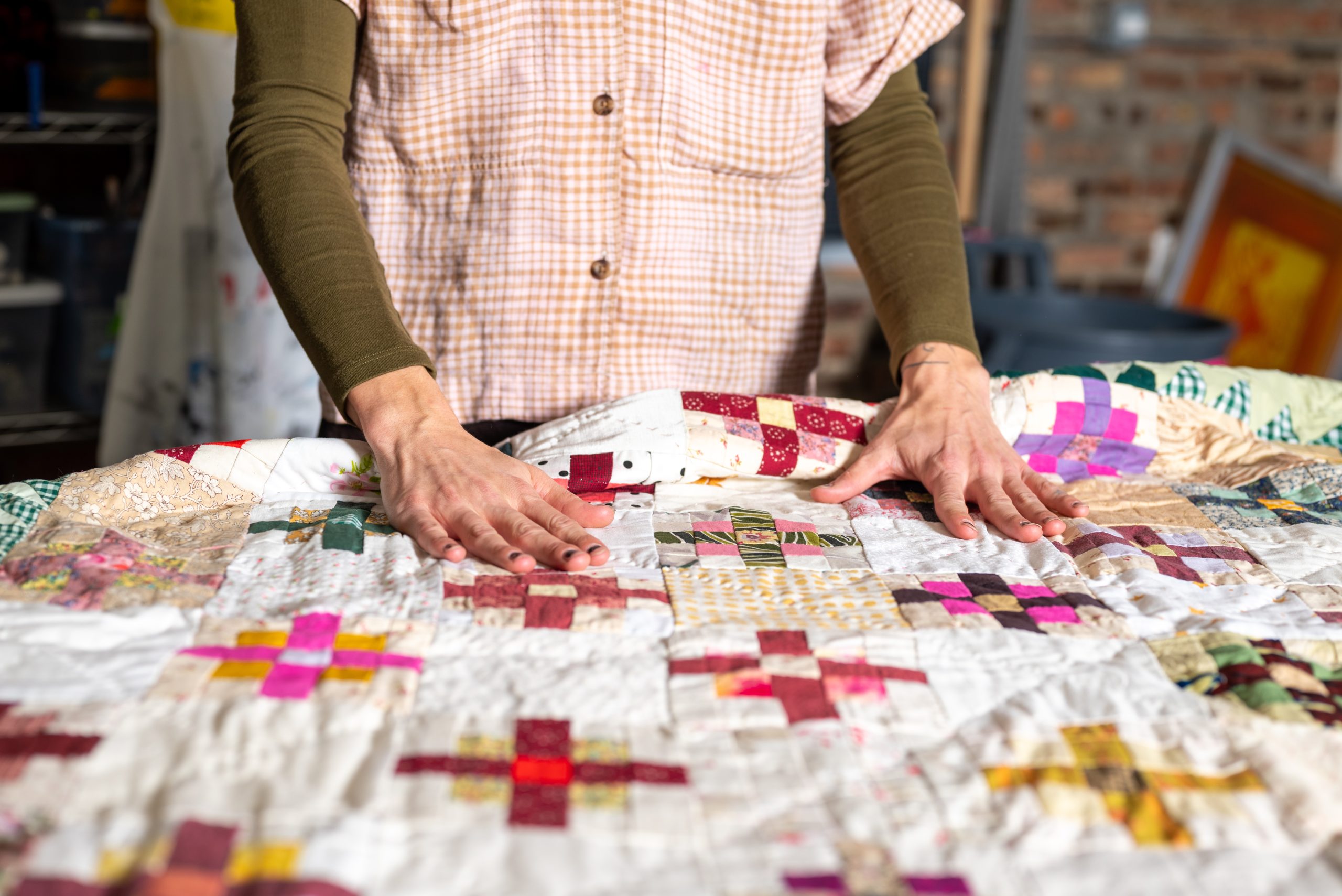
EE: I think of Quilt Church as a community quilting project. It’s a series of hand quilting workshops that I facilitate in a way that I think provides space for a group of people to connect with each other regularly, get to know each other and build community with each other. Kind of in a similar format that you can find in an institution without the power structures and inaccessible fees or payments. It’s a space where a lot of mutual education happens.
Quilting is such a community based practice in the way that it’s passed from generation to generation and it is something that you can’t get away from—the give and take of generational knowledge and skills that everyone has. So I think as time goes on, people are learning from each other and building relationships.
We are also engaging in a historic practice of quilt raffles, which isn’t necessarily the foundation of what the project means, but I think it’s been a really special part of what community art practices can teach us about collaboration in the name of self supporting and funding our communities in ways that are directly impactful.
ZR: So how did you start Quilt Church?
EE: The first cohort of Quilt Church happened in April of 2024. I was working with Margaret Dugger who I met at school who I had been talking to about doing a community facing workshop and quilt project a few months before and we threw an outline together of lesson plans. She had just returned from a hand quilting intensive in North Carolina so we were talking a lot about handicrafts and the slowness and community that those sink into. That one stretched pretty far throughout the year, it ended in September because we were only meeting once each month and that also lined up with the end of my lease in the garage space that I had. So that first cohort we did all the work in the garage during summer and we raffled the quilt off in the garage as well. Margaret, pretty close to the end of that project, got a long-term residency that precipitated another job in Pennsylvania so she moved.
The second cohort started in November of that same year, this time meeting twice a month, every two weeks. And the turnaround time on that did shorten substantially but it was also a very different project. One of the people who was participating in the first cohort, Mira Simonton-Chao, works at an organization called Walls Turned Sideways and as I was talking to people about the end of this lease and needing a new space to host the next project, they offered to host there. That worked out really well. So then we were working there and raffled that quilt off in early March of last year.
ZR: Can you share a little more about the history of raffling off quilts?
EE: Yeah, I think the history of quilt making as a collective process has always been grounded in this sentiment “make do with what we got,” making these objects of comfort and care. There is a really long history of those quilts, that are made by many hands, being a viable option to return money to the communities they come from. Quilt history in the United States is rooted in a lot of primarily Black quilting guilds that practiced in the south that intertwine with collective craft as mutual aid work. Then that practice has continued to show up through things like the AIDS epidemic with the NAMES project quilt and then now as we live through numerous new crisis’ that we’ve had to respond to as communities.
ZR: What did you each learn between the first and second cohort?
EE: For the first one, I had a co-director and co-teacher and a group of probably seventeen people. We moved through the fundamentals quite slowly and probably spent the first three or four months just doing practice blocks, going over stitching fundamentals, practicing knots, and choosing and cutting fabric. Things that seem kind of like minutiae but are actually really important long term. We had a very rigorous strict pattern we were following and everyone was making two of this pattern block and two of this pattern block and then we put them all together. So it was very streamlined in that way and everything came together incredibly fast and it felt unreal how quickly and smoothly it came together. Jamie can tell you about how the second one was different.
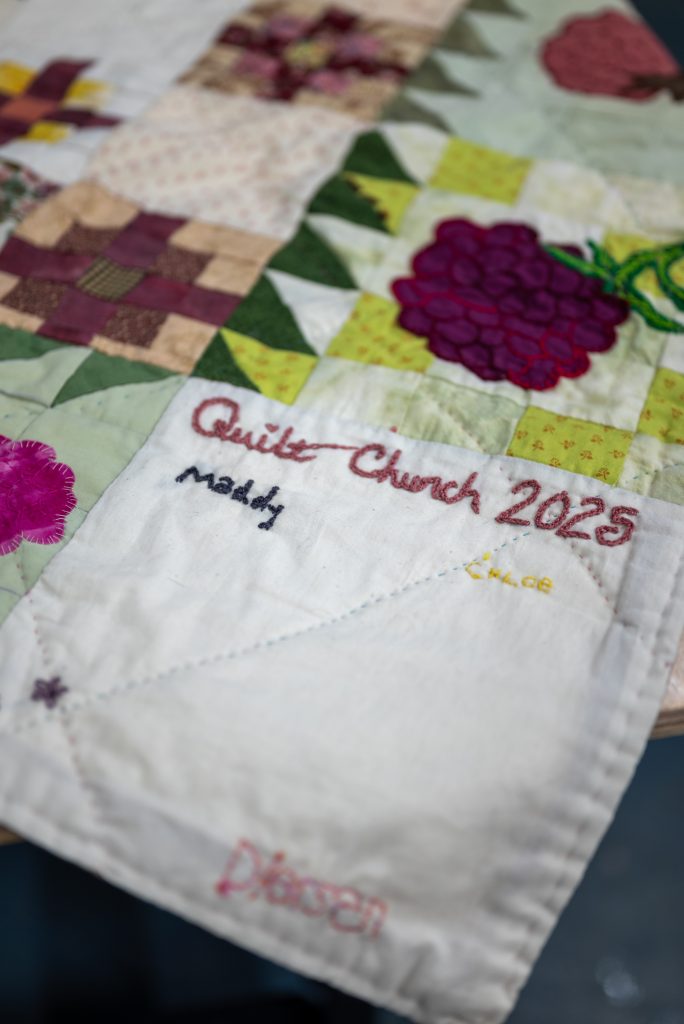
Jamie Hopkins: It’s funny to hear how the first cohort went because this one was nothing like that. We did spend a lot of time on fundamentals, but it was always in the second half of the day. The first half of the day was just a lot of talking about what we wanted for the quilt, what message we wanted, what colors we were thinking. It was funny because a lot of us hadn’t met before so we were getting to know each other through finding out what we wanted in the quilt. There was a wide range of experience in the group, I knew nothing coming in. I mean I throw patches on things every once in a while, but there were a few capital Q Quilters there who knew a lot of technique. We were talking about patterns and the Log Cabin was thrown out there and we focused on Log Cabin for a second. In the quilt, we didn’t fully execute it. It was there but then everybody got really excited about stars, so we sort of combined multiple patterns and a pattern was just made.
EE: Quilting is a practice that is extremely malleable. It’s composed of small blocks that make up bigger blocks so you can imagine there’s infinite room to veer off creatively. In the second cohort, a huge learning curve for me was figuring out what my role is in the group when it comes to decision making. I also think that part of the beauty and importance of a community art project is that there is autonomy in the group and everyone’s aesthetic choices and wishes for where the quilt goes and how we use the money are very horizontally appreciated. But where we ran into trouble was there was a lot of interest in the group to make modifications to the Log Cabin that ended up making the quilt top a very freeform pattern where people’s individual blocks did not have a specified place, which, not to take your punchline Jamie, but made the quilt wildly bigger than what I was expecting and the process of piecing it together took a lot longer. So that was a big takeaway.
ZR: I liked what you said, about quilts being malleable. They kind of contain both a high amount of rigidity and a high amount of flexibility, it’s really interesting as a—well a quilt isn’t really a material, as a form I guess?
EE: It’s like a concept honestly, anything could be a quilt and it depends on what kind of quilter you talk to how they define a quilt. There’s just so many ways of putting fabric together.
JH: There were a variety of techniques in our quilt too. We weren’t just piecing it together. It was also appliquéd so there were a lot of other techniques that were thrown in. Because everyone was bringing in their own patterns, it was fun to chat with everyone about what they were doing because everyone was doing something different and then seeing what issues people hit at different times. Since there were so many of us and only one of you, we ended up asking each other questions the whole time and leaned on different people for different things.
EE: I’m glad you brought up the multiple levels of experience earlier because that is also something that feels important to my earlier point about mutual education. Some of the people who hadn’t quilted before or sewn by hand before were able to find guidance in the more experienced quilters and that kind of environment is one I appreciate.
JH: A part of it that made it so accessible for me was the wide range, it was nice to go to the experts for guidance and then go back to the beginners for some camaraderie.
ZR: So where do you start with the quilt, picking the fabric?
EE: We actually started with practice blocks to get the feel of stitch work and then we did practice blocks of our chosen block patterns so we did Log Cabin blocks, which is a pretty basic design. So when we had those that’s when we laid out fabric and when people could conceptualize colors integrating into their practice blocks and then people chose from the fabrics.
ZR: And where does the fabric come from?
JH: The fabric was so much fun, all of us brought our own fabric from home. I went and thrifted some because I don’t have a huge stash. A lot of the quilters had a huge stash and brought stuff. Some people got it from their grandparents’ stash. Someone else brought bits of their wedding dress. That was such a special and exciting part, talking about where all the fabric had come from. Then we all laid it all on the table and started organizing by color and talking about what we wanted our color palette to be like.
EE: I think we landed on a color scheme that was sweet and worked but it’s hard to make decisions as a group when there’s so many options! A lot of quilting guilds and quilters clubs will do this format of community making where one person, who is usually actually called “The Queen Bee” will write up a theme page that has the block pattern, dimensions, color scheme, and what the quilt is about and send it to rest of the group. Everyone will make blocks for that one person and then everyone quilts it together. Which is something I’ve been considering for the next iteration and just how we navigate those decisions.
ZR: So how did you go about piecing the quilt without a Queen Bee?
EE: Everyone completed a specific number of blocks with specific dimensions and those all come back the next week and that’s when we laid them out on the floor and that’s a pretty fun stage because that’s when you’re working through composition of the final piece and it’s kind of like a puzzle. That’s another way this cohort differed from the last one was that there were not specific dimensional requirements for their blocks. Not to get into the weeds but when all the blocks are the same size you can piece them in strips and piece those together. However, with this quilt we were dealing with corners that were coming in midway through a block and blocks that had to fit into already pieced corners. It was a lot more fun in terms of composition. It was a much more dynamic and interesting thing to experience, so that stage took a while because there were a lot of holes to be patched and some blocks weren’t square or there wasn’t enough seam allowance so we had to appliqué them on.
ZR: What’s the next step once you have the quilt top together?
EE: Once you have your finished top together there are small steps that take kind of a long time. You’re doing a lot of trimming of seam allowances, and cleaning up on edges, and trimming threads, because these are all things that show through the top once it’s quilted and you don’t want to seal it into the quilt.
And then the quilt gets basted and it gets put into the frame and that’s the Quilting Bee. That’s an all day event. Those are traditionally huge community events where people are cooking all day and feeding each other and there’s music. That’s one of the culminating events of Quilt Church, participating in this day with this community you’ve made, feeding each other, taking turns working, and then it gets raffled.
ZR: How do you decide where the funds from the raffle go? Do you decide as a group?
EE: That was the case for the first cohort. For the second, we decided together, but it also felt like the natural choice to give the proceeds to Walls Turned Sideways, since they had supported us for months and the group was excited about their work, with people being invited to events there and becoming more integrated into that community. And they will continue to host us and hopefully [with] the next group we will be able to bring in more people from the Walls Turned Sideways community. The Director of Walls Turned Sideways, Sarah Ross, is interested in that being a craft education space, that’s something a lot of their community has expressed interest in.
ZR: I saw that you went on a field trip to the Leather Archives & Museum and Gerber/Hart Library and Archives. What was that like?
JH: The field trip to Gerber/Hart! They gave us a tour of some of their collections and pulled some drag wardrobes that they had there and told us a bit about the space. That was just a nice space to think about queer history while we were all making something together, objects, and seeing that alongside all the things that other people have made that Gerber/Hart is working to conserve. We did some of the trimming there as well.
EE: As a part of the second quilt, something that I’ve been thinking about has been the importance of integrating research into Quilt Church. And what does it mean to be engaging in this historical practice that has a really significant history as a queer project? I spent a lot of time at the beginning trying to get people to think out loud about what it means for them to be learning about quilting. In terms of design choices, there’s so much history behind quilt patterns and the popularity of patterns, and why different quilts have been collected and archived and why some of them have been sold and mass-produced. I feel like the trip to Gerber/Hart was a way I’m interested in Quilt Church growing into a place of not only skill sharing and a place where we create something as a community and build community with each other, but also a way that we deepen into what it means to be doing this—practicing this, at this time in history.
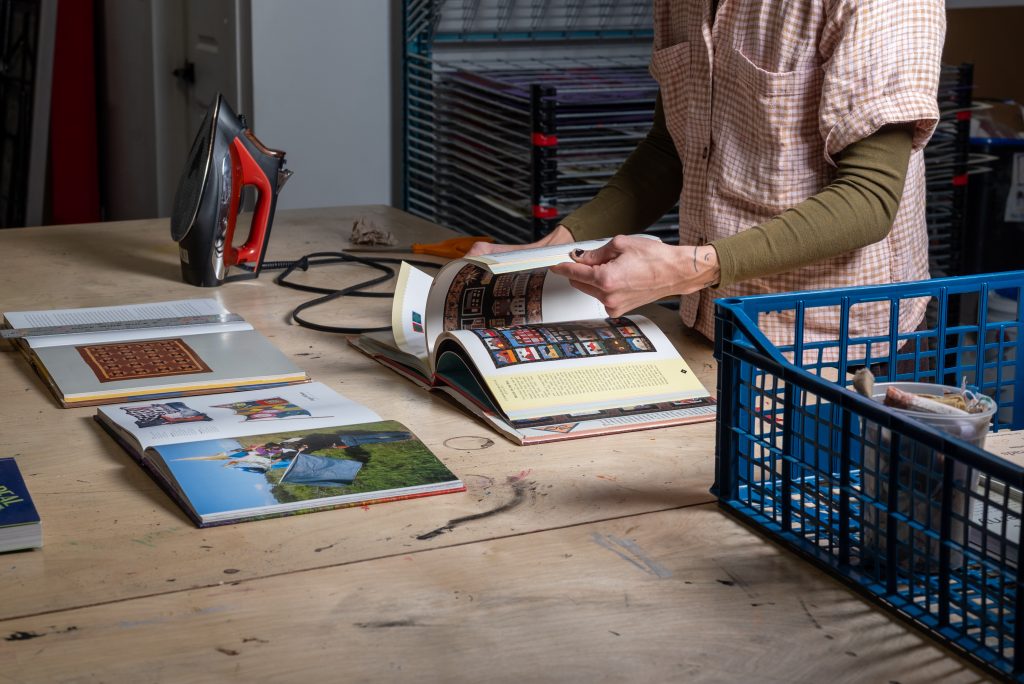
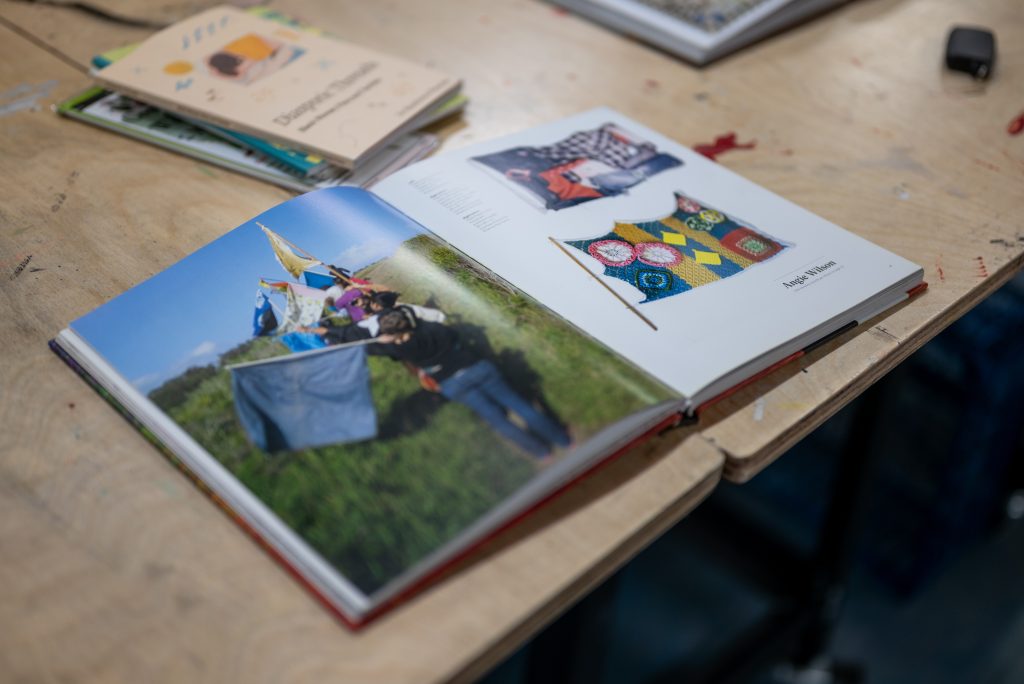
EE: A few people had never been to Gerber/Hart before, and almost everyone went home with a stack of books they were excited about.
JH: It was also nice because we were all working on this together, and we were all aware of this being a community practice. And then we were surrounded by projects from the archives that were made in community. And we were imagining things like, I wonder how many extra meetings they had to have? What issues did they run into? We mapped our experience onto those objects. It was fun to feel in community with those people too. All working toward the means of making something beautiful and how that’s been done in so many different ways.
EE: That’s such a good point. I feel like that came up a lot in our group. It’s something that’s hard to understand until you’re in it. How impactful it is to have a reliable, recurring group of people you’re working side-by-side with on something you love and care about. And it’s such a thoughtful and intimate and vulnerable thing to make a quilt and to be learning a technique that is about softness and tension and binding. I feel like the thing that always hits me is how meaningful it is to be doing that outside a capitalist lens of labor and survival. And that it centers around doing something you care about with people you care about.
ZR: Do you have any advice for somebody who wants to put something like this together or show up or be a part of something like this?
JH: I definitely don’t think I’m alone in this, but I have a big issue with making mistakes. Being in a group is a really hard place to learn something. Being in a group means opening yourself up to having people see you make mistakes and being nervous about that. And something that was so nice about this group is that we had to face that openly together.
EE: Yeah, that is so true. I love thinking about the feelings that come up in the group as we move through something new. In a group project like this, there are so many feelings, shame and fear and self-doubt, that come up and need to be addressed, and they are. Receiving compassion and understanding and the togetherness that working in a group can offer is really healing. It’s hopeful.
ZR: Is there anything else you want to add?
EE: The next quilt is going to be small.
[All laugh]
ZR: What are your dreams for the next quilt?
EE: The next quilt is tiny. [Laughs.] No, I’m feeling more and more interested in shrinking the dimensions down because there are so many moving parts, and the design of the quilt impacts the actual structure of the months we’re in community. I’m really interested in what a smaller wall-hanging quilt will look like. When quilts expand like they did last time, the small intimate details that are so special in a quilt get blown out across a big space. I think condensing it into a small area and having more focus on surface manipulation will be really fun.
ZR: I noticed that accessibility is emphasized in your programming and wondered if there’s anything you’d like to add about that?
EE: Yeah. All our meetings are mask-mandatory and we got a couple air purifiers from Clean Air Club for the reception. Walls Turned Sideways is cool because it’s also wheelchair accessible—it’s on the first floor of the building and has accessible bathrooms. I think accessibility is intrinsic to my mission for what community and community craft education means. It would be counterintuitive for a space built on building community to only be accessible to some people. I try to make it as inclusive as possible, in a flawed way, of course.
ZR: The first part of our interview was back in April and a lot has happened since then. Is there anything else you want to share about the project now?
EE: The project has grown and developed in a couple exciting ways since the last time we talked. The third cohort completed their quilt and raffled it off in mid September of last year, and it turned out so beautifully. The quilt was themed around the black raspberry, which if you’re not familiar is the only drupaceous fruit that is native to Illinois. The proceeds of that raffle went to the Chicagoland Food Sovereignty Coalition.
The next really exciting development for Quilt Church is that with the help of a grant from the Awesome Foundation I was able to expand the project out into two intertwining quilt projects that will run in tandem with one another through this winter. One of the groups will focus on foundational hand-sewing and textile based archival practices, while the other cohort is welcoming back past participants who will venture into more fabric manipulations like dye, print, and drawing on fabric. I’m feeling really happy about the opportunity to run two cohorts simultaneously. As a quilter and educator I’m excited to expand the vocabulary of skills that we’re going to be passing back-and-forth within these two groups. As an organizer, I also feel excited about having doubled the number of people involved and to see what will come of their engagement with each other. Those two quilts should be wrapping up right around the end of February, and I’m working on organizing a more substantial exhibition of quilts for those to be displayed within.
I think one last thing I feel like I want to mention is just a shout out to our host space: Walls Turned Sideways in East Garfield Park. They have been the most gracious hosts to Quilt Church and are doing really amazing abolition and support work for and with people who have been incarcerated or have been affected by the carceral system. They’re a gallery and community space putting up beautiful shows and holding really great community educational work so definitely try to check out their space and support them if you can.
ZR: And where can people find out about Quilt Church?
EE: Instagram, and we’ve got a newsletter.
People can also email me at communitycraft333@gmail.com.
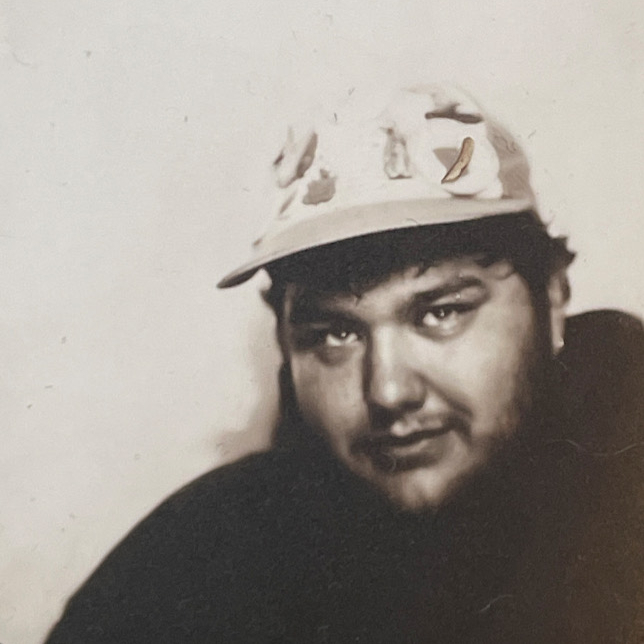
About the author: Zola Rollins (they/he) is an artist and writer living and working in Chicago. Their studio practice is grounded in interdisciplinary sculpture and also includes writing, bookbinding and performance. They are a founder of Switch-Hook projects, an itinerant artist-run curatorial and publishing project. He received his BFA from School of the Art Institute of Chicago in May of 2023.
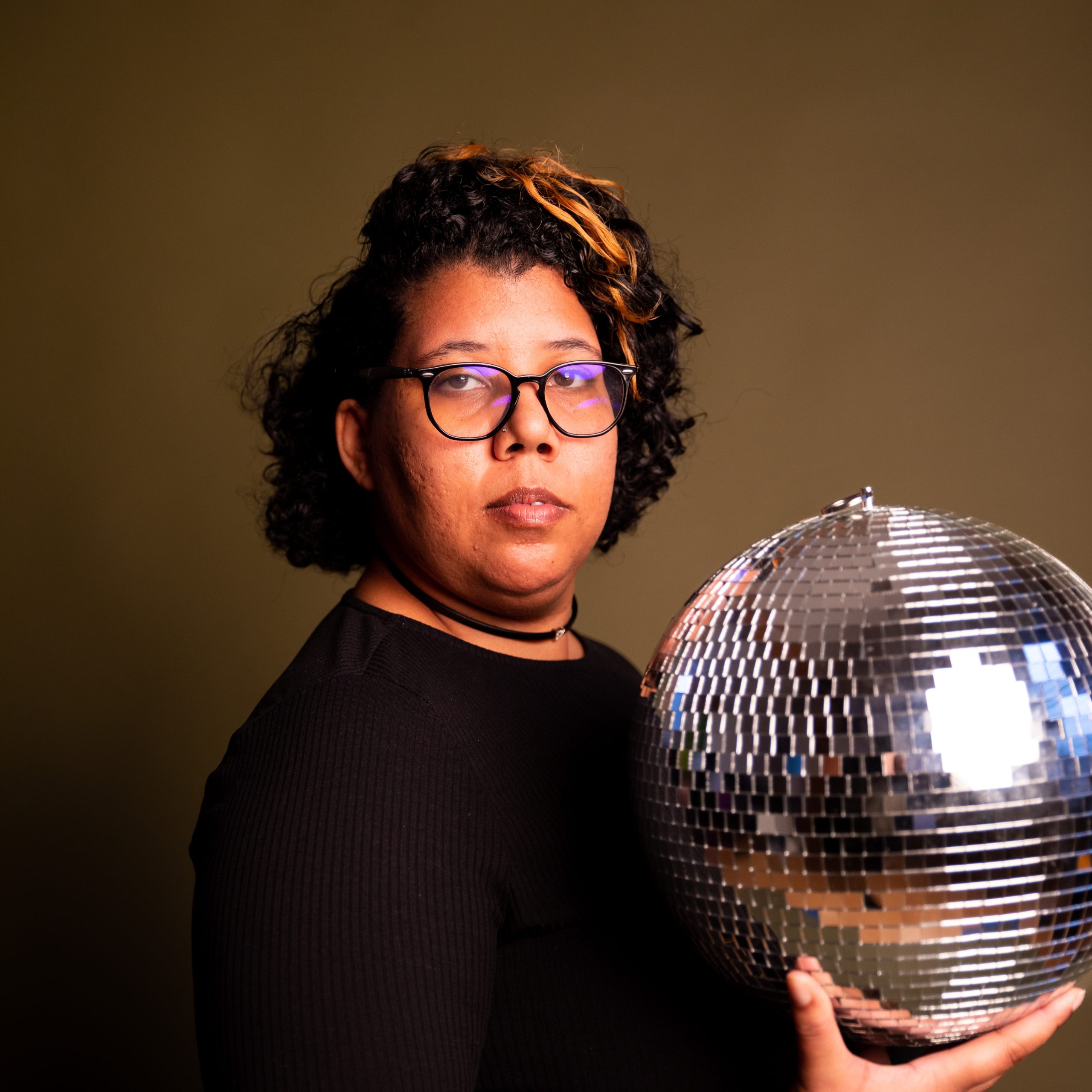
About the photographer: Tonal (tuh-nawl) (they/them), is a bi-racial Black non-binary Photographer from the Midwestern city of Kalamazoo, MI, where tall grass and even taller trees first nurtured their creative spirit. Currently based in the vibrant city of Chicago, IL, Tonal’s artistic journey is a testament to the power of self-discovery and passionate exploration through community. Inspired by the authenticity of Chicago’s Black Queer art scene, their artistry is a symphony of colors, emotions, and storytelling, as they skillfully weave vibrant and authentic narratives of Black and Brown 2SLGBTQIA+ communities. Their portrait work invites viewers to pause and witness the fullness of Black and Brown queer personhood in bloom.