Lee en Español aquí.
Tuning Away from Mechanized Listening features Midwest’s music ecosystems—listening cultures where thoughtful curation, collective engagement, and storytelling still shape what and how we hear. This series is meant to be a reminder: listening can be more than a passive, forgetful experience.
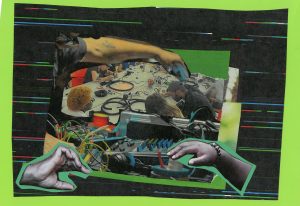
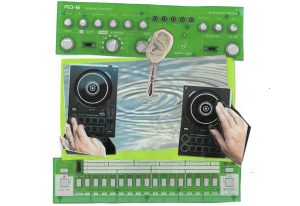
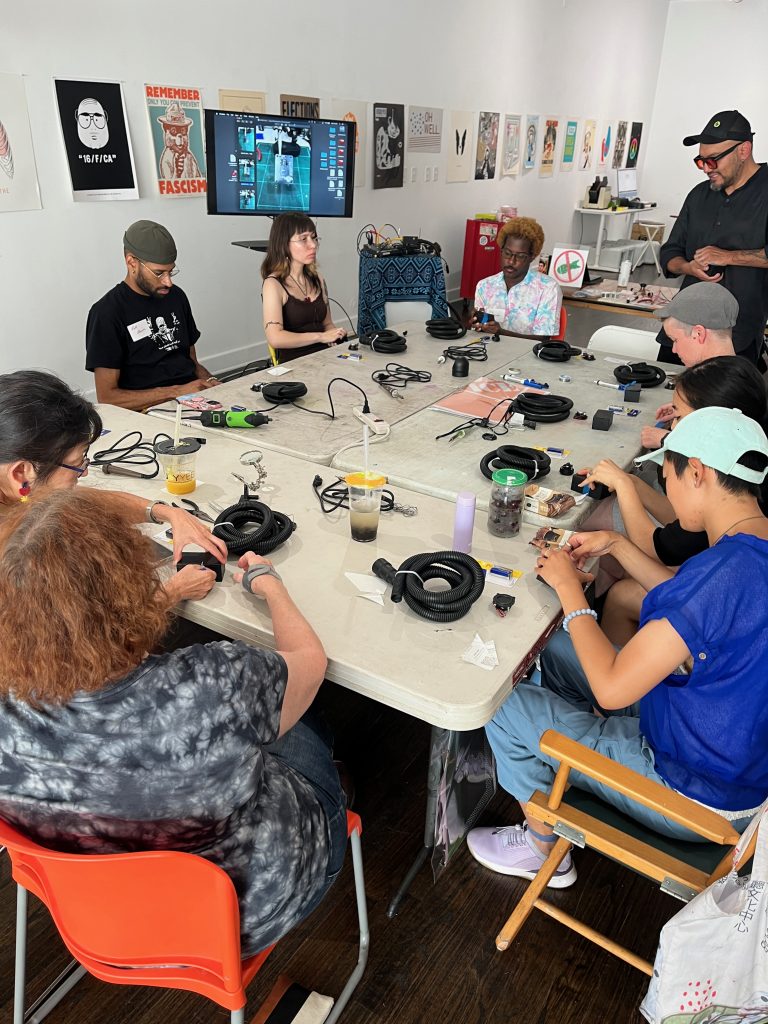
Livy Onalee Snyder (LS): You led a workshop during Co-Prosperity’s Subversion Camp this summer and invited participants to build hybrid instruments from recycled and obsolete technology. What initially drew you to explore sound-making through planned obsolescence and tech recycling?
Juanjosé Rivas (JR): My work as an artist, from its beginnings, has been concerned with how we relate to technology and its material and symbolic consequences. The use of technological waste and recycled material is a form of resistance and a political commentary on excessive production and capitalism.
LS: How does working with discarded or outdated materials change the way we think about music, instruments, or sound itself?
JR: Working with sonic residues or electronic tools that are not strictly technological instruments makes us reconsider what we understand as music and expand our aesthetic and musical boundaries. It allows for a deeper and more active form of listening, where noise and silence are indispensable parts of the musical experience. Finding sonic possibilities in obsolete tools or found objects broadens our creative horizons and limits.
LS: For people who weren’t able to participate in the workshop, but are still interested in making their own autonomous sonic device, would you be willing to walk us through the workshop? What are your basic instructions for assembling such a device?
JR: Of course! I don’t have instructions and the materials online, but I think the important thing about the workshop is knowing that anyone, with or without prior knowledge of electronics or music, can experiment by learning some basic electronics rules and using few resources. There are currently many online forums and tutorials for working with electronics at home or experimentally. I think the important thing in an in-person workshop like the one I gave at Co-Prosperity is to shift the ideology from “Do It Yourself” to “Do It Together.”
Sharing experiences and getting to know each other becomes more and more important than sharing information.
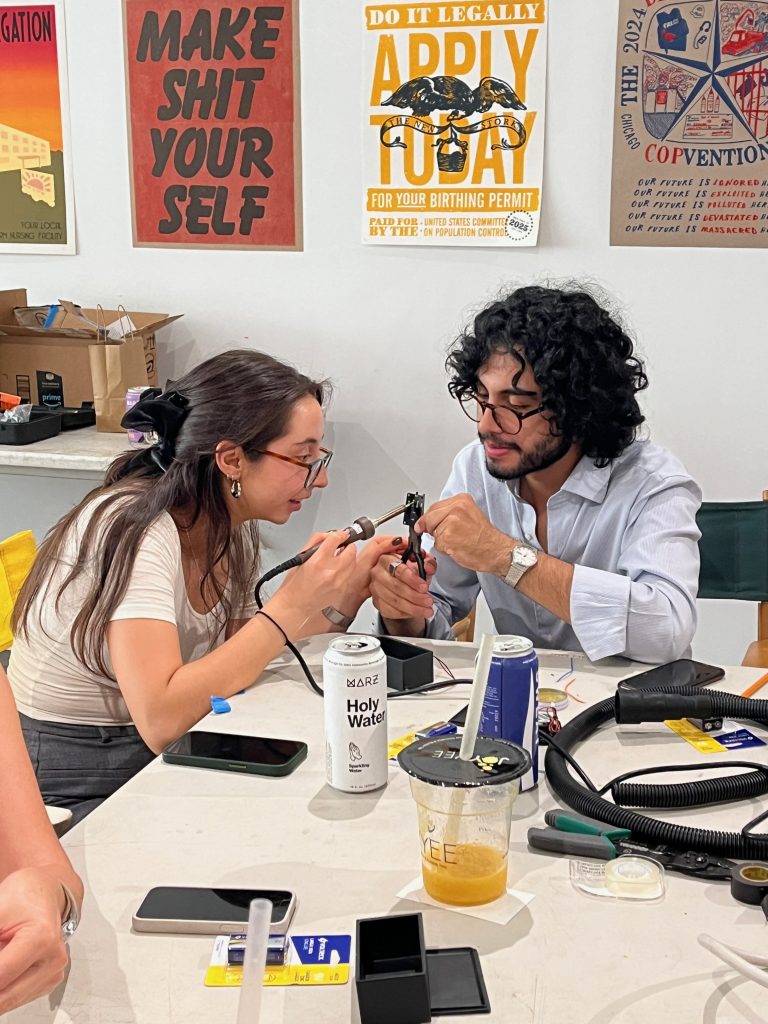
LS: I also noticed that the workshop emphasizes collective-building. What do you see as the connection between collaborative instrument-making and resisting dominant technological or musical infrastructures?
JR: I think the essential idea of the workshop is to question the relationship we have with consumption and the distribution of symbolic and material resources, questioning what we listen to, whether musical or not, and what we consume materially, whether technological resources or not. It has to do with a series of cultural, economic, and political values that are imposed on us, limiting us to consuming without questioning. In that sense, the workshop aims to offer a space for exchange and collective connection to ask ourselves how and why we consume what we consume.
LS: How do you hope participants will listen differently after building these “autonomous sonic devices”?
JR: The idea is for workshop participants to leave with the understanding that everything around us has expressive and artistic possibilities, and that all we need to do is listen carefully and sensitively to everything around us.
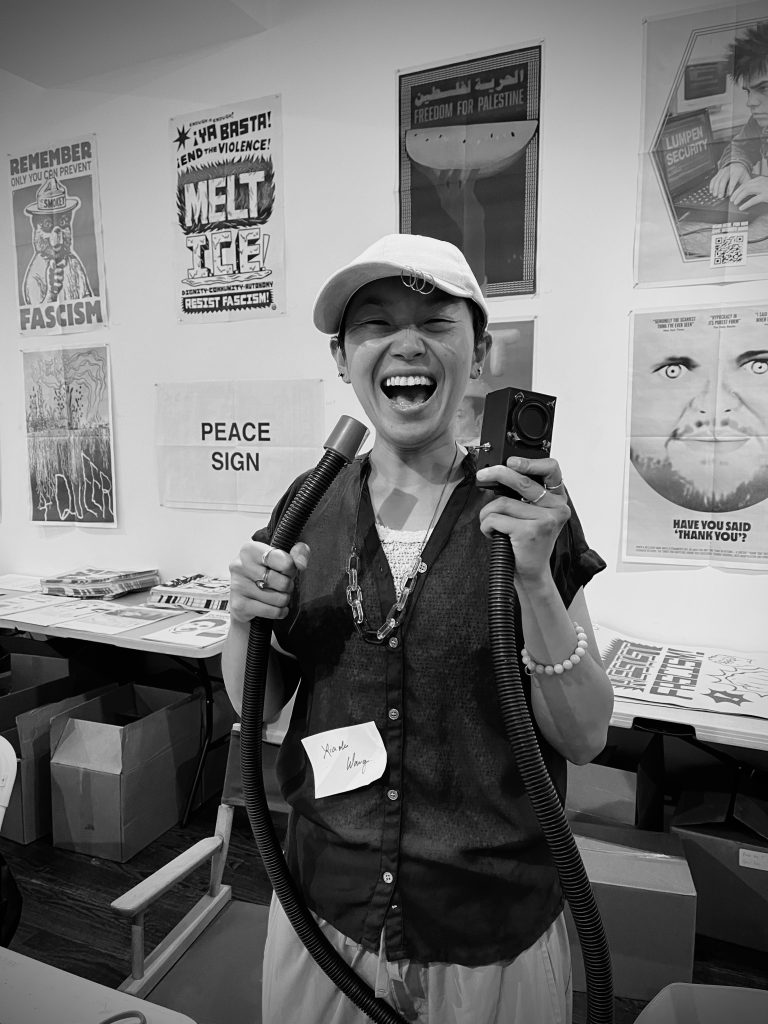
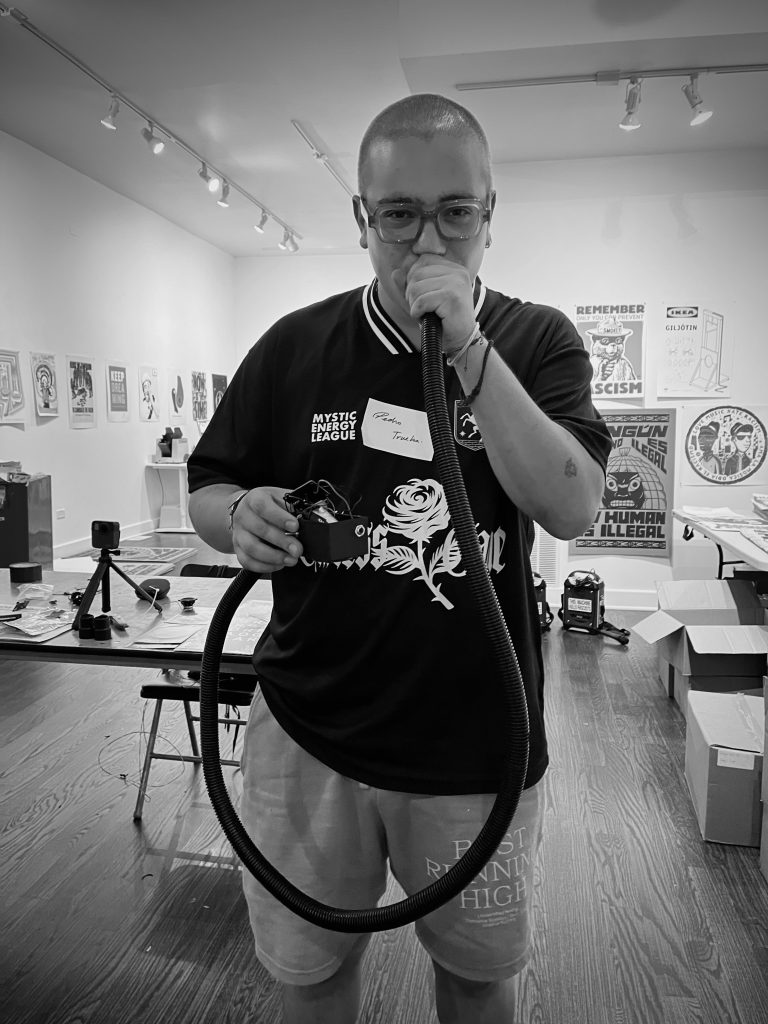
LS: Did the workshop meet your expectations as a facilitator? What about the workshop surprised you?
JR: Of course! Co-Prosperity is a great space, surrounded by a very diverse and interesting community. It’s always nice to meet people with different interests and cultures and know we can engage in dialogue and sharing. I was surprised by the openness and reception of the participants, as each of them found not only a musical or sound instrument but also the opportunity to make and build something with their own hands.
Juanjosé Rivas is a Mexican transmedia artist. His work is characterized by exploring the boundaries between sound, art and technology with a strong artistic background and a passion for experimentation. Throughout his artistic practice, Rivas has used a variety of media, including drawing, photography, video, sound installations, electro-acoustic compositions and live performances. His creations often involve the use of digital and electronic technologies, allowing him to expand the expressive possibilities of sound without separating from improvisation as the main resource, to elaborate a discourse through translation, error and interference within the different artistic languages.
In addition to his artistic work, Juanjosé Rivas has contributed significantly to the Mexican sound scene as director of VOLTA, improvisation and sound experimentation sessions with more than 12 years of work. He has given workshops and conferences on sound art, art and technology, and creative processes, and has collaborated with other artists and musicians in multidisciplinary projects.
About the author: Livy Onalee Snyder’s writing has appeared in the Journal for Metal Music Studies, DARIA, Ruckus, TiltWest, Signal, and more. She graduated with her Masters from the University of Chicago in 2021. Currently, she holds a position at punctum books and serves on the board of the International Society for Metal Music Studies. Listen to her live on WHPK 88.5 FM Chicago. Read more of Livy’s writing for Sixty here.
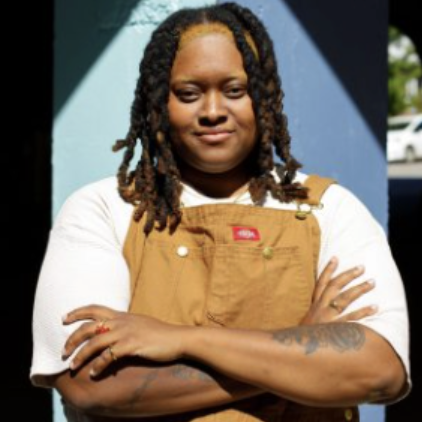
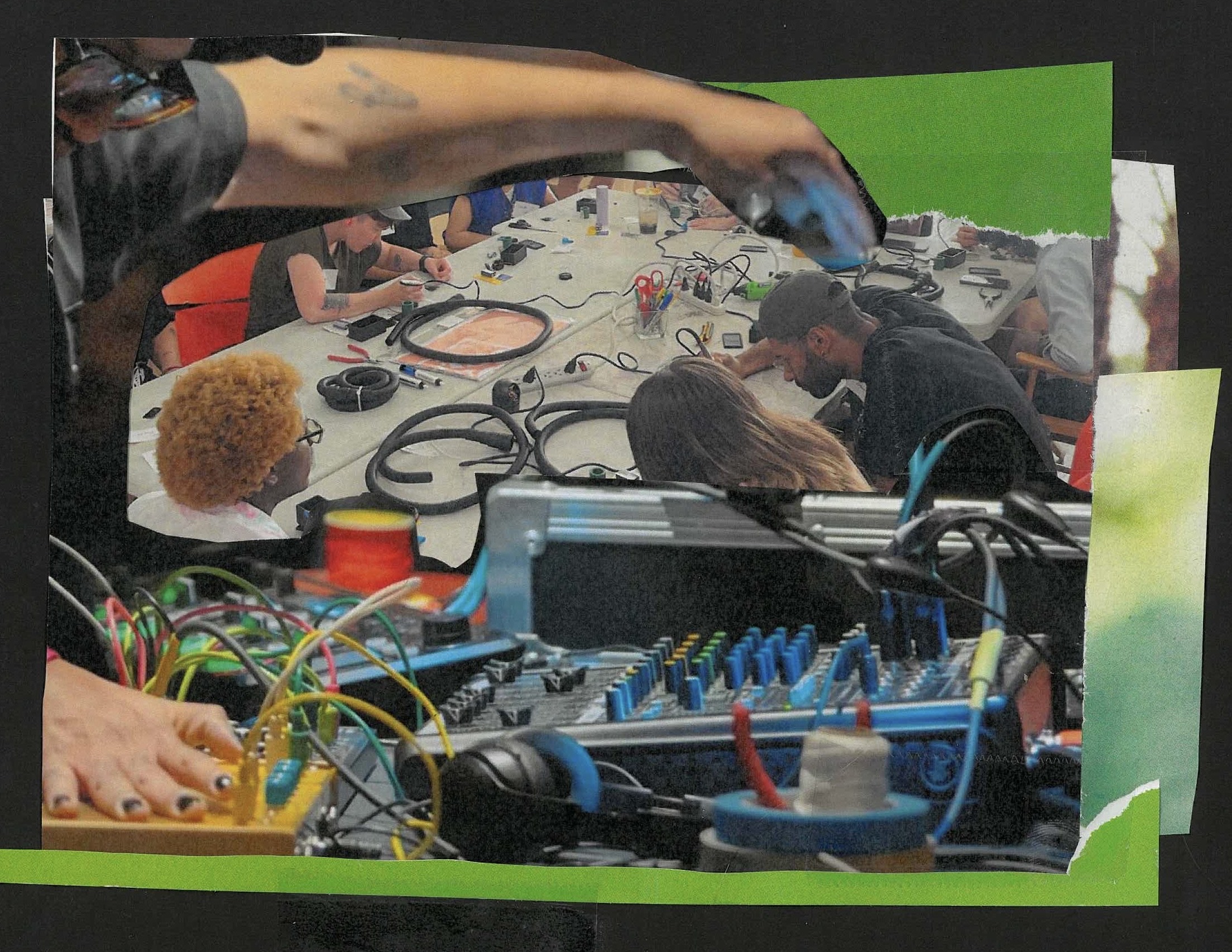
About the illustrator: Bri Robinson is a mixed media artist, analog collagist, sculpture artist, and historian who weaves intricate narratives of love, loss, and identity across the expansive Midwest. Through their unique process of cutting, pasting, and layering, Bri deepens the meaning of these found objects, transforming them into evocative works of art. Bri’s practice is deeply rooted in the exploration of identity, relationships, and the constant evolution of self. By merging archival materials with elements of popular culture, they create thought-provoking narratives that invite viewers to engage with the complexities of the queer experience. Through their work, Bri honors the past while also pushing the boundaries of contemporary art history, crafting pieces that are as introspective as they are expansive. Check out their work on Instagram @niq.uor.