
The Chicago Archives + Artists Project (CA+AP) connects archivists and artists to reimagine futures and histories. This year’s research continues our current theme of “embodying the archive.“
This series of interviews profiles this year’s archives + artists pairings, which include the National Public Housing Museum’s oral history collection (archive) + Dr. ShaDawn Battle (artist), Honey Pot Performance (archive) + Siobhan McKissic (artist/archivist), and one trio: Chuquimarca’s art library (archive) + Crystal Vance Guerra (poet) + Mariana Mejía (archivist).
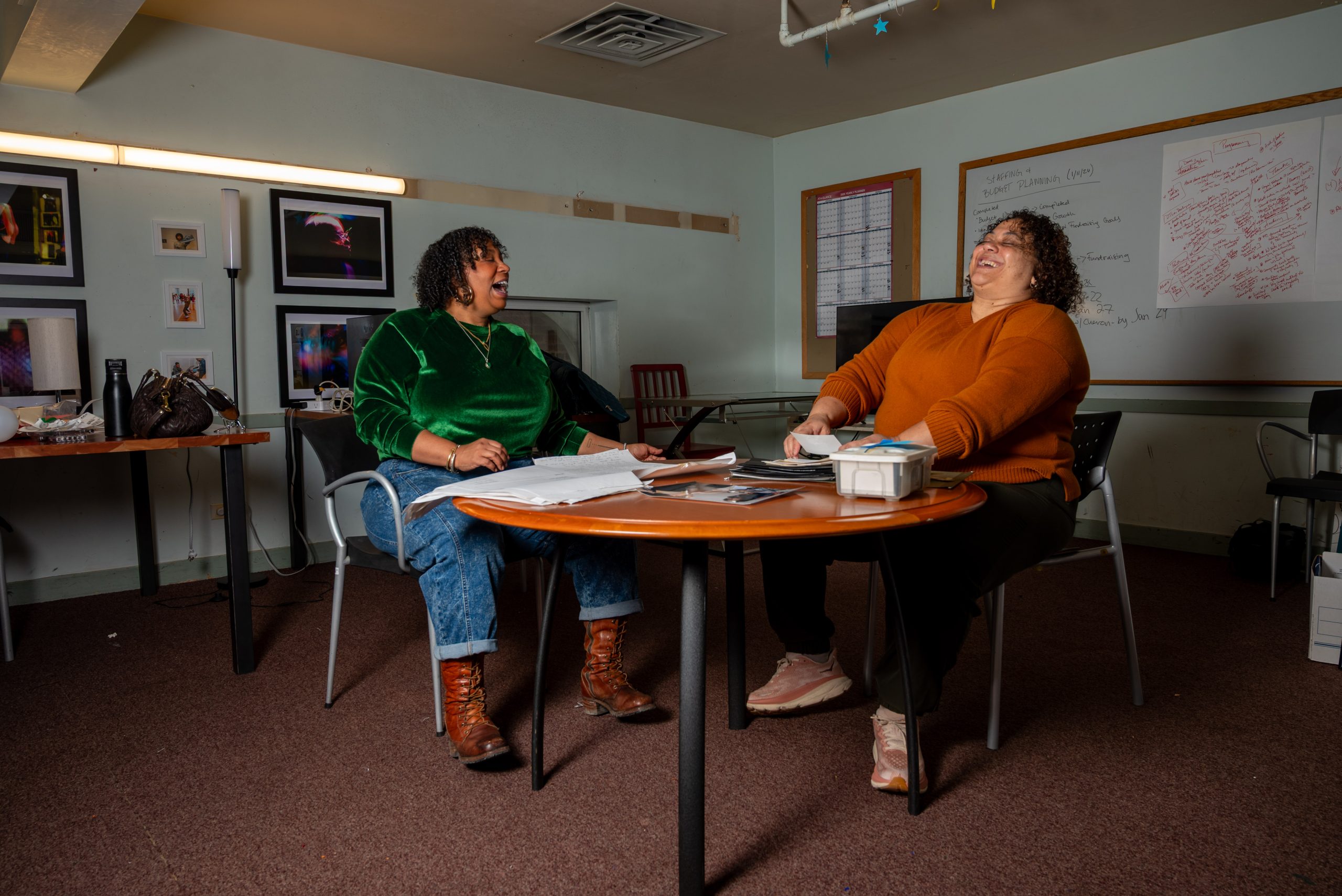
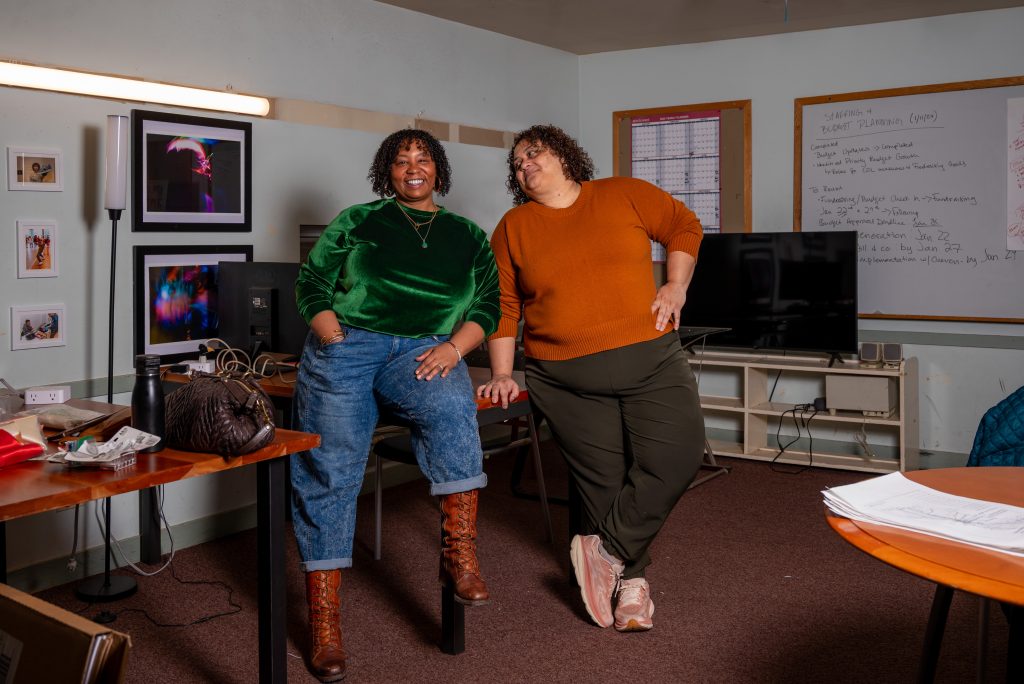
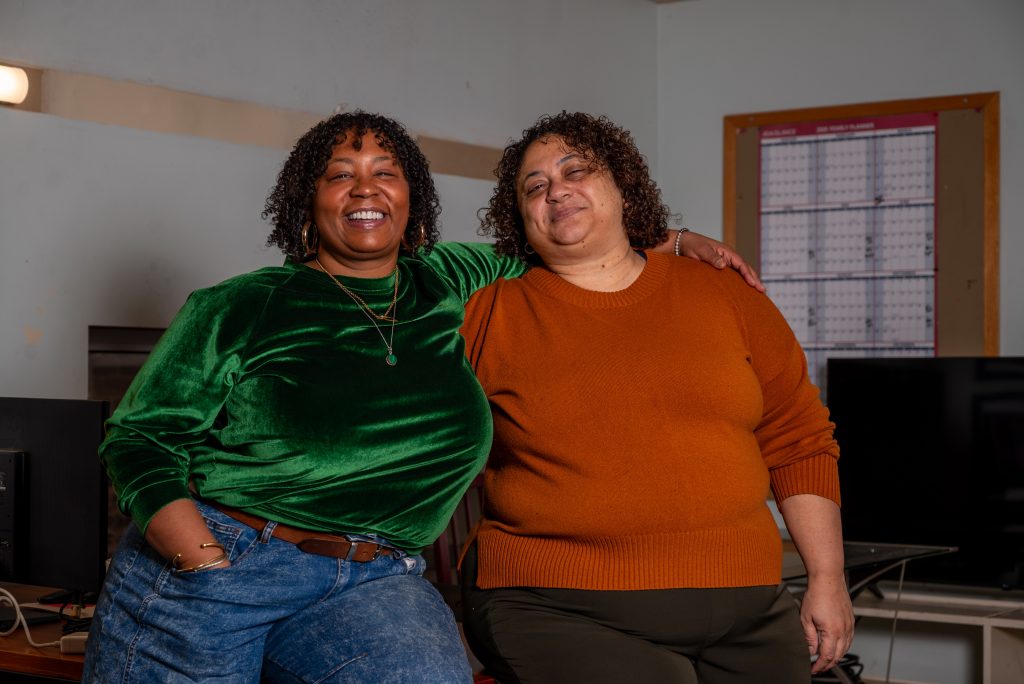
For this installment, Tonal Mondae met with members Meida Teresa McNeal, Aisha Josina Jean-Baptiste, and Kimeco Roberson to discuss the origins and evolution of Honey Pot Performance. Meida Teresa McNeal (she/her) is a co-founding member, artist, and scholar whose work centers on performance and critical ethnography. Aisha Josina Jean-Baptiste (she/her) is a co-founding member and poet. Kimeco Roberson (she/her) is a board member of Honey Pot Performance and also a vocalist and songwriter.
Honey Pot Performance (HPP) is a creative collaborative chronicling Afro-feminist and Black diasporic subjectivities amidst the pressures of contemporary global life. Since 2001, HPP has cultivated an approach to performance integrating movement, theater, and first-voice to examine the nuanced ways people negotiate identity, belonging, and difference in their lives and cultural memberships.
Tonal Mondae: From your perspective, how did Honey Pot Performance begin? What was the dream? Where did it start?
Aisha Josina Jean-Baptiste: I love talking about our origin story! We started off as a group of friends. There were four of us, four Black feminist women, artists who had kind of come across or encountered one another at different points and places in our lives. We were in our late teens, entering our 20s, and we all had artistic and community-based experiences and interests. We were academics reading a lot of Black feminist thought theory, and we came together. I think we felt we needed to make something together.
I think it was 2001, and many artists, especially Black artists, were trying to build on these radical art spaces that were so needed at the time. There was a lot going on when I think about it; there was a lot going on in the 2000s artistically, politically, and culturally. And there was social media. I remember we had an early MySpace page. It was the rise of social media, Facebook, and that culture. We just wanted a collective voice. We had these shared values, you know, a love for our people and our stories, and we wanted to honor that.
So we started off sort of like putting a call out to women, femmes of all artistic mediums, that were part of our larger circles. There were people who were poets, makers, dancers, spoken word artists, fine artists, who made jewelry, and we ended up with, I think, about seven women who created our first work, which was Home Stories. After that piece, we kind of whittled back down to the four of us again, and we became Thick Routes [Performance Collage]. I think we wanted to continue making work that honored our ancestors, create these healing spaces, and include everything that we were experiencing. You know, our grief, joy, and rage. And also make a space for Black femme bodies that didn’t align with white or patriarchal performance traditions. So it might be my experience, but as Thick Routes Performance Collage, our breakout piece, I believe, was Bag Ladies: Carrying A Diaspora Colored Black, which premiered at Northwestern University, and I feel like people really saw us and saw our work through that piece.
TM: Can I ask, why do you consider Bag Ladies: Carrying A Diaspora Colored Black your breakout performance? What was different about that one?
AJJB: It was back to the beginning. First of all, these four sister friends embodied everything we researched, analyzed, and joked about. It was really bold and brave, I think, for the time, it was like a protest, a celebration, and a sanctuary. I feel like people really understood this, understood our voice in that moment, it was our first, our longest evening-length performance, and it asked a lot of important questions, and people really resonated with it. They responded, and we performed that piece in many other spaces and a few other iterations.
TM: You stated that you all were first called “Thick Routes Performance Collage.” When did you become Honey Pot Performance? Can you speak to how that has shifted over the past two decades?
Meida Teresa McNeal: Thick Routes was the first iteration after Aisha talked about the large group that came together, which was a bunch of women who wanted to make art, and then it settled into this smaller group. We were Thick Routes for a while before we went on hiatus. When I came back [in 2009], it was the recession. We started in this spot on Milwaukee Ave in Wicker Park called OuterSpace, with this women’s weekly workshop called Ladies Ring Shout.
It was a group of women coming together and using different creative modalities to talk about quality-of-life issues. We decided to make a work, and at that time it was Ladies Ring Shout, with members of Thick Routes. I did a project called Sweet Goddess about women’s relationships and roles in house music, and then we did a project called Price Point. It was around that time that Honey Pot manifested, and it felt like we were in the next version of ourselves. We’re going to keep making work.
That was the entity that came into being. A lot of folks in the group at that time were really exploring spirituality and how that manifested in our work, in our lives. So Honey Pot came up as this kind of image of women’s energy and ancestral connection and sweetness, the fullness of all of that. We just started making work as that entity.
By that time, we had also realized we kind of make work in a certain way. There’s always this period of asking questions and engaging in conversation. Gathering things and making things and documenting stuff, and then taking all of that as source material to then create some kind of world, some kind of work that had various elements that were multi-disciplinary, but was rooted in performance. That’s how Honey Pot Performance came about.
TM: When I first came to Honey Pot, there was a lot of conversation around pleasure, and I know that sometimes the way that people define pleasure can be mostly sensually, but that’s not really the focus at Honey Pot, at least, you know, my experience. So I’m curious, how do you all define the word pleasure, and why do you think it’s such an essential part of the work, and ultimately, the archive?
Kimeco Roberson: I think it is defined. We went through the exact process that Meida and Aisha talked about to create that definition. And it is more than sensual. It is also harkening back to what they said about it being a container for processing grief, joy, and rage. In the same way in which Honey Pot has always kind of thought through and created work as a result of that inquiry, thinking, and analyzing.
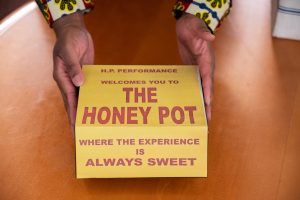
It’s not just a way to express. It is also, especially in times like these, an act of resistance: when there’s so much negativity, there is also creativity. Another piece of Honey Pot is about wellness and healing, and the act of resistance now is to reflect on pleasurable moments to help you heal and rest. That’s why it’s an essential part of the work. One of the assets and artifacts of the archive is a deck of cards that can help folks use intergenerational play and kitchen-table conversations to bring about more healing, joy, and processing of rage together, and to learn more about one another or about yourself.
The cards embody the research, the analysis, the things they’ve talked and joked about for the last 20-some years, and they also show up in this work.
AJJB: What we have been wanting to do with the Pleasure Power Portal is to move beyond documenting and performing, just struggle, because our last work was really heavy. A lot of our work is really heavy, and it’s important. It’s important to commune with folks you know, in those stories, because everybody’s feeling it. We wanted to celebrate so many other experiences of Black life.
TM: Aisha was talking about wanting to move beyond performing struggle and thinking about different ways to perform art, and/or different topics under the umbrella of art. And so I’m curious if you have anything on the horizon for 2026 in that regard, or is it a newer conversation?
MTM: It is that work, the Pleasure Power Portal. That work is going to take, it is taking, a sense of urgency and a term because of the change in administration and all that, you know, these more direct threats we’re suddenly under so quickly. So now it puts even joy and pleasure back into this frame.
The activations we did over the summer were experiments to think about how some part of the work will continue to be performance, but as a series of activations. Ways of gathering people to kind of express the urgency of our joy, and that Black people, too, live full lives that include pleasure as a part of who they are as full beings. It’s also in our long-term work with the Chicago Black Social Culture Map. That work is very much a celebration, an embrace, and an upliftment of Black cultural production, as it is again integral to every part of our lives. It is itself political and urgent in the way we express ourselves, and the way we like to gather our communities, in the way that we make our livelihoods, all of that.
TM: You’ve mentioned the iterations of the names, and I don’t know if you said the year that it became Honey Pot Performance, but when did Chicago Black Social Culture Map (CBSCM) begin, and did that come along at the same time as, you know, taking on the name of Honey Pot Performance?
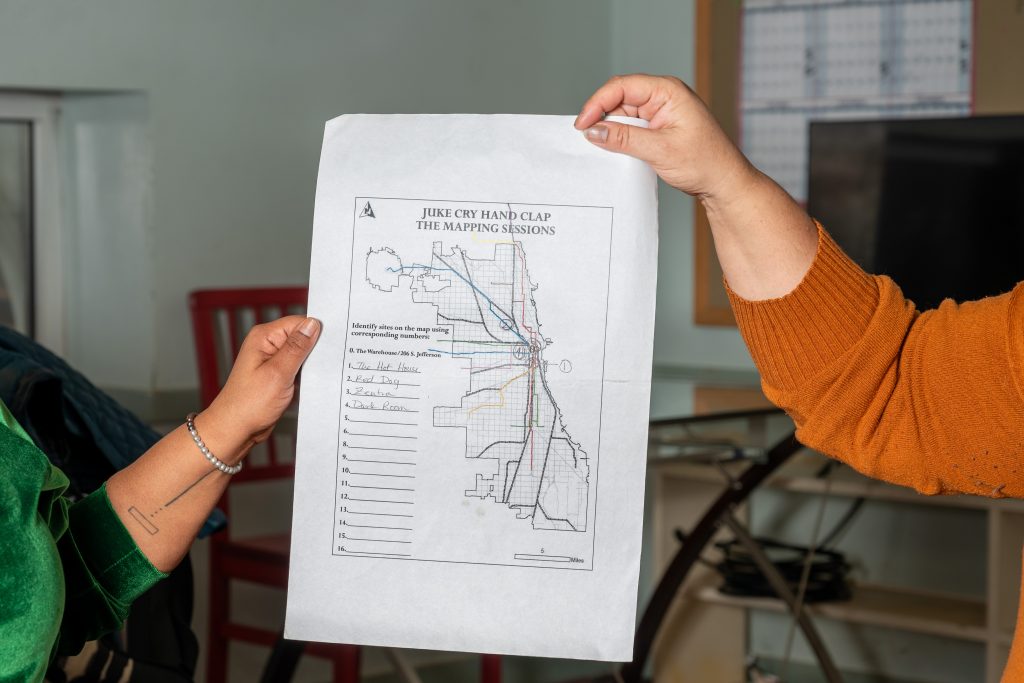
MTM: The CBSCM began as a work we did in 2014 called Juke Cry, Hand Clap, and we have since made several works. House head, Sweet Goddess, and Juke Cry, Hand Clap were all explorations of what house music is. What does it mean to us? You know, historically, and then in all of these other facets, like what is in house music that is older than itself. We did that project and a bunch of mapping, then realized we had all this data from people telling us about places, people, and things that had happened from the 1910s to the present. Then it was like, we should share this data, this information, back to people.
That’s where we got the idea to try creating a digital map. We scoured the internet [for historical data to add] until we hit a wall. So we started running public programs and connecting with artists like Skyla Herne. She’s an archivist, a member of the Blackivists, and then just really kind of stayed in our circle. So we began to think about, oh, there’s a community archiving piece to this. And it just kept growing. We had been Honey Pot for a few years, and then that developed as an outgrowth of a performance work. Eventually, it became a big arm of what we do as an organization.
AJJB: Part of [the mapping session]’s origins, we had DJ parties; DJ Jo de Pressure would spin, and we printed out maps of different parts of the city with prompts. People would come in, find their places, and be really excited about sharing what they wore and where they went, the after-parties, and stories about these parties and places that no longer exist. It’s incredible that we have this digital map where people can do the same, but it’s become an institution.
TM: I was looking at the map, and I was like, oh, I know this artist. Oh, I know this person. I know this person. So it’s kind of cool to see the different people who contribute to that archive. So, can I ask what impact you hope Siobhan McKissick, [the archivist paired with Honey Pot for the Chicago Archives + Artists Project], will have on the archive?
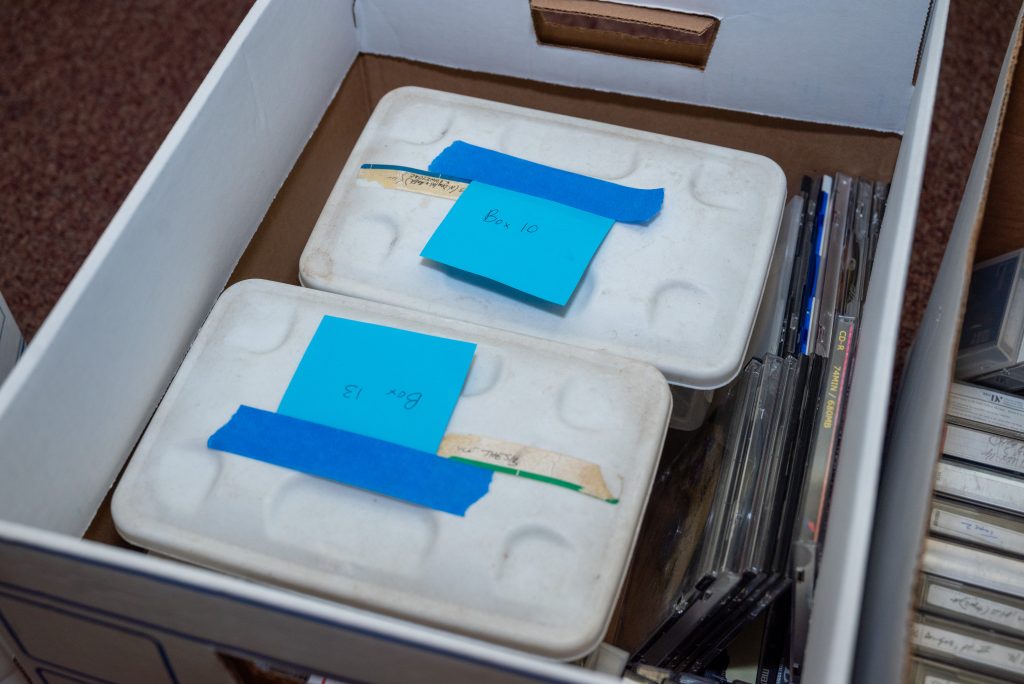
MTM: This was just a very cool opportunity that came up at a moment when we have been deepening our sense of what archiving is and how we do it. We’ve been digital for a very long time, but digital without the skills of a true archivist. It’s been much more of a labor of love, kind of figuring it out as we’ve gone along. The opportunity to work with Siobhan was like, oh, we can have somebody who can talk to us about all the stuff we’re doing. It was an awesome opportunity to talk to somebody where that’s their skill set. And then we’ve been in this building for two years, and, you know, have this question about, could we build a physical archive? So, Siobhan has come in, and I think part of what she’s doing is creating an assessment plan for us and sharing some thoughts on how we can pursue it. We got a big grant from the Donnelley Foundation renewal, which was also one of the first foundations to give us significant funds for the CBSCM.
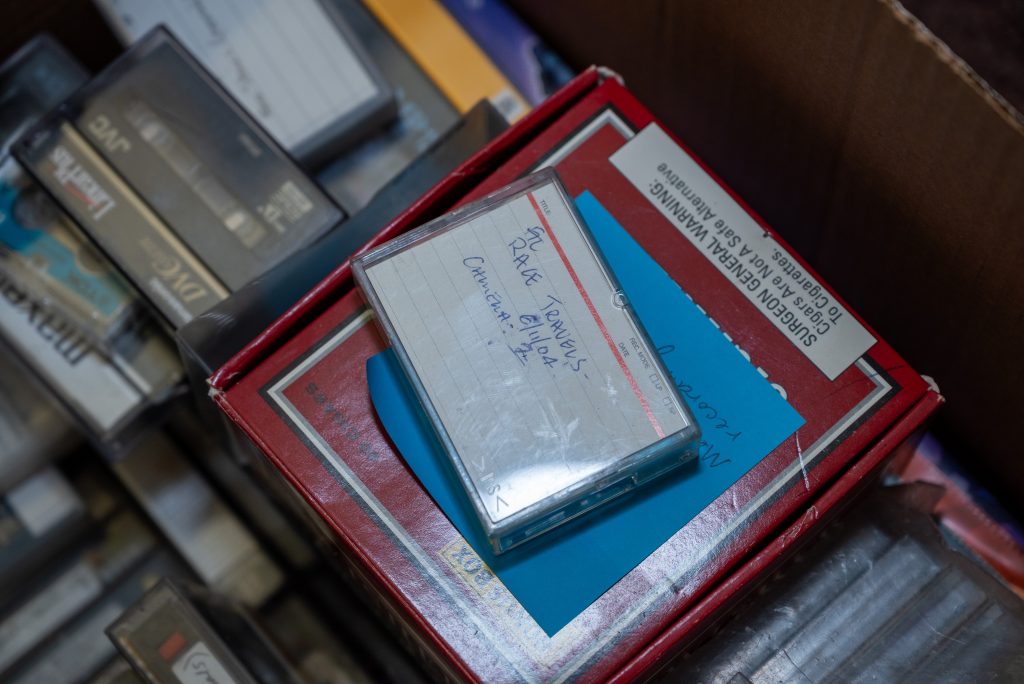
AJJB: We all have so much stuff. We’ve had it in our basements and storage. We have photos of our young selves and videos from the 2000s of us rehearsing—all kinds of notes, old scripts, and flyers—to see all of the places we’ve been and the work we’ve done. We started off in these familiar, but sometimes borrowed spaces, like somebody’s living room, somebody’s basement, or on a college campus. Because we built everything ourselves, we had limited resources. We didn’t have these big grants. We just had our imagination, this sister, friend connection, and this sense of urgency. Everything was grassroots.
There’s a lot of sacrifice, a lot of time leaning on each other, leaning on friends and family and community support.
TM: Twenty-five years is a long time and a lot of energy. I’ve come to art later in my life and have only been doing it for the past four years. I can just imagine what that will look like in two decades. Can you speak a little bit about what sustainability looks like for Honey Pot Performance, whether artistically, financially, or emotionally? How do you all continue to prioritize yourself and this work so you can keep doing it?
MTM: It’s funny, I think we weren’t expecting to become a non-profit, but I think the scale of the work that we were making kept growing, and then the circle kept widening. In order to support this work, we became much more sensitive to compensating ourselves. Understanding that art is labor, we wanted to pay people on projects in a way that felt substantial for the work they were providing.
We began building the infrastructure and budget for our organization. The mission felt strong and important, focused on building something that outlasts us. I get excited every time I look at the expanse of what our team looks like now. The span of ages it represents and the different perspectives of these people, most of them folks of color. Most of them are Black people and creatives. It just feels like a strong community trying to listen to everybody’s vision and figure out where we go next. So to me, that’s a big part of our sustainability.
AJJB: As someone who is kind of taking a look under the hood into the nonprofit industrial complex, sustainability for HPP feels like we are stretching and growing muscles. The process of the work or discovering things as we go. I’m seeing ways Honey Pot can diversify its funding streams. Not just through grants, but also individuals and organizations that support the work we do. That have missions and communities, or workers who identify with the work we do or the mission of the organization, and support in those ways, and those are also growing. We’re putting on hats as fundraisers.
[There’s a] newer piece that we’ve kind of added to our mission about caring for ourselves as we care for others. Talking more about rest and pleasure, right? Always talking about what our capacity is and thinking about the space, the time, our emotional bandwidth, and continuing to create with fervor, but without burning ourselves out or compromising our values or our mission, while taking good care of ourselves as we offer to the community.
TM: I’m curious to hear a little bit more about how you partner with artists and put on performances. How has that sort of shifted over the past 25 years? Or you can even just speak to the past year, the artists that you work with, and the artists that you hope to work with in 2026.
AJJB: I know we want to continue working with more West Side artists and neighborhood institutions. We want to continue collaborating with folks who share our vision and values, and with partners committed to the long-term work we’re doing. You know artists who carry that work and work in these community-led processes. I think we’ve been looking for folks who are on the same wavelength.
MTM: Us being in a space on the West Side offers this new possibility in terms of how we can welcome people into the space to partner with us. I’m excited about the folks in our circle who are helping enhance how we do things in that building.
We could take a work built for a small group of us, then expand that circle and invite them to revisit it with us, remaking it into something new while retaining its essence. That’s something we carry with us into the Pleasure Power Portal, too.
KR: I’ve been doing community engagement, understanding the West Side community specifically. It started with the folks already in the building [we’re in], as three congregations and partners there have also helped us expand our reach. We may be discovering more opportunities to introduce this work intergenerationally. Because we are on the West Side, I think there are some really promising possibilities to strengthen community connections not only within the building but also across the surrounding areas.
TM: How do you imagine Black pleasure being experienced, practiced, or archived in the future? Or how do you want people to feel or understand Black pleasure when they look at this archive decades from now?
AJJB: Definitely using new technologies like digital storytelling, and continued emphasis on these embodied archives. It is part of our way of making, working, and offering, which includes the gestures, practices, songs, and spatial memory.
KR: I want folks, now and decades from now, to continue discovering ways to develop practices and/or to commune with others who share similar backgrounds without feeling alone, othered, or marginalized. They have a solution or a path of belonging that they can always refer back to with the map. I see a lot of folks utilizing Honey Pot’s archive and documentation as part of their research and as ways to continue contributing to the body of thought and expression of Black women in diasporic communities.
AJJB: More thinking about in the future how Black pleasure can be practiced through more accessible spaces, accessible cultural spaces. Places that support rest and creativity, places that are built, maybe infrastructure, but in communities, in neighborhoods.
MTM: I want us to keep uplifting and to be a kind of emblem of who we are, the wealth of who we are, you know, as a people—Black folks’ community, folks of color, people of the global south. There is so much wealth, knowledge, and just the beauty of what we contribute. The things that are both pleasing and lovely, but also challenging. You know that we make those beautiful things too, and that the work we do can continue to be emblematic of that.
AJJB: Yes, and more intergenerational!
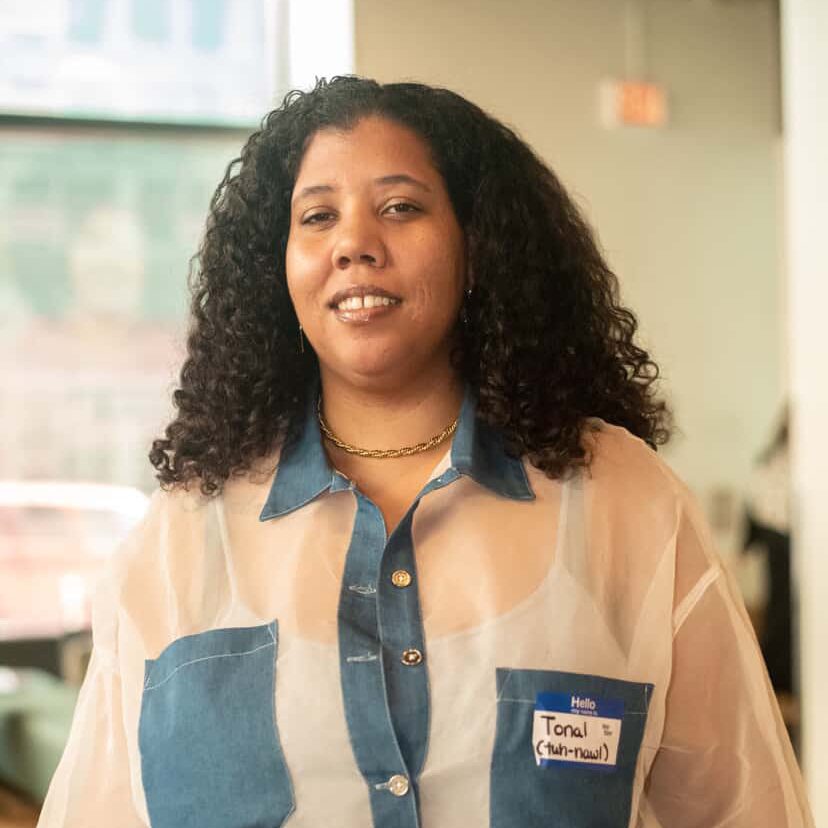
About the author + photographer: Tonal Mondae (they/them) is a documentary photographer and writer based in Chicago, IL. Their work creates visual narratives that celebrate personhood and seek to explore the relationship between belonging and environment. The use of collaborative portraiture is an act of resistance that promotes the right to self-authorship for Black, Brown, and queer people.