
Lee en Español aquí.
Dignity is a strange word, not because of its definition, but because of how it rolls off the tongue. It feels loaded and also not quite grand enough. Yet, it is—it has to be. It represents the combination of honor and respect. Not only to see each person as a human, but also for societal structures to allow them to live humanely simply for existing. It is not a police state. It is not pricing out Black and Brown working-class families from their neighborhoods. It is not abandoned houses, lots, and open areas. It is not the continual forced shrinking of public gatherings.
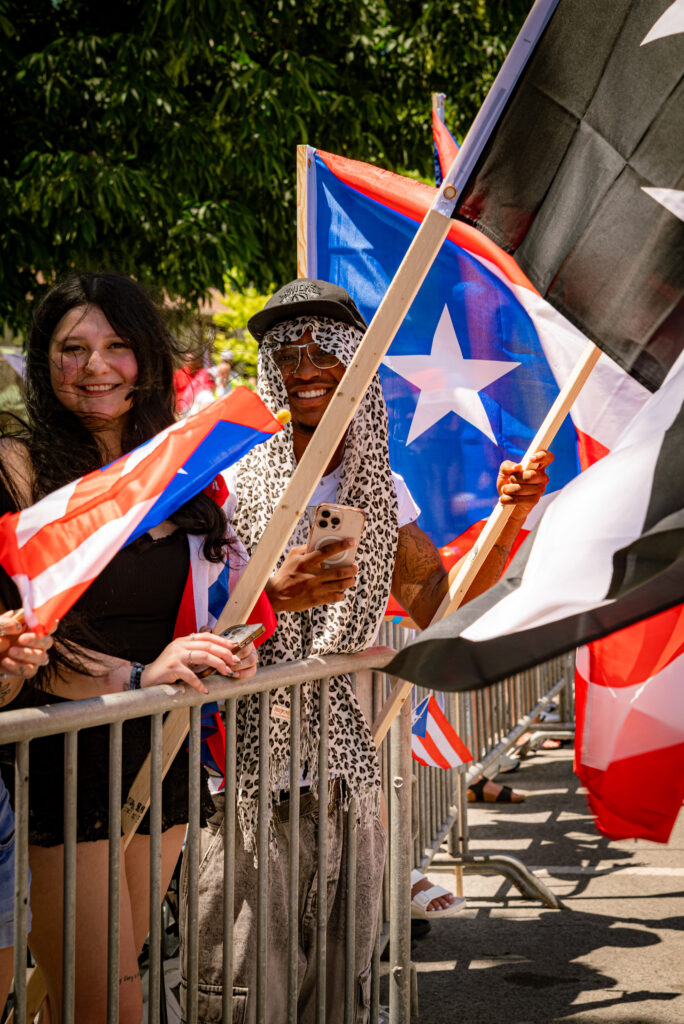
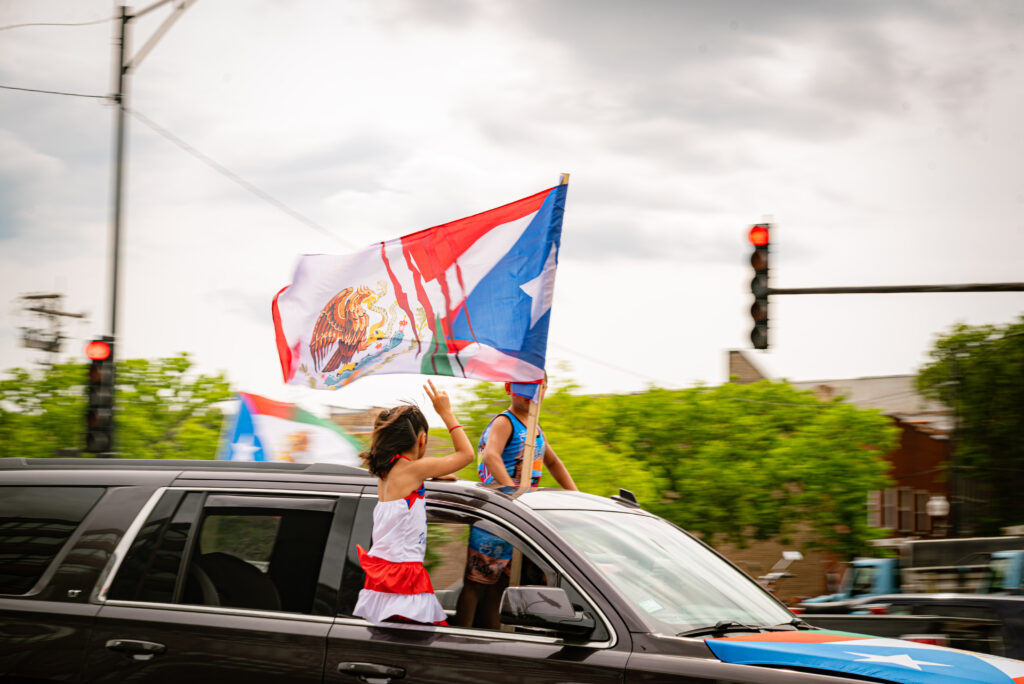
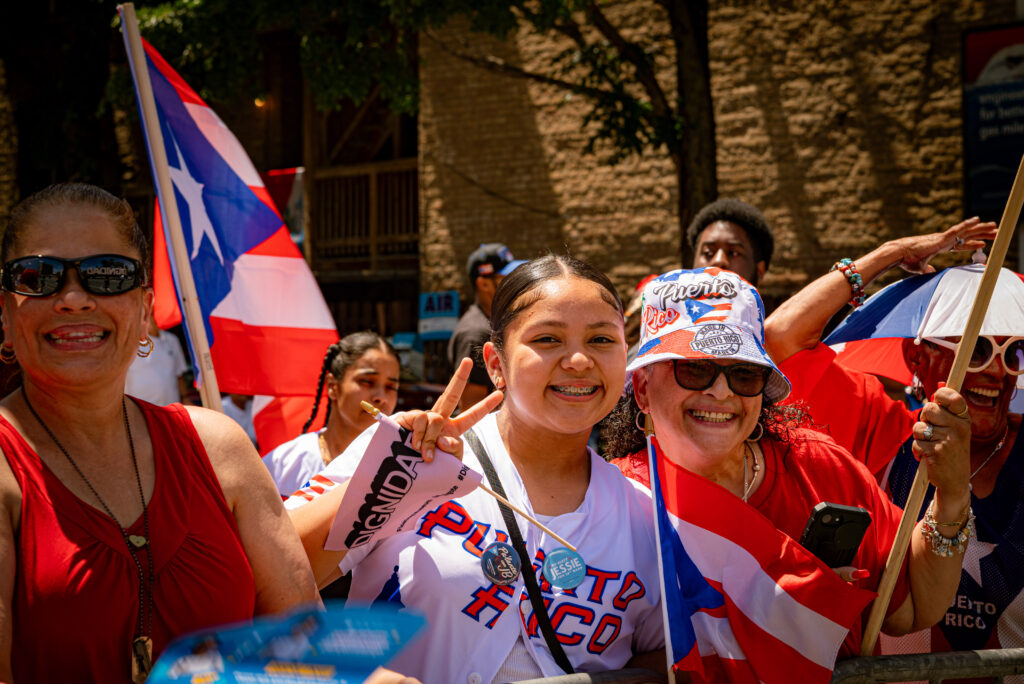
No, dignity is like a parade: it’s loud, colorful, bold, brave, and untameable. It is the cars honking on Western Ave outside the police barricade as Boricuas of all ages hang out their car windows with large flags while riding up and down the street chanting, “Yo Soy Boricua, Pa’ Que Tu Lo Sepas!”
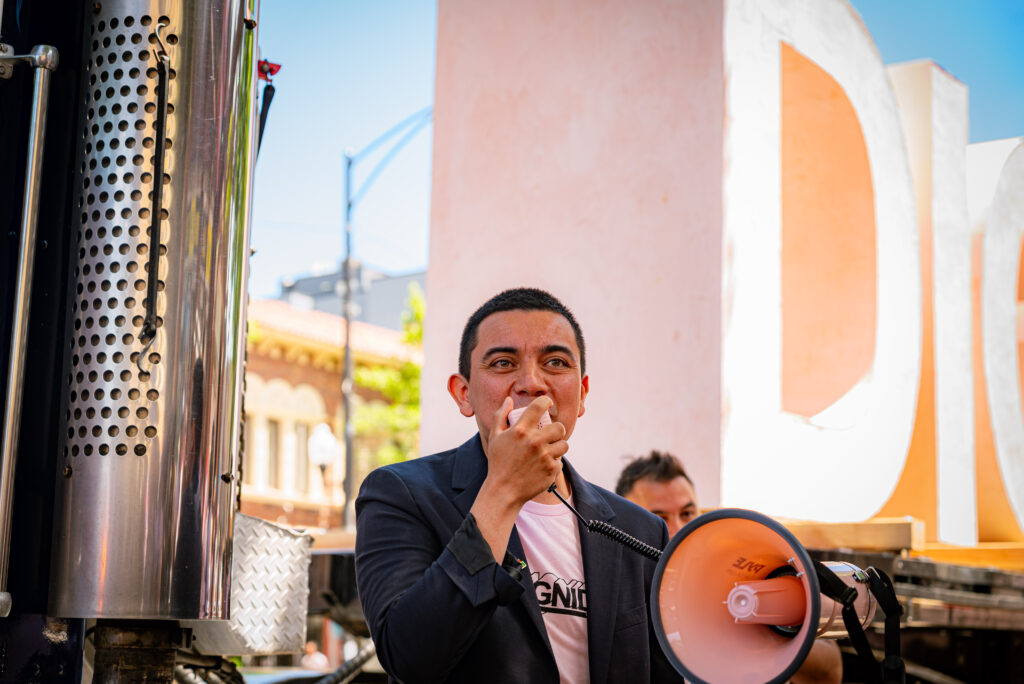
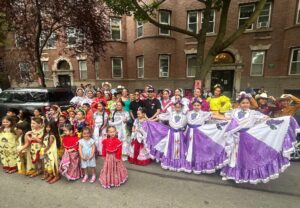
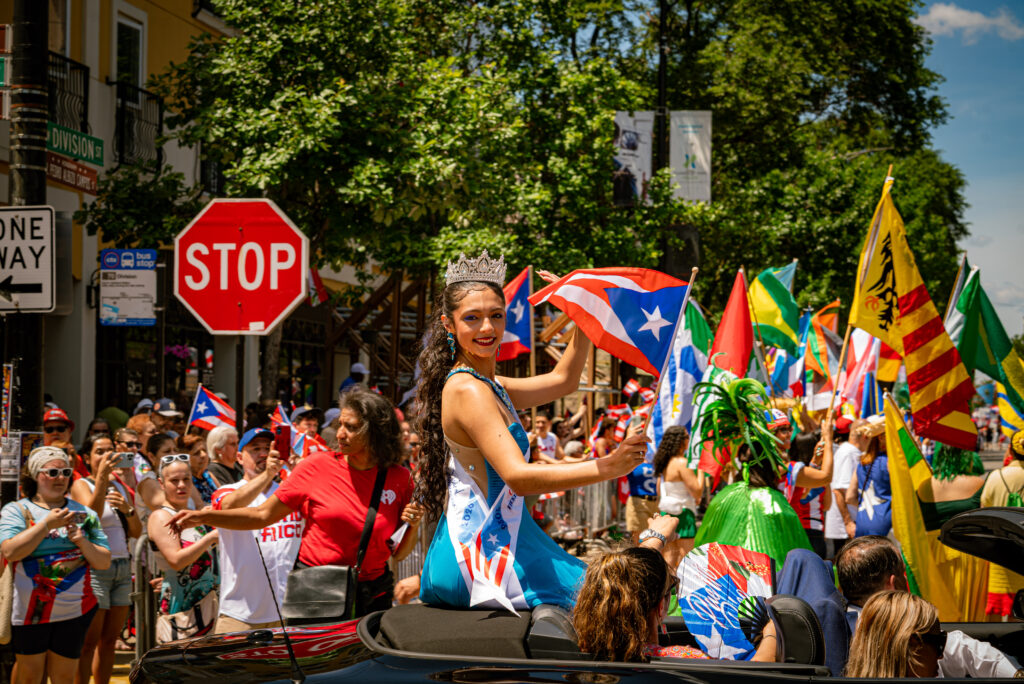
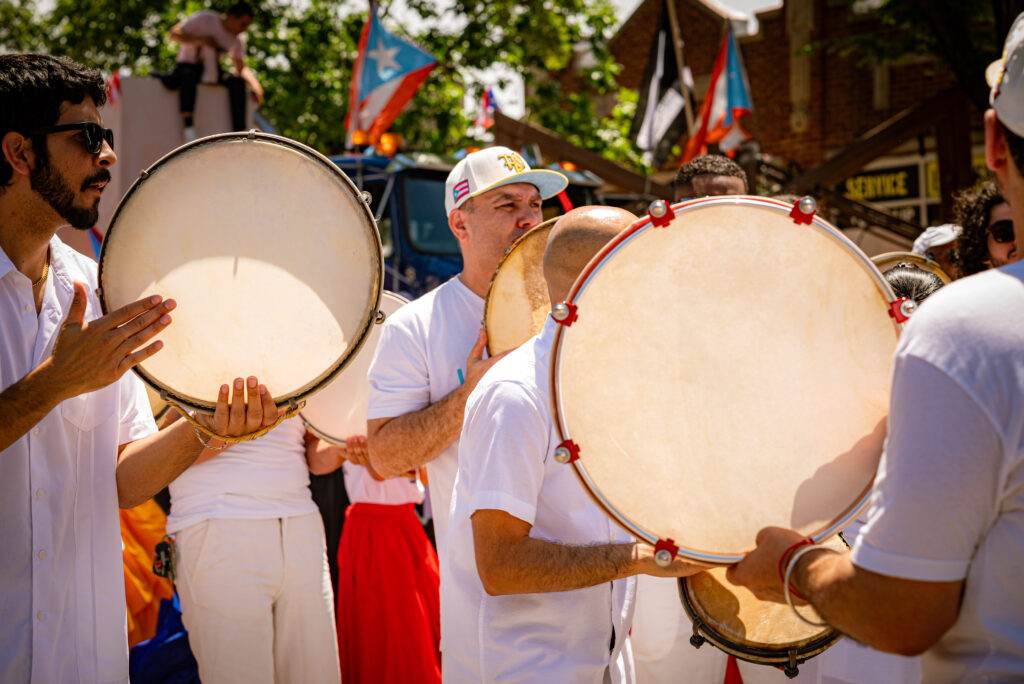
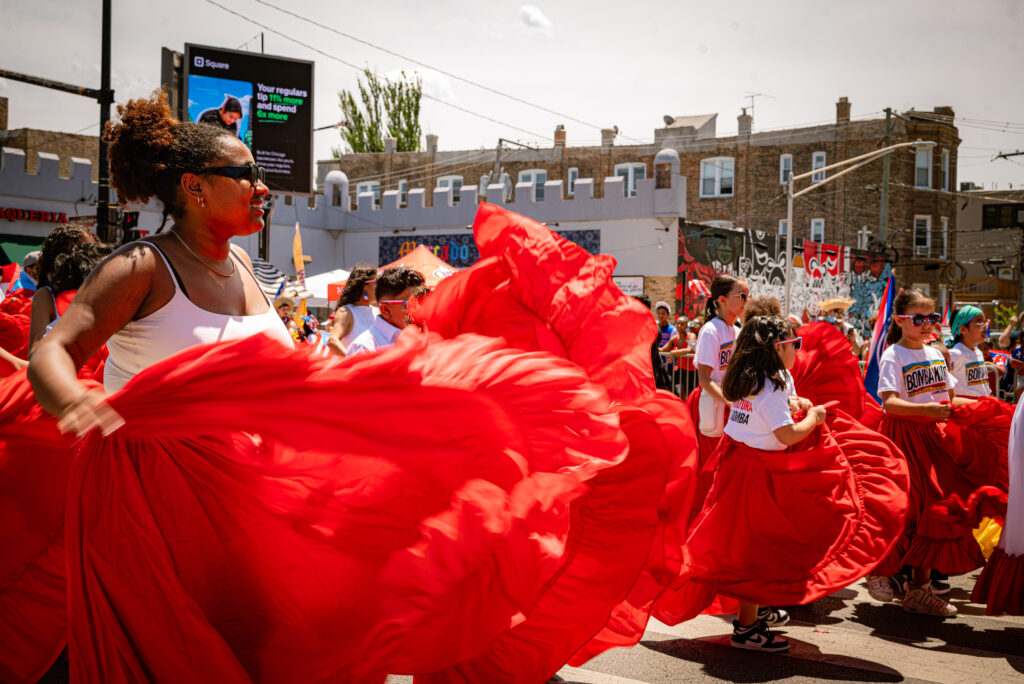
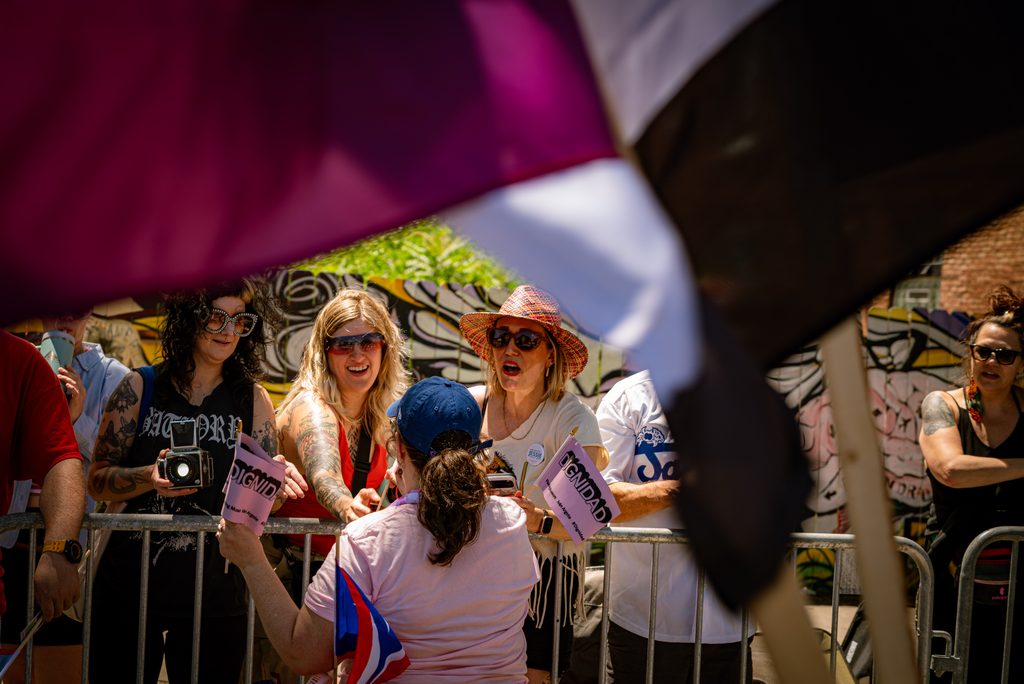
It is the bomberas and bomberitas twirling their skirts from their ankles up to the clouds. They smile from ear to ear as pink flags bearing “Dignidad” in black are handed out to the crowd. It is Miss Puerto Rico sitting atop a car, donning a blue dress and jewelry, who, when she waves, holds eye contact with each person for a few seconds before moving to the next. It is the gates coming down so neighbors can both walk and dance in the streets together. It is the peace before the sirens.
It is uninterrupted joy. It is “Wobble” by V.I.C. blasting out the speakers, followed by “Kulikitaka” by Toño Rosario. The Puerto Rican People’s Parade in Chicago is a reminder of the history of Black and Brown people uniting for more than a celebration. It is a celebration of survival.
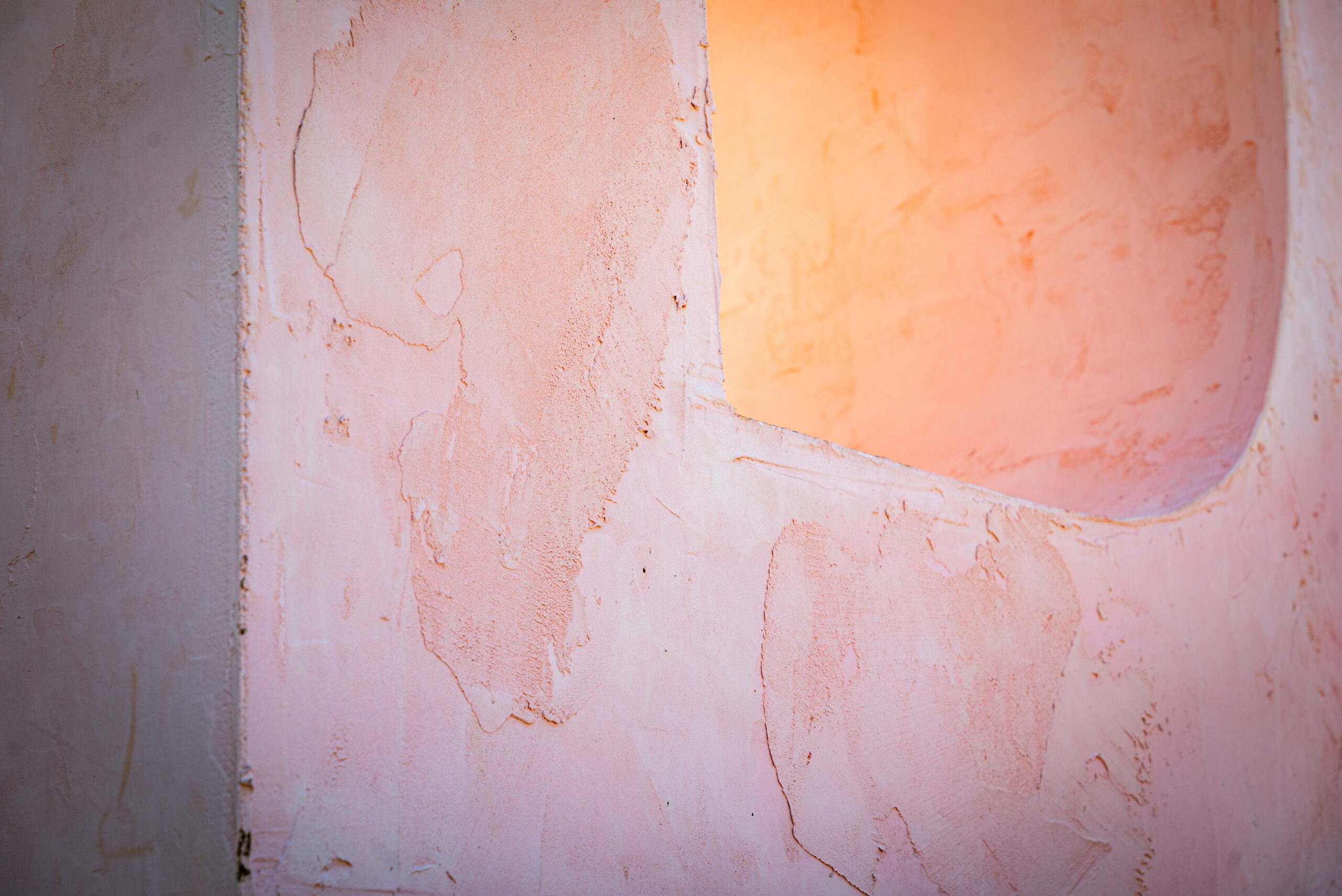
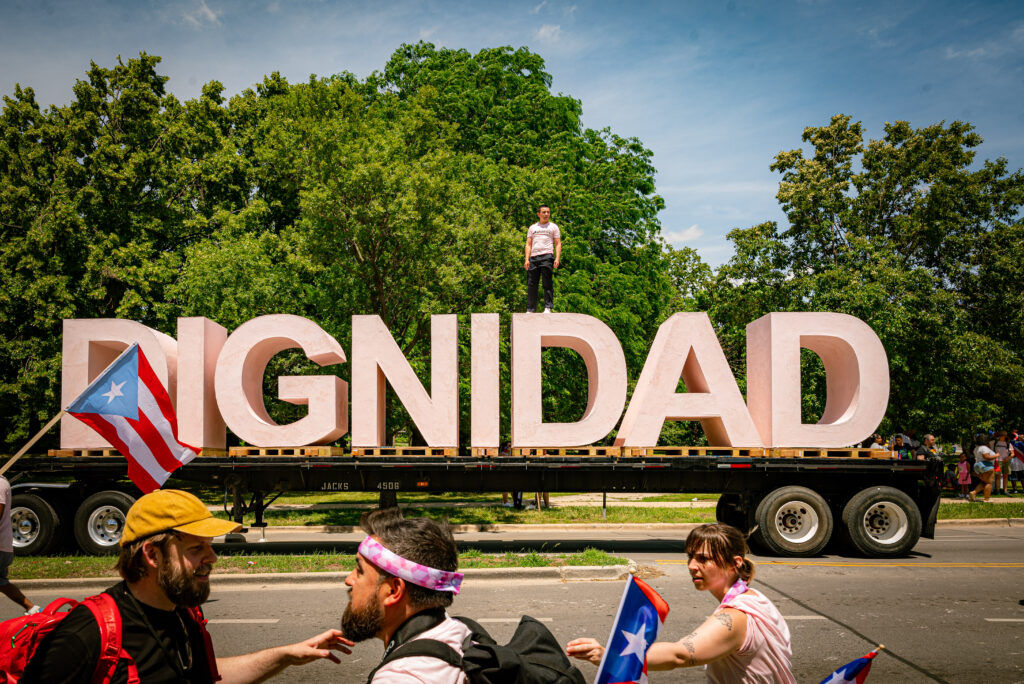
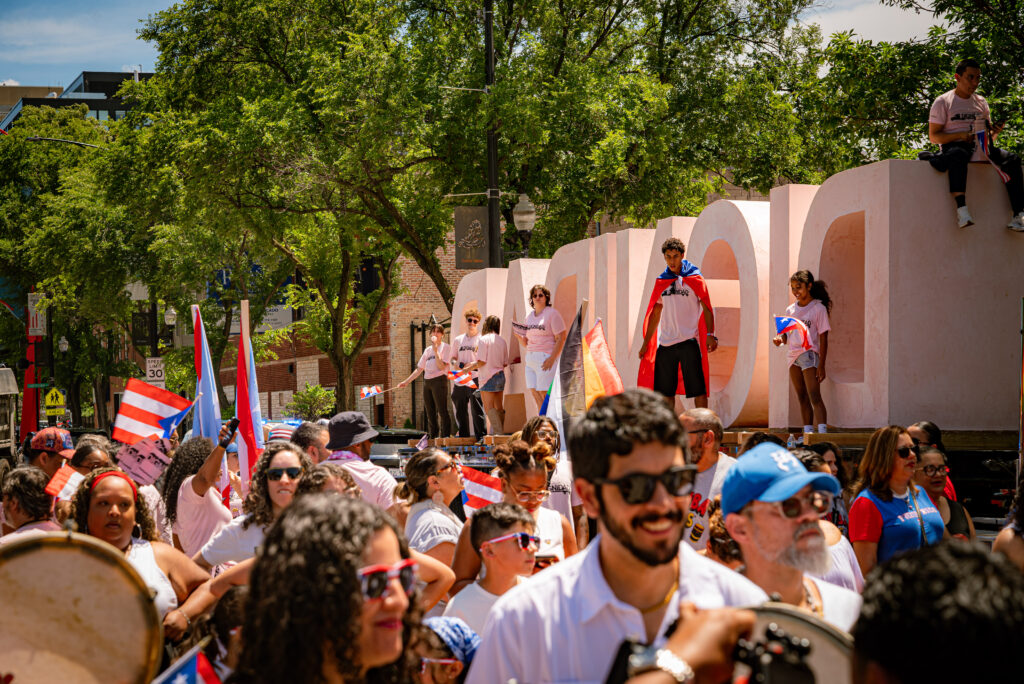
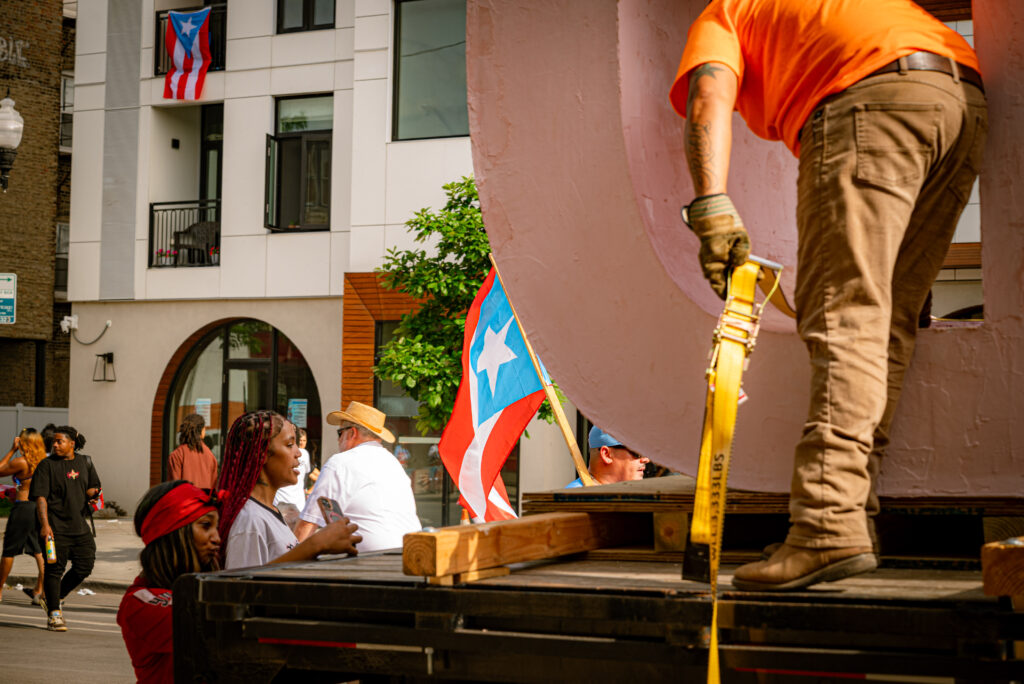
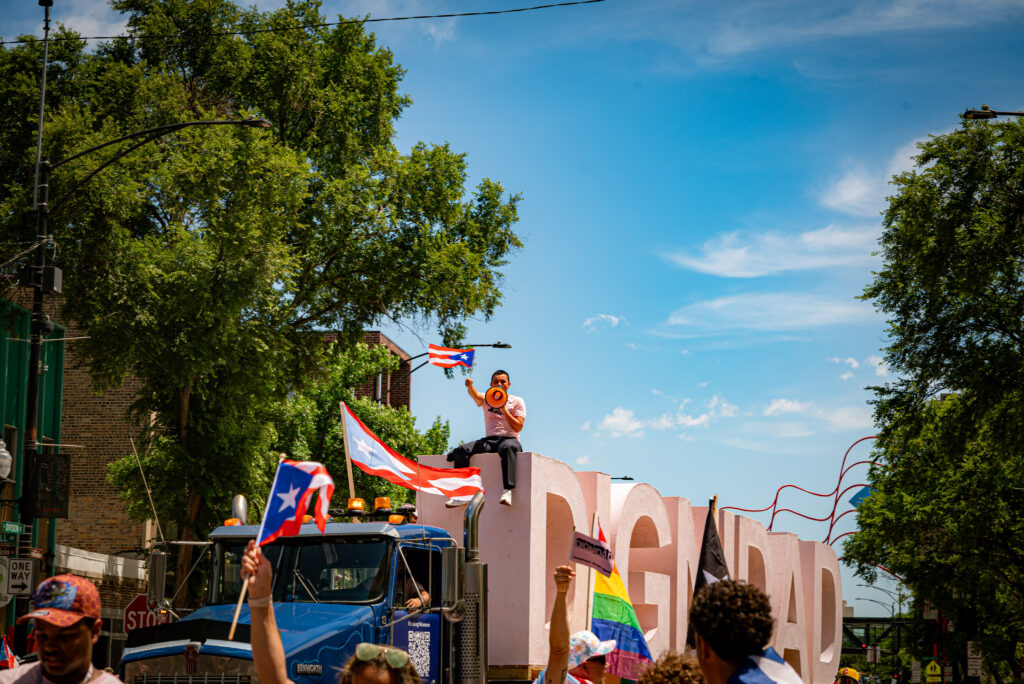
It is eight, eight-foot sculptures that plainly spell: Dignidad. Built from wood and fiber mesh, then painted with cement dyed pastel pink, and with the community as consultants, they proudly stood to join the procession, the artist sitting atop. For two years, artist Ivan Argoté collaborated with The Puerto Rican People’s Agenda in Humboldt Park and The Floating Museum to conjure a monument. Whether it serves as a record or a warning is left open to interpretation, as Colombian artist Argoté encourages people to draw their own conclusions.
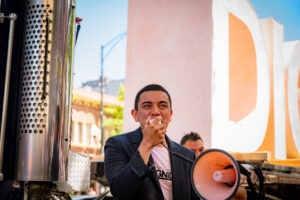
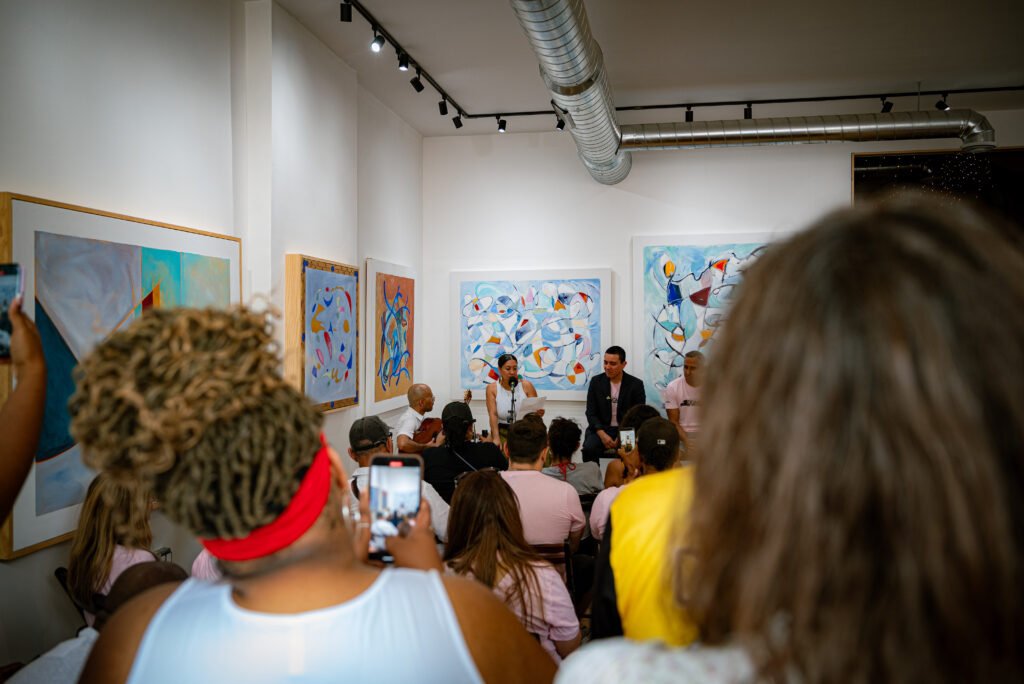
This parade is simply step one of dignity being given back to the people in a world where ICE and state-sanctioned police violence are at an all-time high. “You have the right to say things, and nobody gives us the space like this work is made to do. You can make revolutionary ways to create cultural liability.” Argoté describes his politics of art and family during the community gathering at Le Lo Lai Gallery in Paseo Boricua. Yet, here there was no table, just a panel of artists and the community, many of whom were neighbors, sharing the impact of the word dignity. Dignidad will venture to various sites of impact throughout the US as a way of solidarity and protest.
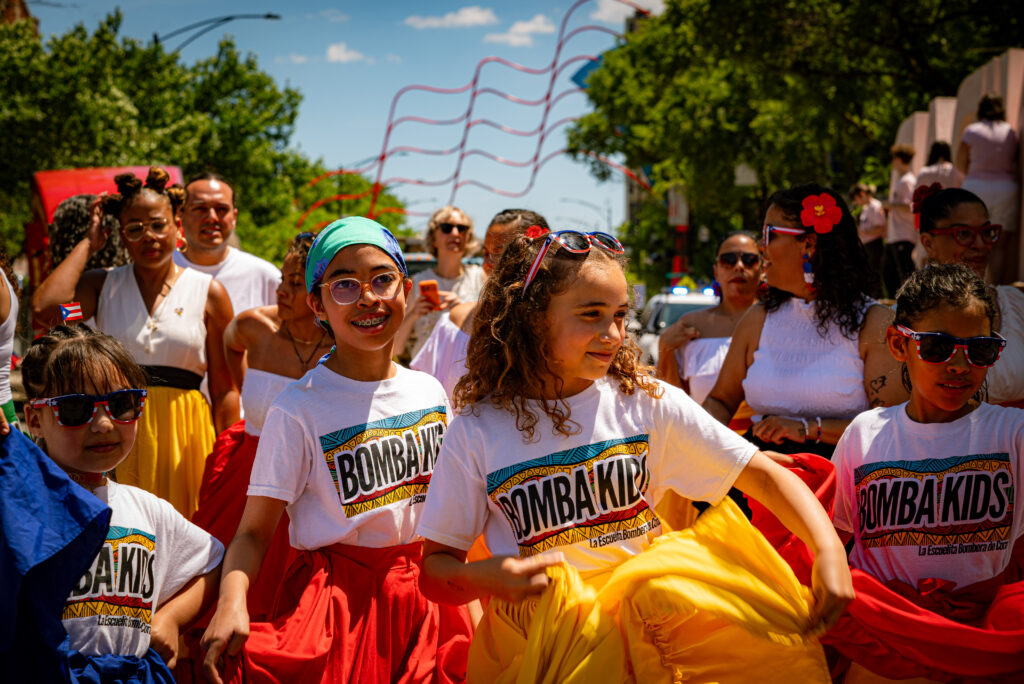
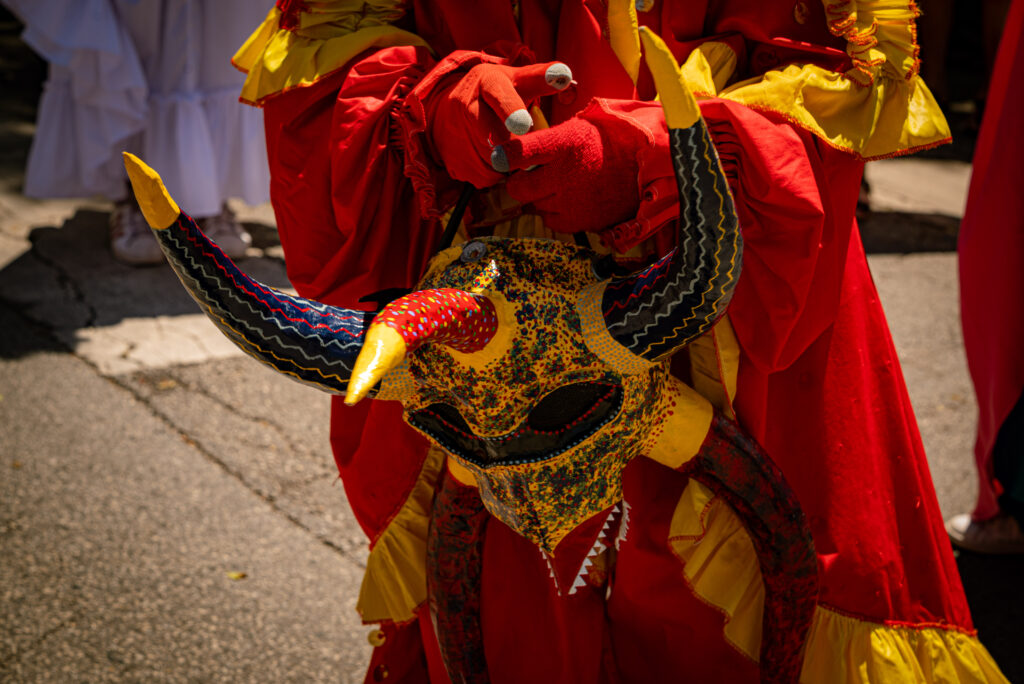
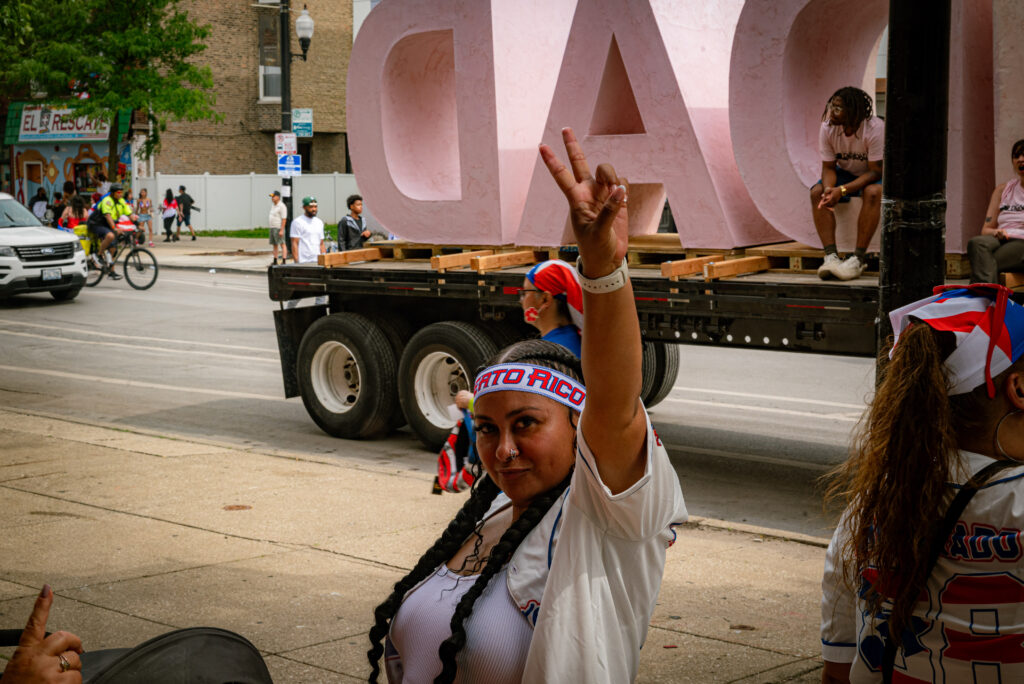
A group of kids from the La Escuelita Bombera de Corazón dance. In the background are more dancers and the large metal Puerto Rican flag. A close-up shot of a yellow, red, black, and white vejigante mask and the wearer holding it in their hands. It’s mostly yellow with designs on each of the five horns. A person with a Puerto Rican headband throws up the peace sign looking into the camera. They are standing on the sidewalk between the Le Lo Lai Gallery and the parked DIGNIDAD sculpture. Photos by Tonal Mondae.
From inside, these eight letters stood taller than the window itself as they appeared to watch us from the flat bed truck. While the room filled wall to wall, I watched one teenager investigate the letters while their friend did a TikTok dance with their phone propped against the last ‘D.’ Other passersbyers reached their hand out to timidly touch the large letters as if it was something forbidden, or not permitted to be theirs to hold too.
One community member began their commentary by highlighting the 60 year anniversary of the 1966 Division Street Rebellion which was a community response to police brutality. “I think it’s really powerful in Chicago, where people try to create divisions between Brown and Black communities. I just think that that really, kind of, divides the narrative that people are trying to impose on the city. We are home of the Rainbow Coalition!” he states with pride. This body of work is not nearly as much a spectacle as a tool, but a love letter from Humboldt Park to the world. Set to remind us that we are all deserving of not just seeing, but experiencing dignidad.
“I think America and this country would do well to look at the communities that it tries to deny and push out in order to learn more about what [dignity] means,” states Chicago’s 2026 Poet Laureate Mayda del Valle as she describes how we first learn respect through our family. Commissioned to create a poem in response to the sculpture, she performs her ekphrastic poem to the hum of a guitar that was met first with silence then whistles and cheers. “Look, America, at all that’s beautiful and all that you could become.”
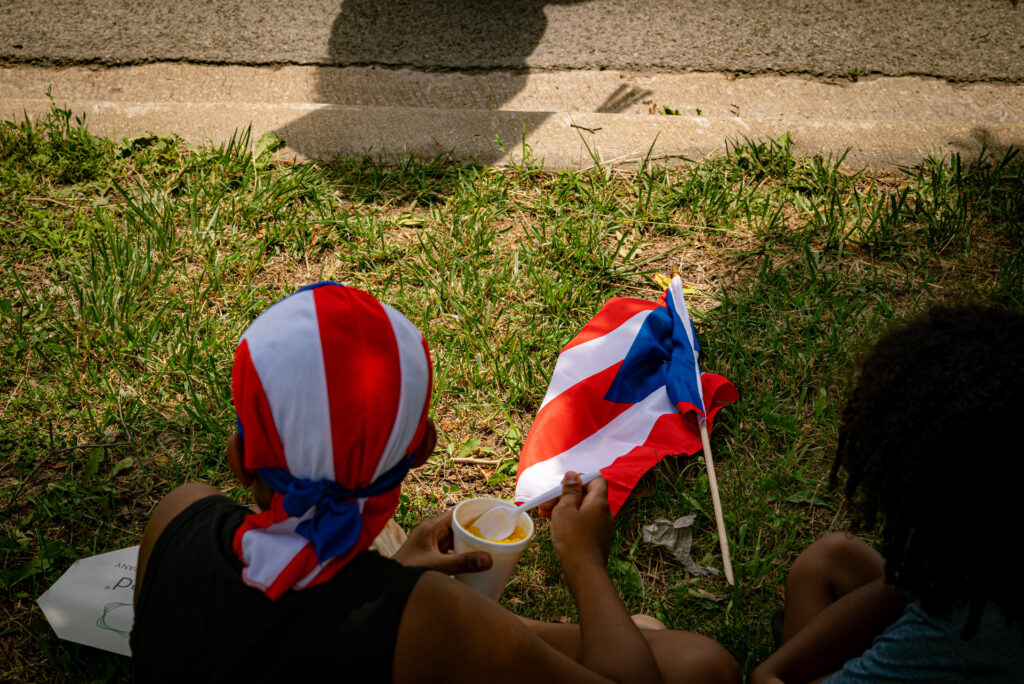
Born out of rebellion and a direct response to police violence, the Puerto Rican people and the larger Latinx community worked with the Black Power Movement to form the Rainbow Push Coalition, which still resides on the Southside. This parade celebrates the pride of a people. The pride of elders. The pride of youth. The pride of a neighborhood. The pride of a city.
After the community conversation, the people took back to the streets; I, as a Black person, joined other Black Chicagoans, Afro Boricuxs, Boricuxs, and the larger Latinx community to dance to “Nuevayol” by Bad Bunny. With each “ayyy,” the sun felt to shine brighter and brighter. Each dancer would get the limelight if they so chose to step into the circle. A kid blew bubbles at his family, and as they grooved around the floating mini rainbows, they smiled relentlessly.
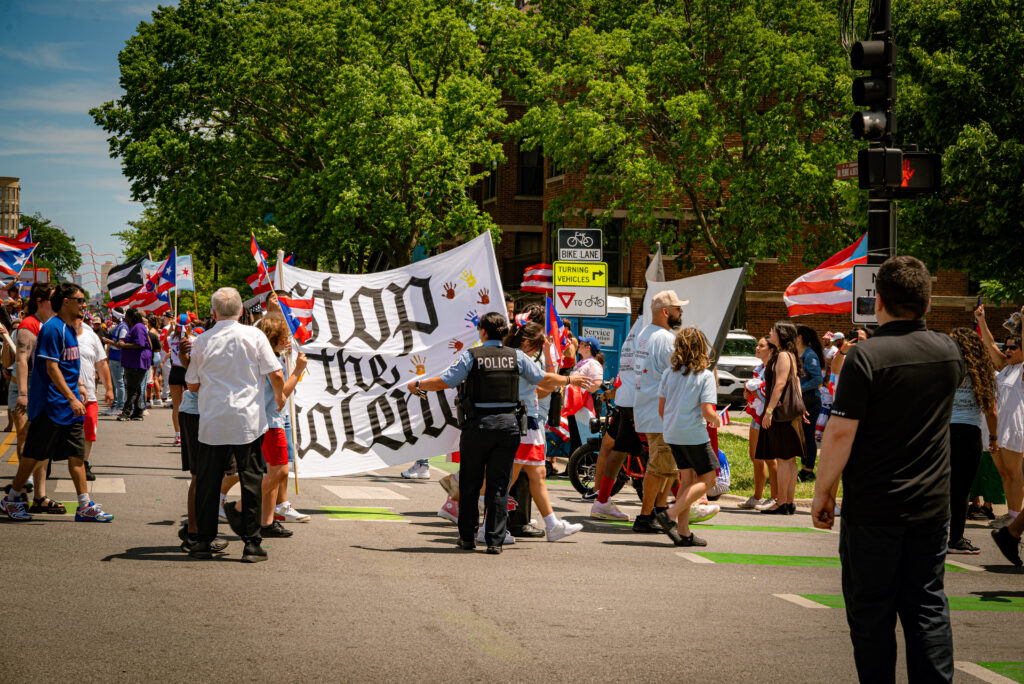
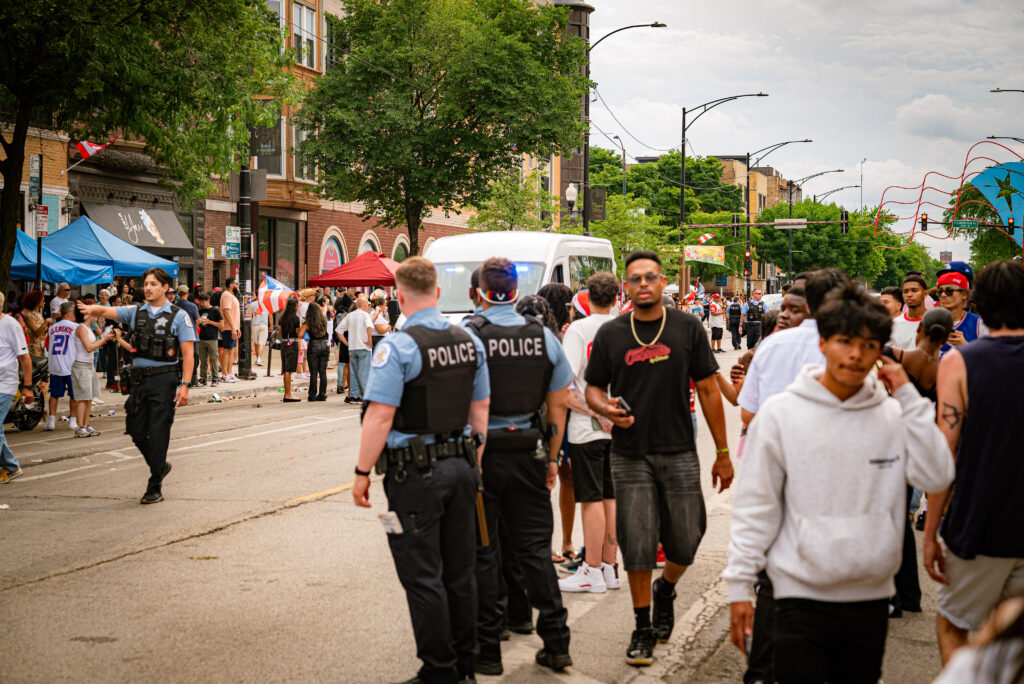
As I approached the exit of the designated parade area, which was only three and half blocks long, I noticed a white van with the Chicago Sanitation emblem on the side. At least eight police officers were being bussed in. The scene felt eerily familiar and equally depressing. We get so little space to be free. Between the two flags, all day police broke up the joy whenever they wanted, simply because they could. However, the people would return to their two-step, showing each other grace and dignity.
Because dignity is us.
About the Author and Photographer: Tonal Mondae (they/them) is a documentary photographer and writer based in Chicago, IL. Their work creates visual narratives that celebrate personhood and seek to explore the relationship between belonging and environment. The use of collaborative portraiture is an act of resistance that promotes the right to self-authorship for Black, Brown, and queer people.