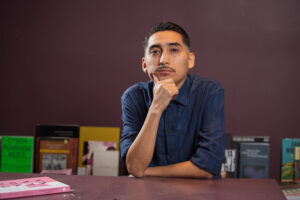
I first encountered Okrika at a live tribute to Fela Kuti in Chicago, where Oguguam (OG) Ugwuanyi sat behind a table covered with books from her growing reference library. After that first meeting, I continued following Okrika’s work online, watching its reading rooms and public programs unfold until I finally visited her studio this past June.
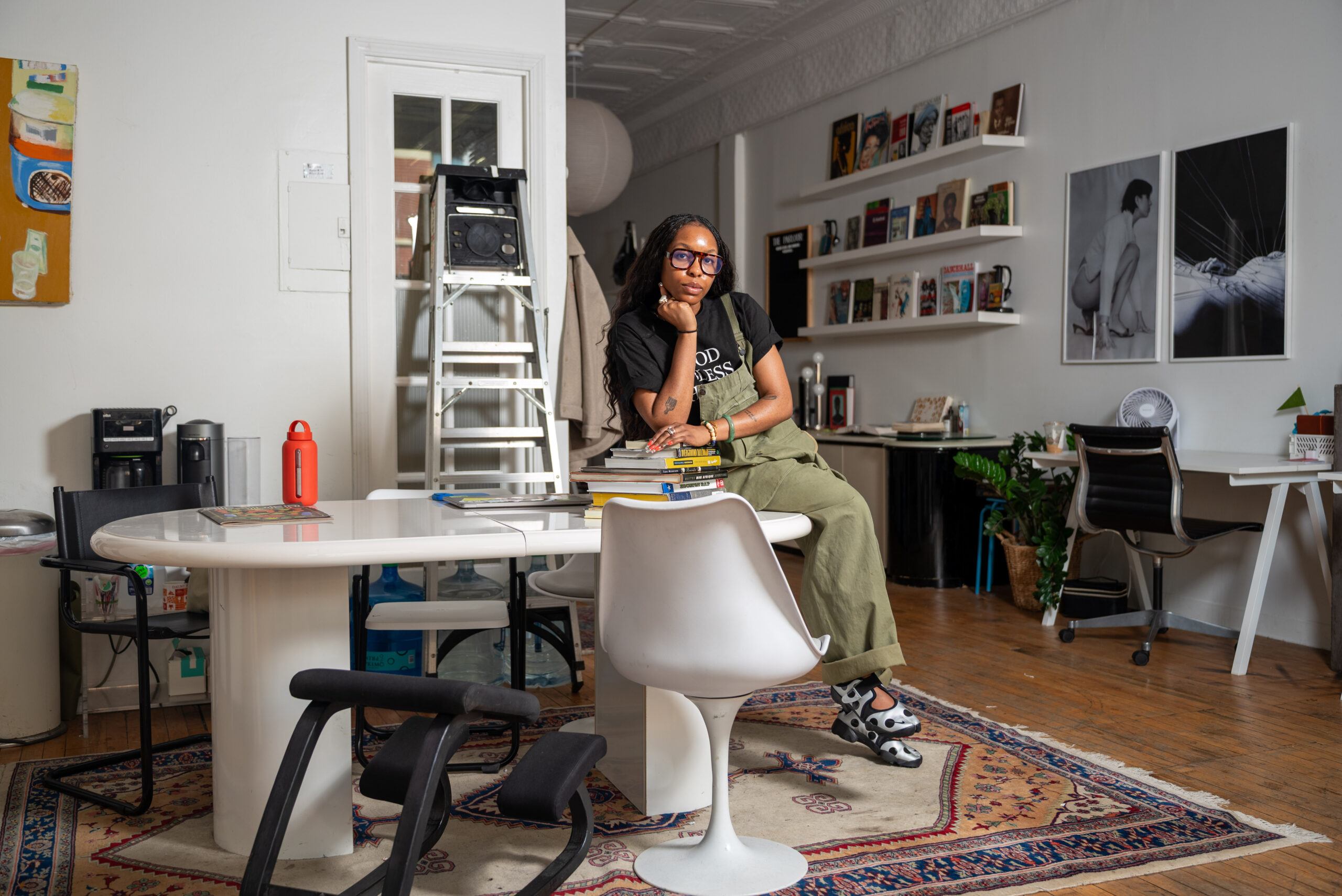
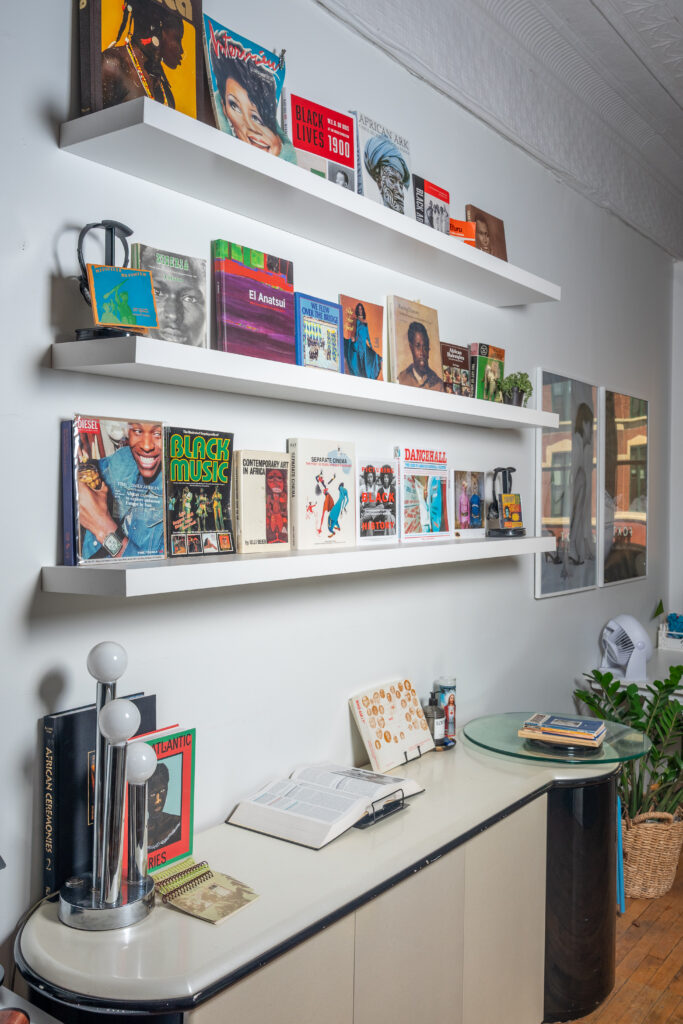
OG welcomed me into a space surrounded by shelves of carefully sourced books, magazines, and ephemera, the materials that have shaped Okrika’s evolving archive. Warm and generous, with an unmistakable sense of personal style, from sculptural nails to oversized sunglasses, OG approaches collecting as both a personal practice and a way of creating connection. Like the work of Chinua Achebe, Akwaeke Emezi, and Solange, whose influence she cites throughout our conversation, Okrika is grounded in an expansive vision of Black cultural production, one that brings together collecting, storytelling, and the many ways people encounter and share knowledge.
Based in Chicago, OG founded Okrika, which she describes as “an unfolding documentation of the African diaspora through books, sound, and space.” Through reading rooms, listening sessions, screenings, and collaborations, the project invites people to encounter the collection—and one another.
Zia Pao-Ziegler (ZPZ): You’d been collecting for years before Okrika existed. When did that private practice become something you wanted to share publicly?
OG Ugwuanyi (OG): So I’ve been growing this forever, but it was just living in my house in a very curated way. It really started when my cousin gave me an out-of-print book. I’d always loved books, but that was the moment I realized I can’t find this anymore. What else is out there? It wasn’t about owning more books as much as discovering lesser-known authors, especially within African literature.
So two years ago I looked around at everything I’d collected and realized I wanted to do something with it. Eventually I’d love to work in publishing, but in the meantime I wanted to create a reading room where people could encounter these books. I don’t need to sell them; I don’t want to sell them. I just want to share them, and have people read them.
ZPZ: So the goal was always to create a space.
OG: Chicago has great libraries, but not many dedicated reading room spaces. I wanted something more curated. A project in Houston called The Reading Room really inspired me. Seeing someone build a reference library around public programming took the idea out of my head and showed me it could actually exist. I’m a firm believer that ideas have two life cycles. Either you act on them, or they find someone else. Seeing someone doing something similar doesn’t discourage me as much as remind me that it is possible.
ZPZ: It sounds like Okrika has expanded quite a bit since those first reading rooms.
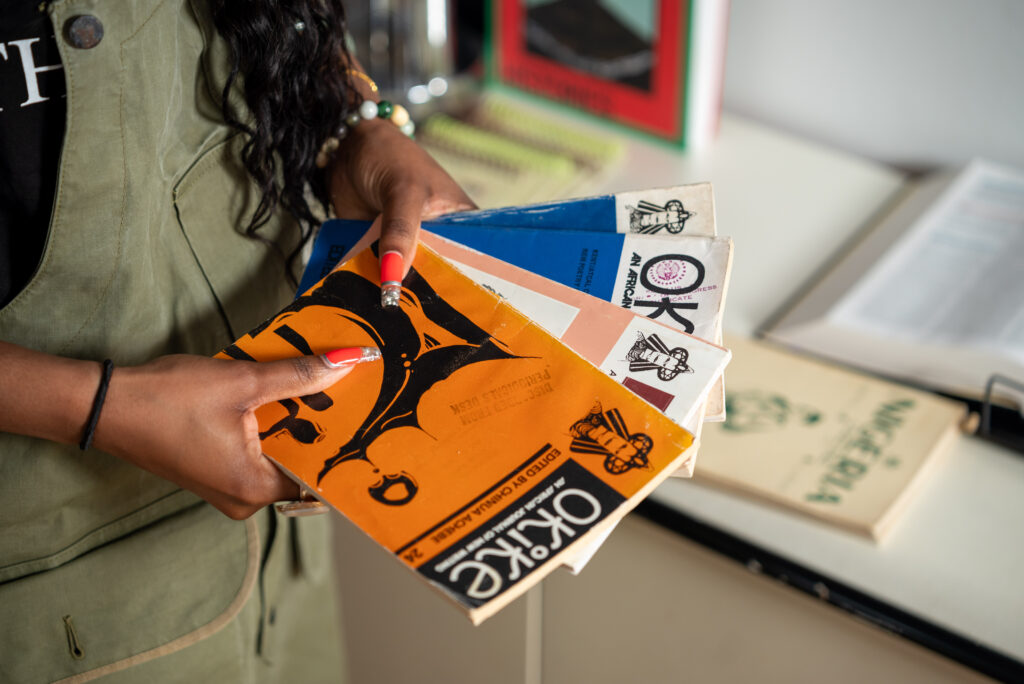
OG: It definitely has. The original idea was really just African literature. But once I started looking at what I’d collected, there were Black authors, art books, magazines—so many reference points across the diaspora that it no longer made sense to keep such a narrow frame.
ZPZ: And where did the name Okrika come from?
OG: In Nigeria, we call thrifted clothes “okrika.” When you go to the market, everything is laid out on tarps, and people call it “bend down select.” I loved that idea because so many of these books are secondhand, gifted, or passed down. For a while I considered akwukwo, which means “books” in Igbo, but my art director brain wanted something that felt a little less literal. That’s how the name came about.
ZPZ: Has your idea of “Bend Down Select” changed as the project has grown?
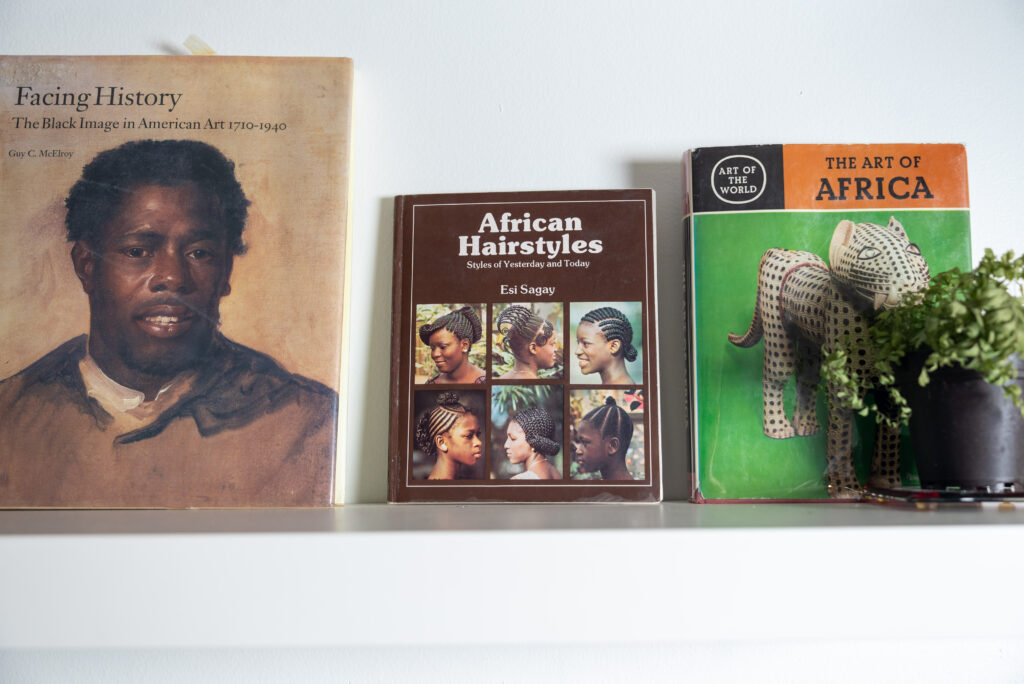
OG: Initially I literally laid the books out, and people could pick up whatever they felt drawn to. Then I collaborated with a friend in New York, which really pushed the project forward. Since then it’s grown into reading rooms, collage workshops, and other public programs. It’s still evolving.
ZPZ: Okrika feels built around access. Was that always the vision?
OG: Definitely. At Loyola, I was always struck by how many incredible books my professors knew that students never encountered. I kept wondering, why aren’t these more accessible?
Actually, another big motivation was spite. Because I source a lot of books, I kept coming across titles priced anywhere from $500 to $5,000. And I kept thinking, why? Often I wondered how some white man in the UK had these books in the first place, and who decided they were worth that much.
They’re valuable in one sense, and not valuable in another. They’re valuable to the people who have the privilege to understand that these are collectibles. But they’re not valued in the same way to many of the people or places they come from.
People always ask whether people in Nigeria care about these books. Honestly, many of them collect dust there. For a lot of people, art is a luxury, and the libraries that do exist are often underfunded. So when I see one of these books priced at $5,000, I wonder: who is that value actually for?
ZPZ: What are you searching for these days? Are there particular subjects or books that you’re thinking about?
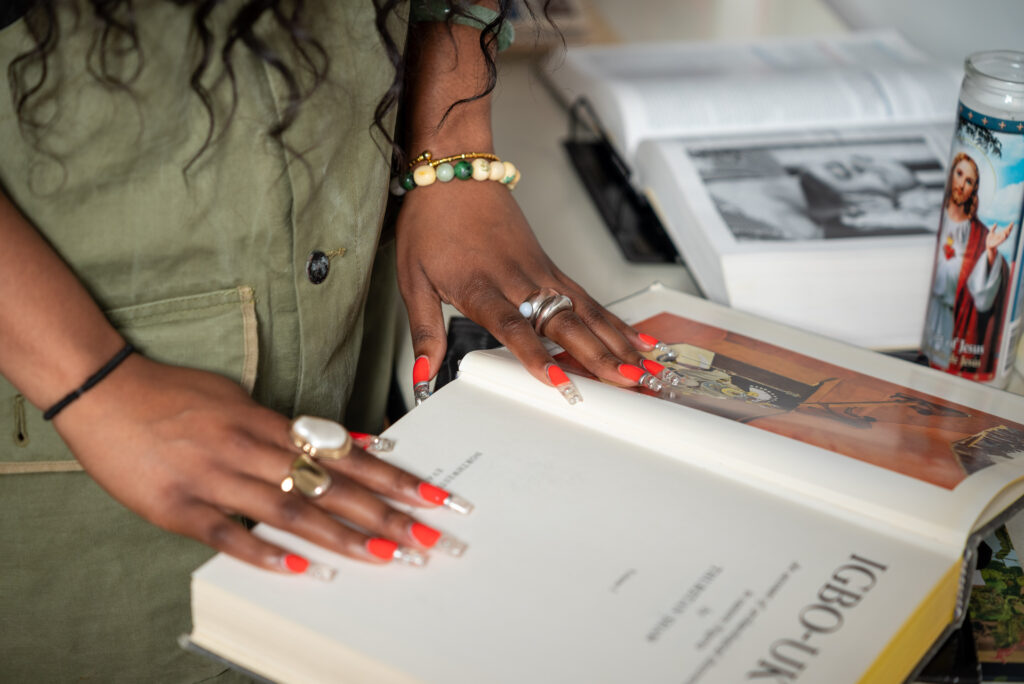
OG: Right now I’m looking for books on beauty, beauty rituals, beauty practices, the ways they differ across countries and even across tribes.
I started from literature, but I realized people don’t always want to sit down and read pages of text; they also want to respond to visuals. So I’ve been looking for more art books rooted in the diaspora.
I’m also trying to find more Afro-Caribbean and Afro-Latina books. The more I collect, the more I realize the African diaspora is far broader than I first imagined. Living in Nigeria really changed my understanding of that.
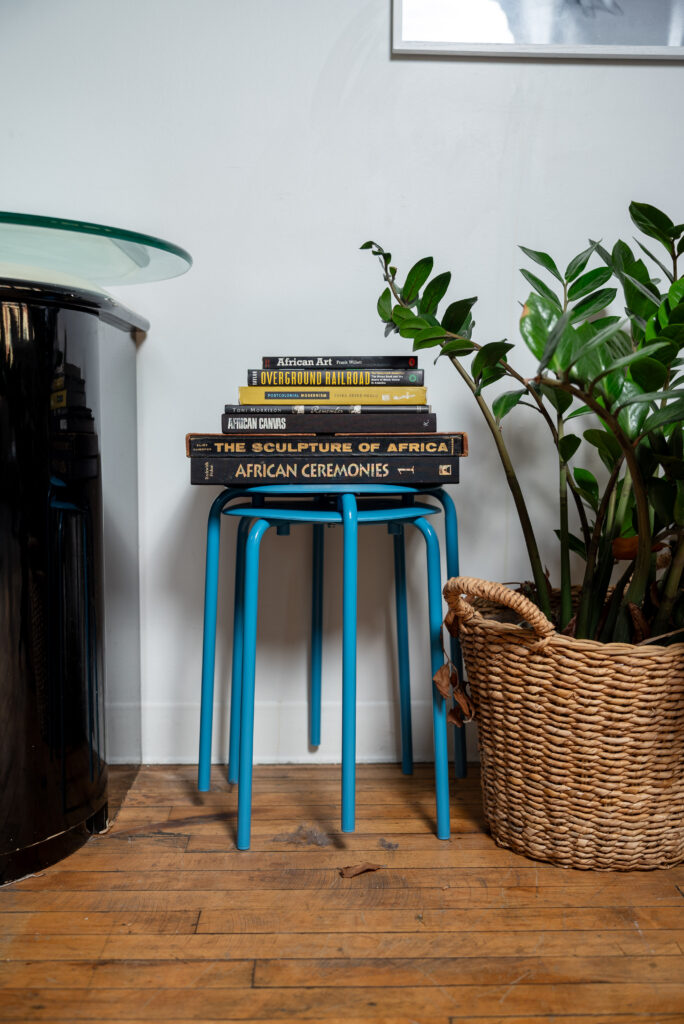
ZPZ: Why was it important that Okrika extend beyond books?
OG: I wanted to offer different ways into the project. Some people don’t love books, but they love film, or music. Those intersections create new entry points. For Lagos Fashion Week last October, I collaborated with a fashion model on a launch party where we streamed the shows alongside a selection of fashion books and fabrics. People responded so strongly to it. It became a whole new way of bringing people into space.
ZPZ: You’ve mentioned access a few times, but it feels like the project is also about creating relationships between people.
OG: Chicago can be really cliquey sometimes. You’ll see someone arrive alone, stay for ten minutes, then leave because nobody spoke to them. I have a lot of empathy for that. I want people to feel welcome.
I almost cancelled my last reading room because only four people RSVP’d. My boyfriend reminded me, “Those are four people who want to come.” It ended up being one of my favorite events. People stayed from beginning to end, people who came by themselves and would make the rounds, people talking. And that renewed the purpose and changed my perspective.
Community is really important. Community is a buzzword at this point, and I try my best to show it more than tell it, starting with the energy and how you approach people.
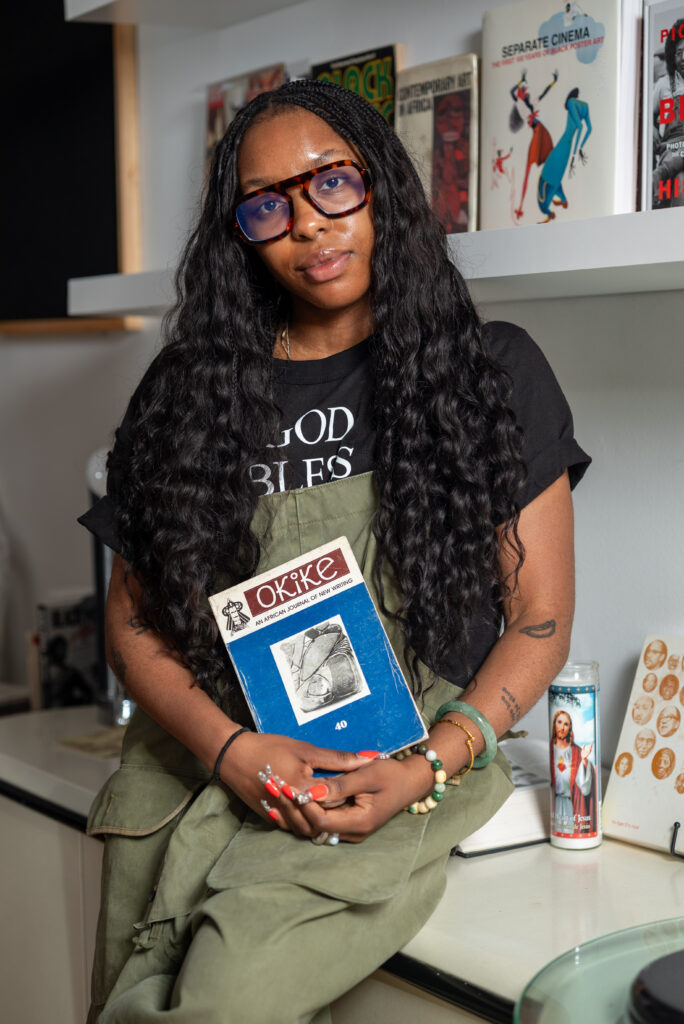
Okrika continues to evolve alongside the community that gathers around it. What began as shelves of books in OG’s apartment has grown into a living reference library shaped by collaborations and conversations across Chicago. Upcoming events and programming can be found on Okrika’s Instagram.
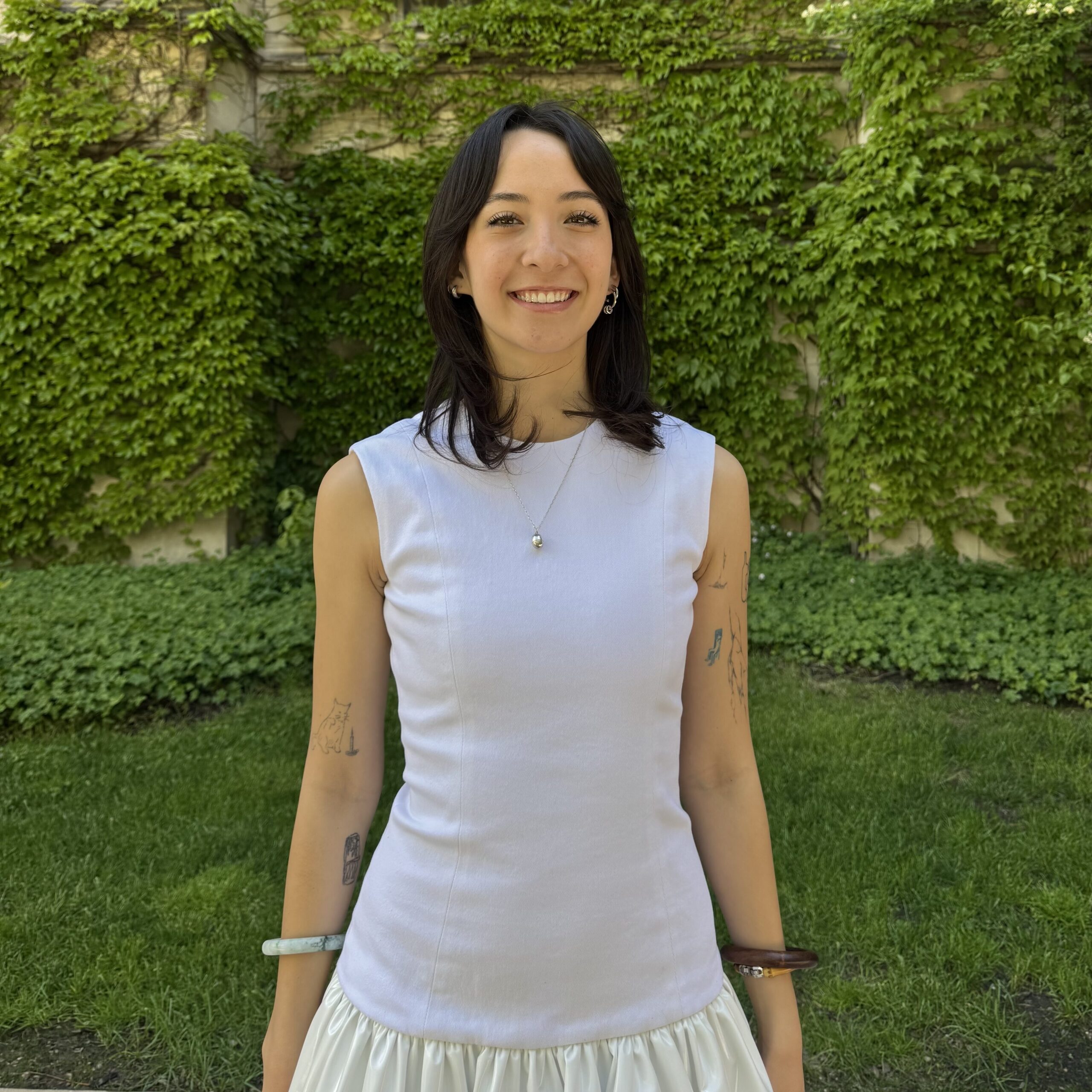
About the author: Zia Pao-Ziegler (she/her) is a student, curator, and writer based in New York City. She is interested in the dialogues through which meaning is produced between individuals, collectives, art objects, sonic projects, and food. She is currently pursuing a master’s degree in Art History at the Institute of Fine Arts, New York University. Her research centers on contemporary artists of the African and Asian diasporas, attending to how visual and material practices shape the terms through which communities become visible to themselves and to others. Drawn to artists and organizers whose work operates across layered cultural registers, she is particularly interested in how aesthetic and dialogic models of meaning might inform the way we encounter art, archives, and each other.
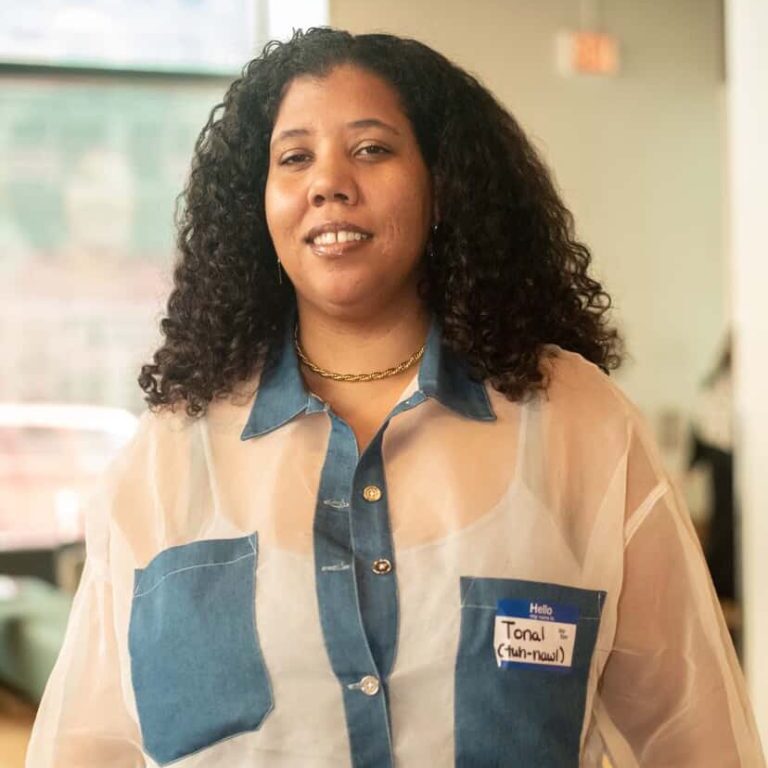
About the photographer: Tonal Mondae (they/them) is a documentary photographer and writer based in Chicago, IL. Their work creates visual narratives that celebrate personhood and seek to explore the relationship between belonging and environment. The use of collaborative portraiture is an act of resistance that promotes the right to self-authorship for Black, Brown, and queer people.