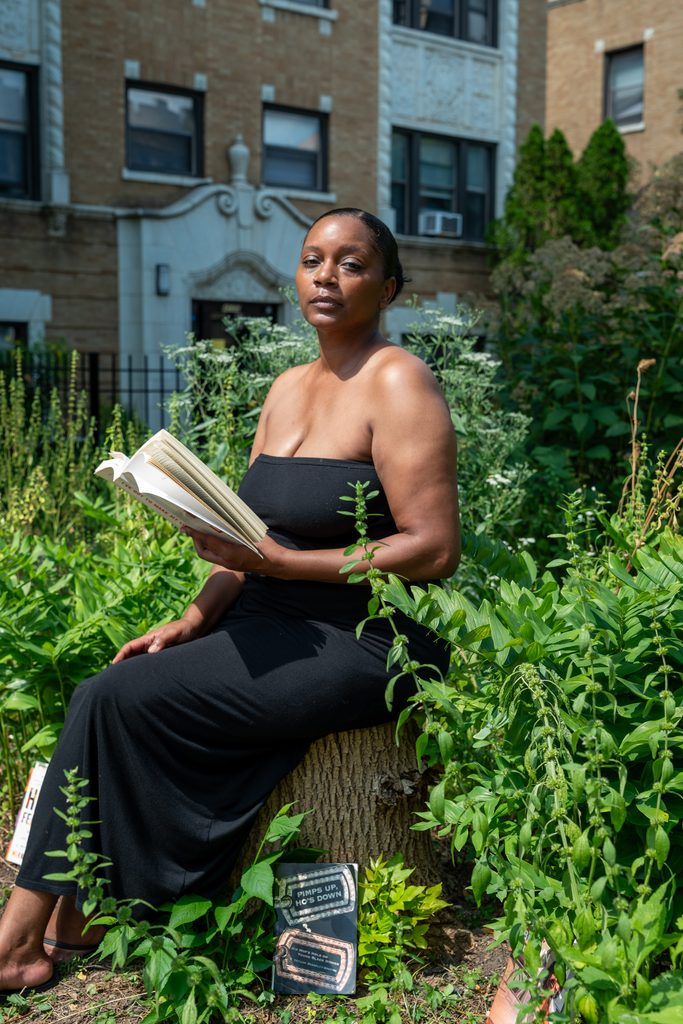
Rebelle Cunt and I sit in the living room of their apartment, fresh off the heels of a series of bad air quality days in Chicago. Today is different, as a cleaner breeze wafts through their windows. Rebelle rolls a blunt and sits back in an armchair. She wears a colorblocked “Baby Girl” romper and states with a smile, “I got this from the beauty supply,” when I compliment it. We are periodically joined by their black cat who saunters in for a quick view then heads back to enjoy her solitude.
Rebelle is the founder of Heaux History Project, a multimedia archival project exploring Black erotic labor and sex worker history. As we approach HHP’s sixth anniversary, I sat with Rebelle to discuss future visions for the project, whorephobia in the media, and how non-sex workers can be better advocates for their erotic labor peers.
Musu Bangura: Talk to me about the beginnings of Heaux History Project. What inspired you to start up HHP?
Rebelle Cunt: I started sex work in the strip club. One year, my sister bought me a camera because she knew that I wanted to document my life as a stripper. At the time [I would] record myself in the dressing room, so I had cute moments where we’re venting about customers or play fighting or teaching each other how to twerk. I always had a couple of friends that I trusted outside of the club and we would hang out afterwards, so sometimes I would ask them for interviews. At that same time, I think Twitter had just started getting popular so I had a Twitter account. I remember being open about being a sex worker and that led to me realizing there was a whole community out there.
I might not have realized as a stripper that I was an organizer until meeting other people online who had similar stories, especially other black sex workers who were like, “no, you’re not tripping. There is a Black girl quota at white clubs and mixed clubs.” Or, “we do get fired quicker for the smallest things” or “you have to be a certain complexion or a certain body type to get in certain clubs.” At the time I was in contact with a friend who has since gone ghost. But at the time, we were really, really close and they were OG.
I would do threads talking about racial politics and sex work, but also my own personal experiences as a trafficking survivor, or my thoughts on pimp culture. The friend that I’m telling you about one day was like, “you should do something with that.” So I’m like, “what would a project look like where I’m centering Black sex workers?” I went through a terrible double breakup so I might have sat on some projects for a good year and then eventually I got out of that funk and was like, “I’m gonna do this!” I started it with a thread where I’m examining mugshots of Black sex workers from the 1900s. And that’s how I launched Heaux History Project.
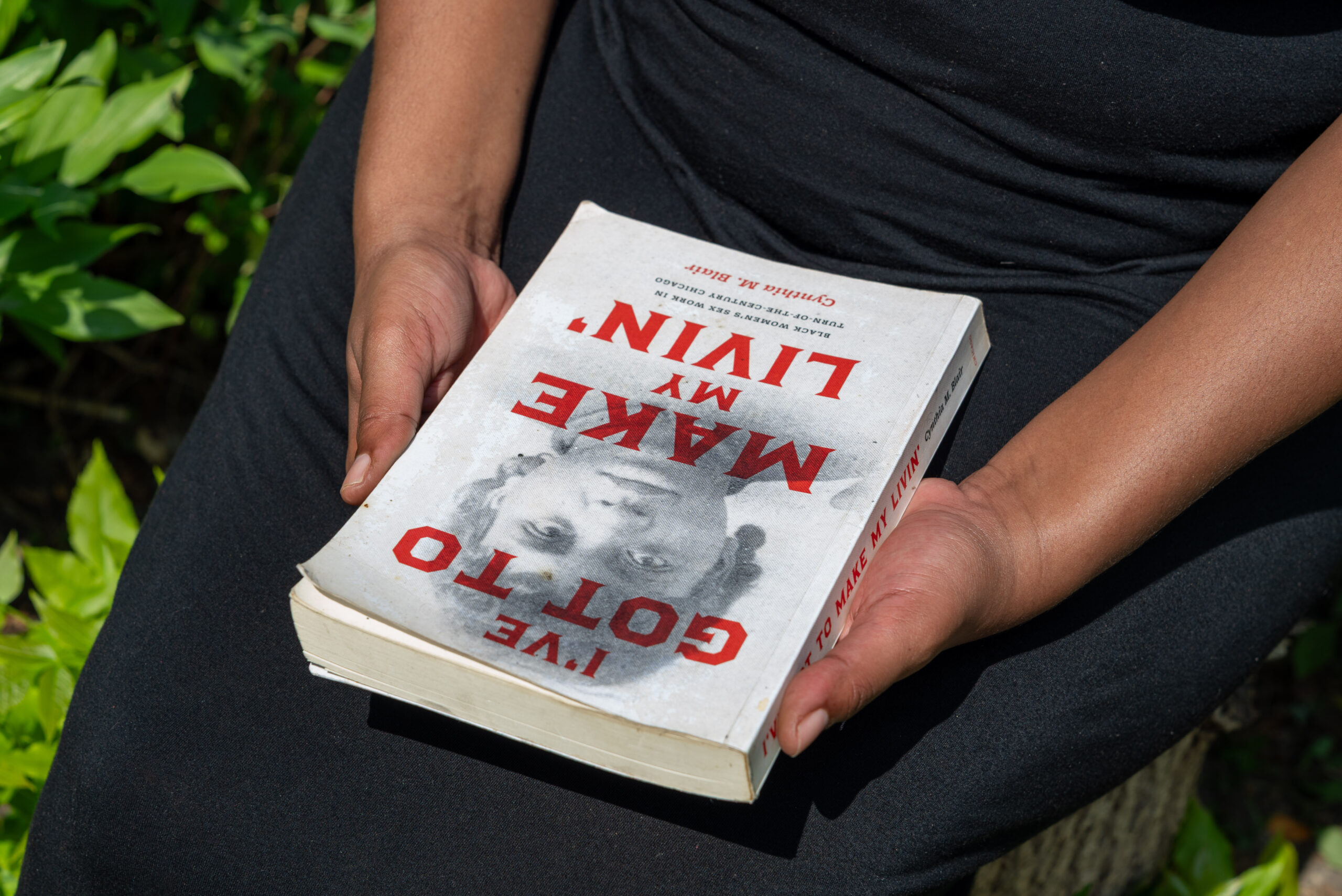
Siobhan Brooks’ book Unequal Desires was a huge influence too. I had read texts that had been written by sex workers, but I hadn’t come across many that were written by Black sex workers yet. Reading that book changed my life. It influenced the project greatly, because I had proof of a Black sex worker who understands their historical connections here, exploring it, wrote it in a book, and then did their own research, was the part that did something for me. Reading that book, let me know that I could do that shit.
MB: I’m really curious about North Stars or other people that feel like they’ve guided you and shaped the work that you’ve done.
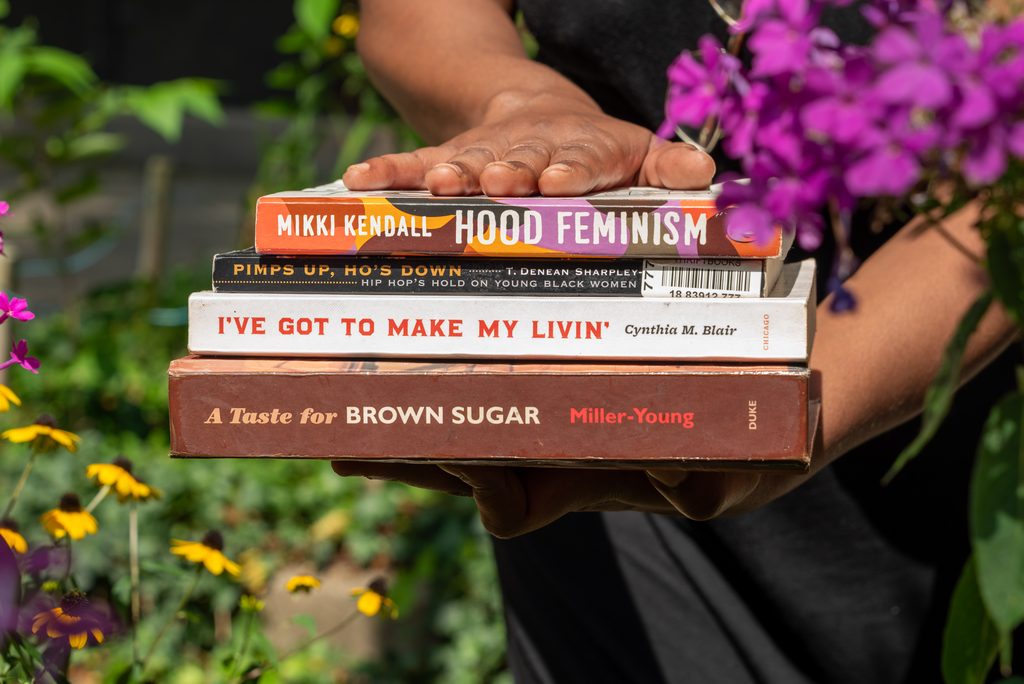
RC: Oddly enough, Karrine Steffans. I’m a hip hop head for sure. Always have been. My mom was also in the industry for a while; she had a music studio and used to manage acts. Prior to writing about sex work, that’s what I wrote about. I think it’s one of the first books where even if they’re not breaking down the game or examining pimp culture in an academic sense, they’re still connecting hip hop to pimp culture. I’ve always found it interesting that she and the BET Uncut babes are to blame for the fall of the Vixen era. She’s the first person I can think of that’s connected to millennial shit who’s challenging hip-hop in this very specific way, from the lens of someone who has done erotic labor.
And of course Gloria Lockett, Marsha P. Johnson, Maya Angelou, and Billie Holiday.
MB: Heaux History Project’s work on the Mistress Velvet exhibition shone a light on the late dominatrix trailblazer. What inspired you all to take on this project, and what would you say has been the impact of it almost five years later?
RC: I thought it would be important for Black sex workers to spearhead finding a way to honor V and creating a space where we felt safe to grieve. A lot of Black sex workers have our mental health obstacles so for those of us who have dealt with suicidal ideation, I think it hit home for us in that way too. V had a relationship with Leather Archives & Museum, which is why we chose it, and we were doing our own research [there too].
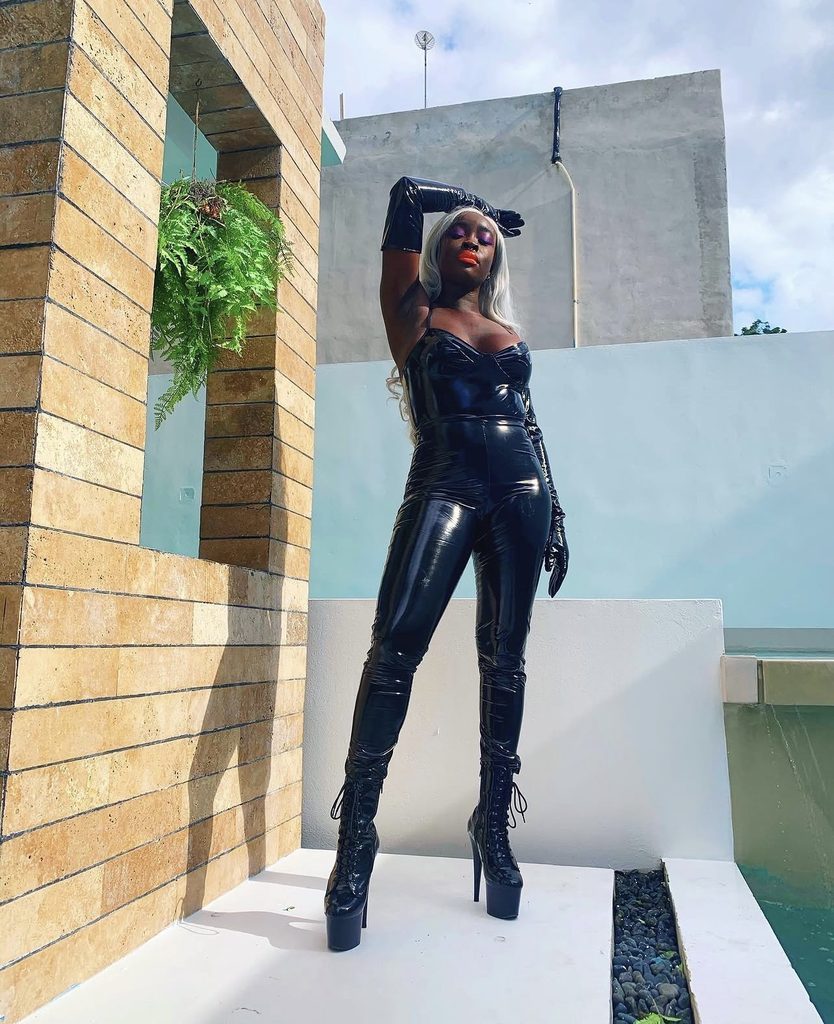
I’ve seen groups of Black sex workers honor our now ancestors in very intentional and specific ways. A huge part of that was celebrating their personhood, recognizing their humanity, and giving them a going away that doesn’t erase parts of their existence including sex worker advocacy and community organizing. I think we are apart of that group and have influenced other people to honor other people who have passed in their communities. It was important for a lot of us to be able to work in that space together. And I think that’s grief work too. Doulaship. Everybody showing up in their hoe gear made my day. My favorite memory is when we were working on V’s wigs, and we had the whole auditorium space. It was very Black hair shop. It smelled like a Black salon. There was soul music playing in the background.
Two of the canvases will be part of Leather Archive & Museums exhibit that they’ll do next year at Columbia University.
MB: Can you speak about the impact Red Maps Project has made in how we understand Chicago history as a whole?
RC: Chicago’s a very segregated city still. Being able to show what that looks like from a sex worker lens is part of the goal. To go back to Siobhan, there’s part of her book where she’s discussing house fees at strip clubs and how they’re connected to racism, classism, and geographic racism in particular. Apart of what we’re trying to do here is give people a literal layout of how we’re split up throughout the city or what clubs you find depending on where you’re at in the city. It’s not a coincidence that the clubs that you would associate with having mostly Black and Brown dancers are on the the South Side. I think at first, I might have just been a little too ambitious with everything that I wanted to put on there.
So you are looking at stroll history alongside what stores you can go get some hoe gear, or could have gotten them if they’re closed down. As we move forward, I want to detail through words, audio, and visuals, points on the map where we explore geographic racism and what policing looks like in those areas. I think now we could even add information about ICE raids and what sex workers spaces have been targeted.
MB: What has been the most surprising thing you’ve learned about Chicago’s sex work history?
When we were working on the maps project, I noticed that when it comes to Black sex work, the names of our strolls or our vice districts are interchangeable with the name of the neighborhood, like the Black Belt. Now, a white area like Old Town? It’s not necessarily interchangeable. Viagra Triangle is a cute little nickname that it has and if you know, you know. But it’s not how people refer to that neighborhood typically.
Back in the day, this would be the case with areas like Bedbug Row, which was a lower income, high traffic, but not high pay sex work vice district area. In a white neighborhood where there’s some hoeing, that neighborhood isn’t associated with sex work. It’s just part of that neighborhood, versus a Black neighborhood where it’s there but it’s that neighborhood’s identity also.
RC: One of the standout things about HHP is the public accessibility the information you share. Information can be found on extensive Twitter threads and public exhibits. How would you describe your approach to sharing archival materials?
Yeah, public accessibility is really important. I’m not an academic, so I don’t typically speak academically about things or about sex worker history. We have worked alongside people and had people on our creative teams who are academics or who do write in an academic style, so we welcome all that. I think that being able to put out information in that multitude of ways is important. Being a multimedia project, we’re exploring heaux history through film or through books or through lectures and classes. I think this is something that Black sex workers get, that phrase of building your own table or knocking a door off its hinges, even if you weren’t invited. Being able to create a space for us by us, that documents us, that centers us and making sure that It’s accessible that people understand what we’re saying, that we take our time, and we’re not rushing to complete things or to prove something. Also making sure that we mirror back how varied Blackness is.
MB: Sex workers recently have been very vocal about the explosion of sex work aesthetics (i.e. non-strippers wearing pleasers, pole classes increasing in popularity, and dating tips from civilians that mirror sugar baby or escorting) while whorephobia still runs rampant. How would you define whorephobia, and what are your thoughts on the topic?
RC: I would define whorehobia as the coupling of all the isms, but directed at sex workers. It’s the dislike, a disdain, a disgust, hatred of sex workers. I would like to use and see hoephobia used more because I think that would be racially specific, hoephobia being a hatred for Black sex workers specifically. Even within the sex worker community, I think hoephobia is at the root of a lot of things. I’ve worked in strip clubs where there are things that are general rules but you know that it’s specifically to bother your Black ass. Say, there’s 500 girls. They only hire 50 Black dancers. And then you only work your shift with maybe a handful of Black folks and that’s it. It’s making sure that we don’t get community amongst ourselves in those spaces and also making sure that we don’t organize.
When we are invited to broader conversations that are led by people who are non-Black, they’re usually light skinned and thin. White sex workers frequently get the opportunities to be published, make videos and then go viral exploring whorephobia, having feminist conversations, and are the ones who are invited to Ivy League schools to do lectures. When they spearhead something and a Black sex worker is part of that space or part of that work, there is some anti-Blackness that is going to occur. To me, that is hoephobia. It’s white sex workers being part of the game then getting out the game and it being viewed as, “they just did what they had to do. No big deal.” You know what I’m saying? White sex workers being able to get funding for their projects. Hoephobia could even look like…if you want to get out the game there being no options available versus a non-Black sex worker friend who could go out and get a high paying, respectable job quicker. I also think hoephobia is the labor that’s expected of Black sex workers to be able to get their coin in a strip club. This might look like you having to dance harder. It’s being told that you’re not desirable in comparison.
MB: What’s been the most energizing or impactful part of the work you’ve done with HHP?
RC: I want people to be able to find us. Like when we were shorties and we used to do those time capsules. You’re just trying to add to this larger canon in hopes that in Black feminist or womanist conversations it will be part of that. There’s gonna be a Black sex worker who’s gonna do exactly what I just described earlier, which is look for our voices and making it easier for us to be found. There are tons of Black sex worker projects out there and we’re all kind of throwing in this pot and adding more to that work.
MB: You are currently in the middle of writing a book about your own experiences as a sex worker. Do you think there’s a connection between this personal archival project and the work that you’re doing archiving the work of other sex workers?
RC: Hell yeah. It’s a chapbook where there’s some memoir aspect to it where I’m exploring my personal life alongside other things, but there’s also like sociopolitical analysis of Black sex worker history here and there. So I think they’re connected in that way for sure.
MB: Outside of archiving sex working histories, what are some other things you’re passionate about?
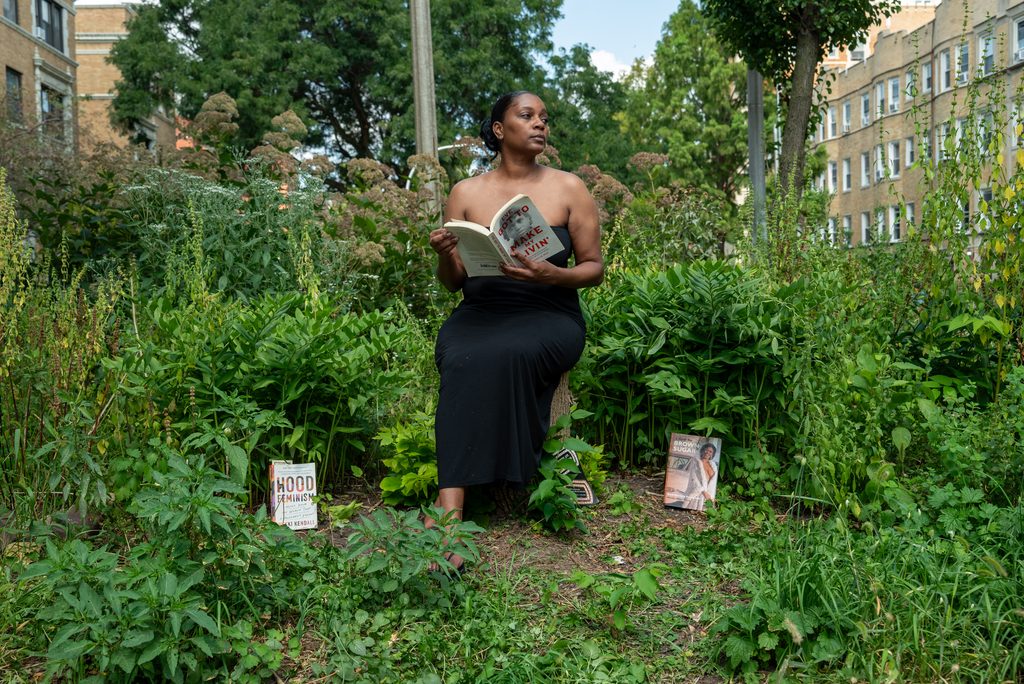
RC: I like to dance. I used to be a dance teacher. I used to teach hip-hop. I’d love to teach like a hybrid, like a little bit of hip-hop mixed with heels and hair, floor work, and pole dance. I love reading and raising my little one. Getting free in any way that I fucking can. There are things that I want to learn, some of which I think would benefit the project. I’d like to learn more about filmmaking, strengthening my writing, or learn a little photography, get a couple of skills. That’s about it-an artsy, corn fed hoe.
MB: How can non-sex workers honor the legacy of the trade in their media portrayals, writing, etc?
RC: Get a hoe friend. Get a hoe comrade. You’re probably using one as a muse. And if so, was it consensual? Get into some sex worker history and do your due diligence. We see so many movies where they’re exploring different areas or cultures and there’s a lot of research that goes into that. It seems like no one thinks that any research has to go into writing sex worker characters. Go watch some sex worker interviews and read our books. We should have sex worker characters where the large majority of us are like, “yes, yep!,” like [Wanda from] Snowfall-her character arc and her being able to choose herself. Towards the end where she’s like, “actually, I don’t want none of you motherfuckers. I want to pursue my dreams. I’m going to go be an actress. You can keep your love, and yours, and yours. Mine is enough.” [The movie] Jezebel too. If you’re a Black sex worker who writes screenplays and you’re reading this? Just an idea. Do us some justice, babe.
MB: All right, last question. How can people best show up for sex workers in general?
RC: Listen to us the first time. Because there’s a lot of law and legislation that’s changing, or that’s on the horizon, or on the chopping block that sex workers said something about ten years ago and everybody just laughed in our face. Get familiar with sex workers’ rights advocacy, conversations, discussion points, whatever literature is out there that you can get your hands on. Send some money to a real bitch crowdfund. If you know them in their personal lives don’t disclose that they’re sex workers? If you care so much about us getting out the game, hire us. Leave us alone. But listen to us. That’s it, that’s all.
MB: Any words you want to leave the people with?
RC: Viva la Revolution! [airhorn noises]
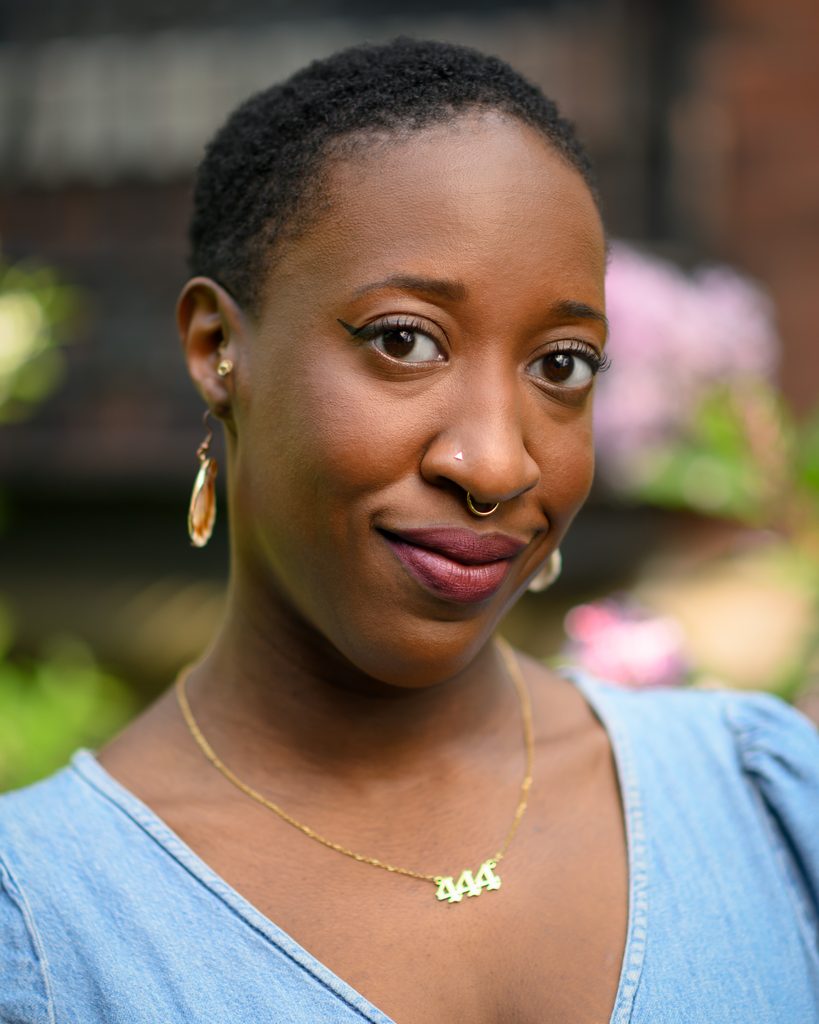
About the Writer: musu bangura is an artist originally from Washington, D.C. and currently residing in Chicago, Illinois. They are the author of the essay-book “…Considers Lil’ Kim’s Hard Core.” Their work has been published in New Delta Review, BITCH Magazine, Southeast Review, and more.
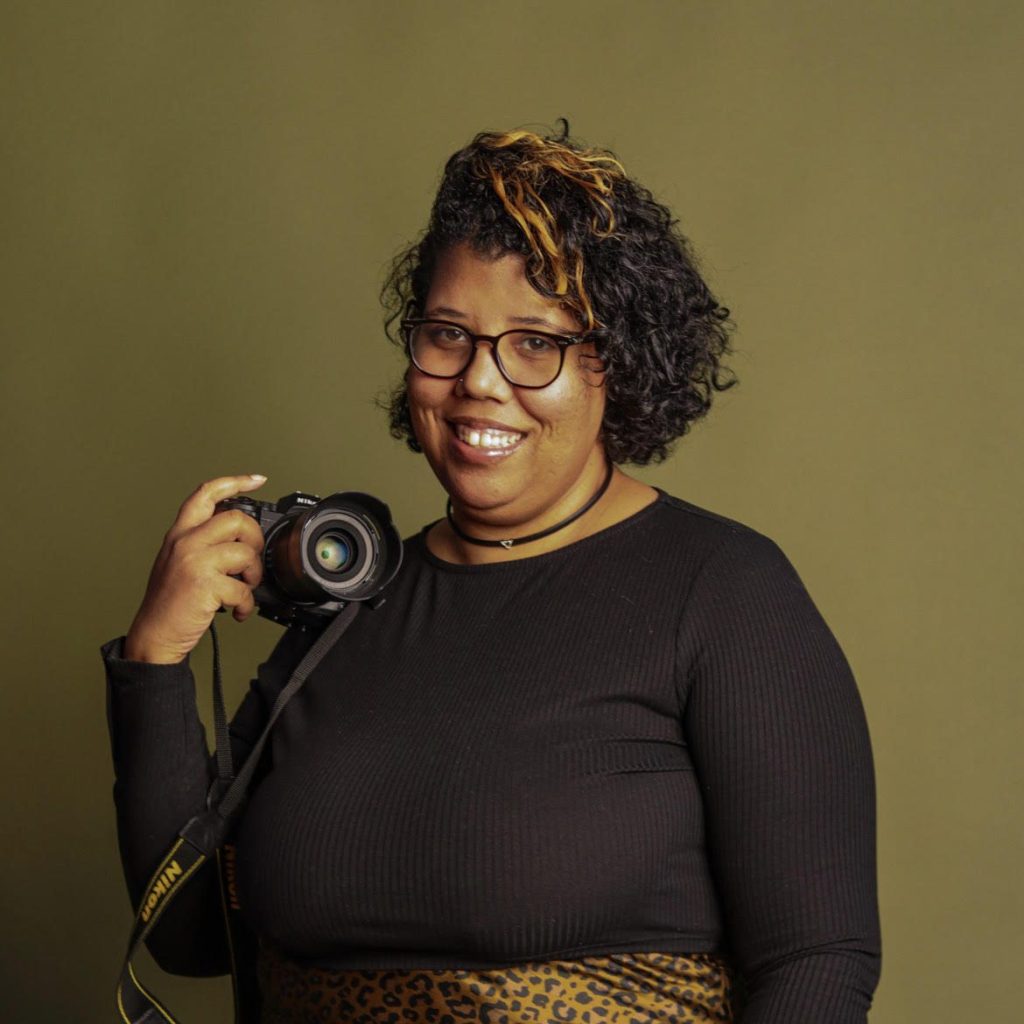
About the Photographer: Tonal Mondae (they/them) is a documentary photographer and writer based in Chicago, IL. Their work creates visual narratives that celebrate personhood and seek to explore the relationship between belonging and environment. The use of collaborative portraiture is an act of resistance that promotes the right to self-authorship for Black, Brown, and queer people.